

The Micro-Dose of Change: Systems, Science, and Habits with Joshua Siyumbwa
Golden Hook & Introduction
SECTION
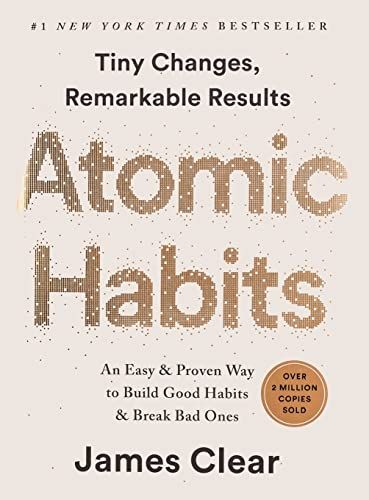
Nova: Think about a single cell in the human body. On its own, it is microscopic, almost completely invisible to the naked eye. But get trillions of those tiny cells working in perfect harmony, and you get a living, breathing, thinking human being. What if our daily habits work the exact same way? What if the smallest, seemingly insignificant choices we make every single day are actually the cells building the body of our future? Welcome to the show, everyone! I am Nova, and today we are diving deep into James Clear’s groundbreaking masterpiece,. And I am absolutely thrilled to have a brilliant mind joining us today. He is a healthcare student, a deeply analytical thinker, and someone who loves connecting the dots between science and everyday life. Joshua Siyumbwa, welcome to the microphone!
Joshua Siyumbwa: Thanks, Nova! It is so great to be here. You know, when I first read, that biological metaphor you just used really hit home for me. In healthcare, we are constantly looking at how microscopic changes—like a tiny shift in hormone levels or a single cellular mutation—can completely alter an entire physiological system. James Clear is basically arguing that our behavior works the exact same way. It is all about the chemistry of our daily routines.
Nova: Oh, I love that! The chemistry of our routines. That is such a perfect way to frame this. And today, we are going to tackle this book from two really fascinating angles. First, we are going to explore why focusing on systems and identity—rather than just setting big, shiny goals—is the ultimate key to lasting change. And yes, we are going to look at that through a biological lens! Then, we will break down the practical science of environmental design, showing how you can literally engineer your physical surroundings to make positive habits completely effortless. So, Joshua, are you ready to dissect some behavioral science with me?
Joshua Siyumbwa: Oh, absolutely. Let's get under the microscope!
Deep Dive into Core Topic 1
SECTION
Nova: Let's do it! So, let's start with this massive paradigm shift that James Clear introduces right at the beginning of the book. He writes, "You do not rise to the level of your goals. You fall to the level of your systems." Now, when I first read that, it blew my mind because we are always told to set big goals, right? "Lose twenty pounds," "Get an A in organic chemistry," "Run a marathon." But Clear says goals are actually the problem. To illustrate this, he tells this incredible story about the British Cycling team. Now, for nearly a century, British professional cycling was basically a joke. They were so mediocre that one top bike manufacturer actually refused to sell them bikes because they were worried it would hurt their reputation!
Joshua Siyumbwa: Wow, that is brutal. Imagine being so bad at your sport that companies don't even want you using their gear!
Nova: Right? It is the ultimate athletic burn! But then, in 2003, they hired a man named Dave Brailsford as their new performance director. And Brailsford didn't care about setting some massive, unrealistic goal of winning the Tour de France overnight. Instead, he committed to a strategy he called the "aggregation of marginal gains." The basic philosophy was simple: if you break down everything you can think of that goes into riding a bike, and then improve it by just one percent, those tiny improvements will compound into a massive systemic change.
Joshua Siyumbwa: That is so analytical. He basically treated the cycling team like a complex biological system, looking for every single variable he could optimize.
Nova: Exactly! And the things he optimized were wild, Joshua. They didn't just redesign the bike seats to make them more comfortable or rub alcohol on the tires for better grip. They went way deeper. They had the riders wear electrically heated shorts to maintain perfect muscle temperature while riding. They used wind tunnels to test different fabrics for their racing suits. But then they went outside the obvious. They hired a surgeon to teach the riders the absolute best way to wash their hands to avoid catching a cold. They tested different massage gels to see which one led to the fastest muscle recovery. They even figured out which mattress and pillow gave each individual rider the best night's sleep, and they brought those exact beds with them to every hotel on tour!
Joshua Siyumbwa: That is brilliant! I mean, as a healthcare student, the handwashing and sleep optimization parts make total sense to me. If your star athlete gets sick or sleeps poorly, all the high-tech gear in the world won't save their performance. Brailsford was looking at the holistic system of the human being, not just the mechanical system of the bicycle.
Nova: Yes! And the results were absolutely mind-blowing. Just five years after Brailsford took over, at the 2008 Olympic Games in Beijing, the British Cycling team absolutely dominated. They won an astounding sixty percent of the gold medals available. And then, four years later in London, they set nine Olympic records and seven world records. That same year, Bradley Wiggins became the first British cyclist to win the Tour de France, and they won it again and again in the years that followed. It was all because of those tiny, one percent changes.
Joshua Siyumbwa: It is incredible because, in science, we call this compounding effect a non-linear progression. In our minds, we expect progress to be linear—like, if I put in one unit of effort, I should get one unit of result. But in complex systems, whether it is a cycling team or human physiology, small changes accumulate quietly until they cross a threshold and trigger a massive, sudden shift. It is like water heating up. From thirty-two degrees to two hundred and eleven degrees, it is just hot water. But that one extra degree—going from two hundred and eleven to two hundred and twelve—turns it into steam. The transition looks sudden, but it was actually built by all those tiny, invisible degrees of heat.
Nova: Oh, that is a beautiful analogy! The one extra degree that creates steam. And this brings us to how we actually build these systems in our own lives. Clear says that the deepest level of behavior change isn't changing your outcomes—which are your goals—but changing your identity. He explains that there are three layers of behavior change, like an onion. The outer layer is outcomes—what you get. The middle layer is processes—what you do. And the deepest, innermost layer is identity—what you believe. Most of us start from the outside and work in. We say, "I want to be thin, so I’m going to go on a diet, and I hope I can stick to it." But Clear says we need to build habits from the inside out.
Joshua Siyumbwa: This is where the psychology gets really profound, Nova. If you focus on the identity first, the behavior follows naturally. Clear uses this great example of two people turning down a cigarette. The first person says, "No thanks, I’m trying to quit." That sounds reasonable, but they still identify as a smoker who is trying to be different. The second person says, "No thanks, I’m not a smoker." That is a massive psychological shift! They have changed their identity, so refusing the cigarette isn't a struggle of willpower anymore; it is just a natural reflection of who they are.
Nova: Exactly! It is the difference between fighting your own self-image and acting in alignment with it.
Joshua Siyumbwa: And you know, this has huge implications for healthcare. When we talk about patient compliance—like getting someone with chronic hypertension to take their medication every day or change their diet—we usually give them goals. We say, "Your goal is to lower your blood pressure to 120 over 80." But that is an outcome! And patients often fail because they don't see themselves as a "healthy person." They see themselves as a sick person who has to do these annoying chores. If we can shift the clinical conversation to help them adopt a new identity—helping them believe, "I am someone who actively cares for my body"—then taking medication or eating vegetables isn't a chore. It is just what a healthy person does.
Nova: Wow, Joshua. That is a really powerful perspective. It is about shifting from "I have to do this" to "This is who I am." But how does a person actually change their identity? Because we can't just wake up and decide, "Okay, I am a healthy person now," if we've spent the last ten years eating fast food on the couch, right? Our brain needs proof!
Joshua Siyumbwa: Exactly. And Clear has the perfect answer for that. He says that your identity emerges out of your habits. Every action you take is a vote for the type of person you want to become. If you write one page, you are voting for the identity of a writer. If you practice the violin for five minutes, you are voting for the identity of a musician. You don't need to be perfect; you just need to win the majority of the votes. I love this because it takes the pressure off. As a college student, I sometimes get overwhelmed thinking, "I have to study for eight hours today to be a good student." But Clear’s model says, no, just sitting down at your desk and opening your notebook is a vote for being a studious person. The vote counts, even if the study session is short.
Nova: Yes! Every small action is a vote. I find that so incredibly encouraging. We don't have to completely transform our lives in a single day. We just have to cast a few small votes for the person we want to be.
Deep Dive into Core Topic 2
SECTION
Nova: Now, this leads us beautifully into our second core topic, which is all about how we actually make those votes easier to cast. Because let's be honest, willpower is a finite resource. If we are relying on sheer mental strength to make good choices all day, we are going to exhaust ourselves. This is where Clear’s Four Laws of Behavior Change come in, and specifically, the power of environmental design. To show how powerful this is, Clear shares a fascinating study conducted by a primary care physician named Dr. Anne Thorndike at Massachusetts General Hospital in Boston.
Joshua Siyumbwa: Oh, I remember this study! It is a classic in behavioral economics and choice architecture.
Nova: It is so cool! So, Dr. Thorndike wanted to improve the eating habits of hospital staff and visitors, but she didn't want to use willpower, persuasion, or even talk to them about nutrition. She wanted to see if she could change their behavior simply by altering the environment of the hospital cafeteria. Now, originally, the refrigerators next to the cash registers in the cafeteria were filled with only soda. Dr. Thorndike and her team decided to add bottled water to those refrigerators. On top of that, they placed baskets of bottled water next to all the food stations throughout the room. The soda was still there, but water was now physically present in way more locations.
Joshua Siyumbwa: And what happened? Did people actually choose the water just because it was there?
Nova: They absolutely did! Over the next three months, the number of soda sales at the hospital dropped by eleven point four percent. Meanwhile, sales of bottled water increased by a massive twenty-five point eight percent! And here is the kicker, Joshua: not a single person was told what to drink. No one gave them a lecture on the dangers of sugar. They changed their behavior purely because the physical cues in their environment changed.
Joshua Siyumbwa: That is just incredible. It shows that we are highly visual creatures. Our brains are constantly scanning the environment for cues, and we often choose the path of least resistance. In biology, we talk about how organisms adapt to their ecosystems. But as humans, we have this unique ability to actually design our ecosystems! If you walk into a kitchen and there is a plate of cookies on the counter, you are probably going to eat one, not because you are hungry, but because the cue is right there. But if you hide the cookies in the pantry and put a bowl of fresh apples on the counter, the cue changes, and so does your behavior.
Nova: Exactly! We want to make the cues for our good habits obvious, and the cues for our bad habits invisible. I mean, think about how we can apply this to our daily lives. If you want to practice guitar more, don't keep it tucked away in its case in the back of the closet. Put it on a stand right in the middle of your living room! If you want to drink more water, put a full bottle on your desk first thing in the morning. We have to stop hiding the things we want to do!
Joshua Siyumbwa: Absolutely. And you know, this concept of environmental design is actually a matter of life and death in clinical settings. In hospitals, we use environmental cues to prevent medical errors. For example, have you ever noticed those bright yellow lines on the floor near medication dispensing stations? Or how hand sanitizer dispensers are always placed directly at eye level right outside every single patient room? Those aren't random design choices. They are highly engineered visual cues designed to trigger specific, critical habits—like sanitizing your hands or pausing to double-check a drug dosage. It is choice architecture saving lives.
Nova: That is fascinating! I never realized that hospital layouts are literally designed to guide human behavior in such a precise way. It makes so much sense. Now, another law of behavior change that Clear talks about is "Make it Easy." And one of my absolute favorite tools for this is what he calls the "2-Minute Rule." The idea is that when you start a new habit, it should take less than two minutes to do. So, instead of "Read one book a week," the habit becomes "Read one page." Instead of "Do thirty minutes of yoga," it becomes "Get my yoga mat out." Joshua, as a busy college student with a massive workload, how does this resonate with you?
Joshua Siyumbwa: Oh, it is a lifesaver, honestly. When you are looking at a massive textbook chapter on human anatomy, the sheer cognitive load can cause instant procrastination. Your brain sees this huge mountain of work and says, "Nope, let's go scroll on social media instead." But if I apply the 2-Minute Rule, my only goal is to sit down and open my textbook to the correct page. That is it. It takes less than thirty seconds. And what I’ve found—and what Clear points out—is that once you start doing the right thing, it is much easier to continue doing it. Action breeds motivation, not the other way around. The hardest part is just crossing that initial friction point.
Nova: Yes! It is all about overcoming that initial inertia. Once you take that tiny first step, you build momentum. Clear says a habit must be established before it can be improved. You can't optimize a habit that doesn't exist! So, if you want to become a person who works out every day, you have to first become a person who actually shows up at the gym, even if you only stay for five minutes and then leave. You are establishing the identity of being a gym-goer first.
Joshua Siyumbwa: Exactly. It is about reducing the friction for the good habits and increasing the friction for the bad ones. If I want to study, I put my phone in another room. That adds physical friction. If I want to check my phone, I have to get up, walk down the hallway, and get it. Often, that tiny bit of extra effort is enough to make my brain say, "Eh, not worth it, let's just keep reading." We are basically hacking our own lazy biology!
Nova: Hacking our lazy biology! I love that. It is so true. We are using our natural tendency to take the easiest path to our advantage.
Synthesis & Takeaways
SECTION
Nova: Well, Joshua, this has been such an incredibly rich conversation. We have covered so much ground, from the British Cycling team and marginal gains to the biology of systems, identity-based habits, and how hospital design saves lives through choice architecture. If you had to synthesize everything we’ve talked about today into one core takeaway for our listeners, what would it be?
Joshua Siyumbwa: I think the core of everything we’ve discussed is that real, lasting change doesn't require a massive, heroic effort. It is not about having superhuman willpower. It is about designing a system that works for you, rather than against you. If you can focus on casting small votes for the identity you want to build, and make those votes easier to cast by tweaking your environment, the compounding effect of those tiny changes will eventually transform your life. Just like those microscopic cells building a healthy body, your atomic habits are building your future.
Nova: That is so beautifully put, Joshua. And for everyone listening out there, we want to leave you with a simple, actionable challenge today. Think about one positive habit you want to build. Now, how can you apply the 2-Minute Rule to it today? And what is one tiny change you can make to your physical environment right now to make that habit just a little bit easier to start? Maybe it is putting a book on your pillow, or placing your running shoes by the front door, or setting a glass of water on your nightstand. Just one percent. That is all it takes.
Joshua Siyumbwa: Just one percent. Start small, engineer your space, and let the science of compounding do the rest.
Nova: Absolutely! Joshua, thank you so much for sharing your brilliant, analytical perspective with us today. This was an absolute joy.
Joshua Siyumbwa: Thank you, Nova. It was a blast!
Nova: And thank you to all of our wonderful listeners. Remember, you are the architect of your habits, and every day is a new opportunity to cast a vote for the person you want to become. Until next time, keep building those systems, stay curious, and we will talk to you soon!