

The Lead Indicator: Building Systems of Excellence with Yomi
Golden Hook & Introduction
SECTION
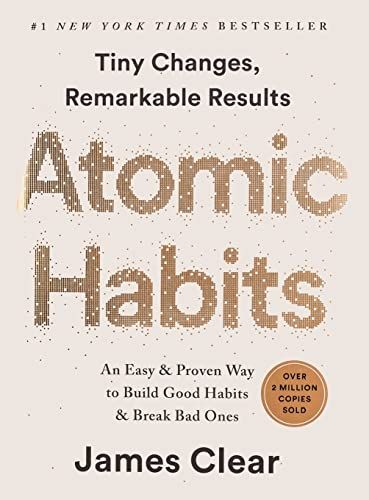
Nova: Think about a massive geological formation, like a canyon carved deep into solid rock. It didn't happen overnight with one massive explosion. It happened through the relentless, compounding drip of water over thousands of years. That is the exact essence of an atomic habit. Welcome to The Lead Indicator, the podcast where we break down powerful ideas into actionable systems. I am Nova, and today we are diving into James Clear's game-changing book, Atomic Habits. Joining me is Yomi, a geology graduate, entrepreneur, and aspiring geophysicist who is passionate about building disciplined, intentional leadership. Yomi, it is so wonderful to have you here with us today!
Yomi: Thanks, Nova! It is great to be here. You know, that geological opening really resonates with me. In geophysics, we look at how massive, invisible forces and tiny, continuous pressures shape the earth over time. When I read Atomic Habits, I saw the exact same principles applied to human behavior. It is all about the systems beneath the surface.
Nova: Oh, I love that connection so much! The systems beneath the surface. Today, we are going to tackle this book from two distinct angles. First, we will explore how to build identity-based habits that align with the leader you want to become, rather than just focusing on goals. And second, we will discuss how to design your physical and digital environments to make discipline practically effortless, engineering the path of least resistance. Ready to dive in, Yomi?
Yomi: Absolutely, Nova. Let's dig into the strata of behavior change.
Deep Dive into Core Topic 1
SECTION
Nova: Let's start with a story that James Clear shares in the book, which perfectly illustrates the power of tiny, compounding changes. It is the story of the British Cycling team. For nearly a hundred years, professional cyclists in Great Britain had been the laughingstock of the sporting world. They had won virtually nothing, and their performance was so mediocre that one top bike manufacturer actually refused to sell them bikes because they were worried it would hurt their brand's reputation!
Yomi: Wow, that is incredibly brutal. Imagine being so bad that companies don't even want your money!
Nova: Right? It was a total embarrassment. But then, in 2003, everything changed. They hired a man named Dave Brailsford as their new performance director. Brailsford didn't believe in massive, overnight overhauls. Instead, he committed to a strategy he called the aggregation of marginal gains. The basic philosophy was that if you broke down everything you could think of that goes into riding a bike, and then improved it by just one percent, you would get a significant increase when you put them all together.
Yomi: That is pure systems engineering. He wasn't looking for a magic bullet; he was looking for variables to optimize.
Nova: Exactly! And they optimized things that other teams didn't even think about. They redesigned the bike seats to make them more comfortable. They rubbed alcohol on the tires for better grip. They had the riders wear electrically heated overshorts to maintain muscle temperature. But they didn't stop there, Yomi. They went even deeper. They hired a surgeon to teach the riders the best way to wash their hands to prevent catching a cold. They tested different types of massage gels to see which one led to the fastest muscle recovery. They even painted the inside of their team truck white, which helped them spot tiny dust particles that could degrade the performance of the finely tuned bikes!
Yomi: That level of detail is mind-blowing. Painting the truck white just to spot dust? That is an incredibly analytical approach to performance. It shows a deep understanding of how tiny, environmental variables can accumulate.
Nova: Yes! And the results were staggering. Just five years after Brailsford took over, the British Cycling team dominated the 2008 Olympic Games in Beijing, winning sixty percent of the gold medals available. Four years later in London, they set nine Olympic records and seven world records. That same year, Bradley Wiggins became the first British cyclist to win the Tour de France. It is the perfect real-world proof of Clear's concept: a one percent improvement every day for a year makes you thirty-seven times better by the end of it.
Yomi: That thirty-seven times compounding effect is staggering. As an entrepreneur and leader, it makes me realize how often we fall into the trap of focusing solely on the end goal, like launching a business or hitting a revenue target. But a goal is just a snapshot in time. A system is the continuous process that actually generates that snapshot. If you want better results, forget about the goals. Focus on your systems instead.
Nova: That is such a profound shift, Yomi. "Forget about the goals, focus on the systems." Clear talks about how winners and losers often have the exact same goals. Every Olympic athlete wants the gold medal. Every job applicant wants the job. So, the goal itself can't be what differentiates the winners. It is the system of continuous improvement that makes the difference.
Yomi: Exactly. And Clear takes this a step further by introducing the concept of identity-based habits. He explains that there are three levels of behavior change: outcomes, processes, and identity. Outcomes are about what you get. Processes are about what you do. But identity is about what you believe. Most people start from the outside in. They say, "I want to be a disciplined leader, so I will start planning my day, and hope that makes me a disciplined person." But true, lasting change flows from the inside out.
Nova: Ooh, tell me more about that. How does a leader build an identity-first system?
Yomi: Well, instead of focusing on the outcome, you start by asking yourself: "Who is the type of person that could achieve this outcome?" If you want to be a disciplined, consistent leader, you ask, "What would a disciplined leader do in this situation?" Every action you take is a vote for the type of person you wish to become. If you write down your priorities every morning, you are casting a vote for being an organized leader. If you show up to meetings five minutes early, you are casting a vote for being a respectful and reliable leader. You don't need to be perfect; you just need to win the majority of the votes.
Nova: I love that metaphor of "casting a vote." It takes the pressure off having to be perfect immediately. It is just about accumulating small wins that build self-trust. For you, Yomi, in your journey as an entrepreneur and leader, how have you seen this identity shift play out?
Yomi: For me, it was shifting my identity from "someone trying to build a business" to "I am a systematic builder." When I embraced the identity of a systematic builder, my daily actions changed. I stopped waiting for bursts of entrepreneurial inspiration. Instead, I focused on creating daily, repeatable processes for research, outreach, and learning. It made discipline feel less like a chore and more like an expression of who I actually am.
Nova: That is incredibly empowering! When the habit becomes an expression of your identity, it requires so much less willpower to maintain. It just becomes who you are.
Deep Dive into Core Topic 2
SECTION
Nova: Now, let's pivot to how we actually make these habits stick on a practical level. This brings us to the environment. Clear argues that willpower is highly overrated. The people who appear to have the most self-control are often just the ones who have designed their lives in a way that doesn't require heroic willpower in the first place. They design their environment to make good habits obvious and easy, and bad habits invisible and difficult.
Yomi: This is where my geophysics brain gets really excited, Nova. In physics, we study how forces move through mediums. If you want water to flow in a certain direction, you don't yell at the water; you carve a channel. You create a path of least resistance. Human behavior is exactly the same. We are highly influenced by the architecture of our physical and digital spaces.
Nova: Yes! We are visual creatures, and our environment constantly cues our behavior. Clear shares a fascinating study conducted by Dr. Anne Thorndike, a primary care physician at Massachusetts General Hospital in Boston. She wanted to improve the eating habits of hospital staff and visitors without using a single word of persuasion or motivation. She didn't tell anyone to eat healthier; she simply redesigned the hospital cafeteria.
Yomi: Oh, I remember this study! It is a classic example of choice architecture. How did she alter the layout?
Nova: Originally, the refrigerators next to the cash registers were filled only with soda. Dr. Thorndike and her team added bottled water to those refrigerators, and they also placed baskets of bottled water throughout the room. Soda was still available, but water was now present in all locations. Over the next three months, the number of soda sales dropped by over eleven percent, while bottled water sales increased by over twenty-five percent! And here is the kicker: no one said a word to the customers. They changed the environment, and the environment changed the behavior.
Yomi: That is absolutely brilliant. It shows that we often choose things not because we want them the most, but because of where they are. Proximity is power. If the water is right in front of you, you drink it. If the phone is sitting on your desk next to your keyboard, you will pick it up and scroll, even if you promised yourself you would focus.
Nova: Exactly! So, if we want to build disciplined leadership habits, we have to become the architects of our environments, not just the consumers of them. We need to make the cues of our good habits highly obvious. Yomi, how can we apply this to the customized themes you mentioned, like bringing identity-based habits into your spiritual life or your daily work?
Yomi: Let's look at spiritual life first. If I want to build a habit of daily reflection or reading spiritual texts in the morning, but my book is tucked away on a shelf and my phone is charging right next to my bed, what is the path of least resistance? It is picking up the phone and checking emails. To change this, I have to design the environment. I can place my reflection journal or book directly on my pillow in the morning when I make my bed. That way, when I go to bed at night, the cue is physically staring me in the face. It is obvious.
Nova: That is a perfect example! You are literally placing the habit in your path. What about in your work as an entrepreneur? How do you design your digital environment to reduce friction?
Yomi: Digital environment design is huge for me. To make deep work easy, I use website blockers to lock myself out of social media and news sites during my peak focus hours. I also keep my phone in another room. Clear mentions that even having your phone in the same room, even if it is turned off, drains cognitive capacity because your brain has to actively exert energy to resist checking it. By putting it in another room, I increase the friction of checking it. I would have to physically get up, walk down the hallway, and get it. That extra friction is usually enough to keep me focused on my work.
Nova: It is all about managing friction! We want to decrease friction for good habits and increase friction for bad ones. It is like creating a smooth, downhill slope for the things we want to do, and building a steep, rocky uphill climb for the things we want to avoid.
Yomi: Exactly. As a leader, you can also design environments for your team. If you want a culture of open communication, don't make people jump through bureaucratic hoops to share an idea. Create a simple, shared digital space where ideas can be dropped instantly. Make the desired behavior the easiest path.
Synthesis & Takeaways
SECTION
Nova: This has been such an incredibly rich conversation, Yomi. We have covered how tiny, one percent changes compound over time, how shifting our identity from the inside out builds lasting discipline, and how engineering our physical and digital environments automates our success. It really shows that leadership isn't about a single heroic moment; it is about the quiet, consistent systems we build.
Yomi: It really is. And for anyone listening who wants to start applying this today, I highly recommend a technique Clear calls "habit stacking." It is a way to anchor a new habit to an existing one. The formula is simple: "After I, I will."
Nova: Oh, that is incredibly practical! Can you give us an example of how a leader might stack a habit?
Yomi: Sure! Let's say you want to build a habit of expressing gratitude and encouraging your team. You can stack it onto your morning routine. "After I pour my first cup of coffee in the morning, I will send one quick, encouraging message to a team member." You are taking an established neural pathway—pouring coffee—and using it to trigger a new, positive leadership habit.
Nova: I love that! It is so simple, yet so incredibly effective. It takes the guesswork out of when and where to act. Well, Yomi, thank you so much for sharing your analytical insights and your passion for systems-driven leadership with us today. You have given us a fantastic blueprint for building atomic habits.
Yomi: Thank you, Nova. It has been an absolute pleasure. Remember, we don't rise to the level of our goals; we fall to the level of our systems. Let's build better systems together.
Nova: What a perfect note to end on! To everyone listening, what is one tiny, one percent change you can make in your environment today to make your best habits obvious and easy? Think about it, design it, and let the compounding begin. Until next time, keep building, keep growing, and we will see you in the next episode of The Lead Indicator!