

The Identity-Driven Leader: Systemizing Growth, Spirit, and Performance with Atomic Habits
Golden Hook & Introduction
SECTION
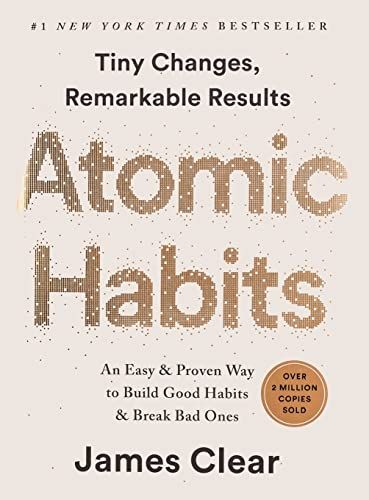
Nova: Why do ninety-two percent of New Year's resolutions fail? We tend to think it's a personal failure, right? Like, oh, if only I had more willpower, or if only I were more disciplined. But the truth is far more liberating. It's not a willpower problem; it's a system design flaw. Today, we are diving deep into James Clear's masterpiece,, to show you how to stop chasing fleeting goals and start building systems that actually redefine who you are. And I am absolutely thrilled to have Master Lee here with us today. Lee, you're someone who looks at the world through a deeply analytical lens, always searching for those systematic connections. Welcome!
Master_Lee: Thanks, Nova. It's great to be here. You know, when I first read, what really struck me was this idea of compounding. As an analytical thinker, I love looking at systems and feedback loops. Clear talks about how if you can get just one percent better each day for a year, you'll end up thirty-seven times better by the time you're done. That's not just a minor improvement; that's exponential growth. And as leaders, we often focus so heavily on the big, dramatic shifts, but the real magic is in the micro-systems.
Nova: Thirty-seven times better! That math is just mind-blowing when you actually stop to picture it. It's like financial compound interest, but for your personal growth. Today, we're going to tackle this book from three very specific angles. First, we'll explore the profound shift from goal-setting to identity-building, especially in our spiritual and personal lives. Then, we'll discuss why systems beat goals every single time in high-performance work environments. And finally, we'll focus on how to design our physical and mental spaces to make discipline feel almost effortless. Ready to jump in, Lee?
Master_Lee: Absolutely. Let's unpack this.
Deep Dive into Core Topic 1
SECTION
Nova: Let's start with what James Clear calls the "three layers of behavior change." Picture them like concentric circles. The outer layer is changing your outcomes—your goals. The middle layer is changing your processes—your systems. But the deepest, most powerful layer is the inner circle: changing your identity. Clear tells this wonderful story about two people trying to quit smoking. When offered a cigarette, the first person says, "No thanks, I'm trying to quit." It sounds reasonable, right? But they still believe they are a smoker who is trying to do something else. The second person, though, says, "No thanks, I'm not a smoker." That is a massive psychological shift. They've changed their identity.
Master_Lee: That story is incredibly profound, Nova, because it highlights the friction we experience when our habits don't align with our self-image. If you believe you are a disorganized person, you can try to force yourself to clean your desk, but your underlying identity will eventually pull you back to chaos. I've been thinking about how this applies to my spiritual life. Often, we treat spiritual growth like a checklist. We say, "I need to read this text for twenty minutes a day," or "I need to meditate every morning." That's focusing on the outcome or the process. But what if we shifted that to identity? What if my core belief is, "I am a person who seeks wisdom daily," or "I am a person who cultivates inner peace"?
Nova: Oh, I love that distinction! It feels so much more inviting and less like a chore we have to cross off our to-do list. When you say, "I am a person who seeks wisdom," then reading a book or reflecting isn't a task—it's just what you do. It's a natural expression of who you are.
Master_Lee: Exactly. And Clear explains that identity is actually built through our habits. Every action we take is like a vote cast for the type of person we want to become. If you write one page, you cast a vote for being a writer. If you take five minutes to sit in silence and reflect, you cast a vote for being a spiritually grounded person. You don't need to be perfect; you just need to win the majority of the votes. For me, as a leader, this is a game-changer. It means my spiritual discipline isn't about achieving some perfect state of enlightenment; it's about consistently casting votes for the identity of a grounded, thoughtful leader.
Nova: That is so encouraging! "Casting votes." It takes the pressure off. We don't have to be perfect every single day; we just need to make sure the majority of our daily choices align with the person we want to be. But how do we bridge the gap between wanting that identity and actually executing it when life gets incredibly busy?
Master_Lee: That's where the transition from identity to system design becomes critical. You can't just wish yourself into a new identity; you have to build the infrastructure to support it. And that brings us right to the core of how we manage our work and leadership.
Deep Dive into Core Topic 2
SECTION
Nova: Yes! Let's talk about systems. Clear has this line that I think should be painted on the wall of every office: "We do not rise to the level of our goals; we fall to the level of our systems." To illustrate this, he shares the incredible turnaround of the British Cycling team. For nearly a hundred years, British professional cycling had been the definition of mediocrity. They had won almost nothing, and top bike manufacturers wouldn't even sell them bikes because they were worried it would hurt their brand! But then, they hired a man named Dave Brailsford.
Master_Lee: Ah, yes, the concept of the "aggregation of marginal gains." Brailsford didn't try to overhaul the entire team overnight with some massive, unrealistic goal. Instead, he looked for one percent improvements in everything they did.
Nova: Exactly! They did the obvious things, like redesigning the bike seats to make them more comfortable and having the riders wear heated shorts to maintain muscle temperature. But they didn't stop there. They tested different massage gels to see which led to the fastest muscle recovery. They hired a surgeon to teach the riders the best way to wash their hands to avoid catching colds. They even painted the inside of their team truck white so they could spot tiny dust particles that might degrade the performance of their finely tuned bikes!
Master_Lee: That is pure systems thinking. As an analytical mind, I find that absolutely beautiful. They isolated every variable in the system and optimized it by just one percent. And the result? At the 2008 Beijing Olympics, the British Cycling team won an astounding sixty percent of the gold medals available. Four years later in London, they set nine Olympic records and seven world records. It's the perfect proof that goals don't drive success; systems do. Both the winning team and the losing team in any competition have the exact same goal—to win. So, the goal itself cannot be the variable that determines success. It's the system that makes the difference.
Nova: That is such a powerful point, Lee. The goal is a constant; the system is the variable. So, if you're a leader trying to improve your team's work performance, how do you apply this? How do we move away from just shouting about KPIs and actually build better systems?
Master_Lee: Well, first, we have to stop managing by outcomes and start managing by inputs. If a leader only focuses on the quarterly sales target, they are looking at a lagging measure. The leading measures are the daily habits of the team. Are we making the calls? Are we updating the database? Are we communicating clearly? As a leader, my job is to design a system where doing the right thing is the default path. We need to look at our workflows the same way Brailsford looked at those bikes. Where is the friction? Is our software slowing people down? Are our meetings draining energy? If we can reduce friction by just one percent in our daily operations, the compounding effect over a quarter is massive.
Nova: It really shifts the role of a leader from being a taskmaster to being an architect. You're designing the environment and the processes so your team can thrive. And speaking of design, that leads us perfectly to our third big topic: environment design.
Deep Dive into Core Topic 3
SECTION
Nova: James Clear argues that environment is the invisible hand that shapes human behavior. We like to think we make conscious, deliberate choices all day, but often, we just react to the cues in our surroundings. Take the study conducted by Dr. Anne Thorndike at Massachusetts General Hospital. She wanted to improve the eating habits of hospital staff and visitors without talking to them or trying to persuade them. So, she and her team redesigned the hospital cafeteria. Originally, the refrigerators next to the cash registers were filled only with soda. They added water to those refrigerators and placed baskets of bottled water throughout the room.
Master_Lee: And what happened? Did people complain?
Nova: Not at all! Over the next three months, soda sales dropped by over eleven percent, while bottled water sales shot up by over twenty-five percent. Nobody was told to drink water. There were no motivational posters. The researchers simply made water more visible and easier to grab. They made the positive habit obvious and easy, and the less healthy habit slightly more difficult.
Master_Lee: That is a brilliant example of choice architecture. It shows that willpower is highly overrated. We rely on willpower when our environment is poorly designed. If you want to practice a spiritual discipline in the morning, but your phone is sitting right next to your bed, the cue to check your email or social media is incredibly strong. You are setting yourself up for a willpower battle before your feet even hit the floor. But if you place your phone in another room and put a journal or a spiritual book on your pillow the night before, you've completely changed the cues in your environment.
Nova: Yes! You've made the good habit obvious and the distraction invisible. We can do this in our workspaces too, right? If we want to focus on deep work, we have to design our digital environment to support that.
Master_Lee: Absolutely. I've started doing this with my digital workspace. I turn off all non-human notifications. If it's not a real person trying to reach me urgently, I don't want to see a red dot or a pop-up. I've also made it a habit to close all browser tabs at the end of the day except for the one document I need to work on first thing the next morning. When I open my laptop, the cue is singular and clear. There's no decision fatigue. I don't have to choose what to do; the system has already chosen for me.
Nova: That is so smart, Lee. It's like leaving a clean canvas for yourself. And it works both ways, too. If we want to break a bad habit, we have to make it invisible and difficult. If you find yourself mindlessly snacking while working, don't keep snacks on your desk. Put them in the pantry, behind a closed door, or don't buy them at all. Increase the friction!
Master_Lee: Exactly. The more steps you put between yourself and a bad habit, the less likely you are to do it. It's all about managing energy and friction. As leaders, we need to ask ourselves: are we making it easy for our people to do great work, or are we accidentally creating systems of high friction?
Synthesis & Takeaways
SECTION
Nova: This has been such a rich conversation, Lee. We've covered so much ground—from the deep psychological shift of identity-based habits to the compounding math of systems, and finally to the practical design of our environments. If you had to synthesize this for a leader who is listening right now and wants to start applying these principles today, where should they begin?
Master_Lee: I would tell them to start with the "Two-Minute Rule." James Clear says that when you start a new habit, it should take less than two minutes to do. So, don't try to read for an hour; read for two minutes. Don't try to meditate for thirty minutes; sit in silence for two minutes. The goal is not to achieve perfection immediately; the goal is simply to establish the gateway habit. You have to standardize before you can optimize. You have to master the art of showing up before a habit can compound into something meaningful.
Nova: "Standardize before you optimize." That is a golden takeaway. You can't improve a habit that doesn't exist!
Master_Lee: Exactly. Once you show up consistently, the identity starts to shift. You begin to see yourself as the kind of person who does this thing. And once that identity is locked in, the system becomes self-sustaining. So, my challenge to our listeners today is simple: What is one tiny, two-minute action you can take today to cast a vote for the leader, the thinker, or the person you want to become tomorrow?
Nova: What a beautiful and challenging question to leave our audience with. Master Lee, thank you so much for sharing your analytical insights and your heart with us today. This has been incredibly inspiring.
Master_Lee: Thank you, Nova. It was an absolute pleasure.
Nova: And to everyone listening out there, remember: big changes don't require massive, exhausting leaps. They start with tiny, atomic shifts. Build your systems, design your environment, and cast your votes. We'll see you next time!