

The Identity Architecture: Designing Systems for Leadership, Spirit, and Growth
Golden Hook & Introduction
SECTION
Nova: Imagine two people resisting a cigarette. When offered a smoke, the first person says, "No thanks, I'm trying to quit." It sounds reasonable, right? But the second person says, "No thanks, I'm not a smoker." It is a tiny, almost imperceptible shift in language, but it represents a massive, tectonic shift in psychology. The first person still believes they are a smoker who is trying to be different. The second person has fundamentally redefined who they are. Today, we are going to explore how this exact shift in identity is the secret key to unlocking discipline, consistency, and systems-driven leadership. Welcome to the show! I am Nova, and joining me today is Esther, an incredibly analytical leader who is passionate about connecting the dots between personal growth, work performance, and spiritual life. Esther, it is so wonderful to have you here with us.
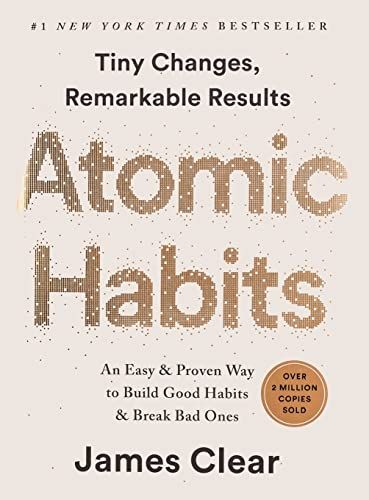
Esther: It is great to be here, Nova. You know, that smoker example from James Clear's Atomic Habits has always resonated with me because, as analytical thinkers, we often focus so heavily on the data, the metrics, and the end goals. We want to achieve a certain KPI at work, or we want to read a certain number of books, or spend a specific amount of time in spiritual reflection. But Clear's work challenges us to look beneath the surface of what we want to achieve and instead ask, who do we want to become?
Nova: Exactly! We are so used to starting from the outside and working our way in. We start with the outcomes, then we look at the processes, and only rarely do we touch our identity. But today, we are going to flip that entirely on its head. We are going to tackle Atomic Habits from three distinct angles. First, we will explore the profound shift from outcome-based goals to identity-based habits in both our professional and spiritual lives. Second, we will discuss how to architect our physical and digital environments to make consistency feel almost effortless. And finally, we will focus on how to embrace the 1% margin, navigating that frustrating plateau where we are doing the work but not yet seeing the results. It is going to be a deep, practical, and systems-focused conversation. So, let us dive right in!
Deep Dive into Core Topic 1
SECTION
Nova: Let us start with this idea of identity-based habits. James Clear talks about three layers of behavior change: outcomes, processes, and identity. Outcomes are about what you get. Processes are about what you do. Identity is about what you believe. Most of us, when we want to build a new habit, focus entirely on the outcomes. We say, "I want to be a highly organized leader," or "I want to have a vibrant spiritual life." But Nova, we think the real magic happens when we start from the identity layer. Esther, how does this distinction play out when you look at leadership and spiritual growth?
Esther: It is a fundamental paradigm shift, Nova. If you start with the outcome, say, "I want to be a disciplined leader who checks in on my team daily," you are relying purely on willpower. And as we know, willpower is a highly volatile, finite resource. On a stressful day, when your cognitive load is maxed out, that goal-driven habit is the first thing to go. But if you shift the focus to identity, you start by saying, "I am a leader who prioritizes people." Now, the daily check-in is not just a task on your to-do list; it is a physical manifestation of who you are. Every time you check in on a team member, you are casting a vote for that identity.
Nova: Oh, I love that phrase! "Casting a vote for your identity." That is a beautiful way to look at it. It takes the pressure off being perfect. We do not need a unanimous vote to win an election; we just need a majority. So, every small action is just a vote for the person we want to become. How do you see this applying to spiritual disciplines, which can sometimes feel hard to maintain consistently in a busy corporate schedule?
Esther: It applies beautifully, and honestly, it relieves a lot of spiritual guilt. If my goal is "I must meditate or pray for thirty minutes every single morning," and I wake up late, I feel like a failure. I have broken the chain, and my analytical brain might say, "Well, the system is broken, let us just skip today." But if my identity is "I am a contemplative person who seeks daily connection with the divine," then even a single, mindful breath during a chaotic morning commute is a vote for that identity. It is not about the duration; it is about the direction. The identity-based approach allows us to build a bridge between our spiritual aspirations and our daily, messy reality.
Nova: That is so comforting and incredibly practical. It reminds me of how Clear describes the feedback loop of identity. Our habits shape our identity, and our identity shapes our habits. It is a continuous, self-reinforcing loop. If we want to change who we are, we have to start by changing what we do, but in tiny, manageable increments. We do not need to build a cathedral in a day; we just need to lay one brick.
Esther: Exactly. And as leaders, we can apply this to our teams as well. Instead of just praising outcomes, like "Great job on hitting that sales target," we can praise identity. We can say, "I love how collaborative and detail-oriented you were on this project." We are helping them build a professional identity of excellence, which naturally drives future performance. It is a much more sustainable way to lead.
Deep Dive into Core Topic 2
SECTION
Nova: That is a brilliant transition to our second topic, which is all about environment design. We like to think we have complete control over our choices, but the truth is, our environment is the invisible hand that shapes our behavior. Clear shares a fascinating study conducted by Anne Thorndike, a primary care physician at Massachusetts General Hospital. She wanted to improve the eating habits of hospital staff and visitors without speaking a single word of persuasion to them.
Esther: Oh, I remember this study! It is a classic example of choice architecture. What did she do exactly?
Nova: It was incredibly simple but brilliant. She and her team redesigned the hospital cafeteria. Originally, the refrigerators next to the cash registers were filled with only soda. They added water as an option to those refrigerators, and they also placed baskets of bottled water throughout the room. Over the next three months, soda sales dropped by over eleven percent, while bottled water sales shot up by over twenty-five percent! No one told these people to drink water. There was no motivational speech. The environment simply made the healthier choice the easier, more obvious choice.
Esther: That is absolutely fascinating, Nova. It shows that convenience often trumps motivation. As an analytical thinker, I look at this and think about how we can engineer our environments to reduce the friction for good habits and increase the friction for bad ones. If we want to be disciplined, systems-driven leaders, we cannot rely on our environment being neutral. We have to actively design it.
Nova: Yes! We have to become the architects of our own spaces. So, Esther, if we are looking at work performance, how can we apply this "Make it Obvious" and "Make it Easy" principle to our digital and physical workspaces?
Esther: Well, let us look at digital distraction, which is the ultimate productivity killer for leaders. If my phone is sitting right next to my laptop on my desk, even if it is face down, it is screaming for my attention. It is highly obvious. To make deep work easy, I have to make the distraction invisible. I started putting my phone in another room during my deep-work blocks. The physical friction of having to stand up, walk down the hallway, and retrieve the phone is usually enough to stop my subconscious mind from mindlessly checking it.
Nova: That is a perfect example of increasing friction for a bad habit. What about building a positive habit, like spiritual reflection or personal growth reading? How do we make those obvious in our environment?
Esther: It is all about visual cues. If I want to read more leadership books, but my books are tucked away on a shelf in a dark corner, I will never pick them up. But if I place the book I am currently reading right on my pillow in the morning when I make my bed, it is waiting for me when I go to sleep. It is obvious, and the friction to start reading is practically zero. For my spiritual life, I created a dedicated space in my home—just a simple chair with a journal, a pen, and a devotional book sitting on a small table next to it. When I see that chair, it is a visual trigger that says, "This is where we connect, reflect, and find stillness." I do not have to think about where to go or what to do; the environment has already made the decision for me.
Nova: I love that. "The environment has already made the decision for me." That is the ultimate goal of a systems-driven life. We want to automate as many positive decisions as possible so we can save our precious decision-making energy for the big, complex challenges we face as leaders. It is about being kind to our future selves.
Deep Dive into Core Topic 3
SECTION
Nova: Now, let us talk about the math behind all of this, because I know your analytical mind is going to love this part, Esther. James Clear talks about the power of tiny gains—specifically, the idea of getting just one percent better every single day. If you can improve by just one percent each day for an entire year, you will end up thirty-seven times better by the end of that year! But on the flip side, if you get one percent worse every day, you will decline almost down to zero.
Esther: The compounding effect of habits is mind-blowing when you look at the math. But the challenge we face, especially as high-achieving leaders, is what Clear calls the "Plateau of Latent Potential." We expect progress to be linear. We think, "If I work hard every day, I should see a steady, upward trajectory of results." But in reality, habits compound quietly. For a long time, nothing seems to happen. It is like heating an ice cube.
Nova: Oh, the ice cube analogy is so powerful! Tell us more about that.
Esther: Imagine an ice cube sitting on a table in a cold room that is twenty-six degrees. You heat the room up slowly. Twenty-seven degrees... nothing. Twenty-eight... still nothing. Twenty-nine, thirty, thirty-one... the ice cube is still sitting there, completely solid. But then, you hit thirty-two degrees. Suddenly, the ice begins to melt. A one-degree shift, seemingly no different from the previous temperature increases, unlocks a massive physical transformation. The work you did from twenty-six to thirty-one degrees was not wasted; it was being stored.
Nova: That is such a vital lesson for anyone trying to build consistency. So often, we give up at thirty degrees because we do not see any water. We think, "I have been running every day for a month, and I haven't lost any weight," or "I have been practicing this new leadership communication style, and my team still seems disengaged." But we do not realize we are just storing up that potential. We are still in the cold room, but we are making progress.
Esther: Exactly. And this is where analytical leaders can actually get tripped up. We love immediate feedback loops. We want to see the graph moving up and to the right immediately. When it does not, we assume the system is broken. But a truly systems-driven leader understands that the results are a lagging measure of our habits. Your net worth is a lagging measure of your financial habits. Your physical fitness is a lagging measure of your eating and exercise habits. Your team's trust is a lagging measure of your leadership habits.
Nova: So, how do we stay motivated when we are stuck in that plateau, waiting for the ice to melt? How do we keep showing up day after day?
Esther: We have to fall in love with the system rather than the goal. Clear says that goals are about the results we want to achieve, but systems are about the processes that lead to those results. If you are a coach, your goal might be to win a championship, but your system is the way you recruit players, manage assistants, and conduct practice. If you ignore the goal and focus solely on the system, you would still win. In fact, focusing too much on the goal can actually hurt us because it creates a "yo-yo" effect. Once we cross the finish line, we stop doing the very things that got us there.
Nova: That is so true! We see it all the time with people who train for a marathon and then never run again after race day. They were goal-oriented, not systems-oriented. To build a disciplined, consistent life, we need to build systems that we actually enjoy sustaining. We need to make the daily practice of our habits satisfying in the moment.
Esther: Yes, and we can do that through habit tracking, but with a twist. Instead of tracking to measure our progress toward a goal, we track to verify our identity. Every time I cross off a habit on my tracker, I am not thinking, "I am one step closer to my goal." I am thinking, "I just proved to myself that I am the kind of person who keeps their promises." That is a highly satisfying, immediate feedback loop that keeps us showing up, even when the ice cube is still solid.
Synthesis & Takeaways
SECTION
Nova: This has been such an incredibly rich conversation, Esther. We have covered so much ground, from the deep psychological shifts of identity-based habits to the practical architecture of our environments, and finally, the mathematical beauty of the 1% margin. As we wrap up today, let us synthesize this for our listeners. If you had to give our audience one core, actionable takeaway to help them become disciplined, systems-driven leaders, what would it be?
Esther: I would challenge everyone to look at their daily routines and ask themselves one simple question: "Who does this habit make me?" Don't ask what goal it helps you achieve. Ask what identity it is voting for. If you want to be a leader who inspires trust, look at your daily calendar. Are you casting votes for that identity through active listening and consistent communication? If you want to have a deep spiritual life, are you casting votes for that through daily moments of stillness, even if it is just for two minutes? Start small. Focus on the system, design your environment to support it, and trust that the compounding effect will eventually melt the ice.
Nova: Beautifully said, Esther. It really is about those tiny, atomic shifts. We don't need to revolutionize our lives overnight. We just need to get one percent better today, and then do it again tomorrow. Thank you so much for sharing your insights, your analytical depth, and your heart with us today. It has been an absolute joy.
Esther: Thank you, Nova. It was a pleasure being here and exploring these ideas together.
Nova: And to our listeners, thank you for tuning in. We hope you feel encouraged, inspired, and ready to design your own identity architecture. Remember, your habits are the building blocks of your future self. What vote will you cast today? Until next time, keep growing, keep building, and we will talk to you soon!