

The Habit Lab: Deconstructing Drudgery with Atomic Habits
Golden Hook & Introduction
SECTION
Nova: Have you ever stood in the doorway of a room, looked at the mess, and just felt… defeated? That feeling of 'Ugh, I don't even know where to start.'
Tori: Oh, absolutely. It's a special kind of paralysis. You want the end result—the clean room—but the path to get there feels like climbing a mountain.
Nova: Exactly! Well, what if I told you that the secret to a consistently clean space has almost nothing to do with willpower or some sudden burst of motivation?
Tori: Okay, now you have my full attention. That goes against everything we're usually told.
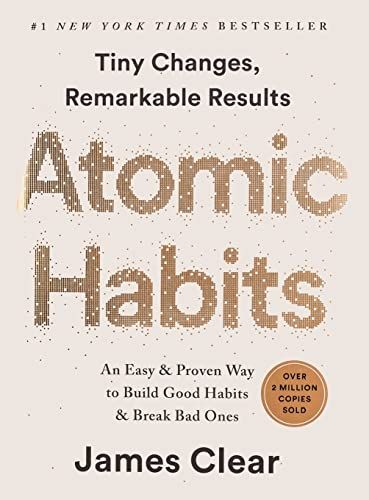
Nova: It does! And that's the core idea of James Clear's incredible book,, and it's what we're exploring today. We're not going to talk about just 'trying harder.' Instead, we're going to treat a dreaded chore—cleaning—like a fascinating design problem.
Tori: I love that framing. It's not a moral failing that my laundry basket is overflowing; it's a systems engineering problem.
Nova: Precisely! So today we'll dive deep into this from two perspectives. First, we'll explore how to create the initial spark, making cleaning habits obvious and attractive. We'll talk about tricking our brains into to clean.
Tori: The 'architect' phase, designing the desire.
Nova: Perfect. Then, we'll discuss the follow-through, focusing on how to make those habits so easy they're hard to skip, and so satisfying you'll crave doing them again. Ready to re-engineer drudgery, Tori?
Tori: I'm in! Let's deconstruct this. I'm genuinely curious to see how these big ideas apply to something so everyday.
Deep Dive into Core Topic 1: The Spark
SECTION
Nova: Fantastic. It's all about the system. So let's start with Clear's First Law of Behavior Change: Make It Obvious. The idea is that many of our habits are triggered by cues in our environment, often without us even realizing it.
Tori: So we're kind of on autopilot, responding to what's in front of us.
Nova: We totally are! Clear tells this great story about a woman who wanted to start a habit of taking her medication. She kept forgetting. A consultant didn't tell her to set a phone alarm or try harder to remember. He just asked, "What do you do every single morning without fail?" She said, "Well, I make a cup of tea." He told her to move her medicine bottle right next to her tea kettle. The habit of making tea became the cue for the habit of taking her medicine. She never forgot again.
Tori: That's so simple it's almost profound. She didn't change her motivation; she changed her environment. The cue for the new habit was piggybacking on an existing, automatic one.
Nova: That's the key! He calls it "Habit Stacking." The formula is: "After, I will." So, for our cleaning experiment, it's not "I will wipe down the kitchen counters." It's "After I finish my morning coffee, I will wipe down the counter where I made it."
Tori: And to make it even more obvious, you'd leave the cleaning spray and a cloth right there on the counter the night before. You're essentially designing your future self's behavior. You're removing the need for in-the-moment decision-making, which is where we so often fail.
Nova: You've nailed it. You make the cue for the good habit impossible to miss. But, of course, seeing the cue is one thing. Actually to do it is another. That brings us to the Second Law: Make It Attractive.
Tori: Ah, the dopamine hit. Our brains are wired to repeat experiences that feel good. Cleaning... does not always feel good.
Nova: Not usually, no! So we have to manufacture the attraction. Clear's strategy for this is called "Temptation Bundling." It's where you pair an action you to do with an action you to do.
Tori: Okay, give me an example.
Nova: He talks about an engineering student in Ireland who loved watching Netflix but knew he should exercise more. So he literally hacked his stationary bike. He connected it to his laptop and wrote a code that would only allow Netflix to run if he was cycling at a certain speed. If he slowed down, his show would pause.
Tori: That is hilariously brilliant. He bundled the temptation of Netflix with the habit of exercising. He couldn't get one without the other.
Nova: Exactly! So for cleaning, this is a game-changer. You could decide, "I only get to listen to my favorite podcast while I'm doing the dishes," or "I can only watch the new episode of that show I love while I'm folding laundry."
Tori: So you're not just doing the chore. You're getting your reward the chore. Your brain starts to link the two. Over time, the anticipation of listening to that podcast might actually become a craving to do the dishes. You're hijacking your brain's reward system.
Nova: You are! The anticipation of a reward is often more motivating than the reward itself. If you know you get this little treat, it's so much easier to get started. You've made the chore attractive. So now, we've got a habit that's obvious and attractive. We're primed to start.
Deep Dive into Core Topic 2: The Follow-Through
SECTION
Nova: But even with the best intentions, we can still fail if the task feels too big. And that brings us to the Third Law, which might be my favorite: Make It Easy.
Tori: This feels crucial. The friction of starting is often the biggest hurdle. Finding the vacuum, plugging it in, moving the furniture... sometimes it's easier to just sit back down.
Nova: It really is! Clear argues that we are fundamentally wired to conserve energy. We will always gravitate toward the option that requires the least amount of work. So, we need to decrease the friction associated with good habits.
Tori: So, for cleaning, that would mean things like keeping a small bottle of shower spray right in the shower, so you can spray it down right after you use it, instead of having to go get it from under the sink.
Nova: Yes! Or keeping a container of cleaning wipes in every single bathroom and in the kitchen. You reduce the number of steps between you and the habit. But the most powerful concept here is the "Two-Minute Rule."
Tori: I've heard of this one. It sounds almost too simple.
Nova: It does, but it's pure genius. The rule states: when you start a new habit, it should take less than two minutes to do.
Tori: So, "read every day" becomes "read one page." And "clean the kitchen" becomes... what?
Nova: It becomes "put one dish in the dishwasher." Or "wipe off one counter." The goal isn't to get the whole kitchen clean in that moment. The goal is to master the art of showing up. A habit must be established before it can be improved.
Tori: That's a huge mental shift. You're not trying to achieve the outcome; you're trying to become the type of person who does the thing. No one can argue they don't have two minutes to wipe one counter. It short-circuits the part of our brain that gets overwhelmed and procrastinates. It's about lowering the barrier to entry until it's practically zero.
Nova: You can't say no to it! And once you've started, once you've wiped that one counter, you might think, "Well, I'm already here, I might as well do the rest." But even if you don't, you've still cast a vote for your new identity as a tidy person. And that brings us to the final, crucial piece of the puzzle. The Fourth Law: Make It Satisfying.
Tori: The reward at the end. The thing that tells your brain, "Hey, that was good. Let's do that again."
Nova: Exactly. The problem with many good habits, like cleaning, is that the reward is often delayed. You avoid getting sick in the future, or you have a nice house later. Our brains aren't built for delayed gratification. We want an immediate reward.
Tori: So we have to create one.
Nova: We have to. Clear tells this fantastic story about a man who was a rookie stockbroker. He started his day with two jars on his desk. One was filled with 120 paper clips. The other was empty. After every sales call he made, he would move one paper clip from the full jar to the empty jar.
Tori: Oh, I love that. It's so visual.
Nova: Isn't it? He said, "Every day I'd start with 120 paper clips in one jar and I'd keep dialing the phone until I'd moved them all to the second jar." It provided this immediate, tangible, visual proof of his progress. It was satisfying to see that pile of paper clips grow. It made him want to keep going.
Tori: That's the feedback loop! Our brains crave evidence of progress. So for cleaning, after you do your two-minute tidy, you could put a big red 'X' on a calendar on your fridge. After a week, you have a chain of seven X's. The satisfaction comes not just from the clean counter, but from not breaking the chain.
Nova: Yes! You get that little hit of satisfaction right away. It closes the habit loop and tells your brain to remember this behavior for the future. You're not just cleaning; you're building a winning streak.
Synthesis & Takeaways
SECTION
Nova: So when you put it all together, you have this beautiful, four-step system. It's a complete loop. You start with a cue that's obvious. You make the craving attractive. You make the response incredibly easy. And you finish with a reward that is immediately satisfying.
Tori: It's so logical. It's not about one magic trick; it's about building a system where the good habit is the most logical and appealing outcome. You're not fighting against your human nature; you're designing a process that works it.
Nova: Exactly. You're making it obvious, attractive, easy, and satisfying to be the person you want to be. Whether that's a person with a clean house, a person who exercises, or a person who learns a new language.
Tori: And what I really take away from this is the power of starting small. We're not trying to transform our lives overnight. We're just trying to lay one, tiny, atomic-sized brick perfectly.
Nova: That's the whole philosophy. So, what's our final takeaway for everyone listening who's now staring at their own messy room with a new sense of hope?
Tori: I think the challenge is this: don't try to fix everything at once. Pick one chore. Just one. And then pick just one of these four laws to apply to it. Don't try to do all four. Just one.
Nova: I love that. Make it easy on yourself.
Tori: Exactly. Maybe you just put your running shoes by the door to make a workout more obvious. Or maybe you decide you'll only listen to that podcast while you unload the dishwasher to make it more attractive. Or maybe you commit to the two-minute rule and just wipe one counter after dinner. Or get a calendar and a marker to make it satisfying. Just do one thing. See how it feels.
Nova: That's a perfect, atomic-sized piece of advice. It's not about revolution; it's about a gentle, intelligent evolution. Tori, this was so much fun. Thank you for deconstructing this with me.
Tori: The pleasure was all mine. I'm looking at my to-do list as a series of design problems now. It's a much better feeling.