

The Compound Soul: Designing Systems for Identity, Leadership, and Healing
Golden Hook & Introduction
SECTION
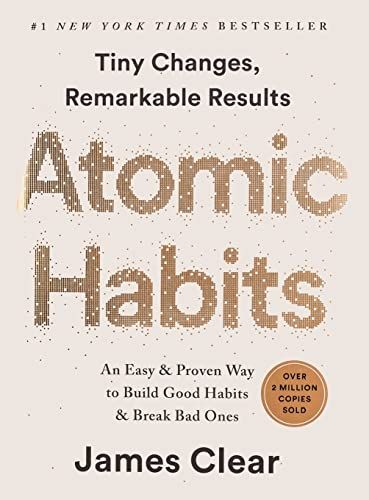
Prof. Eleanor Hart: Imagine a pilot changing their flight path by just three and a half degrees. Leaving Los Angeles for New York, that tiny, almost imperceptible shift steers the plane to Washington, D. C. instead. In our lives, we often chase the massive, dramatic breakthrough, believing that monumental success requires monumental action. But James Clear’s Atomic Habits reveals a quieter, far more potent truth: our lives are shaped by the tiny, compounding margins of our daily systems. Today, we are going to tackle this book from two different angles. First, we will explore identity-based habits, looking at how shifting our focus from what we want to achieve to who we want to become changes everything. Then, we will dive into the architecture of systems, exploring how we can design our environments to make consistency almost effortless, whether we are leading a healthcare team or nurturing our inner spiritual lives. Welcome to the podcast. I am Professor Eleanor Hart, and joining me today is Faith, a healthcare professional with a deep curiosity for how we can build meaningful, disciplined lives. Faith, it is wonderful to have you here.
Faith: Thank you, Eleanor. It is an absolute pleasure to be here. That pilot metaphor really resonates with me. In healthcare, we see how the smallest deviations in protocol can lead to vastly different patient outcomes over time. And on a personal level, as someone who is constantly trying to balance professional demands with my spiritual life and personal growth, I often find myself overwhelmed by the sheer scale of the changes I want to make. The idea that a three-degree shift can completely redefine where we land is incredibly liberating.
Prof. Eleanor Hart: It really is. It takes the pressure off the need for instant transformation. We live in a culture obsessed with the destination, but Clear argues that the secret to lasting change lies in the journey, or more specifically, in the identity of the traveler. Let us start there.
Deep Dive into Core Topic 1
SECTION
Prof. Eleanor Hart: Clear introduces this beautiful concept of the three layers of behavior change. Picture them as concentric circles. The outer layer is outcomes, which is about what you get. The middle layer is processes, which is about what you do. But the deepest, most central layer is identity, which is about what you believe. Most of us, when we try to build new habits, start from the outside in. We focus on the outcome, like losing weight, reading more books, or becoming a more disciplined leader. But Clear suggests we need to build habits from the inside out. He uses a wonderful example of two people resisting a cigarette. When offered a smoke, the first person says, No thanks, I am trying to quit. It sounds reasonable, but they still believe they are a smoker who is trying to be different. The second person, however, declines by saying, No thanks, I am not a smoker. It is a tiny shift in phrasing, but it signals a fundamental shift in identity. Faith, as an analytical thinker who also values deep, authentic alignment, how does this distinction between outcome-based and identity-based habits strike you?
Faith: It feels like the missing link, honestly. As an INFP, I am naturally driven by authenticity and core values. If a goal feels purely external or mechanical, like just checking a box to improve a metric at work, my brain almost rebels against it. It feels hollow. But when I frame it around identity, it completely changes the energy. For instance, in my spiritual life, I used to set these rigid goals, like I must read my devotional for thirty minutes every single morning. If I missed a day, I felt like a failure, and the habit would collapse. But if I shift that to an identity-first perspective, I ask myself, Who is the person I want to become? I want to be a reflective, spiritually grounded person. Once that is the identity, then a daily habit is no longer a chore to complete; it is simply a way of voting for that identity. Even if I only have two minutes to sit in silence on a busy morning, I am still casting a vote for being a reflective person.
Prof. Eleanor Hart: That is a profound insight, Faith. Casting a vote. That is exactly the terminology Clear uses. He says that every action you take is a vote for the type of person you wish to become. No single instance will transform your beliefs, but as the votes build up, so does the evidence of your new identity. It makes habit formation almost democratic. You do not need to be perfect; you just need to win the majority of the votes. How do you see this playing out in your professional life, especially in healthcare leadership?
Faith: It is incredibly applicable. In healthcare, leadership can feel incredibly high-pressure. You are managing teams, dealing with administrative demands, and trying to maintain high standards of patient care. If my goal is simply to be a perfect leader, I am going to burn out because perfection is impossible in a chaotic clinical environment. But if my identity is, I am a leader who fosters psychological safety and supports my team, then my daily habits shift. It is no longer about executing a flawless shift. It is about the small habits: taking thirty seconds to look a colleague in the eye and ask how they are doing, or pausing to explain the why behind a clinical decision. Those small actions are votes for the identity of a supportive leader. It makes the discipline feel organic rather than forced.
Prof. Eleanor Hart: I love that. It bridges the gap between empathy and structure. You are using the structure of habits to express your deepest values of care and connection. But let us look at the flip side of this. Sometimes, our existing, unconscious identities can hold us back. We tell ourselves stories like, I am terrible with numbers, or I am not a disciplined person, or I am always late. These self-images act as invisible barriers. Have you ever encountered those internal narratives, and how does Clear suggest we dismantle them?
Faith: Oh, absolutely. I think we all have those silent scripts running in the background. For a long time, I told myself, I am a creative, free-spirited person, so I am just not good at rigid structures or systems. I used my personality type almost as an excuse for lack of discipline. But Clear’s book helped me realize that systems do not restrict freedom; they actually create it. If you do not have your habits handled, you are constantly reacting to the chaos of the moment. By automating the basic decisions of life through habits, you free up cognitive space for creativity, deep thinking, and genuine presence. Dismantling that old belief required me to redefine what discipline means. It is not a cage; it is the foundation that allows me to fly.
Prof. Eleanor Hart: That is a beautiful way to put it. Discipline is not a cage; it is the foundation. It reminds me of the ancient philosophical idea that true freedom is self-mastery. When we master our habits, we are no longer slaves to our immediate impulses or our chaotic environments. We become the authors of our own lives.
Deep Dive into Core Topic 2
SECTION
Prof. Eleanor Hart: This transition from identity to action brings us naturally to our second core topic: the power of systems over goals. Clear writes a line that has become famous: You do not rise to the level of your goals; you fall to the level of your systems. To illustrate this, he tells the fascinating story of the British Cycling team. For over a hundred years, British professional cycling had been the laughingstock of the sporting world. They had won virtually no medals, and the situation was so dire that one top bike manufacturer actually refused to sell bikes to the team because they feared it would hurt their reputation. Then, in 2003, they hired a man named Dave Brailsford. Brailsford did not look for a massive, revolutionary change. Instead, he committed to a strategy he called the aggregation of marginal gains. The idea was simple: if you broke down everything you could think of that goes into riding a bike, and then improved it by just one percent, you would get a significant increase when you put them all together.
Faith: I love this story because it is so analytical, yet so practical. What were some of the specific one percent changes he made?
Prof. Eleanor Hart: They were incredibly meticulous, Faith. They redesigned the bike seats to make them more comfortable. They rubbed alcohol on the tires for better grip. They had the riders wear electrically heated shorts to maintain muscle temperature. But they did not stop there. They tested different types of massage gels to see which led to the fastest muscle recovery. They hired a surgeon to teach the riders the best way to wash their hands to avoid catching colds. They even figured out which pillow and mattress led to the best night’s sleep for each rider and carried those pillows with them to hotels. They painted the inside of their team truck white so they could spot tiny dust particles that might degrade the performance of the finely tuned bikes.
Faith: That is astonishing. It is the ultimate expression of a systems-driven approach. And what were the results?
Prof. Eleanor Hart: Just five years later, at the 2008 Olympic Games in Beijing, the British Cycling team won an astounding sixty percent of the gold medals available. Four years later in London, they set nine Olympic records and seven world records. That same year, Bradley Wiggins became the first British cyclist to win the Tour de France, and the team went on to dominate the event for years. It was all built on the compounding effect of hundreds of tiny, seemingly insignificant improvements.
Faith: That story is incredibly powerful, Eleanor, especially when you think about it from a healthcare perspective. In medicine, we often talk about the Swiss Cheese Model of accident causation. No single small mistake causes a disaster, but when all the tiny holes in the system align, a catastrophe happens. Brailsford basically inverted that model. He aligned all the tiny, positive one percent improvements so that they compounded into an extraordinary success. It shows that excellence is not a singular event; it is a system.
Prof. Eleanor Hart: Exactly. And Clear translates this systems thinking into daily life through what he calls the Four Laws of Behavior Change. To build a good habit, you must make it obvious, make it attractive, make it easy, and make it satisfying. Conversely, to break a bad habit, you do the opposite: make it invisible, unattractive, difficult, and unsatisfying. Let us focus on making it easy, which is all about reducing friction. Faith, how do you see the role of friction in your own environment, both at work and in your personal routines?
Faith: Friction is everything. In healthcare, if a life-saving piece of equipment is stored in a locked closet three floors away, clinicians are less likely to use it efficiently. We design clinical spaces to minimize friction, putting hand sanitizer right at the entrance of every patient room so it is almost impossible not to clean your hands. But in my personal life, I realized I was doing the exact opposite. I was creating friction for my good habits and making my bad habits incredibly easy. For example, if I wanted to read my spiritual texts in the morning, but my book was tucked away on a shelf, and my phone was sitting right on my nightstand, what do you think I did first thing in the morning? I reached for the phone. The phone had zero friction; the book had high friction.
Prof. Eleanor Hart: It is a classic trap. We underestimate how much our physical environment shapes our behavior. We like to think we have high willpower, but willpower is a finite resource. Clear argues that the people with the most self-control are actually the ones who have to use it the least because they design an environment that does not tempt them. They make the good habits the path of least resistance.
Faith: Yes, and I have started applying this through a concept Clear calls habit stacking. You take a habit you already do automatically every day, and you stack your new habit right on top of it. The formula is: After I do current habit, I will do new habit. For my spiritual life, I stacked reflection onto my morning coffee. I love my morning coffee; it is a non-negotiable routine. So, I made a rule: After I pour my morning coffee, I will sit at the kitchen table and read one page of my devotional. To make it even easier, I place the book on the kitchen table the night before. I reduced the friction to zero. The book is literally waiting for me next to my favorite mug.
Prof. Eleanor Hart: That is a textbook application of environment design and habit stacking, Faith. You are anchoring a new, fragile habit to an established, robust one. And by focusing on just one page, you are utilizing the Two-Minute Rule. Clear says that when you start a new habit, it should take less than two minutes to do. The goal is not to run a marathon on day one; it is simply to show up. You have to standardize before you can optimize. You have to establish the habit of showing up before it can compound into something larger.
Faith: That was a massive paradigm shift for me. As an analytical person, I always want to design the perfect, comprehensive system right from the start. I want the perfect workout routine, the perfect study plan, the perfect spiritual practice. But Clear’s point is that a perfect system that you do not do is worthless. A messy, two-minute habit that you actually do every day is infinitely more valuable because it establishes the identity. Once you are the person who sits at the table with the book every morning, it is very easy to scale that up to five pages, then ten pages. But you have to master the art of showing up first.
Synthesis & Takeaways
SECTION
Prof. Eleanor Hart: This has been such a rich conversation, Faith. We have covered the deep, internal work of identity-based habits, shifting our focus from what we want to achieve to who we want to become. And we have explored the external architecture of systems, using marginal gains, environment design, and habit stacking to make consistency almost effortless. As we begin to wrap up, how do you synthesize these ideas into a cohesive approach for your life as a leader and as an individual seeking personal and spiritual growth?
Faith: I think the ultimate synthesis is that our daily routines are the physical manifestation of our deepest values. If I value compassion, excellence, and spiritual depth, those cannot just be abstract concepts I think about. They have to be woven into the fabric of my day through tiny, repeatable systems. As a leader in healthcare, I want to focus on the one percent improvements in how I support my team, reducing the friction for them to do their best work. In my personal and spiritual life, I want to continue embracing the identity-first approach, casting small votes every day through habit stacking and the Two-Minute Rule. It takes the anxiety out of growth. I do not have to leap to the top of the mountain today; I just have to take one small, deliberate step in the right direction.
Prof. Eleanor Hart: That is a beautiful and comforting truth. The mountain is climbed one step at a time, and those steps, when compounded over weeks, months, and years, can take us to heights we never thought possible. For our listeners today, we want to leave you with a simple, actionable challenge. Look at your own life, whether it is your professional career, your relationships, or your personal well-being. What is one identity you wish to cultivate? And what is one tiny, two-minute vote you can cast for that identity today? Remember, you do not rise to the level of your goals; you fall to the level of your systems. Design your systems with care, and let the compounding power of atomic habits do the rest. Faith, thank you so much for sharing your insights and your journey with us today.
Faith: Thank you, Eleanor. This has been a truly inspiring conversation.
Prof. Eleanor Hart: And thank you to everyone listening. Until next time, keep building those systems, one small vote at a time.