

The Architecture of Identity: Building Systems-Driven Leadership and Spiritual Habits
Golden Hook & Introduction
SECTION
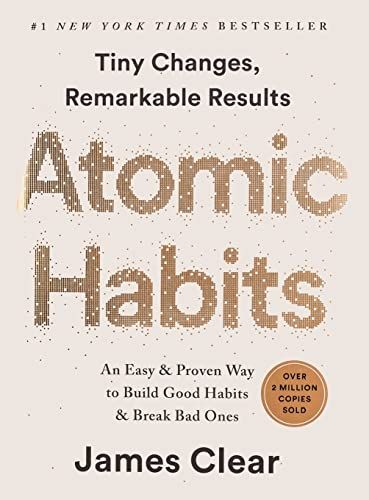
Nova: Why do ninety-two percent of New Year's resolutions fail? It's not actually a lack of willpower, and it's definitely not a lack of talent. It's a design flaw. We've been told our entire lives that to change our world, we need to set massive, audacious goals. But James Clear argues that we don't rise to the level of our goals; we fall to the level of our systems. Today, we're going to tackle this groundbreaking book,, from three distinct angles. First, we'll explore how shifting from outcome-based goals to identity-based habits can completely redefine your leadership. Second, we'll analyze the math of compounding 1% improvements, looking at how small systems outperform grand ambitions. And finally, we'll dive into environment design, showing you how to structure your physical, digital, and spiritual spaces to make consistency absolutely effortless. I'm Nova, and joining me today is Kainat, a brilliant analytical thinker who is on a mission to build disciplined, systems-driven leadership. Kainat, welcome!
Kainat: Thanks, Nova! I am so excited to be here. You know, as someone who loves looking at the underlying structures of how things work, really blew my mind. It takes behavior change out of the realm of vague inspiration and puts it squarely into the realm of systems engineering. I'm really looking forward to exploring how we can apply these concepts not just to our daily work performance, but also to our deeper spiritual lives and leadership styles.
Nova: Oh, I love that you brought up systems engineering, because that is exactly what this is! We often treat habits like a moral test—like, "Oh, if I can't wake up at 5:00 AM to meditate or work on my strategy deck, I must just lack discipline." But Clear shows us that the system is the problem, not the person. Let's dive right into that first big idea: identity-based habits.
Deep Dive into Core Topic 1
SECTION
Nova: Clear talks about three layers of behavior change. Picture them like concentric circles, like a target. The outer layer is outcomes—what you get. The middle layer is processes—what you do. And the deepest, innermost layer is identity—what you believe. Most of us start from the outside in. We say, "I want to write a book" or "I want to be a more organized leader." That's the outcome. Then we design a process. But we never change the underlying belief about ourselves. Kainat, how does this distinction between outcome-based and identity-based habits resonate with your perspective on leadership and personal growth?
Kainat: It's a complete paradigm shift, Nova. When you look at traditional leadership training, it's incredibly outcome-focused. We talk about hitting targets, achieving quarterly goals, or mastering specific competencies. But if you don't shift your identity first, any change in behavior is just temporary. It's like a rubber band; you can pull it into a new shape with sheer willpower, but the moment you let go, it snaps right back to its original state.
Nova: Yes! That is such a perfect visual. The rubber band of our old self-image.
Kainat: Exactly. Clear uses this wonderful example of two people refusing a cigarette. The first person says, "No thanks, I'm trying to quit." That sounds reasonable, right? But they still identify as a smoker who is trying to do something else. The second person says, "No thanks, I'm not a smoker." That is a massive difference! It's a tiny shift in language, but it represents a completely different identity. For me, applying this to leadership means shifting from "I want to be a disciplined leader" to "I am a systems-driven leader who values consistency." And spiritually, instead of saying "I want to pray or meditate more," it becomes "I am a deeply reflective person who prioritizes spiritual alignment." Once that identity is anchored, the habits naturally flow as proof of that identity.
Nova: That is so profound, Kainat. Every action you take is actually a vote for the type of person you want to become. If you write one page, you're voting for the identity of a writer. If you check in on a team member with empathy, you're voting for the identity of a supportive leader. You don't need to be perfect; you just need to win the majority of the votes!
Kainat: Right, it's a democratic process of the self! And that takes so much pressure off. You don't have to be a flawless leader or a spiritual saint overnight. You just need to cast small votes every day.
Nova: And those small votes lead us perfectly to our second core topic: the power of 1% improvements and why systems beat goals. To illustrate this, let's look at one of the most famous case studies in the book: the transformation of British Cycling. For over a hundred years, British professional cycling was the laughingstock of Europe. They had won virtually nothing. No Tour de France victories, barely any Olympic gold medals. In fact, one top bike manufacturer even refused to sell bikes to the British team because they were worried it would hurt their brand!
Kainat: Wow, that is incredibly embarrassing. Imagine being so bad at your job that people won't even sell you the tools to do it!
Nova: Right? It was a total low point. But then, in 2003, they hired a man named Dave Brailsford. He was committed to a strategy he called the "aggregation of marginal gains." The basic philosophy was that if you broke down everything you could think of that goes into riding a bike, and then improved it by just 1%, you would get a significant increase when you put them all together.
Kainat: This is where the analytical side of my brain just starts lighting up! He didn't look for a single, massive breakthrough. He looked for tiny, almost imperceptible variables.
Nova: Exactly! They started with the obvious things: redesigning the bike seats to make them more comfortable, rubbing alcohol on the tires for better grip, and having the riders wear electrically heated shorts to maintain muscle temperature. But then they went further. They tested different massage gels to see which one led to the fastest muscle recovery. They hired a surgeon to teach the riders the best way to wash their hands to avoid catching a cold. They even painted the inside of their team truck white so they could spot tiny dust particles that might degrade the performance of the finely tuned bikes!
Kainat: That is absolute genius. It's a complete systems-thinking approach. They even figured out which pillows and mattresses led to the best night's sleep for each individual rider and took those pillows with them to hotels!
Nova: Yes! They left absolutely nothing to chance. And the results? Just five years later, at the 2008 Beijing Olympics, the British Cycling team dominated, winning an astounding sixty percent of the gold medals available. Four years later in London, they set nine Olympic records and seven world records. And that same year, Bradley Wiggins became the first British cyclist to win the Tour de France. It was an unprecedented run of success, all built on the back of 1% improvements.
Kainat: What I love about this story, Nova, is the mathematical reality of compounding. If you get 1% better each day for one year, you end up thirty-seven times better by the time the year is over. But if you get 1% worse each day, you decline almost down to zero. As an analytical thinker, this is incredibly liberating. In leadership, we often think we need to execute these massive, sweeping organizational restructures to see progress. But Brailsford proved that optimizing the existing system in tiny ways is far more powerful.
Nova: It really is. And how do you see that compounding effect playing out in your spiritual life or personal growth?
Kainat: Well, in spiritual practices, consistency is everything. We often think we need to go on a week-long silent retreat or spend hours in deep contemplation to grow spiritually. But if you apply the 1% rule, spending just five minutes in quiet reflection, prayer, or journaling every single morning compounds over a year into over thirty hours of deep spiritual practice. That daily, consistent touchstone does far more to shape your identity and keep you grounded than a sporadic, intense effort once a year. It's the daily system that sustains you.
Deep Dive into Core Topic 2
SECTION
Nova: That is a beautiful way to put it. The daily system is what sustains us. So, how do we actually build these systems? This brings us to the practical mechanics of behavior change. Clear outlines the Four Laws: Make it Obvious, Make it Attractive, Make it Easy, and Make it Satisfying. Today, let's focus heavily on the first and third laws: making it obvious and making it easy, specifically through environment design. Clear argues that environment is the invisible hand that shapes human behavior. We think we make conscious choices, but often, we just react to the cues in our surroundings.
Kainat: Oh, absolutely. We are highly visual creatures. If you walk into a kitchen and there's a plate of freshly baked cookies on the counter, you're probably going to eat one, even if you weren't hungry five seconds ago. The cue was obvious, so the behavior followed.
Nova: Exactly! And Clear shares this fascinating study by a primary care physician named Anne Thorndike at Massachusetts General Hospital. She wanted to improve the eating habits of hospital staff and visitors without using any persuasion or willpower. She didn't talk to them, she didn't put up posters. Instead, she redesigned the hospital cafeteria. Originally, the refrigerators next to the cash registers were filled only with soda. She added water to those refrigerators and placed baskets of bottled water throughout the room. Over the next three months, soda sales dropped by over eleven percent, and water sales shot up by over twenty-five percent!
Kainat: That is incredible! No lectures, no guilt trips, just a simple change in the physical layout. It's what behavioral economists call "choice architecture." And it proves that we don't have to be passive victims of our environment; we can be the architects of it.
Nova: Yes! We can design our environments to make the good habits the path of least resistance. So, Kainat, let's get practical. How can you, as a leader and someone focused on personal and spiritual growth, architect your environments?
Kainat: Let's look at work performance first. If I want to focus on deep, strategic thinking—which is essential for leadership—but my phone is sitting right next to my laptop, buzzing with notifications, the cue to distract myself is too obvious. The friction to do the bad habit is zero. So, to make deep work easy and distraction hard, I can put my phone in another room, or use an app blocker that locks me out of social media during my peak focus hours. I'm increasing the friction for the distraction and decreasing the friction for the focus.
Nova: That is a classic move. Increasing the friction for the bad habit. It's like unplugging the television and putting the remote in a drawer after you use it. If you want to watch TV, you have to physically go plug it in, which gives your brain a second to pause and ask, "Do I actually want to do this?"
Kainat: Exactly! It breaks the automatic loop. Now, let's apply this to spiritual life. If I want to make morning reflection a consistent habit, I need to make the cue highly obvious and the process incredibly easy. If my journal is buried under a stack of work papers, or if my prayer mat is tucked away in a closet, I'm adding friction. But if I set up a dedicated space the night before—maybe a comfortable chair with my journal already open and a pen resting on top, in a quiet corner of the room—the moment I wake up, the environment is whispering, "This is what we do now." The cue is staring me in the face.
Nova: Oh, I love that phrase: "the environment is whispering, 'this is what we do now.'" That is so poetic and so true! It takes the decision-making out of the moment. You don't have to wake up and debate with yourself about whether you have the energy to find your journal. The system has already made the decision for you.
Kainat: Yes! And that is crucial because our willpower is at its lowest when we are tired or stressed. If you rely on willpower to make good choices, you will lose eventually. But if you rely on a well-designed environment, the environment does the heavy lifting for you.
Nova: It really does. Now, let's talk about another incredible tool Clear introduces to make habits easy: Habit Stacking. This is where you take a habit you already do every single day without fail—like brushing your teeth or drinking your morning coffee—and you stack your new habit right on top of it. The formula is simple: "After, I will." Kainat, how would you stack habits to build consistency in your leadership or spiritual routines?
Kainat: This is such a powerful cognitive shortcut because it piggybacks on existing neural pathways. For leadership, I could stack a habit of gratitude. For example: "After I open my laptop to start the workday, I will send one quick message of appreciation to a team member." It takes less than two minutes, but it casts a massive vote for the identity of an encouraging, people-first leader.
Nova: Oh, that is a beautiful stack! It's so actionable.
Kainat: Right? And for my spiritual life, I could stack it with my morning routine. "After I pour my morning cup of coffee, I will sit in silence for five minutes before looking at my phone." The coffee is the anchor. I never forget to make coffee, so I will never forget to sit in silence. It links the physical craving for caffeine with the spiritual craving for peace.
Nova: That is brilliant! You're using the reward of the coffee to reinforce the habit of silence. And that brings us to the Two-Minute Rule, which is perhaps the ultimate tool for making habits easy. Clear says that when you start a new habit, it should take less than two minutes to do. So, "read thirty pages a night" becomes "read one page." "Do thirty minutes of yoga" becomes "get out my yoga mat." Kainat, why do you think this rule is so effective, especially for high-achievers who might feel like reading one page is a waste of time?
Kainat: It sounds counterintuitive at first, right? We think, "What's the point of just reading one page or meditating for two minutes? That won't change anything!" But the secret is that a habit must be established before it can be improved. If you don't master the art of showing up, you never have the chance to optimize the behavior. The Two-Minute Rule prevents the "all-or-nothing" mindset that kills so many habits. If you're exhausted after a long day of leadership challenges, you might not have the energy for a thirty-minute study session. But you can definitely read one page. And once you start, it's much easier to keep going. The momentum is on your side.
Nova: Yes! It's all about overcoming that initial friction. Once you've laced up your running shoes and stepped out the door, you've already won the hardest battle. Even if you only walk for five minutes, you've kept the identity alive. You're still a person who exercises.
Synthesis & Takeaways
SECTION
Kainat: Exactly. It's about maintaining the integrity of the system, even on a small scale.
Nova: Well, Kainat, we have covered some incredible ground today. We've looked at how true behavior change is actually identity change—shifting from what we want to achieve to who we want to become. We've analyzed the math of compounding 1% improvements, showing how systems beat goals every single time. And we've explored how to architect our physical and digital environments to make consistency effortless, using tools like Habit Stacking and the Two-Minute Rule. As we wrap up, what is the one key insight you want our listeners—especially those striving to be disciplined, systems-driven leaders—to take away from this conversation?
Kainat: I think the most important takeaway is to stop obsessing over the finish line and start focusing on the trajectory. In leadership, in our careers, and in our spiritual lives, we are often so fixated on the goals we haven't reached yet that we feel discouraged. But James Clear reminds us that your current outcomes are simply a lagging measure of your past habits. Your net worth is a lagging measure of your financial habits. Your spiritual depth is a lagging measure of your daily reflection habits. Your team's performance is a lagging measure of your leadership systems. Don't worry about where you are right now; worry about whether your current trajectory is pointing you in the right direction. Are you getting 1% better or 1% worse every day? Focus on building the system, trust the compounding math, and let the identity take care of the rest.
Nova: That is an incredibly powerful and encouraging note to end on, Kainat. Thank you so much for sharing your analytical depth and insights with us today.
Kainat: Thank you, Nova! This was an absolute joy.
Nova: And to our listeners, we want to leave you with one simple challenge today. Don't try to overhaul your entire life tomorrow. Instead, find one tiny, two-minute habit that aligns with the person you want to become. Stack it onto something you already do every day, and make the cue absolutely impossible to miss. Remember, big changes don't require massive upheavals—they just require atomic habits. Until next time, let's keep building those systems together!