

The Architect of You: Building a Leader's Identity with Atomic Habits
Golden Hook & Introduction
SECTION
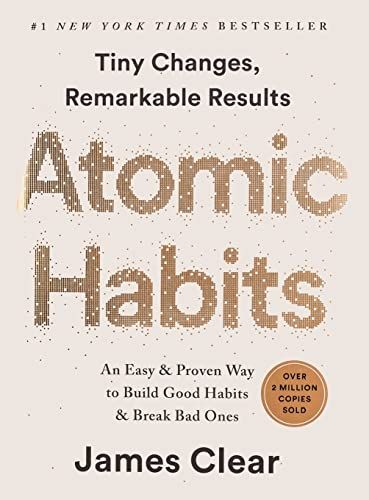
Nova: Have you ever felt that frustrating gap between your ambitions and your daily reality? We set these huge, inspiring goals—to become a great leader, a disciplined thinker, an innovator—but then the day-to-day gets in the way. What if the problem isn't our motivation, but our method? What if the secret to becoming the person we want to be lies not in giant leaps, but in tiny, almost invisible changes? That's the revolutionary idea behind James Clear's.
Nova: I’m your host, Nova, and today we are diving into a book that has truly changed the conversation around personal development. And I'm thrilled to be joined by Princess Dube, a dedicated learner and passionate reader who thinks deeply about how ideas can be used for real-world growth and impact. Welcome, Princess!
Princess Dube: Thanks for having me, Nova. I'm excited for this. That opening question really hits home. I think anyone who is serious about personal growth has felt that exact friction between their aspirations and their actions.
Nova: Exactly! And that's why we're here. Today, we're going to explore this from two powerful angles. First, we'll uncover the profound concept of identity-based habits—focusing on you want to become, not just what you want to achieve. Then, we'll get incredibly practical and break down the Four Laws of Behavior Change, treating them as a personal operating system for making those habits stick. Princess, as someone who thinks deeply about growth, does that idea resonate—that we often focus on the 'what' instead of the 'who'?
Princess Dube: Absolutely. We're conditioned to set outcome-based goals. "I want to get this grade," or "I want to win this case." We rarely step back and ask the more fundamental question: "What kind of person achieves those things, and how do I become that person?"
Nova: That is the perfect entry point for our first big idea. Let's get into it.
Deep Dive into Core Topic 1: The Identity-First Principle: Becoming, Not Just Doing
SECTION
Nova: So, James Clear argues that there are three layers to behavior change. Think of them like the layers of an onion. The outermost layer is your. This is what you get: losing weight, publishing a book, winning a championship. It's all about the results.
Princess Dube: The goals we usually set.
Nova: Precisely. The next layer in is your. This is what you do: your workout routine, your writing schedule, your study habits. Most habit-focused advice lives here. It's about implementing a system. But the deepest, most powerful layer—the core of the onion—is your. This is what you believe about yourself. It’s your self-image, your worldview, your judgments about yourself and others.
Princess Dube: So, outcomes are the fruit, process is the roots, but identity is the soil itself.
Nova: What a perfect analogy! And Clear’s big argument is that most of us try to change from the outside in. We start with "I want to lose 20 pounds" and hope that achieving that outcome will change how we see ourselves. But he says true, lasting change works from the inside out. You start with the identity.
Nova: He tells this brilliant, simple story to illustrate it. Imagine two people who are trying to quit smoking. Someone walks up and offers them a cigarette. The first person says, "No thanks, I'm."
Princess Dube: Hmm, okay. I see where this is going.
Nova: Right? Their language reveals their identity. They still see themselves as a smoker who is currently resisting the urge. The behavior feels like a sacrifice. Now, the second person, when offered a cigarette, says, "No thanks,."
Princess Dube: That's a world of difference. It's a statement of fact, not a statement of struggle. The decision is already made because it's rooted in who they are. It's not about resisting temptation; it's about acting in alignment with your identity.
Nova: Exactly! The behavior is now effortless because it's a simple reflection of their self-belief. And this is so critical for the kind of disciplined leadership you're interested in. You don't just 'do' leadership tasks. You decide, "I am a decisive person," or "I am a compassionate leader."
Princess Dube: And then your choices naturally start to reflect that. It becomes an internal standard you hold yourself to, not an external chore you have to perform. If you believe "I am a prepared person," then reviewing your notes before a meeting isn't a burden; it's just what a prepared person does. It removes so much of the internal negotiation and willpower drain.
Nova: You've hit on the magic word: willpower. This approach outsources the effort to your identity. Clear says every action you take is a vote for the type of person you wish to become. Waking up early is a vote for "I am a disciplined person." Reading a page of a book is a vote for "I am a reader." These aren't just actions; they are tiny affirmations of your desired identity.
Princess Dube: I love that framing of "casting a vote." It makes each small action feel significant. In the legal world, we talk about precedent—how past decisions influence future ones. These small habits are like building a body of personal precedent. The more votes you cast for being a "disciplined leader," the stronger that identity becomes, and the easier it is to make choices consistent with that precedent in the future.
Nova: That's such a sharp connection. You're literally building a case file for your new identity, one piece of evidence at a time. It's a powerful reframe. But, of course, that leads to the big question... how do we actually it? How do we build the system to cast those votes consistently?
Princess Dube: Right. The identity is the 'why,' but we still need the 'how.'
Nova: And that, wonderfully, brings us to our second core idea.
Deep Dive into Core Topic 2: The Four Laws: Your Personal 'Code' for Behavior
SECTION
Nova: Okay, so we've decided on the identity we want to build. But as you said, an identity without a system is just a wish. This is where the genius of the book's practical side comes in. James Clear gives us a blueprint, a kind of personal operating system, which he calls The Four Laws of Behavior Change.
Princess Dube: This is the part that appeals to my analytical side. A clear framework.
Nova: It's so logical. For any habit you want to build, you just need to make it: One,. Two,. Three,. And four,. And if you want to break a bad habit, you just invert them: Make it Invisible, Unattractive, Difficult, and Unsatisfying.
Princess Dube: It’s like a legal code for your own behavior. A set of rules you design to guide you toward the desired outcome.
Nova: Exactly! Let's run a case study. This is perfect for your background. Let's say a busy professional wants to build the identity of "I am someone who stays current on developments in my field." The habit they want to build is reading a relevant article or legal journal for 15 minutes each morning. Right now, that feels like a chore. How do we use the Four Laws to engineer this habit?
Princess Dube: Okay, I'm ready. Let's architect this.
Nova: First,. The biggest enemy of a new habit is the friction of starting. So, instead of having to find the article each morning, you could, the night before, email the link to yourself with the subject "Read Me." Or even better, print it out and place it directly on top of your coffee maker. You can't miss it. The cue to act is right in your path.
Princess Dube: That’s environment design. You're making the desired action the path of least resistance. You don't have to rely on memory or motivation when the cue is literally blocking you from getting your morning coffee. I like that.
Nova: Second,. Our brains are wired to do things that release dopamine. So, we need to link this new, slightly boring habit with something we already want to do. This is a technique Clear calls "temptation bundling." The formula is: "After, I will get to."
Princess Dube: So, "After I read my article for 15 minutes, I will get to listen to my favorite podcast on my commute." Or, "I will only allow myself to drink my delicious, fancy coffee I am reading the article."
Nova: You got it! You're pairing the necessary action with an immediate reward, making your brain crave the whole routine. Now for the most important law, in my opinion:.
Princess Dube: This feels counterintuitive. Don't we need to push ourselves?
Nova: That's what we think! But Clear argues that motivation is a finite resource. The secret to consistency is to make the habit so easy that you can't say no. He calls it the Two-Minute Rule. Any new habit should be scaled down to take less than two minutes to do.
Princess Dube: So, "read for 15 minutes" becomes... what?
Nova: It becomes "open the article." Or "read one paragraph." The goal isn't to master the content in the beginning. The goal is to master the art of showing up. You're not trying to become an expert overnight. You're casting a vote for your identity as "a person who reads." Anyone can read one paragraph, even on their worst day.
Princess Dube: That lowers the barrier to entry to almost zero. It sidesteps the perfectionism that so often kills a new habit before it even starts. You can't fail at reading one paragraph. And once you've started, the momentum often carries you further anyway. It's a brilliant psychological trick.
Nova: It really is. And finally, number four:. Our brains are wired for immediate gratification. A long-term goal, like becoming a leader, has a very delayed reward. So we need to inject a little hit of satisfaction right after we complete our tiny habit. The simplest way? A habit tracker.
Princess Dube: The simple joy of checking a box.
Nova: Don't underestimate it! Getting a calendar and making a big, satisfying 'X' through the day after you've completed your two-minute habit feels good. It provides immediate visual proof of your progress. It makes you want to not "break the chain." That little bit of satisfaction is the signal to your brain that says, "Hey, that was worthwhile. Let's do it again tomorrow."
Princess Dube: You know, what I find so compelling about this system is how it respects human nature instead of fighting it. It acknowledges that we're driven by cues in our environment, by dopamine, by a desire for ease, and by a need for immediate feedback. Instead of trying to overcome those things with brute force willpower, it harnesses them. It's like using legal principles to shape public behavior—you don't just tell people what to do; you design a system of incentives and procedures that makes the right choice the most logical and satisfying choice.
Nova: That is such a fantastic parallel. You're creating a system of 'procedural justice' for yourself. A fair, predictable process that guarantees you'll move in the right direction.
Princess Dube: Exactly. It's a system for growth. And it’s a system that’s built on small, consistent wins, which is far more sustainable than relying on sporadic bursts of heroic effort.
Synthesis & Takeaways
SECTION
Nova: So, when we put it all together, it really is a beautiful two-part dance. It's not one or the other; it's both. First, there's the deep, internal work of choosing your identity. Asking that fundamental question: "Who do I wish to become?"
Princess Dube: Deciding, "I am a consistent writer," or "I am a thoughtful leader," or "I am a healthy person." Setting that North Star for your self-belief.
Nova: And then, second, there's the practical, architectural work of using those Four Laws—Obvious, Attractive, Easy, Satisfying—to build one tiny, two-minute habit that proves that identity to yourself, every single day.
Princess Dube: And it's so empowering because it's not about finding a huge chunk of time or a sudden burst of motivation, which are both unreliable. It's about being a clever architect of your own environment and your own daily rhythm. It makes ambitious growth feel genuinely accessible to everyone, no matter how busy they are.
Nova: It really does. It brings these lofty goals down to earth and puts them within our immediate control. Which brings us to our final takeaway for everyone listening.
Princess Dube: The challenge.
Nova: The challenge. So for everyone listening, here's what we want you to try. Don't set another big, audacious goal. Instead, just for today, pick one identity you want to embody. It could be "I am a calm person," "I am a disciplined student," "I am an encouraging colleague." Just one.
Princess Dube: And once you have that identity in mind, ask yourself: What is a tiny, two-minute action that would cast a vote for that identity? Not a 30-minute action. A two-minute one.
Nova: If you want to be a writer, the action is "write one sentence." If you want to be a healthy person, the action is "put on your running shoes." If you want to be a tidy person, the action is "put one dish in the dishwasher."
Princess Dube: Then, take that tiny action and run it through the Four Laws. How can you make the cue obvious? How can you make the action attractive? How can you make it ridiculously easy? And how can you give yourself a small, satisfying win immediately after?
Nova: Design that one, single habit. And just start there. Because as James Clear shows us, that is the atomic habit that can compound over time to change everything.
Princess Dube: It’s the first vote for the person you're becoming.
Nova: Princess, this has been such an insightful conversation. Thank you for bringing your perspective and helping us architect a new way of thinking about growth.
Princess Dube: The pleasure was all mine, Nova. It's a framework that gives you a real sense of agency over your own development, and I loved breaking it down with you.
Nova: To everyone listening, thank you for joining us. Go choose your identity, and go cast your first vote. We'll see you next time.