

The Alchemy of Tiny Habits: Building Systems for Soul, Work, and Leadership
Golden Hook & Introduction
SECTION
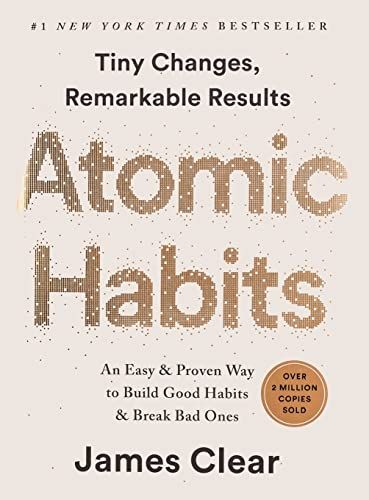
Nova: Imagine trying to steer a massive ship with a broken rudder, hoping that sheer willpower alone will get you to your destination. It sounds exhausting, right? Yet, that is exactly what we do when we try to change our lives using goals alone, without changing our underlying systems. Today, we are diving deep into James Clear's groundbreaking book, Atomic Habits, to discover how tiny, one-percent shifts can completely revolutionize our lives. We are going to tackle this from two powerful angles. First, we will explore the profound shift from goal-setting to identity-building, looking at how we can align our daily systems with our deepest values. Then, we will discuss the practical architecture of behavior change, showing how to redesign our environments to make consistency effortless. Joining us today is Umm E Habiba, an analytical thinker, leader, and someone who truly lives in a world full of books! Welcome, Habiba!
Umm E Habiba: Thank you so much, Nova! It is wonderful to be here. You know, as someone who spends a lot of time surrounded by books and ideas, Atomic Habits has always stood out to me. It is not just a self-help book; it is a masterclass in systems design. I am really excited to talk about how we can take these principles off the page and apply them to our spiritual lives, our daily work, and how we lead others.
Nova: Oh, I love that! Systems design is such a perfect way to look at it. We often think of habits as these small, isolated actions, like flossing or drinking more water. But James Clear is really talking about building an entire ecosystem for personal growth, isn't he?
Umm E Habiba: Exactly. He argues that we do not rise to the level of our goals; we fall to the level of our systems. That single insight is incredibly liberating, especially for leaders who feel overwhelmed by the constant pressure to achieve massive outcomes. It shifts the focus from the daunting destination to the manageable daily process.
Nova: It really does! It takes the pressure off. So, let's start right there, with this idea of systems over goals, and how that connects to who we are.
Deep Dive into Core Topic 1
SECTION
Nova: To really understand this, we have to look at one of the most famous stories in the book, which is the transformation of British Cycling. For over a hundred years, British professional riders had been shrouded in mediocrity. Since 1908, they had won just a single gold medal at the Olympic Games, and they had never won the Tour de France. In fact, their performance was so underwhelming that one of the top bike manufacturers in Europe actually refused to sell bikes to the team because they were afraid it would hurt their sales!
Umm E Habiba: Wow, that is brutal. Imagine being so bad at your job that people don't even want their brand associated with you!
Nova: Right? It is the ultimate professional burn! But then, in 2003, they hired a man named Dave Brailsford. He was committed to a strategy he called the aggregation of marginal gains. The basic idea was that if you improved every single area related to cycling by just one percent, those small improvements would compound into a massive transformation.
Umm E Habiba: This is where the analytical side of my brain just lights up. He did not just say, let us practice harder. He broke the entire system down into its smallest component parts.
Nova: Yes! They started with the obvious things, like redesigning the bike seats to make them more comfortable and rubbing alcohol on the tires for better grip. But then they went into these incredibly detailed, unexpected areas. They tested different fabrics in a wind tunnel to find the most aerodynamic suits for their outdoor riders, and they actually had their indoor riders switch to outdoor suits because they discovered they were lighter and more aerodynamic. They even hired a surgeon to teach each rider the best way to wash their hands to reduce the chances of catching a cold!
Umm E Habiba: That is incredible. They were looking at the entire lifestyle of the athlete, not just the time spent on the bike.
Nova: Absolutely! They even tested different types of pillows and mattresses to see which ones gave each rider the best night's sleep. They painted the inside of their team truck white so they could spot even the tiniest speck of dust that might get into the finely tuned gears of the bikes. And the results? At the 2008 Beijing Olympics, the British cycling team won an astounding sixty percent of the gold medals available. Four years later in London, they set nine Olympic records and seven world records. And they went on to win the Tour de France five times in six years.
Umm E Habiba: It is a breathtaking case study, Nova. And what strikes me as an analytical thinker is that Brailsford did not focus on the goal of winning the Tour de France. Every team has that goal. The goal did not make them different; the system did. When we apply this to leadership or spiritual growth, it is a game-changer.
Nova: How do you see that applying to spiritual life, Habiba? Because that is an area where people often struggle with consistency.
Umm E Habiba: Well, in our spiritual lives, we often set massive, outcome-based goals. We say, I am going to read this entire sacred text in a month, or I am going to pray for an hour every single day. But those are outcomes. If we do not have a system, we fail, and then we feel guilty. Clear talks about three layers of behavior change: outcomes, processes, and identity. The deepest layer is identity. It is the difference between saying, I want to read this book, and saying, I am a reader. Or saying, I want to pray more, versus, I am a deeply reflective, spiritually connected person.
Nova: Oh, that is a beautiful distinction! It shifts the focus from what you are doing to who you are becoming.
Umm E Habiba: Exactly. When you shift your identity, your habits become a natural expression of who you are, not a chore you have to force yourself to do. As a leader, if my identity is, I am a supportive, systems-driven mentor, then checking in with my team members is not a task on my to-do list. It is just who I am. Every small action we take is a vote for the type of person we wish to become.
Nova: I love that metaphor of casting a vote. Every time you sit down to read, even for five minutes, you are casting a vote for being a reader. Every time you take a deep breath and respond calmly to a stressful situation, you are casting a vote for being a mindful leader.
Umm E Habiba: Yes! And you do not need a unanimous vote to win an election. You just need a majority. You do not have to be perfect; you just need to cast more votes for your desired identity than for your old one. That is where the one-percent improvements come in. It is highly encouraging because it means today's small choice matters, even if it seems insignificant in the moment.
Deep Dive into Core Topic 2
SECTION
Nova: It really does. And that brings us to our second big topic: how do we actually make those small choices easier to make? Because let's be honest, even when we want to change our identity, our environment often pulls us back into our old ways. James Clear talks a lot about the architecture of our daily lives.
Umm E Habiba: Yes, environment design is one of the most powerful, yet underutilized, tools for behavior change. We like to think we have high willpower, but the truth is, our environment often dictates our behavior.
Nova: It absolutely does! There is a fascinating study in the book about a primary care physician at Massachusetts General Hospital named Anne Thorndike. She wanted to improve the eating habits of hospital staff and visitors, but she did not want to use willpower, lectures, or even verbal persuasion. She wanted to see if she could change their behavior simply by altering the choice architecture of the hospital cafeteria.
Umm E Habiba: This is a classic behavioral economics approach. How did she set it up?
Nova: Well, she started with the drinks. Originally, the refrigerators next to the cash registers were filled with only soda. She and her team added water as an option to each of those refrigerators. But they went a step further. They also placed baskets of bottled water next to all the food stations throughout the room. Soda was still available, but water was now highly visible and easily accessible in multiple locations.
Umm E Habiba: So, she made the healthier choice more obvious and easier to access, without removing the other options. What happened?
Nova: Over the next three months, the number of soda sales at the hospital dropped by over eleven percent, while sales of bottled water increased by over twenty-five percent! And this was without a single word spoken to the patrons. They did not even know a study was happening. They just made choices based on what was easiest and most obvious in their immediate environment.
Umm E Habiba: That is a stunning result, Nova. It proves that we do not always choose things because we want them; we choose them because of where they are. We are highly visual creatures. If we want to build consistent habits in our spiritual life or our work, we have to become the architects of our environments, not just the consumers of them.
Nova: Yes! We have to make the cues of our good habits obvious and the cues of our bad habits invisible. How do you apply this in your own life, Habiba?
Umm E Habiba: Well, for my spiritual life, I realized that if my prayer mat or my spiritual books are tucked away in a closet, I am much less likely to use them. So, I designed my space. I placed my journal and my reading material right on my desk, next to my computer, so they are the first things I see when I sit down. For work performance, if I want to focus on deep, analytical writing, I have to make the distractions invisible. I actually put my phone in another room, or inside a drawer, so there is physical friction between me and the distraction.
Nova: That is so smart! It is all about reducing friction for the good habits and increasing friction for the bad ones. Clear calls this the Law of Least Effort. We naturally gravitate toward the option that requires the least amount of work.
Umm E Habiba: Exactly. And we can combine environment design with another brilliant concept from the book: habit stacking. This is where you identify a current habit you already do every day, and then you stack your new habit right on top of it. The formula is simple: After I do my current habit, I will do my new habit.
Nova: Oh, I love habit stacking! It is like hitchhiking on an already established neural pathway in your brain.
Umm E Habiba: Yes, precisely! For example, if I want to build a habit of daily reflection for my leadership growth, I can stack it onto my morning coffee routine. I can say, after I pour my morning cup of coffee, I will open my journal and write down one way I can support my team today. The coffee is the anchor. It already happens automatically, so the new habit piggybacks on that existing momentum.
Nova: That is a beautiful, practical example. And it works for spiritual practices too, right? Like, after I close my laptop at the end of the workday, I will sit quietly for three minutes of gratitude or prayer. It creates a natural transition.
Umm E Habiba: Yes, it creates a bridge. It takes away the decision fatigue of wondering when or where you will do the habit. You have already designed the time, the place, and the trigger.
Synthesis & Takeaways
SECTION
Nova: This has been such a rich conversation, Habiba. We have covered some truly transformative ideas today. We talked about shifting our focus from outcome-based goals to identity-driven systems, just like the British Cycling team did with their marginal gains. And we explored how to become the architects of our own behavior by designing our environments and using habit stacking, just like the hospital cafeteria study showed us.
Umm E Habiba: It really comes down to understanding that consistency is a design problem, not a willpower problem. When we align our environments and our daily systems with the identity of the person we want to become, discipline ceases to be a struggle. It becomes a natural, flowing part of our lives.
Nova: That is incredibly encouraging. For anyone listening who wants to start applying this today, what is one small, one-percent action they can take right now?
Umm E Habiba: I would challenge everyone to identify one identity they want to cultivate—whether that is being a more present leader, a more consistent spiritual seeker, or a focused professional. Once you have that identity, find one tiny, two-minute habit that casts a vote for it, and stack it onto something you already do every single day. Make it so easy that you cannot say no.
Nova: I love that. Start small, build the system, and let the compounding effect do the rest. Habiba, thank you so much for sharing your insights and your love of books with us today. This has been absolutely wonderful.
Umm E Habiba: Thank you, Nova! It was an absolute pleasure.
Nova: And to all our listeners, remember: you do not need to revolutionize your life overnight. Just focus on being one percent better today. We are in this together. Until next time, keep building those systems!