

System Upgrade: Rewriting Your Identity Code with Atomic Habits
Golden Hook & Introduction
SECTION
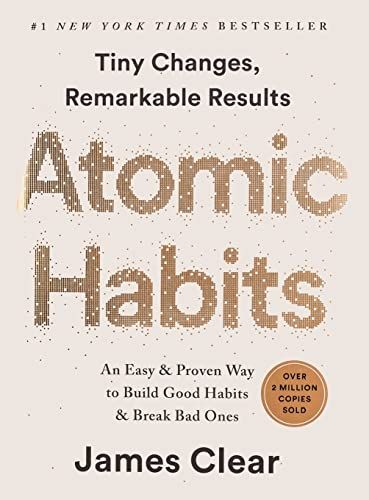
Nova: What if I told you that the secret to becoming an extraordinary leader, deepening your spiritual life, and mastering your career isn't about willpower at all? In fact, obsessing over your goals might actually be holding you back. Today, we are looking at human behavior through the lens of a data analyst. We are diving into James Clear's masterpiece,, to show you how tiny, one-percent changes compound into massive life transformations. Today, we're going to tackle this book from two different angles. First, we'll explore identity-based habits, which is all about rewriting your internal source code to align with who you want to become. And second, we'll look at environment design, showing you how to build a frictionless personal operating system that makes discipline your default setting. I am Nova, and joining me today is MrLecturer, a data analyst with a passion for systems-driven leadership and personal growth. Welcome, MrLecturer! It is so wonderful to have you here with us.
MrLecturer: Thanks, Nova! It is absolutely fantastic to be here. You know, when I first picked up, I immediately started seeing human behavior as a massive, beautiful dataset. As a data analyst, I spend my days looking at inputs, outputs, and feedback loops. And what James Clear argues is essentially that our lives are the ultimate lagging measure of our daily habits. If you want to change the dashboard of your life, you can't just stare at the metrics and wish they were different. You have to look at the underlying data pipeline.
Nova: Oh, I love that metaphor! The underlying data pipeline. That is so true. We get so hyper-focused on the final dashboard, don't we? We want the promotion, we want to read fifty books a year, or we want to be perfectly consistent in our spiritual practices. But those are just the outputs.
MrLecturer: Exactly. In data science, we know that if your data pipeline is messy, your final report is going to be messy too. No amount of wishing will change that. Clear says that we do not rise to the level of our goals; we fall to the level of our systems. That hit me hard, both as an analyst and as someone who wants to lead others. If we want to build lasting discipline, we have to design better systems.
Nova: It is such a liberating way to look at it because it takes the shame out of the equation. It is not that you are lazy or lack willpower; it is just that your system is poorly designed. So, let's roll up our sleeves and look at how we can upgrade that system, starting with the very core of who we are.
Deep Dive into Core Topic 1 - The Identity Shift
SECTION
Nova: James Clear talks about the three layers of behavior change. Picture them like concentric circles. The outer layer is outcomes, which is what you get. The middle layer is processes, which is what you do. And the deep, inner layer is identity, which is what you believe. Nova, why do you think most of us get this backward? We usually start from the outside and try to work our way in, right?
MrLecturer: We absolutely do. We start with the outcome. We say, I want to be a disciplined leader, or I want to read my spiritual texts every single morning. That is the outcome. Then we design a process: I will wake up at five in the morning and read for an hour. But we never change the underlying belief system. We still view ourselves as a night owl who struggles with discipline. So, when the alarm goes off at five, there is this massive internal friction. The old identity is actively fighting the new process.
Nova: Yes! It is like trying to run a brand-new, high-demand software program on an ancient, outdated operating system. It is going to crash! Clear uses this wonderful example of two people refusing a cigarette. When offered, the first person says, No thanks, I'm trying to quit. It sounds reasonable, but they still believe they are a smoker who is trying to be different. The second person says, No thanks, I'm not a smoker. That is a tiny linguistic shift, but it represents a massive identity upgrade. They no longer identify with the habit.
MrLecturer: That is a perfect illustration, Nova. As an INFJ, I tend to look for deep, meaningful connections in everything, and this identity-based approach completely transformed how I view my spiritual life and personal growth. Instead of setting a goal like, I need to meditate for twenty minutes every day, which feels like a chore, I shifted the focus to, I am a contemplative person who values inner peace and wisdom. Once I accepted that identity, the process of meditating became a natural expression of who I am, rather than a task on a to-do list.
Nova: That is beautiful, MrLecturer. Truly. It is about casting votes for the person you want to become. Every time you sit down to meditate, or every time you choose to listen deeply to a colleague, you are casting a vote for that identity. You don't need to be perfect; you just need a majority of the votes!
MrLecturer: Exactly! It is a statistical game, really. In data analysis, we look at trends. One outlier data point doesn't ruin the entire dataset. If you miss a day, or if you have a bad day at work where you lose your temper, that is just one outlier. The goal is to make sure the overall trend line is pointing upward. You do that by consistently casting small votes.
Nova: I love that trend line concept! It makes it feel so manageable. And this is exactly how the British Cycling team turned their entire history around. For over a hundred years, British riders had been incredibly mediocre. They had only won a single gold medal at the Olympic Games since 1908, and no British cyclist had ever won the Tour de France. In fact, they were so bad that one top bike manufacturer refused to sell them bikes because they were worried it would hurt their reputation!
MrLecturer: Wow, that is brutal. Imagine being so bad at your job that people don't even want you using their tools!
Nova: Right? It is wild! But then they hired a man named Dave Brailsford in 2003. He believed in a concept he called the aggregation of marginal gains. The whole philosophy was search for a tiny, one-percent improvement in everything you do. They didn't try to overhaul everything overnight. Instead, they broke down everything that goes into riding a bike and improved it by just one percent.
MrLecturer: This is where the systems-thinking really shines. What did they actually change?
Nova: Oh, they went to incredible lengths! They redesigned the bike seats to make them more comfortable. They rubbed alcohol on the tires for better grip. They had the riders wear electrically heated shorts to maintain muscle temperature while riding. But they didn't stop there. They tested different massage gels to see which one led to the fastest muscle recovery. They hired a surgeon to teach the riders the best way to wash their hands to avoid catching a cold. They even figured out which pillow and mattress led to the best night's sleep for each rider, and they brought those exact pillows to every hotel they stayed at!
MrLecturer: That is absolutely mind-blowing. They optimized the entire ecosystem around the athlete. They didn't just say, ride faster. They looked at every single variable in the equation and optimized it.
Nova: Yes! And they even painted the inside of their team truck white. Do you know why?
MrLecturer: Hmm. To see dust?
Nova: Spot on! It allowed them to spot tiny specks of dust that could get into the finely tuned gears of the bikes and degrade performance. And the results of all these tiny one-percent changes? Just five years after Brailsford took over, the British Cycling team dominated the 2008 Olympic Games in Beijing, winning sixty percent of the gold medals available. Four years later in London, they set nine Olympic records and seven world records. And Bradley Wiggins became the first British cyclist to win the Tour de France, followed by Chris Froome who won it four times. All of this from a team that couldn't even buy bikes a decade earlier!
MrLecturer: That is the power of compounding interest applied to human behavior. In finance or data, we know that compounding is the eighth wonder of the world. If you can get just one percent better each day for one year, you'll end up thirty-seven times better by the time the year is done. But if you get one percent worse each day, you decline nearly down to zero. As an aspiring leader, this tells me that I don't need to have all the answers or make revolutionary changes on day one. I just need to focus on optimizing the daily workflows, the communication channels, and the habits of my team by one percent.
Nova: Absolutely! You are building a culture of continuous, tiny improvements. And that starts with you modeling those identity-based habits. If you want to be a systems-driven leader, you start by showing up as a person who respects the system.
Deep Dive into Core Topic 2 - The Architecture of Action
SECTION
Nova: Now, let's transition to how we actually build these systems. James Clear lays out the Four Laws of Behavior Change: Make it obvious, make it attractive, make it easy, and make it satisfying. Today, let's focus on making it obvious and making it easy, which are all about environment design. MrLecturer, as a tech professional, you must be very familiar with user experience, or UX design. How does environment design relate to UX?
MrLecturer: Oh, it is the exact same thing! In tech, if a user interface is confusing or requires too many clicks to get to the destination, users will abandon the app. We call that friction. Good UX design makes the desired action the easiest, most obvious path. Our physical and digital environments are the user interfaces of our lives. If you want to build a habit, you have to design your environment so that the cue is glaringly obvious, and the action requires almost zero friction.
Nova: Yes! We think we have control over our choices, but so often, we just react to the visual cues in our environment. There is this fascinating study done by a primary care physician named Anne Thorndike at Massachusetts General Hospital in Boston. She wanted to improve the eating habits of the hospital staff and visitors without talking to them, lecturing them, or using any willpower.
MrLecturer: That is the ultimate data analyst dream! Changing behavior purely through system architecture without having to argue with anyone. How did she do it?
Nova: She changed the choice architecture of the hospital cafeteria. Originally, the refrigerators next to the cash registers were filled with only soda. She kept the soda there, but she added bottled water to every single refrigerator. She also placed baskets of bottled water next to the food stations throughout the room. Over the next three months, the number of soda sales dropped by over eleven percent, while bottled water sales increased by over twenty-five percent!
MrLecturer: That is incredible. And nobody was told to drink water. There was no campaign, no signs saying water is good for you. The hospital didn't force anyone. They just made water more obvious and easier to access.
Nova: Exactly! The visual cue of the water bottles was right there, and the friction to grab one was reduced to zero. This is why environment design is so much more powerful than willpower. Willpower is a finite resource. If you are tired after a long day of analyzing data or leading meetings, your willpower is depleted. But if your environment is designed to support your goals, you don't need willpower. The system does the heavy lifting for you.
MrLecturer: This is so practical for work performance. For example, as a data analyst, if I want to build the habit of documenting my code—which is a tedious but crucial task for a systems-driven leader—I need to make the cue obvious. I can design my digital environment so that my documentation template automatically opens every time I start a new project. I am reducing the friction. I don't have to go hunting for the template; it is just right there in front of me.
Nova: That is a brilliant application! You are literally coding your environment to prompt the behavior. What about your spiritual life or personal growth? How can we apply this there?
MrLecturer: Well, let's look at habit stacking, which is a fantastic way to make a habit obvious. Habit stacking is where you identify a current habit you already do every day, and then you stack your new habit on top of it. The formula is: After I do current habit, I will do new habit. For my spiritual life, I already have an established habit of brewing a cup of coffee every morning. That is a deeply ingrained routine. So, I stacked my spiritual practice onto it: After I pour my morning cup of coffee, I will sit on the couch and read one page of a spiritual text.
Nova: Oh, I love that! It is so simple, yet so effective. You are anchoring the new, fragile habit to an old, rock-solid habit. And notice how you said one page. You didn't say, I will read a whole chapter. You made it incredibly easy to start.
MrLecturer: Yes, Clear talks about the Two-Minute Rule. When you start a new habit, it should take less than two minutes to do. The point is not to do the whole task; the point is to master the art of showing up. A habit must be established before it can be improved. If you can't master the habit of sitting on the couch with the book open for two minutes, you will never master the habit of reading for an hour.
Nova: That is such a profound insight. We often feel like if we can't do it perfectly, we shouldn't do it at all. But a half-done meditation session is infinitely better than no meditation session. A single line of code documented is better than none. It keeps the identity alive. You are still casting that vote.
MrLecturer: It really does. And as you build these stacks, you start to create a highly efficient, automated personal operating system. For leadership, you can stack habits to build better relationships with your team. For example: After I close our weekly team meeting, I will send a quick, one-sentence Slack message to one team member praising a specific thing they did. It takes less than two minutes, the cue is the end of the meeting, and it builds a culture of appreciation.
Nova: Oh, MrLecturer, that is a gold-standard leadership habit! It is highly actionable, systematic, and deeply encouraging. Your team would absolutely love that. It shows how being a disciplined leader isn't about being rigid or cold; it is about using systems to ensure you are consistently showing up for your people.
Synthesis & Takeaways
SECTION
Nova: This has been such an incredibly rich conversation. We have looked at how tiny, one-percent changes can compound over time, just like they did for the British Cycling team. We have explored how true, lasting change starts from the inside out, by upgrading our identity and casting small votes for the person we want to become. And we have discussed how to design our physical and digital environments to make our good habits obvious and easy, using tools like habit stacking and the Two-Minute Rule. MrLecturer, as we wrap up today, what is the one key takeaway you want our listeners, especially those who are aspiring to be systems-driven leaders, to hold onto?
MrLecturer: I would say, stop obsessing over the final dashboard and start focusing on the integrity of your daily data pipeline. Don't worry about whether you are an overnight success. Focus on whether your current trajectory is putting you on the right path. Are you casting votes every day for the leader, the colleague, or the person you want to be? Remember, your outcomes are just lagging measures of your habits. If you design a beautiful, frictionless system, the results will take care of themselves.
Nova: That is a perfect note to end on. Thank you so much, MrLecturer, for sharing your analytical brilliance and deep insights with us today. You have given us a masterclass in how to upgrade our personal operating systems.
MrLecturer: Thank you, Nova. It was an absolute pleasure.
Nova: And to all our listeners out there, here is our challenge for you today: pick one habit you want to build. Just one. Apply the Two-Minute Rule to it, and stack it onto something you already do every single day. Make it obvious, make it easy, and start casting those votes for your future self. Until next time, keep upgrading those systems, and let's get one percent better together!