

Personalized Podcast
Golden Hook & Introduction
SECTION
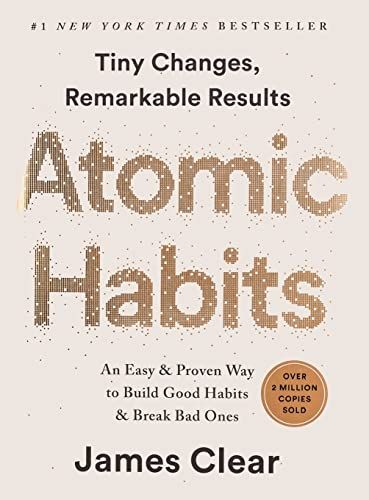
Nova: Think about how we train a deep learning model. We don't just throw a massive dataset at it and expect perfection instantly. No, we adjust the weights by tiny fractions over thousands of iterations—a process called gradient descent. What if the secret to human transformation is exactly the same? Welcome to the show! Today, we're diving into James Clear's masterpiece,, but with a brilliant twist. We're looking at it through the lens of systems engineering, user-centric design, and artificial intelligence. Today, we're going to tackle this book from three different angles. First, we'll explore why systems beat goals every single time, looking at the mathematics of marginal gains. Then, we'll discuss identity-based habits and how to rewrite our internal source code for personal, professional, and spiritual growth. And finally, we'll focus on environmental architecture—how to design our physical and digital spaces to make consistency effortless. I'm joined today by Tanaka, an AI researcher and developer currently pursuing her Master's in Computer Science and AI at the University of Cape Town. Tanaka, it is so wonderful to have you here with us!
Tanaka: Thanks, Nova! It is absolutely fantastic to be here. You know, when I first read, I kept having these massive lightbulb moments. As someone who spends her days writing algorithms, modeling complex geospatial data, and thinking about feedback loops, James Clear's concepts felt incredibly familiar. It's basically systems design, but for the human mind. I'm really excited to unpack how we can debug our daily routines and build some robust, high-performing human systems today.
Nova: Oh, I love that! "Debugging our daily routines." We are definitely stealing that phrase! Let's start right there, with this idea of systems versus goals. Clear writes that "we don't rise to the level of our goals; we fall to the level of our systems." For a lot of high-achievers, that's a hard pill to swallow. We're taught that setting big, audacious goals is the key to success. But Clear argues that goals are actually highly problematic. Why do you think that is, from both a human and a systems perspective?
Tanaka: Well, from a systems perspective, a goal is just a single, static target state. It's like setting a target accuracy of ninety-nine percent for a machine learning model, but never actually writing the training loop or cleaning the dataset. The goal doesn't do the work; the training loop does. In human terms, goals create a sort of binary conflict. You're either in a state of pre-success, where you haven't reached your goal and therefore feel like you're failing, or you actually reach the goal, and then what? The system stops. You see this all the time with runners who finish a marathon and then completely stop exercising. The goal was the finish line, so once they crossed it, the system collapsed.
Nova: That is such a vivid way to put it! The system collapses because the target was temporary. And Clear shares this incredible case study in the book that perfectly illustrates this: the story of Dave Brailsford and the British Cycling team. For over a hundred years, British professional cycling was basically a joke. They had won almost nothing, and one top bike manufacturer even refused to sell them bikes because they were worried it would hurt their reputation! Then, Dave Brailsford comes in as the performance director. He didn't set some wild, unrealistic goal to win the Tour de France overnight. Instead, he committed to a strategy he called "the aggregation of marginal gains." The idea was simple: if you improve every single thing you do related to riding a bike by just one percent, those small improvements will compound into a massive transformation.
Tanaka: Yes! And the details of what they actually did are just mind-blowing. They didn't just redesign the bike seats for comfort or put heated shorts on the riders to maintain muscle temperature. They went into these incredibly granular, unexpected areas. They tested different massage gels to see which one led to the fastest muscle recovery. They hired a surgeon to teach the riders the best way to wash their hands to avoid catching a cold. They even painted the inside of their team truck white so they could spot tiny specks of dust that might get into the finely tuned bicycle gears and degrade performance!
Nova: It's just incredible, isn't it? They literally optimized the dust in the truck! And the result? Within just five years, the British Cycling team dominated the Beijing Olympics, and then they went on to win five Tour de France victories in six years. It's the ultimate proof of the math of compounding. Clear points out that if you get just one percent better each day for a year, you end up thirty-seven times better by the end of the year. But if you get one percent worse each day, you decline almost down to zero.
Tanaka: Exactly! In computer science, we call this exponential growth, or compounding interest in finance. But in deep learning, it's exactly how gradient descent works. You make these tiny, microscopic adjustments to the weights of a neural network. In a single epoch, the change is imperceptible. But over thousands of epochs, those tiny adjustments are what allow an AI to recognize speech, predict climate patterns, or drive a car. For me, as an MSc student, this is incredibly liberating. When you're tackling massive, complex challenges like climate change or water management using predictive modeling, the sheer scale of the problem can feel paralyzing. You think, "How can my little model make a difference?" But Brailsford's approach reminds us that optimizing the small, local variables—our daily study habits, our focus blocks, even our rest cycles—compounds into major breakthroughs.
Deep Dive into Core Topic 1
SECTION
Nova: It really does. And it shifts the pressure off the outcome and onto the process, which is so much healthier for our mental state. But let's talk about how we actually build these systems. Clear introduces the concept of "identity-based habits," which is the second core topic we wanted to dive into. He says there are three layers of behavior change: outcomes, processes, and identity. Outcomes are about you get. Processes are about you do. But identity is about you believe you are. Most of us start from the outside in. We say, "I want to write a thesis, so I need to write every day, and hopefully, I'll feel like a writer." But Clear says we need to flip it. We need to build habits from the inside out.
Tanaka: This part of the book resonated with me so deeply, Nova. It's like redefining the core variables of your system architecture. Clear uses this great example of two people refusing a cigarette. When offered, the first person says, "No thanks, I'm trying to quit." It sounds reasonable, but they still identify as a smoker who is trying to do something else. Their internal source code hasn't changed. The second person says, "No thanks, I'm not a smoker." That is a massive semantic shift! They have updated their identity variable. The behavior of refusing the cigarette is now just a natural execution of who they are.
Nova: That is such a profound distinction! "I'm trying to quit" versus "I'm not a smoker." One is a constant uphill battle against your own self-image, and the other is just living your truth. And we can apply this to literally every area of our lives, right? Tanaka, you mentioned wanting to apply identity-based habits to your spiritual life, your work performance, and your personal growth. How does this look in practice for you?
Tanaka: Well, let's take my spiritual life and my work in climate research. If I frame my goal as, "I need to read academic papers for eight hours a day and pray or meditate for thirty minutes," it feels like a heavy checklist. It's high friction. But if I shift my identity first, I can say, "I am a steward of the Earth, and I am a seeker of truth." As a "steward of the Earth," doing geospatial predictive modeling to tackle water scarcity isn't just a task; it's an expression of my identity. It's how I care for creation. And as a "seeker of truth," taking time for spiritual reflection or reading deeply isn't a chore—it's just what a seeker does. It completely changes the cognitive load. You're no longer forcing yourself to perform a habit; you're simply acting in alignment with who you believe you are.
Nova: Oh, that is beautiful, Tanaka! "A steward of the Earth" and "a seeker of truth." That gives your research and your daily routine such a deep, spiritual resonance. It connects the micro-habits of coding and data cleaning to a macro-purpose. And Clear says that every action you take is actually a vote for the type of person you want to become. You don't need a perfect record; you just need a majority of the votes.
Tanaka: Yes! I love that voting metaphor. It's so forgiving and realistic. In AI, we have this concept of "ensemble learning," where you have multiple models voting on an outcome. No single model is perfect, and some will make mistakes, but the collective decision of the majority is incredibly accurate. It's the same with our habits. If I have a bad day where I get distracted, or I don't meditate, or I eat junk food, I haven't ruined my system. I just cast a few votes for the old identity. I don't need to debug the whole system; I just need to make sure my next action casts a vote for the new identity. It takes away that perfectionist guilt that so often derails our personal growth.
Nova: It really does. We don't have to be perfect; we just need a democratic majority of good habits! And this ties directly into how we can design our environments to make casting those positive votes as easy as possible. This brings us to our third core topic: environmental architecture. Clear talks a lot about how our environment is the invisible hand that shapes human behavior. We like to think we have high willpower, but the truth is, our default choices are almost always determined by what is right in front of us.
Deep Dive into Core Topic 2
SECTION
Tanaka: Oh, absolutely. In Human-Computer Interaction, or HCI, we talk constantly about user-centric design and "choice architecture." If a user interface is poorly designed—if the buttons are hard to find or the navigation is confusing—users will abandon the app. They experience cognitive friction. Our physical and digital environments are the user interfaces of our lives! If you want to build a habit, you have to make the user interface of that habit incredibly intuitive.
Nova: Yes! And Clear shares a wonderful study by a primary care physician named Anne Thorndike at Massachusetts General Hospital in Boston. She wanted to improve the eating habits of hospital staff and visitors without using any peer pressure or even talking to them. She did what she called a "choice architecture" intervention. In the hospital cafeteria, the primary beverage option next to the cash registers was soda. She and her team redesigned the space. They added water to all the beverage stations, and they placed baskets of bottled water next to the food lines. Soda was still available, but water was now highly visible and easily accessible in multiple locations.
Tanaka: And what happened? I love the data from this study!
Nova: It's amazing! Over the next three months, the number of soda sales dropped by over eleven percent, while bottled water sales increased by over twenty-five percent! And this was without a single person being told what to drink. They simply changed the environmental cues. The hospital staff didn't suddenly develop massive willpower; they just reacted to the redesigned user interface of the cafeteria.
Tanaka: That is a classic HCI success story! It proves that context is often stronger than motivation. If we apply this to our work performance, especially in highly demanding fields like tech and research, we have to design our digital workspaces to reduce friction. For example, if I want to build a habit of writing clean, well-documented code every day, I need to make that the default path. I can keep my Integrated Development Environment, my IDE, open on my desktop with my current project loaded, so it's the very first thing I see when I wake up my computer. At the same time, I can use website blockers to increase the friction of accessing distracting sites like social media. I'm basically designing a user interface where the "good habit" button is massive and right in the center of the screen, and the "distraction" button is hidden deep in a sub-menu.
Nova: That is such a practical application! You're literally reducing the "clicks to launch" for your good habits. And what about your spiritual life? How do you apply environmental design there?
Tanaka: I've actually set up a physical "cue" in my room. I have a specific chair that is dedicated solely to reflection, prayer, and reading. I don't do my university work there, and I don't use my phone there. On the small table next to the chair, I keep my journal and my spiritual texts. Because that space is highly visible and exclusively associated with that single activity, the moment I sit in that chair, my brain receives a clear environmental cue that it's time to quiet down and focus. It reduces the transition state, the "cold-start problem," if you will.
Nova: Oh, the "cold-start problem!" That is a perfect term for that initial resistance we feel when trying to start a habit. And Clear has a brilliant tool for this called the "Two-Minute Rule." He says that when you start a new habit, it should take less than two minutes to do. So, "read for an hour" becomes "read one page." "Do yoga for thirty minutes" becomes "get out my yoga mat." Why is this so effective, Tanaka?
Tanaka: It's effective because it addresses the physics of starting. In physics, static friction—the force you have to overcome to get something moving—is always much higher than kinetic friction, the force required to keep it moving. Once you start, it is infinitely easier to keep going. The Two-Minute Rule is basically a gateway habit. It's not about the output of those two minutes; it's about establishing the routine of showing up. In AI, we talk about "initializing" a process. You have to initialize the loop before you can optimize it. If you don't show up, there is nothing to improve.
Nova: "You have to initialize the loop before you can optimize it." That is going on my wall! That is absolutely brilliant. It takes away the pressure of performance and focuses entirely on the rhythm of consistency. We have to master the art of showing up before we can master the details of the craft.
Synthesis & Takeaways
SECTION
Tanaka: Exactly. And as we think about becoming systems-driven leaders, this is the exact mindset we need to model and cultivate in others. A great leader doesn't just demand high-performance outcomes; they design the systems, the culture, and the environments that make high performance the natural, low-friction path for their team. They focus on the inputs and the feedback loops, knowing that the outcomes will take care of themselves.
Nova: That is a beautiful synthesis of leadership and systems design. We've covered some truly profound ground today, Tanaka. We looked at how the British Cycling team's aggregation of marginal gains is like the gradient descent of human growth—tiny, compounding 1% improvements. We explored how identity-based habits allow us to rewrite our internal source code, shifting from "what we do" to "who we are," like being a steward of the Earth or a seeker of truth. And finally, we discussed environmental architecture as the user interface of our daily lives, using choice design to make good habits obvious and easy, and bad habits difficult and high-friction.
Tanaka: It really shows that personal growth isn't about having superhuman willpower. It's about being a clever architect of your own life. By designing better systems, updating our identity variables, and debugging our environments, we can make consistency feel natural, sustainable, and deeply aligned with our highest values.
Nova: Well said, Tanaka! To wrap up today's episode, we want to leave our listeners with a powerful question to ponder: If you were to look at your daily routine as a user interface, what is the easiest, lowest-friction action you can take today to cast a single vote for the person you want to become tomorrow? Think about that, design your system, and let's get one percent better together. Tanaka, thank you so much for sharing your incredible insights and bridging the worlds of AI and human habits with us today!
Tanaka: Thank you, Nova! It was an absolute joy. Let's keep optimizing those systems!
Nova: Absolutely! And to all our listeners, thank you for tuning in. Keep building those atomic habits, and we'll see you next time!