

Personalized Podcast
Golden Hook & Introduction
SECTION
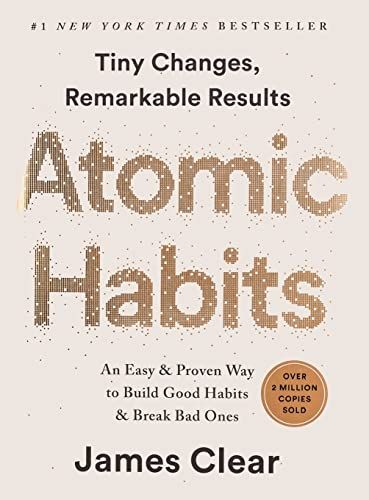
Nova: Why do ninety-two percent of New Year's resolutions end in failure, while a single, almost invisible shift in how you view yourself can permanently alter your destiny? In medicine, we know that a tiny cellular change can transform an entire organism. The exact same rule applies to our minds, our leadership, and our spiritual lives. Welcome to the show, everyone. I am Nova, and today we are diving deep into James Clear's groundbreaking book, Atomic Habits. But we are not doing this alone. I am joined by Yosry, a brilliant healthcare student who is looking at these behavioral principles through a fascinating analytical lens. Yosry, it is so wonderful to have you here with us.
Yosry: Thanks, Nova. It is great to be here. You know, as someone studying healthcare, I spend a lot of time looking at systems, whether that is the cardiovascular system or hospital workflows. When I read Atomic Habits, it clicked instantly. The human body does not maintain health through massive, one-time interventions; it does it through constant, microscopic adjustments. I am really excited to explore how we can apply that same systematic rigor to our leadership styles and, honestly, to our spiritual lives as well.
Nova: Oh, I love that connection so much. The micro-adjustments that keep us alive. Today, we are going to tackle James Clear's work from three distinct angles. First, we will explore the profound shift from goal-setting to identity-building, especially how that can revitalize our spiritual practices. Second, we will unpack why systems always trump goals for aspiring leaders, looking at some incredible real-world case studies. And finally, we will share practical, highly actionable strategies like choice architecture and habit stacking that you can start using today. So, Yosry, let us start with this idea of identity. Clear talks about three layers of behavior change: outcomes, processes, and identity. Imagine three concentric circles. The outer ring is outcomes, what you get. The middle ring is processes, what you do. And the deep, inner core is identity, what you believe. Most of us try to change from the outside in, but Clear says we have to change from the inside out.
Identity-Based Habits & Spiritual Transformation
SECTION
Yosry: That distinction is absolutely massive, Nova. In healthcare, we see this all the time. If a patient is trying to adopt a healthier lifestyle, and they focus purely on the outcome, like losing twenty pounds, they often fail. Why? Because they still view themselves as an unhealthy person who is just temporarily suffering through a diet. But when they shift their identity to, I am an active person who respects my body, the behaviors flow naturally. It is a shift from symptom management to cure.
Nova: Exactly. It is the difference between treating the symptom and healing the root cause. Clear shares this wonderful, simple story in the book about two people refusing a cigarette. When offered, the first person says, No thanks, I am trying to quit. It sounds reasonable, right? But they still believe they are a smoker who is trying to be different. The second person says, No thanks, I am not a smoker. It is a tiny linguistic shift, but it signals a complete identity transformation. They no longer identify with the old behavior.
Yosry: That story blew me away because it is so applicable to spiritual discipline. For a long time, I found myself setting outcome-based spiritual goals. I would say, I want to read twenty pages of sacred texts every day, or I want to pray for thirty minutes. But on busy days, when clinical rotations got overwhelming, those goals were the first things to go. And then comes the guilt, which actually derails you further. But when you apply Clear's identity-based approach, the goal is not to read the text; the goal is to a spiritual seeker. The goal is not to perform a ritual; the goal is to a reflective, grounded person who prioritizes connection with the Divine.
Nova: That is incredibly beautiful, Yosry. When you shift that focus, how does it change the way you actually approach those daily practices? How does it take the pressure off while keeping you consistent?
Yosry: Well, it changes the metric of success. If my identity is, I am a person who connects with my faith daily, then even on my absolute busiest days, a single minute of deep, mindful prayer or reading just one verse is a successful vote for that identity. Clear talks about how every action you take is a vote for the type of person you want to become. No single vote is going to completely transform you, but as the votes build up, so does the evidence of your new identity. So, if I am running on two hours of sleep and I still take thirty seconds to express gratitude before my shift, I have cast a vote for being a spiritually grounded person. That is incredibly empowering.
Nova: Oh, I am getting goosebumps. We are casting votes for our future selves. That is such an encouraging way to look at it. It removes that all-or-nothing perfectionism that paralyzes so many of us. We do not need a perfect record; we just need a majority vote. And that leads us beautifully into our second core topic: why systems are vastly more important than goals, especially when it comes to leadership.
Systems vs. Goals in Leadership
SECTION
Nova: Clear writes a line that has become famous: You do not rise to the level of your goals; you fall to the level of your systems. To illustrate this, he tells the incredible story of the British Cycling team. For over a hundred years, British cycling was the laughingstock of the sporting world. They had won virtually nothing. In fact, one top bike manufacturer refused to even sell bikes to the team because they were worried it would hurt their reputation. But then, in 2003, they hired a man named Dave Brailsford.
Yosry: Right, Brailsford introduced a concept he called the aggregation of marginal gains. He was an analytical thinker's dream. He believed that if you improved every single area related to cycling by just one percent, those small changes would compound into a massive competitive advantage.
Nova: Yes, and the way they did it was so creative. They did not just focus on training harder. They redesigned the bike seats to make them more comfortable. They rubbed alcohol on the tires for better grip. They had the riders wear electrically heated shorts to maintain muscle temperature. But they did not stop there. They tested different massage gels to see which led to the fastest muscle recovery. They hired a surgeon to teach the riders the best way to wash their hands to avoid catching a cold. They even figured out which pillows and mattresses led to the best night's sleep for each individual rider, and they carried those pillows with them to every hotel.
Yosry: That is absolutely mind-blowing. They even painted the inside of their team truck white so they could spot tiny specks of dust that might degrade the performance of the finely tuned bikes. That is not just attention to detail; that is a world-class system.
Nova: It really is. And the results were staggering. Just five years after Brailsford took over, at the 2008 Beijing Olympics, the British Cycling team won an astonishing sixty percent of the gold medals available. Four years later in London, they set nine Olympic records and seven world records. It was a complete revolution, all built on the back of one percent improvements.
Yosry: As a student of leadership and healthcare, this story is pure gold. In a hospital setting, if a leader says, Our goal is zero patient infections, that is a great goal, but the goal itself does not save lives. What saves lives is the system. It is the hand-washing protocols, the sterile field checklists, the way the surgical instruments are laid out. If the system is flawed, even the most dedicated, well-meaning doctors and nurses will make mistakes. True leadership is not about standing at the front of the room and demanding better results. It is about being the architect of the system that makes those results inevitable.
Nova: The architect of the system. That is a brilliant way to frame leadership, Yosry. A systems-driven leader does not just inspire; they build the infrastructure for success. They make it easy for their team to do the right thing and hard to do the wrong thing.
Yosry: Exactly. And if you apply that to personal leadership, it means looking at your own daily schedule as an operating system. If I am constantly failing to read leadership books or stay updated on medical research, it is not because I lack willpower. Willpower is a finite resource; it is like a battery that drains throughout the day. If my system relies on me having high willpower at nine o'clock at night after a twelve-hour shift, that is a bad system. I need to redesign the system so that the desired behavior is the path of least resistance.
Practical Execution: Environment Design & Habit Stacking
SECTION
Nova: That is the perfect transition to our third topic: how we actually build these systems in our daily lives. Clear gives us some incredibly practical tools for this, and one of the most powerful is what he calls environment design, or choice architecture. To show how powerful this is, let us look at a study conducted by a primary care physician named Anne Thorndike at Massachusetts General Hospital in Boston. She wanted to improve the eating habits of hospital staff and visitors without using willpower or persuasion.
Yosry: Oh, I remember this study. It is a classic in behavioral economics and public health. It is so elegant.
Nova: It really is. Thorndike and her team redesigned the hospital cafeteria. Originally, the refrigerators next to the cash registers were filled only with soda. They added bottled water to those refrigerators, and they also placed baskets of bottled water throughout the room. They did not say a word to anyone. They did not post any signs encouraging people to drink water. They just changed the physical environment.
Yosry: And the results were immediate, right? Over the next three months, soda sales dropped by over eleven percent, while bottled water sales increased by over twenty-five percent. And this was without a single lecture, a single health warning, or a single drop of willpower. People were simply responding to the visual cues in their environment.
Nova: Yes. We like to think we have complete control over our choices, but the truth is, we are highly visual creatures. We often choose things simply because of where they are. Clear says that if you want to make a habit a big part of your life, you need to make the cue highly obvious in your environment. If you want to practice the guitar more, do not keep it tucked away in a closet. Put it right in the middle of your living room.
Yosry: This is incredibly practical for spiritual and academic habits. If I want to make sure I read my sacred texts or leadership books in the morning, I cannot leave them buried under a stack of medical textbooks or hidden in a drawer. I need to design my environment. Now, I place my journal and my reading material directly on my desk chair the night before. When I wake up, I literally have to pick them up before I can even sit down. I have made the cue unavoidable.
Nova: That is brilliant. You are creating a physical speed bump for your bad habits and a clear runway for your good ones. But what about when we want to build a new habit into an already packed schedule? That is where Clear's concept of habit stacking comes in.
Yosry: Habit stacking is a game-changer. It is based on the work of neuroscientist BJ Fogg. The formula is simple: After I perform a current habit, I will perform a new habit. You are essentially anchoring a new, fragile behavior to an established, rock-solid routine that your brain already does automatically.
Nova: Exactly. Your brain has already built strong neural pathways for things like brushing your teeth, pouring your morning coffee, or taking off your shoes when you walk through the door. By piggybacking on those existing pathways, you do not have to build a new routine from scratch.
Yosry: I actually designed a spiritual habit stack using this exact formula. I noticed that every single morning, without fail, the very first thing I do is put on my kettle to make tea. That is a deeply ingrained habit. So, I created a stack: After I turn on the kettle, I will close my eyes and express three things I am deeply grateful for. While the water is heating up, which takes about three minutes, I am engaged in a practice of spiritual gratitude. I do not have to find extra time in my day for it; it is woven directly into the fabric of my morning routine.
Nova: That is absolutely beautiful, Yosry. It is so simple, yet so incredibly profound. You are turning a mundane, waiting moment into a sacred space. And because the kettle is the cue, you do not even have to think about it. The environment triggers the behavior.
Yosry: Exactly. And you can do the same thing for leadership habits. For example, after I close my laptop at the end of the workday, I will immediately write down the single most important task I need to accomplish tomorrow. That simple stack prevents that overwhelming feeling of chaos when you start your work the next morning. You are designing your future success.
Synthesis & Takeaways
SECTION
Nova: We have covered some truly transformative ground today, Yosry. From shifting our identity from the inside out, to building robust systems like the British Cycling team, to designing our physical environments and stacking our habits. It really shows that greatness is not about giant, heroic leaps. It is about the compounding effect of tiny, daily decisions.
Yosry: Absolutely, Nova. If there is one thing I want to take away from this conversation, and share with everyone listening, it is that we need to stop obsessing over the finish line and start focusing on the running form. Whether you are trying to become a more disciplined leader, a more spiritually connected person, or a better student, the secret lies in your daily systems. Focus on being one percent better today than you were yesterday. Let those small wins compound. Over time, those atomic habits will build a character of steel.
Nova: A character of steel, built one percent at a time. I love that. What a powerful note to end on. Yosry, thank you so much for sharing your analytical insights and your personal journey with us today. You have given us all so much to think about and, more importantly, to act on.
Yosry: Thank you, Nova. It has been an absolute pleasure.
Nova: And to all our listeners out there, we want to leave you with one simple question to ponder today: What is one tiny, one percent change you can make to your environment right now to make your most important habit just a little bit easier? Go make that change, cast a vote for your future self, and we will see you next time. Keep growing, keep building, and remember, we are in this together.