

Personalized Podcast
Golden Hook & Introduction
SECTION
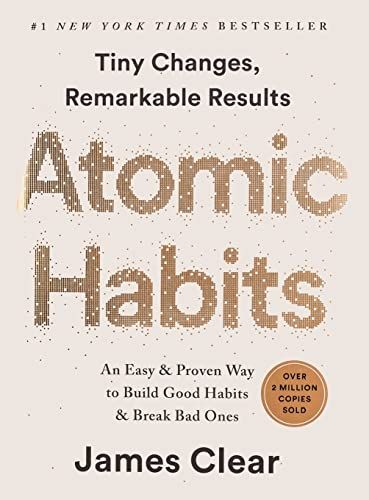
Nova: Think about a single drop of reagent in a laboratory. On its own, it seems completely insignificant. But drop by drop, it changes the entire color, the entire chemistry of the solution. That is the power of an atomic habit. Today, we are looking at James Clear's bestseller,, not just as a self-help book, but as a scientific manual for human behavior. We are going to tackle this book from two different angles. First, we'll explore the Systems-First Protocol, which is all about why focusing on systems, rather than goals, is the secret to reproducible personal growth. Then, we'll dive into Behavioral Catalysts, looking at how we can design our physical environments to lower the activation energy needed to build life-changing routines. And joining me today to dissect all of this is Suleiman Isah, a medical laboratory scientist and researcher who spends his days looking at the world through a microscope. Suleiman, welcome! It is so wonderful to have you here with us.
Suleiman Isah: Thanks, Nova! It is absolutely fantastic to be here. You know, when I first read, I couldn't help but smile. As a laboratory scientist, my entire world is built on the microscopic. We know that the smallest cellular mutation or the tiniest chemical imbalance can completely alter an organism's health. So, when James Clear talks about a one percent improvement compounding into something massive over time, it immediately clicked for me. It is the exact same principle we see in biology and chemistry.
Nova: Oh, I love that connection! It is so true, isn't it? We often think that to make a big change in our lives, we need to make a massive, earth-shattering move. But Clear argues that real, lasting change is actually the result of hundreds of small decisions—like choosing to do five push-ups, reading one page, or waking up five minutes earlier. We call these atomic habits because they are like the building blocks of our lives. Individually, they are tiny, but together, they form the entire structure of our daily existence.
Suleiman Isah: Exactly. In research, we talk about incremental progress all the time. You don't just walk into a lab and discover a cure or map a genome in a single afternoon. It is a painstaking process of tiny, daily experiments, adjustments, and observations. If you only focus on the end goal, you get discouraged incredibly fast because the daily progress is almost invisible. You have to fall in love with the process, the system itself.
Nova: Yes! Fall in love with the system. That is the perfect transition to our first major topic.
Deep Dive into Core Topic 1
SECTION
Nova: Let's talk about this Systems-First Protocol. James Clear writes something in the book that really blew my mind. He says, "You do not rise to the level of your goals. You fall to the level of your systems." That is a pretty bold statement, right? We are always told to set big, audacious goals. But Clear says goals are actually the problem. To illustrate this, he shares the incredible story of the British Cycling team. For over a hundred years, British professional riders had been completely mediocre. They had won next to nothing. In fact, they were so bad that one top bike manufacturer refused to even sell them bikes because they were worried it would hurt their reputation! But then, in 2003, they hired a man named Dave Brailsford. And Brailsford didn't focus on a massive overhaul. Instead, he committed to a strategy he called the aggregation of marginal gains. He looked for one percent improvements in everything. They redesigned the bike seats to make them more comfortable. They rubbed alcohol on the tires for better grip. They had the riders wear electrically heated shorts to maintain muscle temperature. They even tested different types of massage gels to see which one led to the fastest muscle recovery!
Suleiman Isah: That is incredibly thorough. It sounds like a highly controlled laboratory experiment!
Nova: It really was! They even hired a surgeon to teach the riders the best way to wash their hands to avoid catching a cold, and they chose the precise pillows and mattresses that led to the best night's sleep for each rider. They painted the inside of their team truck pristine white so they could spot tiny dust particles that might degrade the performance of the finely tuned bikes. And the result? Just five years later, at the 2008 Beijing Olympics, the British Cycling team dominated, winning sixty percent of the gold medals available. Four years later in London, they set nine Olympic records and seven world records. And Bradley Wiggins became the first British cyclist to win the Tour de France. It is just mind-blowing!
Suleiman Isah: It really is. And what I find fascinating about that story from a scientific perspective is that Brailsford didn't just say, "Our goal is to win the Tour de France," and leave it at that. Every team has the goal of winning. The goal is a constant. What changed was the system. In research, we know that if you want a reproducible result, you need a standardized protocol. If your protocol is sloppy, your results will be inconsistent, no matter how much you want a breakthrough. Your daily habits are your personal protocol. If you have a chaotic system, you will get chaotic results.
Nova: That makes so much sense! A personal protocol. I am definitely stealing that phrase, Suleiman. But you know, it can be so frustrating because when we start a new protocol—like going to the gym or eating healthier—we expect to see results immediately. But Clear talks about this concept called the Plateau of Latent Potential. He says that in the early stages of building a habit, there is often a valley of disappointment where you are doing the work, but you don't see any progress. It is like heating an ice cube. If the room is at twenty-five degrees, and you heat it to twenty-six, twenty-seven, twenty-eight... nothing happens. The ice cube doesn't melt. It looks like you are failing. But then you hit thirty-two degrees, and suddenly, it begins to melt. The one-degree shift that caused the melting wasn't a sudden miracle; it was the accumulation of all the previous temperature changes.
Suleiman Isah: Oh, that resonates so deeply with me as a researcher. When we are culturing bacteria in the lab, we inoculate a petri dish and put it in the incubator. For hours, sometimes days, you look at it and see absolutely nothing. It looks like a blank piece of agar. If you got discouraged and threw it away, you would think the experiment failed. But underneath the surface, at the microscopic level, cellular division is happening exponentially. Then, suddenly, overnight, visible colonies appear. That is the Plateau of Latent Potential in action. The growth was happening all along; it just hadn't crossed the threshold of visibility yet. We have to trust the system even when we can't see the results yet.
Nova: Wow, that is a beautiful analogy. It really helps to visualize that invisible progress. But how do we actually stick to the system when we feel discouraged? Clear says the key is shifting our focus from what we want to achieve to who we wish to become. He talks about three layers of behavior change: outcomes, processes, and identity. Most people start with outcomes—like "I want to lose twenty pounds" or "I want to write a book." But the most effective way to build lasting habits is to focus on identity. Instead of saying "I want to be a person who runs," you say "I am a runner." Instead of "I want to write," you say "I am a writer."
Suleiman Isah: Yes, the identity shift is crucial. It changes the internal narrative. If you see yourself as a healthy person, then choosing an apple over a donut isn't a sacrifice; it is just an expression of who you are. In my own life, when I transitioned from being a student to a working healthcare professional, my daily habits had to change. I couldn't just rely on cramming for exams anymore. I had to adopt the identity of a rigorous, detail-oriented scientist. Once I embraced that identity, double-checking my work and keeping a meticulous lab notebook became second nature. It wasn't a chore; it was just what a scientist does. Every action you take is a vote for the type of person you want to become.
Nova: "Every action is a vote." I love that. It is so empowering because it means you don't have to be perfect. You just need to win the majority of the votes!
Deep Dive into Core Topic 2
SECTION
Nova: Now, let's transition to our second major topic: Behavioral Catalysts. How do we actually make these habits easier to perform? Clear introduces the Four Laws of Behavior Change: make it obvious, make it attractive, make it easy, and make it satisfying. Today, I want to focus on making it obvious and making it easy, which really comes down to environment design. Clear shares a fascinating study conducted by Anne Thorndike, a primary care physician at Massachusetts General Hospital. She wanted to improve the eating habits of hospital staff and visitors without talking to them or trying to persuade them in any way. So, she redesigned the hospital cafeteria. Originally, the refrigerators next to the cash registers were filled with only soda. She added water to those refrigerators, and she also placed baskets of bottled water throughout the room. Over the next three months, soda sales dropped by over eleven percent, while bottled water sales increased by over twenty-five percent! And all of this happened without anyone saying a single word to the customers.
Suleiman Isah: That is a classic example of choice architecture. It shows that we often choose things not because of what they are, but because of where they are. Our visual cues are incredibly powerful. In the lab, we design our workspace with extreme precision. We call it 'ergonomics' and 'workflow optimization.' If I need to perform a rapid test, all the reagents, pipettes, and tubes are arranged in a specific sequence from left to right. If I had to search through drawers for a pipette every time I needed one, the friction would be immense, and the chance of making an error would skyrocket. By making the tools obvious and easy to reach, the correct protocol becomes the path of least resistance.
Nova: Exactly! You are lowering the activation energy. In chemistry, activation energy is the minimum amount of energy required to initiate a chemical reaction, right?
Suleiman Isah: Precisely. If the activation energy is too high, the reaction won't happen, or it will happen very slowly. A catalyst works by lowering that activation energy barrier. In human behavior, environment design is our catalyst. If you want to practice guitar more often, but your guitar is packed away in its case in the back of the closet, the activation energy to play is very high. You have to go to the closet, pull it out, unzip the case, and tune it. But if you place the guitar on a stand right in the middle of your living room, the activation energy drops to almost zero. You just pick it up and play.
Nova: That is such a perfect way to look at it! We can catalyze our good habits by making them the default option. And conversely, we can increase the activation energy for our bad habits. If you want to stop watching so much TV, you can unplug it after every use, or even put the remote control in a drawer in another room. The extra effort required to set it up gives your brain a moment to pause and ask, "Do I really want to do this?"
Suleiman Isah: Yes, it creates a cognitive speed bump. And another brilliant tool Clear discusses is habit stacking. This is where you identify a current habit you already do every day, and then you stack your new habit on top of it. The formula is: 'After I, I will.' For example, 'After I pour my morning cup of coffee, I will meditate for one minute.'
Nova: Oh, habit stacking is incredibly effective! It leverages the existing neural pathways in our brain. You don't have to build a new trigger from scratch; you just piggyback on an established one.
Suleiman Isah: It is like a molecular chain reaction. In a biochemical pathway, the product of one reaction becomes the substrate for the next. It is a seamless, automated sequence. When we stack habits, we are essentially creating a behavioral cascade. For me, as a researcher, I stacked a habit of reading scientific papers. I decided that as soon as I sat down at my desk with my morning tea—which was an established habit—I would immediately open one research paper and read the abstract. I didn't commit to reading the whole paper, just the abstract. It was so easy to start, and once I started, the momentum usually carried me through the rest of the paper.
Nova: That is a fantastic example of the 'Two-Minute Rule' as well! Clear says that when you start a new habit, it should take less than two minutes to do. It is all about mastering the art of showing up. A habit must be established before it can be improved. You can't optimize a habit that doesn't exist!
Suleiman Isah: Absolutely. We often let our perfectionism get in the way. We think if we can't do a full thirty-minute workout, there is no point in doing anything. But a two-minute workout still reinforces your identity as an active person. It keeps the neural pathway active. It is like keeping a flame alive with a tiny piece of kindling, rather than letting it go out completely and having to strike a match all over again.
Synthesis & Takeaways
SECTION
Nova: This has been such an incredibly rich conversation, Suleiman. We have covered so much ground, from the British Cycling team's marginal gains to choice architecture in hospital cafeterias, and how all of this connects to the microscopic world of laboratory science. If you had to synthesize our discussion today into one key takeaway for our listeners, what would it be?
Suleiman Isah: I think the most powerful realization is that we are the authors of our own systems. We don't have to be victims of our environment or our genetics. Just like a scientist in a lab, we can experiment, observe, and adjust our personal protocols. If a habit isn't sticking, it is not because you are lazy or lack willpower. It is simply a design flaw in your system. Maybe the cue isn't obvious enough, or the activation energy is too high. Treat yourself with compassion, look at your life like a fascinating research project, and focus on making those tiny, one percent adjustments. Over time, those microscopic shifts will compound into a completely different chemistry of life.
Nova: That is beautiful, Suleiman. A design flaw, not a personal failure. That is such a liberating perspective. And for our listeners today, we want to leave you with a simple, actionable challenge. Think about one positive habit you want to build this week. How can you apply the catalyst of environment design to make it obvious and easy? Can you place a book on your pillow to encourage reading before bed? Or perhaps stack a new habit onto your morning routine? Remember, you don't need to revolutionize your life overnight. Just focus on that next one percent. Suleiman, thank you so much for sharing your incredible insights and scientific perspective with us today. This was truly enlightening.
Suleiman Isah: Thank you, Nova. It was an absolute pleasure. Keep experimenting, everyone!
Nova: And to all our listeners, thank you for tuning in. Until next time, keep building those systems, drop by drop, and watch your world transform. We'll see you in the next episode!