

Debugging the Self: Systems, Identity, and the Power of 1% with Nabil
Golden Hook & Introduction
SECTION
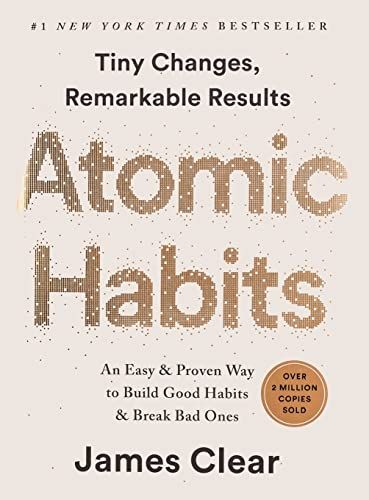
Nova: What if the secret to becoming a disciplined leader, a deeply spiritual person, or a world-class engineer isn't about setting massive goals at all? What if, instead, it's about debugging the tiny, invisible systems that run in the background of our lives every single day? Welcome to the podcast! I'm Nova, and today we are embarking on a truly exciting journey into James Clear's groundbreaking book,. But we aren't just summarizing it. We are looking at it through a fascinating, highly analytical lens. Joining us today is Md Iftiab Mahmud Nabil, a software engineer with a deep curiosity for systems, personal growth, and meaningful leadership. Nabil, it is so wonderful to have you here with us!
Md. Iftiab Mahmud Nabil: Thank you, Nova! It's an absolute pleasure to be here. You know, when I first read, I couldn't help but view it through the lens of software engineering. In tech, we talk a lot about system architecture, optimization, and debugging. And honestly, our daily habits are essentially the source code of our lives. If we have buggy code running in our routines, we can't expect our lives to run smoothly. I'm really excited to dive into how we can refactor that code today.
Nova: Oh, I love that metaphor so much! "Refactoring the source code of our lives." That is brilliant! And today, we're going to tackle this from three key perspectives. First, we'll explore how shifting from goal-oriented thinking to identity-driven systems changes the game for personal and spiritual growth. Then, we'll discuss how to "debug" our physical and digital environments to make good habits effortless. And finally, we'll focus on practical, actionable ways to apply these atomic changes to leadership and daily work performance. We have a lot of ground to cover, so let's jump right in!
Deep Dive into Core Topic 1
SECTION
Nova: Let's start with a story from the book that I think perfectly illustrates the power of small systems. It's the story of the British Cycling team. For nearly a hundred years, British professional riders had been shrouded in mediocrity. Since 1908, they had won just a single gold medal at the Olympic Games, and no British rider had ever won the Tour de France. In fact, they were so consistently underperforming that one top bike manufacturer actually refused to sell bikes to the team because they were afraid it would hurt their sales! But then, in 2003, they hired a man named Dave Brailsford. He believed in a concept he called "the aggregation of marginal gains." The idea is simple: if you break down everything you can think of that goes into riding a bike, and then improve it by just one percent, you will get a significant increase when you put them all together.
Md. Iftiab Mahmud Nabil: That is such a powerful case study, Nova. And what's fascinating is they applied it. They didn't just focus on the obvious things like training programs or nutrition. They went incredibly granular.
Nova: Exactly! They redesigned the bike seats to make them more comfortable. They rubbed alcohol on the tires for better grip. They had the riders wear electrically heated overshorts to maintain muscle temperature. But they didn't stop there. They tested different massage gels to see which led to the fastest muscle recovery. They hired a surgeon to teach the riders the best way to wash their hands to reduce the chances of catching a cold. They even figured out which pillow and mattress led to the best night's sleep for each rider, and they brought those pillows with them to hotels! They even painted the inside of their team truck white so they could easily spot tiny dust particles that might degrade the performance of their finely tuned bikes.
Md. Iftiab Mahmud Nabil: Wow. That level of detail is incredible. It's exactly like optimizing a software system. You don't just look at the final output; you profile the code, find the bottlenecks, and optimize the micro-operations. And what were the results of all those tiny 1% changes?
Nova: Oh, they were staggering! Just five years after Brailsford took over, at the 2008 Olympic Games in Beijing, the British Cycling team absolutely dominated, winning 60 percent of the gold medals available. Four years later in London, they set nine Olympic records and seven world records. And that same year, Bradley Wiggins became the first British cyclist to win the Tour de France. They won it again the next year, and the next, and the next. It was an unprecedented run of success. And it all came down to those tiny, compounding 1% improvements. James Clear uses this to show that we shouldn't focus so much on the goal—like winning the Tour de France—but on the of continuous improvement.
Md. Iftiab Mahmud Nabil: This resonates so deeply with me, Nova. In software engineering, we have this concept of Continuous Integration and Continuous Deployment, or CI/CD. Instead of waiting six months to release a massive, risky software update, we make tiny, incremental updates every single day. It reduces risk, builds momentum, and leads to a much more robust system over time. But James Clear takes this a step further by linking these systems to our. He talks about three layers of behavior change: outcomes, processes, and identity. Outcomes are about what you get. Processes are about what you do. But identity is about what you believe.
Nova: Yes! He says that the most effective way to change your habits is to focus not on what you want to achieve, but on. Can you share how that applies to something like spiritual life or professional growth?
Md. Iftiab Mahmud Nabil: Absolutely. Let's look at spiritual life, which is very important to me. If my goal is outcome-based, I might say, "I want to read fifty pages of spiritual text this week." That's a goal. But if I hit a busy week at work, and I only read five pages, I feel like a failure. I might give up entirely. But if I shift to an habit, I focus on the belief: "I am a person who prioritizes daily spiritual reflection." The system then becomes simply opening the book or sitting in quiet reflection for just two minutes every morning. Even if I only do it for two minutes, I am casting a vote for that identity. Every time you perform a habit, you are casting a vote for the type of person you want to become.
Nova: "Casting a vote for the type of person you want to become." That is such a beautiful, encouraging way to look at it! It takes away that heavy burden of perfectionism, doesn't it? We don't have to be perfect; we just have to win the majority of the votes.
Md. Iftiab Mahmud Nabil: Exactly! And as an INFJ, I tend to be very reflective and value deep, genuine connections. If I view my spiritual practices or my leadership development as an identity rather than a checklist, it becomes authentic. I'm not just "doing" leadership tasks; I am cultivating the identity of a thoughtful, supportive leader who empowers others. That shift in perspective changes everything. It turns a chore into a core part of who you are.
Deep Dive into Core Topic 2
SECTION
Nova: That is incredibly profound, Nabil. And it leads us beautifully into our second core topic: how do we actually make these habits stick? How do we build the environment that supports this identity? This brings us to the First Law of Behavior Change, which is:. James Clear emphasizes that our environment is the invisible hand that shapes human behavior. We like to think we have complete free will and infinite willpower, but the truth is, we often just react to the cues in our surroundings.
Md. Iftiab Mahmud Nabil: Yes, we are highly visual creatures. If a cue is hidden, we ignore it. If it's prominent, we act on it.
Nova: Exactly! To prove this, Clear shares a fascinating study conducted by a primary care physician at Massachusetts General Hospital named Anne Thorndike. She wanted to improve the eating habits of hospital staff and visitors without using willpower or persuasion. She didn't talk to them, she didn't lecture them. Instead, she and her team redesigned the hospital cafeteria's "choice architecture." Originally, the refrigerators next to the cash registers were filled with only soda. The researchers added water bottles to those refrigerators, and they also placed baskets of bottled water throughout the room. Soda was still available, but water was now everywhere.
Md. Iftiab Mahmud Nabil: That's brilliant. It's like changing the default settings on an application. What happened to the sales?
Nova: Over the next three months, the number of soda sales at the hospital dropped by 11.4 percent. Meanwhile, sales of bottled water increased by a whopping 25.8 percent! And they did the same thing with food options, leading to similar healthy changes. The key takeaway here is that people didn't change because of a sudden burst of motivation. They changed because the in their environment changed. The friction to choose water was lowered, and the cue was made highly obvious.
Md. Iftiab Mahmud Nabil: As a software engineer, this makes total sense to me. We call this User Interface and User Experience design, or UI/UX. If you want a user to click a button, you make it big, bright, and place it right in the center of the screen. If you want to prevent them from making a mistake, like deleting their account, you hide that button in a sub-menu and add extra steps of friction. We can apply this exact same UI/UX design to our physical and digital lives!
Nova: Oh, I love that! "UI/UX design for your life!" How would you apply that to your own workspace or your spiritual routine, Nabil?
Md. Iftiab Mahmud Nabil: Well, let's look at work performance. If I want to focus on deep, creative coding, but my phone is sitting right next to my keyboard, that's a highly visible cue. The friction to pick it up and check notifications is practically zero. It's bad UI design. So, to "debug" my environment, I can put my phone in another room, or lock it in a drawer. I've increased the friction. On the flip side, if I want to build a habit of reading technical articles or spiritual texts, I shouldn't hide them on a crowded bookshelf. I should place the book right on my pillow in the morning, or set my browser's default home page to a technical blog I want to read. By making the cue obvious and reducing the friction, I'm setting myself up for success.
Nova: That is so practical! It's about designing your environment so that the good habits are the path of least resistance. We don't need more willpower; we just need a better-designed system. And you know, this is especially important for leaders. A systems-driven leader doesn't just tell their team, "Be more productive!" They look at the team's environment and ask, "What is causing friction here? Are there too many meetings? Is our communication tool too noisy? How can we design our workflow to make deep focus the default?"
Md. Iftiab Mahmud Nabil: Yes! That is the hallmark of a great leader. It's about building supportive structures. In engineering, we don't blame the developer when a bug slips into production; we look at our testing pipeline and ask why the system didn't catch it. As a leader, if a team member is struggling with consistency, we shouldn't just assume they lack discipline. We should sit down with them and help them debug their system. Maybe they are overwhelmed by notifications, or maybe the expectations aren't clear. When we focus on the system, we build trust and psychological safety, which is so important for an INFJ leader.
Synthesis & Takeaways
SECTION
Nova: This has been such an incredibly rich conversation, Nabil. We've connected software engineering, environment design, spiritual discipline, and leadership all back to the core principles of. As we start to wrap up, let's synthesize some of these key ideas for our listeners. If you had to summarize the most important shift we need to make, what would it be?
Md. Iftiab Mahmud Nabil: I think the most important shift is moving away from the obsession with immediate, massive results and embracing the power of compounding. James Clear writes that if you can get just one percent better each day for one year, you'll end up thirty-seven times better by the time you're done. Conversely, if you get one percent worse each day, you'll decline nearly down to zero. It's the compounding interest of self-improvement. Whether we are talking about our spiritual lives, our professional skills, or our leadership abilities, consistency beats intensity every single time.
Nova: "Consistency beats intensity." That is going on my sticky note on my monitor! It's so true. We often think we need to make a massive, heroic effort to change our lives, but really, we just need to show up and cast that vote for our identity, even if it's just for two minutes. Which brings us to one of my favorite practical tools from the book: the Two-Minute Rule. Clear says that when you start a new habit, it should take less than two minutes to do. So, "Read before bed" becomes "Read one page." "Do thirty minutes of yoga" becomes "Fold out my yoga mat."
Md. Iftiab Mahmud Nabil: I love the Two-Minute Rule because it addresses the hardest part of any habit: just getting started. Once you start doing the right thing, it is much easier to continue doing it. A habit must be established before it can be improved. You can't optimize a system that doesn't exist yet!
Nova: Exactly! You have to standardize before you can optimize. That is a perfect engineering principle right there. So, Nabil, for you personally, as you continue to grow in your career as a software engineer and step into your potential as a thoughtful, systems-driven leader, what is one "atomic" habit you are focusing on right now?
Md. Iftiab Mahmud Nabil: For me, it's about my morning routine. I want to ensure my day starts with spiritual grounding and mental clarity before I get pulled into the digital noise of emails and code reviews. So, my atomic habit is: when I wake up, I immediately place my phone in a drawer in the living room, and I sit with a physical journal and a spiritual text for just five minutes. It's a very low-friction, highly obvious system. It reinforces my identity as a reflective, grounded person, and it sets the tone for the rest of my day.
Nova: That is beautiful, Nabil. It's simple, it's elegant, and it's incredibly powerful. Thank you so much for sharing your insights, your technical perspective, and your heart with us today. This has been an absolute joy.
Md. Iftiab Mahmud Nabil: Thank you, Nova. It's been a wonderful conversation. I hope it encourages everyone listening to start debugging their own systems, one percent at a time.
Nova: Absolutely! And to our listeners, we want to leave you with a question to ponder today: What is one tiny, 1% shift you can make in your environment right now to make your best habits obvious and your worst habits invisible? Remember, we don't rise to the level of our goals; we fall to the level of our systems. So let's build some beautiful systems together. Until next time, keep growing, keep debugging, and take care!