

From Teacher to Architect: Building Transformative Learning Systems
Golden Hook & Introduction
SECTION
Nova: Atlas, I was today years old when I truly grasped that the reason some of our best educational intentions crumble isn't because of bad ideas, but because we're trying to fix a single cog in a massive, interconnected machine.
Atlas: Oh, I like that. It's like trying to improve a car's engine by polishing the rearview mirror. Feels productive, but you're still stuck on the side of the road. So, what brilliant mind illuminated this for you?
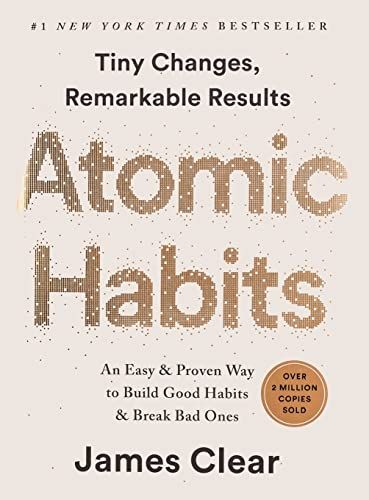
Nova: Exactly! And the brilliant minds behind this particular illumination are quite diverse. We're actually pulling insights today from two foundational texts: James Clear's highly acclaimed "Atomic Habits: An Easy & Proven Way to Build Good Habits & Break Bad Ones," and Donella H. Meadows' seminal work, "Thinking in Systems: A Primer." What's fascinating is how Clear, a writer and speaker focused on habits, managed to distil incredibly complex behavioral psychology into such an accessible, practical guide that it became an instant bestseller and cultural phenomenon.
Atlas: Wow, that’s quite a pairing. One on individual habits, the other on complex systems. It sounds like we’re building a bridge between micro-changes and macro-impact. So, where do we start with transforming learning systems, at the individual desk or the institutional blueprint?
From Atomic Habits to Systemic Change
SECTION
Nova: We start by understanding that the principles of habit formation, while seemingly individual, are profoundly systemic. Clear’s core insight, that true change comes from tiny, consistent improvements and environment design, isn't just about flossing daily. It's about how those small, consistent improvements can aggregate into massive systemic shifts. Think about it: if we want students to read more, we don't just tell them to read more. We design an environment where reading is the default, the easiest option.
Atlas: Okay, so you’re saying instead of just lecturing about the importance of reading, we make the classroom environment a reading-first zone? Like, books are everywhere, quiet reading time is built in, and the act of choosing a book is frictionless?
Nova: Precisely. Clear emphasizes that habits thrive in environments designed for them. He talks about making good habits obvious, attractive, easy, and satisfying. Now, apply that to a school's learning system. What if we made 'deep inquiry' obvious by having visible project displays everywhere? What if 'collaborative problem-solving' was attractive because it led to genuine, celebrated breakthroughs?
Atlas: That makes me wonder, how does this move beyond just individual teachers tweaking their classrooms? Because a lot of our listeners are pedagogical innovators, they're already trying to transform their own spaces. But how do you scale that atomic habit principle to a whole school, or even a district?
Nova: That's where Donella Meadows comes in, and this is where the two books intertwine so beautifully. Meadows, a pioneering environmental scientist and systems thinker, gave us a language and a framework for seeing the invisible forces at play. She taught us that a system isn't just a collection of things; it's a set of interconnected elements that are organized in a way that achieves something. And crucially, it's the between those elements that determine the system's behavior.
Atlas: Right, like a school isn’t just teachers, students, and textbooks. It’s how they interact, how information flows, how decisions are made, and even the unwritten rules that dictate behavior. So, how do we apply Clear’s 'atomic habits' to Meadows’ 'systems thinking'?
Nova: Imagine a school struggling with student engagement. An "atomic habit" approach might be for individual teachers to try new engagement strategies. But a "systems thinking" approach, informed by Clear, asks: What are the feedback loops here? What are the underlying structures that make disengagement easy and engagement difficult? Perhaps the bell schedule creates rushed transitions, making deep work impossible. Or the grading system inadvertently punishes experimentation.
Atlas: So, instead of just telling teachers to "be more engaging," we look at the policies, the schedules, the physical layout, the power dynamics – all the elements that are subtly reinforcing the of disengagement. That’s a powerful reframing. It’s like the system itself has habits.
Nova: Exactly! Meadows would call those "leverage points" – places within a system where a small shift can lead to large changes. And Clear's work gives us the blueprint for what those small shifts, those "atomic habits," might look like at a systemic level. It's not about making a massive, disruptive change, but understanding where a small, consistent intervention can ripple through the entire system.
Atlas: That’s actually really inspiring. Because as a pedagogical innovator, you can feel like you’re constantly pushing against a brick wall. But if you can identify a leverage point, suddenly that small push can move the whole wall.
Systems Thinking and Educational Ecosystems
SECTION
Nova: That's the magic. Meadows' work helps us diagnose the problem beyond surface symptoms. She talks about stocks and flows, feedback loops, and delays. In education, a "stock" might be student knowledge or teacher morale. "Flows" are the rate at which knowledge is acquired or morale changes.
Atlas: Okay, so if student knowledge is a stock, then effective teaching and consistent practice are positive inflows, and forgetting or lack of application are outflows. And the feedback loops would be things like how student performance impacts teacher motivation, or how teacher morale affects student engagement.
Nova: You've got it. And Meadows warns us about common system traps, like "drift to low performance" where standards gradually erode, or "fixes that fail" where well-intentioned solutions actually make things worse in the long run. Think about a new tech tool implemented without proper training or integration. It's a "fix" that creates more friction than benefit.
Atlas: Oh man, I’ve been there. Piloting new tech in a complex lesson, feeling like a hero, only to realize it just added another layer of cognitive load for students and teachers. So, the deep question from our content really hits home: "How might viewing it as a system, rather than an isolated problem, reveal new leverage points for intervention?"
Nova: It’s the essential question. Instead of asking "How do we get students to stop cheating on tests?", a systems thinker asks "What are the underlying structures and incentives that make cheating an appealing option in this learning ecosystem?" Is it an overwhelming workload? A high-stakes, single-point assessment culture? Lack of perceived value in the learning itself?
Atlas: So, the leverage point might not be stricter proctoring, but redesigning the assessment to be more authentic, or reducing the number of high-stakes tests, or fostering a culture where learning is valued over grades. That’s a complete paradigm shift.
Nova: It is. And the beauty is, once you start seeing the system, you can identify those small, "atomic" changes that, when applied at a leverage point, can have disproportionately large effects. A subtle shift in how feedback is given, a redesign of the learning space, a re-evaluation of meeting structures for teachers – these aren't just individual tweaks; they're systemic interventions.
Atlas: This gives me chills, honestly. It moves beyond the individual burden of "be a better teacher" or "be a better student" to "how can we design a better environment for everyone to thrive?" It’s empowering.
Synthesis & Takeaways
SECTION
Nova: That's the profound takeaway here. We often try to solve complex educational challenges with linear thinking, addressing symptoms in isolation. But by integrating the wisdom of "Atomic Habits" and "Thinking in Systems," we unlock a truly transformative approach. We realize that sustainable pedagogical change isn't about grand, sweeping overhauls, but about understanding the interconnectedness of our learning ecosystems and identifying those small, consistent interventions – those atomic habits – that can shift the entire system.
Atlas: So, for our listeners, the pedagogical innovators and digital integrators out there, it’s about embracing that journey of continuous refinement, but with a much smarter map. It's about asking, "Where is the greatest leverage?" and then applying the principles of making good habits obvious, attractive, easy, and satisfying, not just for individuals, but for the entire school culture. It's about moving from simply teaching to truly architecting a self-improving educational ecosystem.
Nova: Absolutely. It’s about building an environment where excellence is the default, not an uphill battle. The challenge, and the opportunity, is to see past the immediate problem and understand the system that produced it. Because once you understand the system, you can gently, yet powerfully, nudge it towards transformation.
Atlas: That’s such a hopeful way to look at it. It’s about designing for success, rather than just striving for it.
Nova: This is Aibrary. Congratulations on your growth!