

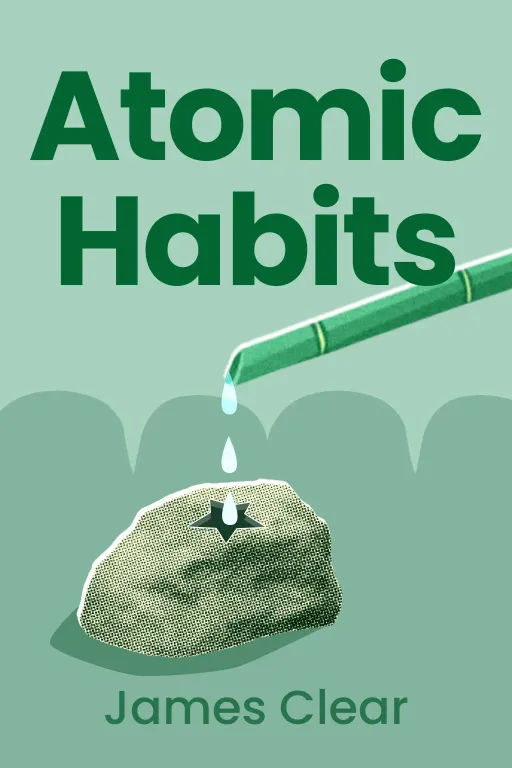
The System Within: Atomic Habits for Healthcare Leaders and Lifelong Learners
Content
Content
Nova: -
Nova: -
Golden Hook & Introduction
SECTION
Nova: If you change the trajectory of an airplane leaving Los Angeles by just three and a half degrees south, you do not land in New York. You end up in Washington, D. C. A tiny, almost invisible shift at the start completely alters the final destination. The same is true for our lives. We often think massive success requires massive, earth-shattering action, but the real magic lies in the tiny, compounding choices we make every single day. Welcome to the show. I am Nova, and today we are diving deep into James Clear’s masterpiece, Atomic Habits. But we are not doing this alone. We have a very special guest with us, Huzaifawaheed_7, a healthcare professional who is deeply passionate about learning, personal growth, and systems-driven leadership. Huzaifawaheed_7, it is wonderful to have you here.
Huzaifawaheed_7: Thank you, Nova. It is a pleasure to be here. I have to say, that airplane metaphor really resonates with me. In healthcare, we see how tiny variables, when compounded over time, can lead to drastically different patient outcomes. So, looking at personal development through that same systemic lens is incredibly exciting.
Nova: Oh, absolutely. And today, we are going to tackle this book from three distinct perspectives. First, we will explore why systems trump goals and how we can build identity-based habits, especially in our spiritual and professional lives. Second, we will look at choice architecture, which is all about designing our environments to make good habits effortless. And finally, we will focus on how to stay motivated and avoid the trap of complacency through deliberate reflection. So, let us jump right in.
Deep Dive into Core Topic 1
SECTION
Nova: Let us start with this idea of systems versus goals. James Clear writes, you do not rise to the level of your goals, you fall to the level of your systems. To illustrate this, he tells the incredible story of British Cycling. In 2003, they were so mediocre that bike manufacturers literally refused to sell them bikes because they did not want to be associated with underachievement. Then, they hired Dave Brailsford. Instead of focusing on a massive, vague goal like win the Tour de France, Brailsford implemented the aggregation of marginal gains. He looked for one percent improvements in everything. They redesigned the bike seats for comfort, rubbed alcohol on the tires for better grip, and used electrically heated overshorts to keep muscle temperatures optimal. But they did not stop there. They hired a surgeon to teach the riders the best way to wash their hands to avoid catching colds. They tested different massage gels, and they even painted the inside of the team truck white so they could spot tiny dust particles that might degrade the bikes. The result? They absolutely dominated the Olympics and the Tour de France for a decade. Huzaifawaheed_7, as someone in healthcare, how does this concept of marginal gains strike you?
Huzaifawaheed_7: It strikes me as incredibly logical and deeply familiar. In clinical settings, we rely heavily on protocols and checklists. We do not just have a goal of zero infections; we have a system of hand hygiene, sterile fields, and double-checking dosages. Each of those is a tiny, one percent variable. If we only focus on the goal, which is patient safety, without optimizing the system, the goal remains an illusion. When I read about Dave Brailsford painting the truck white to see the dust, it reminded me of how we design operating rooms. It is about making the invisible visible so the system can function flawlessly.
Nova: That is a brilliant connection. It is the invisible details that create the visible breakthroughs. But Clear takes this a step further. He says the most effective way to change our habits is not to focus on what we want to achieve, which are the outcomes, but on who we wish to become, which is our identity. He gives the example of two people resisting a cigarette. The first person is offered a smoke and says, no thanks, I am trying to quit. It sounds reasonable, right? But they still identify as a smoker who is trying to be different. The second person is offered a cigarette and says, no thanks, I am not a smoker. That is a massive shift. They no longer identify with the behavior. Huzaifawaheed_7, you mentioned wanting to apply this to your spiritual life and leadership. How do you see this identity shift playing out there?
Huzaifawaheed_7: This is actually one of the most profound takeaways for me. Often, in our spiritual lives, we set outcome-based goals. We say, I want to pray for thirty minutes every day, or I want to read a certain number of spiritual texts this month. But if we do not shift our identity, we are just forcing a behavior that clashes with our self-image. Instead of saying, I am trying to establish a daily prayer habit, the identity-based approach is to say, I am a deeply spiritual person who values daily connection. Or, in my work, instead of saying, I want to complete this leadership course, I say, I am a leader who invests in the growth of my team. Every action we take is a vote for the type of person we wish to become. When I make a small, consistent choice, like reading for ten minutes or checking in on a colleague, I am casting a vote for that identity.
Nova: I love that phrase, casting a vote for the person you want to become. It takes the pressure off being perfect. You do not need a landslide victory; you just need a majority vote. If you miss a day, or make a poor choice, you did not lose the election. You just cast one vote for the other side, and you can immediately cast the next vote for your desired identity.
Huzaifawaheed_7: Exactly. And it builds self-trust. In healthcare, trust is built through consistent, reliable actions over time. The same applies to our relationship with ourselves. When we prove to ourselves through small wins that we are who we say we are, our self-belief strengthens. It is a beautiful, self-reinforcing loop.
Deep Dive into Core Topic 2
SECTION
Nova: It really is. Now, let us move to our second perspective, which is all about the environment. Clear argues that motivation is highly overrated, and environment often matters much more. We like to think we have complete control over our choices, but the truth is, we are deeply influenced by the cues around us. Take the study conducted by Dr. Anne Thorndike at Massachusetts General Hospital. She wanted to improve the eating habits of hospital staff and visitors without talking to them or trying to motivate them. So, she changed the choice architecture of the cafeteria. Originally, the refrigerators next to the cash registers were filled only with soda. She added water as an option to those refrigerators and placed baskets of bottled water throughout the food stations. Soda was still available, but water was now highly visible and easily accessible. Over the next three months, soda sales dropped by over eleven percent, and water sales increased by nearly twenty-six percent. No pep talks, no educational pamphlets. Just a shift in the environment. Huzaifawaheed_7, as a healthcare professional, what does this tell us about human behavior?
Huzaifawaheed_7: It tells us that we are incredibly visual creatures and that we naturally gravitate toward the path of least resistance. In psychology, we talk about how the brain is always trying to conserve energy. If a behavior requires conscious effort and willpower, it is much harder to sustain. Willpower is a finite resource. If I come home after a long, exhausting shift at the hospital, and my environment is set up to make unhealthy choices easy, I will make them. If the remote control is on the couch and the book is hidden away in a drawer, I will watch television. But if I design my environment to make the cues of good habits obvious, I bypass the need for willpower.
Nova: Yes, make the cues of your good habits obvious and the cues of your bad habits invisible. It is like the story of the Schiphol Airport in Amsterdam. They wanted to reduce spillage around the urinals, so they placed a tiny sticker that looked like a fly near the center of each urinal. It turns out, men naturally aim at the fly. Spillage went down by eighty percent, and cleaning costs plummeted. It is a tiny visual cue that completely changes behavior.
Huzaifawaheed_7: That is a classic example of a nudge. And we can apply this to our personal lives through what Clear calls priming the environment for future use. He mentions an IT developer named Oswald Nuckols who uses a strategy called resetting the room. When he finishes watching television, he puts the remote back on the stand, arranges the pillows, and folds the blanket. When he leaves his car, he throws away any trash. He is making the next action as easy as possible. For me, if I want to study or read in the morning, I need to prime my desk the night before. I open the book to the page I want to read, put my notebook next to it, and place a pen on top. When I wake up, the cue is obvious, and the friction to start is almost zero.
Nova: That is so true. And that brings us to the Two-Minute Rule. Clear says when you start a new habit, it should take less than two minutes to do. So, read one page, fold one basket of laundry, or meditate for two minutes. The idea is to standardize before you optimize. You cannot improve a habit that does not exist.
Huzaifawaheed_7: I think the Two-Minute Rule is incredibly powerful, especially for busy professionals. Often, we think if we cannot do something perfectly or for a long time, it is not worth doing. We think, if I cannot go to the gym for an hour, why bother? But the Two-Minute Rule teaches us to master the art of showing up. A reader in the book used this rule to lose over one hundred pounds. He went to the gym every day but only allowed himself to stay for five minutes. He would drive there, walk in, exercise for five minutes, and leave. It sounds ridiculous, but he was establishing the identity of a person who goes to the gym. Once that identity was locked in, scaling up the behavior was natural.
Nova: It is all about overcoming that initial inertia. Once you are in motion, it is much easier to stay in motion. Twyla Tharp, the famous dancer, says her morning ritual starts not with the workout, but with hailing the taxi. Once she tells the driver where to go, the decision is made. The rest of the routine just flows.
Deep Dive into Core Topic 3
SECTION
Nova: Now, let us talk about our third perspective, which is how to stay motivated and avoid the trap of complacency. Clear introduces the Goldilocks Rule, which states that humans experience peak motivation when working on tasks that are right on the edge of their current abilities. Not too easy, which leads to boredom, and not too difficult, which leads to anxiety or discouragement. Think of Steve Martin’s comedy career. He spent ten years learning, four years refining, and four years as a wild success. He kept adjusting his act, adding new jokes while keeping the ones that worked, always staying in that zone of just manageable difficulty. Huzaifawaheed_7, how do you find that Goldilocks zone in your professional and personal growth?
Huzaifawaheed_7: In healthcare, this is critical for preventing burnout and maintaining high performance. If a clinical task is too simple, we go on autopilot, which can lead to mistakes. If it is too complex without proper support, we experience high anxiety. The key is progressive overload, just like in weightlifting. We need to constantly challenge ourselves with slightly more complex cases or new learning opportunities, but in a structured way. In my personal growth, if I want to learn a new skill, I have to break it down so that I am always working at that four percent threshold beyond my current ability. That is where the flow state lives.
Nova: But there is a catch, right? Once a habit becomes automatic, we can fall into the trap of complacency. Clear says habits are necessary for mastery, but they are not sufficient. When you can do something good enough on autopilot, you stop thinking about how to do it better. To combat this, we need a system of reflection and review. He shares the story of Pat Riley, the legendary coach of the Los Angeles Lakers. In 1986, the Lakers were incredibly talented but failed to win the championship. So, Riley created the Career Best Effort program, or CBE. He tracked all the players' statistics, including the unsung hero deeds that do not show up in the box score, and asked each player to improve their output by just one percent over the season. By comparing their current performance to their past data, they kept refining their habits. And they won back-to-back championships in 1987 and 1988.
Huzaifawaheed_7: That story is a masterclass in continuous improvement. In medicine, we have morbidity and mortality conferences, and clinical audits. These are formal systems of reflection and review where we look at what went well and what did not, so we can adjust our protocols. On a personal level, I have started doing a weekly review. I look at my calendar, my habits, and my spiritual practices. I ask myself, what worked this week? Where did I lose consistency? What environmental cues tripped me up? Without that conscious reflection, we risk drifting. We might think we are improving, but we are actually just repeating the same average behaviors.
Nova: Exactly. Eliud Kipchoge, one of the greatest marathon runners of all time, takes notes after every single practice. He reviews his training, his sleep, his nutrition. Even at the absolute peak of his sport, he is constantly reflecting. It is about keeping your identity flexible. Clear warns that the tighter we cling to an identity, the harder it becomes to grow beyond it. If you identify too strongly as a specific role, say, a surgeon, and you can no longer perform surgery, who are you? But if you keep your identity small and flexible, say, I am a person who helps others heal, you can adapt to any change.
Huzaifawaheed_7: That is a very deep and necessary insight. In healthcare, roles can change, and life transitions are inevitable. If our identity is tied to a specific title, we are fragile. But if our identity is anchored in core values and systems of growth, we remain resilient. It allows us to navigate challenges while staying true to our deeper purpose.
Synthesis & Takeaways
SECTION
Nova: Well, we have covered some incredible ground today. We talked about how systems are more important than goals, and how true behavior change is actually identity change. We explored how to design our environments to make good habits obvious and easy, and how to use the Two-Minute Rule to overcome inertia. And finally, we discussed the Goldilocks Rule and the vital role of reflection and review in maintaining peak performance and avoiding complacency. Huzaifawaheed_7, as we wrap up, what is one actionable takeaway you would like to leave our listeners with?
Huzaifawaheed_7: I would challenge everyone to ask themselves one simple, identity-based question before making a decision today. If you want to be a better leader, a more spiritual person, or healthier, do not focus on the outcome. Just ask, what would a leader do in this situation? What would a spiritual person do right now? What would a healthy person choose? Let that identity guide your next small action. Remember, every choice is a vote for the person you want to become.
Nova: That is a perfect note to end on. Huzaifawaheed_7, thank you so much for sharing your insights and your unique perspective with us today. It has been an absolute pleasure.
Huzaifawaheed_7: Thank you, Nova. I really enjoyed the conversation.
Nova: And to our listeners, thank you for tuning in. Remember, big results do not come from massive changes; they come from the compounding effect of tiny, atomic habits. Until next time, keep building your systems, keep casting your votes, and keep growing.









