The Human Algorithm: Coding Consistency with Atomic Habits
Golden Hook & Introduction
SECTION
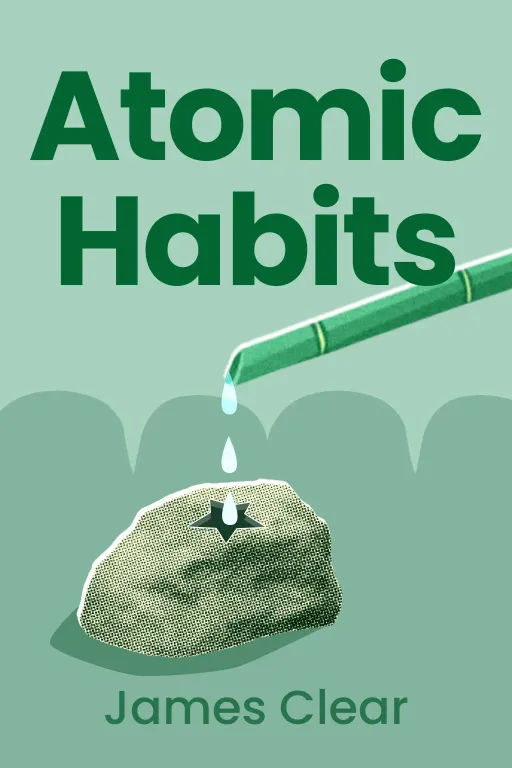
Nova: If you change the heading of an airplane departing from Los Angeles by just three and a half degrees south, you don't land in New York City. You end up in Washington, D. C. A tiny, almost invisible shift at the takeoff completely alters the destination. That is the power of an atomic habit. Welcome to the show. I am Nova, and today we are diving deep into James Clear's masterpiece,. But we are not doing this alone. We have a truly special guest in the studio today, Isaac Luhanga. Isaac is a Human Development graduate who looks at the world through the lens of AI, data, and entrepreneurship to build practical solutions for communities. Isaac, it is so wonderful to have you here.
Isaac Luhanga👊: Thanks, Nova. It is great to be here. You know, that airplane metaphor really resonates with me. In human development, we often look for these massive, dramatic interventions to change lives. But the data shows that it is the micro-inputs, the tiny daily feedback loops, that actually rewrite the trajectory of a person's life.
Nova: Oh, absolutely. We love to focus on the big splash, don't we? The grand resolution, the overnight transformation. But James Clear argues that success is actually the product of daily habits, not once-in-a-lifetime transformations. Today, we are going to tackle this book from three distinct angles. First, we will explore the profound shift from goal-setting to identity-building. Second, we will discuss how to engineer our environments to make success the default choice. And finally, we will focus on how to survive the boredom plateau to achieve true mastery. So, Isaac, let's start with this idea of identity. Clear talks about three levels of behavior change: outcomes, processes, and identity. Why is this distinction so critical for someone trying to grow as a leader?
Deep Dive into Core Topic 1
SECTION
Isaac Luhanga👊: Well, Nova, most people start from the outside in. They focus on outcomes, like wanting to lose twenty pounds, write a book, or lead a successful project. That is outcome-based thinking. But Clear suggests we need to work from the inside out, focusing on identity-based habits. The difference is subtle but incredibly powerful. Think about the classic example Clear gives of two people resisting a cigarette. When offered a smoke, the first person says, no thanks, I am trying to quit. It sounds reasonable, right? But cognitively, they still identify as a smoker who is trying to be different. The second person, however, says, no thanks, I am not a smoker. That is a fundamental shift in self-perception. They are no longer fighting their old identity; they have updated their internal code.
Nova: Yes, it is like they have rewritten their operating system. We are not just changing what we do; we are changing who we are. And Clear has this beautiful phrase: every action you take is a vote for the type of person you wish to become. If you write one page, you are casting a vote for being a writer. If you practice an instrument, you are casting a vote for being a musician.
Isaac Luhanga👊: Exactly. And as a human development analyst, I see this as a form of self-trust building. You cannot just declare a new identity without evidence. If you want to be a disciplined, consistent, and systems-driven leader, you have to prove it to yourself with small wins. I think about this a lot in my own spiritual life and work performance. For instance, instead of setting a goal to read the Bible for an hour every day, which is easy to skip when life gets busy, the identity-based approach is to say, I am a spiritually grounded person. What does a spiritually grounded person do? They might start their day with just two minutes of silent reflection or reading one verse. It is a tiny action, but it casts a vote for that identity.
Nova: I love that. It takes the pressure off, doesn't it? We don't have to be perfect; we just need to win the majority of the votes. There is that wonderful story in the book about a woman who wanted to lose over one hundred pounds. She kept asking herself one simple question before making any decision: what would a healthy person do? Would a healthy person walk or take a cab? Would a healthy person order the salad or the fries? By consistently acting like a healthy person, she eventually became that person. The weight loss was just a side effect of her identity shift.
Isaac Luhanga👊: That is a perfect example of cognitive alignment. When you align your habits with your identity, you bypass the constant need for willpower. Willpower is a highly volatile resource. It drains quickly when you are tired, stressed, or overwhelmed. But when an action is tied to who you are, it becomes natural. For me, in my work, if I identify as a problem-solver who uses data to help communities, then spending time analyzing a spreadsheet isn't a chore. It is simply what I do. It is who I am.
Nova: It is so true. But how do we bridge the gap when our current habits don't match the identity we want? How do we start casting those votes when the old habits are so deeply ingrained?
Isaac Luhanga👊: It starts with deciding the type of person you want to be, and then proving it to yourself with incredibly small, almost laughably easy wins. Clear calls this standardizing before optimizing. You cannot improve a habit that doesn't exist. If you want to become a leader who reads deeply, you don't start by trying to read a book a week. You start by reading one page a night. Once the habit of showing up is established, then you can scale it up. You build the system first, then you optimize the performance.
Deep Dive into Core Topic 2
SECTION
Nova: Standardize before you optimize. That is going to be my new mantra. And that leads us beautifully into our second core topic: choice architecture and environmental design. Clear makes a pretty bold claim here. He says that motivation is overrated, and environment often matters more. We like to think we have complete control over our choices, but the truth is, we are highly responsive to visual cues in our surroundings.
Isaac Luhanga👊: Oh, absolutely. As someone interested in systems and data, this is where the science gets really exciting. Our brains are essentially prediction machines. They are constantly scanning the environment, cataloging cues, and predicting outcomes without our conscious awareness. Think about the study conducted by Dr. Anne Thorndike at Massachusetts General Hospital. She wanted to improve the eating habits of hospital staff and visitors without using any persuasion or motivation.
Nova: Oh, I love this study. Tell us how she did it.
Isaac Luhanga👊: It was brilliant in its simplicity. She and her team redesigned the choice architecture of the hospital cafeteria. Originally, the refrigerators next to the cash registers were filled only with soda. They added water as an option to all of those refrigerators and placed baskets of bottled water throughout the food stations. Soda was still available, but water was now highly visible and easily accessible. Over the next three months, soda sales dropped by over eleven percent, and bottled water sales shot up by nearly twenty-six percent. No one was told to drink water. There were no motivational posters. The environment did the work.
Nova: It is the invisible hand shaping our behavior. We choose things not necessarily because of what they are, but because of where they are. If we want to build good habits, we have to make the cues obvious. And if we want to break bad ones, we have to make the cues invisible.
Isaac Luhanga👊: Exactly. In systems design, we talk about reducing friction for the user. If you want a user to complete an action on an app, you make the button big, bright, and easy to find. We need to apply that same user-experience design to our personal lives. If I want to practice coding or work on an entrepreneurial project in the evening, I shouldn't keep my laptop tucked away in a backpack in the closet. I should leave it open on my desk, with the coding software already running. I am priming the environment to make the next action as frictionless as possible.
Nova: Yes, like Oswald Nuckols' strategy of resetting the room. He is an IT developer who cleans up and prepares each room for its next use. He folds the blanket, puts the remote back, wipes the counter. He is making the future action easy for his future self. It is like a gift to yourself.
Isaac Luhanga👊: It really is. And on the flip side, we have to increase friction for our bad habits. If you find yourself mindlessly scrolling social media when you should be working, you have to make that cue invisible or incredibly difficult to access. Clear shares his own experience of having his assistant reset his social media passwords every Monday morning so he couldn't log in during the week, and only giving him the new passwords on Friday. That is a classic commitment device. It is a choice you make in the present that controls your actions in the future.
Nova: That is so powerful. It takes the decision out of your hands when you are at your weakest. And we see this on a larger scale too, like the British Cycling transformation under Dave Brailsford. They were a mediocre team for a century, but they focused on the aggregation of marginal gains. They looked for one percent improvements in everything. They redesigned bike seats, used heated overshorts to keep muscle temperatures optimal, tested different massage gels, and even painted the inside of their team truck white so they could spot tiny specks of dust that might degrade the bikes' performance.
Isaac Luhanga👊: That story is a masterclass in systems thinking. Brailsford didn't focus on winning the Tour de France as a singular, overwhelming goal. He focused on the system of cycling. He broke down every single variable, optimized it by one percent, and let the compounding effect do the rest. And it worked. They dominated the Olympics and won multiple Tour de France titles. For a leader, this is incredibly liberating. You don't need to revolutionize your entire organization overnight. You just need to find the small points of friction in your daily workflow, your team meetings, or your communication channels, and improve them by one percent.
Deep Dive into Core Topic 3
SECTION
Nova: One percent better every day. It sounds so manageable, but the challenge is keeping it up, isn't it? Which brings us to our third topic: the Goldilocks Zone and the boredom of mastery. How do we stay motivated when the initial excitement of a new habit fades and it just becomes, well, boring?
Isaac Luhanga👊: This is where the amateurs and the professionals separate. Clear introduces the Goldilocks Rule, which states that humans experience peak motivation when working on tasks that are right on the edge of their current abilities. Not too easy, which leads to boredom, and not too difficult, which leads to anxiety and discouragement. It is that sweet spot, about four percent beyond your current capability, where you enter a state of flow.
Nova: Like a good video game. If it is too easy, you turn it off. If it is too hard, you throw the controller. But if it is just challenging enough, you play for hours.
Isaac Luhanga👊: Exactly. And the legendary comedian Steve Martin is a perfect example of this. He spent nearly fifteen years refining his act. He started by performing magic tricks and telling simple jokes at Disneyland, then moved to small clubs, gradually increasing the complexity and length of his performances. He didn't become an overnight sensation. He slowly expanded his boundaries, keeping himself engaged and motivated by constantly operating in that Goldilocks Zone. He famously described his journey as ten years spent learning, four years spent refining, and four years as a wild success.
Nova: Fifteen years. That requires an incredible tolerance for repetition. And Clear writes that the greatest threat to success is not failure, but boredom. When a habit becomes routine, it loses its novelty. We stop getting that easy dopamine hit, and we start looking for something new.
Isaac Luhanga👊: Yes, and as leaders, we are highly susceptible to this. We love the thrill of starting a new project, launching a new initiative, or adopting a new strategy. But the real work of leadership, the work that actually creates lasting impact in a community, is the daily, unglamorous execution of the system. I remember the story Clear shares about an elite weightlifting coach. The author asked him what separated the best athletes from everyone else. The coach didn't just say genetics or talent. He said it comes down to who can handle the boredom of training every day, doing the same lifts over and over.
Nova: That is so profound. The ability to fall in love with the boredom. It is about shifting our relationship with routine. Instead of seeing it as a cage, we see it as the foundation for freedom. If you have your daily systems automated, you free up the mental bandwidth to be creative and solve the complex problems when they arise.
Isaac Luhanga👊: Absolutely. In computer science, we automate the repetitive tasks so we can focus on high-level architecture. The human brain is no different. If you have to use conscious energy every morning to decide when to wake up, what to eat, when to exercise, and how to start your work, you will have no cognitive reserves left for strategic decision-making. By automating the fundamentals through habits, you create the space for greatness. But we also have to be careful. Habits can create a downside. Once we can do something on autopilot, we stop paying attention to how we can do it better. We can fall into complacency.
Nova: Right, Hebb's Law tells us that neurons that fire together wire together. But if we are just repeating the same average performance, we are just reinforcing mediocrity. So how do we combat that?
Isaac Luhanga👊: Clear suggests a system of reflection and review. Look at the Los Angeles Lakers in the 1980s under coach Pat Riley. They had an incredibly talented team, but they were underperforming. Riley introduced the Career Best Effort program, or CBE. He tracked all the players' stats, including the unsung hero deeds like diving for loose balls or blocking out opponents. He asked each player to improve their overall CBE score by just one percent over their historical average. It was a system of continuous reflection and data-driven feedback. It kept them from falling into autopilot, and they won back-to-back championships. For us, this could be a weekly review where we look at our calendar, our habits scorecard, and ask ourselves: where did I slip into autopilot? How can I refine the system?
Synthesis & Takeaways
SECTION
Nova: A weekly review is such a practical way to keep ourselves honest. Well, Isaac, we have covered some incredible ground today. We talked about shifting from outcome-based goals to identity-based habits, casting daily votes for the person we want to become. We explored choice architecture, designing our environments to make good habits obvious and bad ones invisible. And we tackled the Goldilocks Zone, learning to embrace the boredom of daily execution while using reflection to avoid the trap of autopilot. If you had to leave our listeners, and especially those aspiring to be systems-driven leaders, with one actionable takeaway to start today, what would it be?
Isaac Luhanga👊: I would say, start with the Two-Minute Rule. When you want to establish a new habit, make it take less than two minutes to do. If you want to read more, read one page. If you want to meditate, sit for sixty seconds. If you want to build a community project, write one sentence of the proposal. Standardize before you optimize. You have to show up before you can improve. Every time you do that tiny action, you are not just completing a task; you are casting a vote for your new identity. You are telling yourself, this is who I am.
Nova: That is beautiful. Standardize before you optimize. Isaac, thank you so much for sharing your insights, your analytical perspective, and your passion for human development with us today. It has been an absolute pleasure.
Isaac Luhanga👊: Thank you, Nova. It was a wonderful conversation.
Nova: And to our listeners, thank you for sharing your precious time with us. Remember, changes that seem small and unimportant at first will compound into remarkable results if you are willing to stick with them. What is one tiny vote you can cast for your new identity today? Think about it, run the script, and we will see you in the next episode.