

The Habit Prescription: A Dietitian's Guide to Lasting Change
Golden Hook & Introduction
SECTION
Nova: Büşra, as a dietitian, you can create the perfect, scientifically-backed meal plan for a client. You can map out every calorie, every macro. But what's the single biggest reason it often doesn't stick?
Büşra Bayıroğlu: Oh, that is the million-dollar question, Nova. It’s the gap between knowing what to do and actually doing it, day in and day out. A perfect plan is useless if it stays on paper. The follow-through, the consistency… that's the entire challenge.
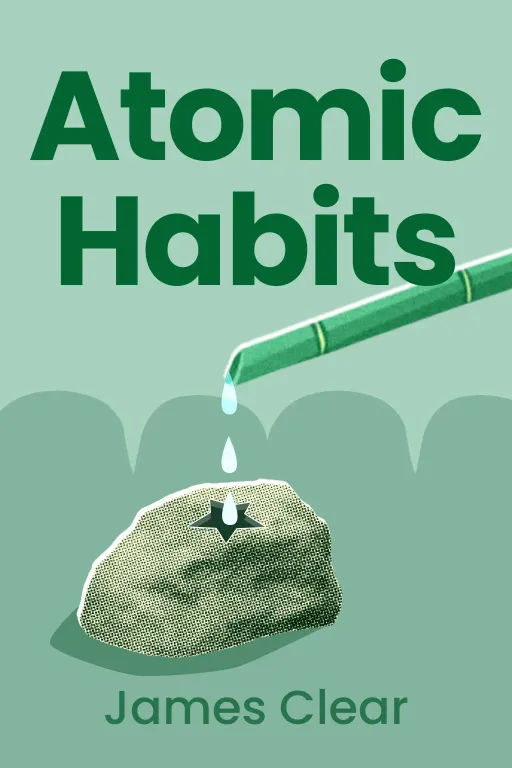
Nova: It’s the entire challenge! And that’s why we’re so excited today. Because we’re not talking about another diet or a new workout. We're talking about the system that runs underneath all of that. We're diving into James Clear's "Atomic Habits," which is less of a book and more of an operating manual for human behavior.
Büşra Bayıroğlu: I love that, an operating manual. That's exactly what it feels like we need sometimes.
Nova: Right? And we're going to use this manual to tackle that huge question of "how to make good habits stick." Today, we'll dive deep into this from three perspectives. First, we'll explore why tiny 1% changes are more powerful than giant leaps. Then, we'll discuss the profound idea of changing your identity to change your habits. And finally, we'll break down the simple four-step toolkit you can use to start building better habits today. Ready?
Büşra Bayıroğlu: I am so ready. This is the heart of everything for me and my clients.
Deep Dive into Core Topic 1: Systems Over Goals
SECTION
Nova: Okay, so let's start with that frustration of plans failing. We all do it. We set a huge goal, like a New Year's resolution: "I'm going to lose 30 pounds!" or "I'm going to run a marathon!" We have a burst of motivation, and then… it fizzles. Clear's first big idea is a radical solution: forget the goals, and focus on the systems.
Büşra Bayıroğlu: Okay, that sounds counterintuitive. How do you achieve anything without a goal?
Nova: It's a great question! And he has this incredible story to illustrate it. Think about the British Cycling team. For a hundred years, they were… well, mediocre. They’d won a single gold medal in their history. No British cyclist had ever won the Tour de France. They were so consistently average that top bike manufacturers wouldn't even sell them gear, afraid it would hurt their brand.
Büşra Bayıroğlu: Wow, that's a bad reputation.
Nova: A terrible one! Then, in 2003, they hired a new performance director, a man named Dave Brailsford. And he had a different philosophy. He called it "the aggregation of marginal gains." His belief was that if you could just improve every single tiny thing you do by 1 percent, those gains would compound into a remarkable victory.
Büşra Bayıroğlu: One percent… that seems so small. What kind of things are we talking about?
Nova: We're talking about things most people would laugh at. They redesigned the bike seats to be slightly more comfortable. They tested different massage gels to see which one helped muscles recover faster. They taught the riders the best way to wash their hands to avoid getting sick. They even painted the inside of the team truck white to spot tiny bits of dust that could affect the finely-tuned bikes. One percent, everywhere.
Büşra Bayıroğlu: That's an incredible level of detail.
Nova: It is! And the results? They were staggering. Within five years, at the 2008 Beijing Olympics, the British Cycling team won 60 percent of the available gold medals. Four years later in London, they set nine Olympic records. Then, they went on to win the Tour de France five times in six years. They went from mediocre to arguably the most successful run in cycling history. Not by focusing on the goal of "winning the Tour de France," but by building a system of "improving by 1% every day."
Büşra Bayıroğlu: That… that completely reframes how I think about progress with my clients. We are so focused on the number on the scale, the goal. But that can feel so far away and demoralizing. This is about celebrating the system.
Nova: Exactly!
Büşra Bayıroğlu: It's the difference between telling a client, "Your goal is to lose 20 pounds," which is terrifying, and helping them build a system of, "I will walk for 10 minutes after dinner every night," or "I will add one vegetable to my lunch." The goal is the outcome, but the system is the process that actually gets you there. The 1% improvement is the small, daily win that keeps you going. That feels so much more achievable and kind.
Nova: It's kind! That's the perfect word for it. You're not relying on a heroic, unsustainable burst of effort. You're just being 1% better than yesterday.
Deep Dive into Core Topic 2: Identity-Based Habits
SECTION
Nova: And you know, Büşra, that system of walking for 10 minutes every night does something even more powerful than just burning a few calories. It starts to change who you are. And this brings us to what I think is the most profound, most important idea in the entire book: Identity-Based Habits.
Büşra Bayıroğlu: Okay, you have my full attention. What does he mean by that?
Nova: Clear argues that there are three layers to behavior change. The outer layer is changing your outcomes—the number on the scale, the time on the clock. The middle layer is changing your process—your systems, your habits. But the deepest, most powerful layer is changing your identity—your beliefs about yourself.
Büşra Bayıroğlu: So, what I believe about myself.
Nova: Exactly. And most of us try to change from the outside in. We think, "If I lose the weight, then I'll be a healthy person." Clear says that's backward. True, lasting change happens from the inside out. You have to start by changing your identity. He gives this brilliant, simple example. Imagine two people who are trying to quit smoking. Someone offers them a cigarette.
Büşra Bayıroğlu: Okay.
Nova: The first person says, "No thanks, I'm trying to quit." The second person says, "No thanks, I'm not a smoker."
Büşra Bayıroğlu: ... Wow.
Nova: Right? Who do you think is more likely to succeed?
Büşra Bayıroğlu: The second person, absolutely. That gives me chills. The first person still identifies as a smoker, just one who is in a constant state of struggle and deprivation. The second person's identity has already shifted. Their behavior is just an extension of who they now are.
Nova: You nailed it. Every action you take is a vote for the type of person you wish to become. When you go for that 10-minute walk, you're casting a vote for "I am a person who is active." When you choose the apple over the chips, you're casting a vote for "I am a person who nourishes my body." The goal isn't to eat one healthy meal; the goal is to become a healthy person.
Büşra Bayıroğlu: This is a game-changer for how I talk to clients. So much of dieting culture is about what you do, what you have to. It's a negative identity. But this approach is about what you doing, who you becoming. It's positive. Clear has this question in the book, right? "What would a healthy person do?"
Nova: Yes! That's the practical application.
Büşra Bayıroğlu: I can give that to a client right now. When you're at the grocery store, when you're looking at a menu, just ask yourself that one question. It's not about a rigid list of "good" and "bad" foods. It's about aligning your small, daily choices with the person you want to be. That is so empowering.
Deep Dive into Core Topic 3: The Four Laws
SECTION
Nova: It's incredibly empowering! And the best part is, Clear doesn't just leave us with these big ideas. He gives us that practical toolkit, the operating manual. He calls it the Four Laws of Behavior Change. For any habit to stick, he says, we have to make it obvious, make it attractive, make it easy, and make it satisfying. We could do a whole episode on each, but let's just touch on the first one, which is so simple but so powerful: Make It Obvious.
Büşra Bayıroğlu: Make the cue for the habit obvious.
Nova: Precisely. And often, our behavior is less about our motivation and more about what's obvious in our environment. There was this fascinating study at a hospital cafeteria. The researchers wanted to see if they could get people to drink more water without saying a single word.
Büşra Bayıroğlu: No posters, no lectures?
Nova: Nothing. For six months, all they did was change the environment. They added bottled water as an option in the soda refrigerators at the checkout, and they placed a few baskets of bottled water near the food stations. That's it.
Büşra Bayıroğlu: And what happened?
Nova: Over the next three months, soda sales dropped by 11 percent, and sales of bottled water shot up by almost 26 percent. People didn't suddenly get more motivated to be healthy. They just chose the obvious, convenient option.
Büşra Bayıroğlu: That's environment design! It's something I can tell my clients to do tonight that will make a real difference. It's not about willpower; it's about making the right choice the easy choice.
Nova: Exactly! You're designing for your future self.
Büşra Bayıroğlu: So, if you want to eat more fruit, don't hide it in the crisper drawer in your fridge. Put it in a beautiful bowl on the counter where you see it a dozen times a day. If you want to stop snacking on chips at night, the most effective strategy is to just not bring them into the house. You're making the cue for the good habit obvious, and the cue for the bad habit invisible. It's so simple and so smart.
Synthesis & Takeaways
SECTION
Nova: It really is. And when you put these three layers together, you get a truly powerful formula for change. First, you start with the 1% rule—focus on small, repeatable systems, not huge, intimidating goals.
Büşra Bayıroğlu: Then, you anchor that system in a new identity. You're not just "doing a diet"; you are "becoming a healthy person."
Nova: And finally, you use simple design principles like "Make it Obvious" to shape your environment, so your surroundings support your new identity instead of fighting against it. It's a beautiful, holistic approach.
Büşra Bayıroğlu: It is. It really changes my role from just being a "dietitian" who gives out information, to being more of a "habit coach" or a "habit architect." It's about co-designing a lifestyle with my clients that makes the healthy choice the natural choice.
Nova: I love that, a "habit architect." So, Büşra, as we wrap up, what's the one question or thought you'd want to leave with our listeners, based on everything we've talked about today?
Büşra Bayıroğlu: I think it would be this: Instead of asking "What's the fastest way to lose 10 pounds?", ask yourself a different question. Ask, "What's the smallest, most obvious step I can take today to cast a vote for the healthy, vibrant person I want to become?" It might be putting your running shoes by the door. It might be buying that fruit bowl. Start there. That's the secret.
Nova: The secret is to start small. Büşra, thank you so much. This was fantastic.
Büşra Bayıroğlu: Thank you, Nova. This was so insightful.









