

The Habit Architect: Building a Life of Structure and Confidence
Golden Hook & Introduction
SECTION
Nova: Have you ever had one of those perfectly productive days where everything just? You feel in control, you're consistent, you're the person you want to be. Now, what if I told you that feeling wasn't a matter of luck or motivation, but a matter of architecture? That you could design a system so powerful that it makes success the path of least resistance?
Sheila Nyaboke Anchinga: That’s a powerful thought. The idea of engineering that feeling, rather than just hoping for it.
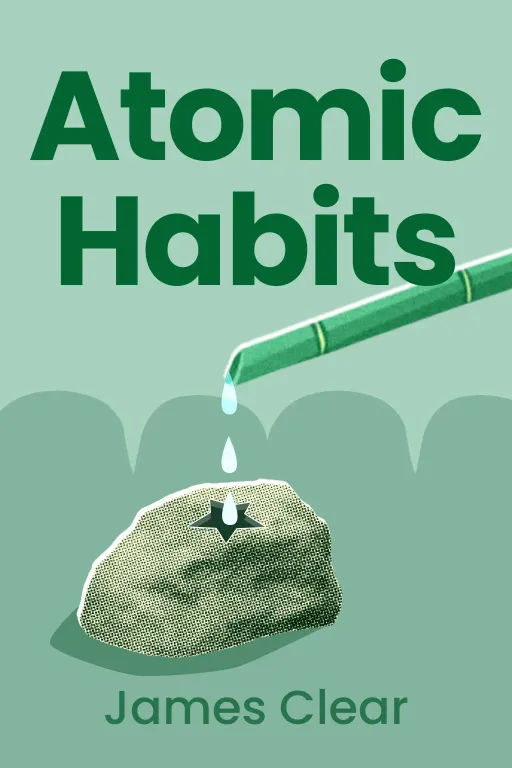
Nova: Exactly! And that's the revolutionary idea behind James Clear's 'Atomic Habits,' which we're going to unpack today. Today we'll dive deep into this from three perspectives. First, we'll explore why you should forget about goals and focus on systems. Then, we'll discuss the most powerful form of change: identity-based habits. And finally, we'll reveal the true secret to self-control, and it's not what you think. I'm your host, Nova, and I'm thrilled to be here with Sheila Nyaboke Anchinga. Sheila is a healthcare professional, an analytical thinker, and a self-professed lover of structure, which makes her the perfect co-pilot for this journey. Welcome, Sheila!
Sheila Nyaboke Anchinga: Thanks for having me, Nova. I'm excited. This book feels like it was written for the part of my brain that craves order and logic in the often-messy process of self-improvement.
Nova: I couldn't agree more. It’s like an operating manual for personal growth. So let's jump right in.
Deep Dive into Core Topic 1: Systems Over Goals
SECTION
Nova: Let's start with that first, almost heretical idea: forgetting about goals. Sheila, I know you appreciate structure, but we're often told goals are the key. Clear argues otherwise. He says, 'You do not rise to the level of your goals. You fall to the level of your systems.'
Sheila Nyaboke Anchinga: That quote really stood out to me. It’s counterintuitive at first, but the more you think about it, the more it makes sense. Goals are a destination, but the system is the vehicle that gets you there. Without a good vehicle, the destination doesn't matter.
Nova: Precisely! And there's no better story to illustrate this than the transformation of British Cycling. For a hundred years, they were the definition of mediocre. They'd won a single Olympic gold medal in their entire history. Top bike brands wouldn't even sell them equipment because they didn't want to be associated with their poor performance.
Sheila Nyaboke Anchinga: A century of mediocrity. That's a tough reputation to shake.
Nova: Right? But in 2003, they hired a new performance director, Dave Brailsford. And Brailsford had a philosophy he called 'the aggregation of marginal gains.' The idea was simple: if you break down everything that goes into riding a bike, and then improve each element by just 1 percent, you'll get a significant increase when you put it all together.
Sheila Nyaboke Anchinga: So, not one big change, but a thousand tiny ones.
Nova: A thousand tiny ones. And they went to incredible lengths. They redesigned the bike seats to be more comfortable. They rubbed alcohol on the tires for better grip. They tested different massage gels to see which one helped muscles recover fastest. They even hired a surgeon to teach the riders the best way to wash their hands to avoid getting sick.
Sheila Nyaboke Anchinga: Wow. That level of detail is astounding. They were building a system for excellence, not just aiming for a gold medal.
Nova: Exactly. And the results were staggering. In the 2008 Beijing Olympics, they won 60 percent of the available gold medals. In 2012, in London, they set nine Olympic records. From 2007 to 2017, British cyclists won 178 world championships. They didn't just get better; they became the most dominant force the sport had ever seen. All from focusing on 1% improvements.
Sheila Nyaboke Anchinga: That's fascinating. It completely reframes effort. In healthcare, we have protocols and checklists for this very reason. It's not about the goal of 'a successful surgery,' it's about the of checks and balances that makes success almost inevitable. That 1% improvement isn't just a gain; it's a reduction in the potential for catastrophic failure. A small change in a pre-op checklist can literally save a life.
Nova: What a perfect parallel. And Clear quantifies it. He says a 1% improvement each day means you're 37 times better after a year. It's the compound interest of self-improvement. It’s not about one heroic effort; it’s about the system you run every single day.
Sheila Nyaboke Anchinga: But how do you stay motivated with such small, almost invisible, progress? I think that's the hard part. When you're just improving by 1%, it can feel like you're not moving at all. That's where I think people, including myself, can falter after a setback.
Nova: And that is the perfect transition, Sheila, because that's where the book gets really deep. Clear argues the answer isn't motivation, it's.
Deep Dive into Core Topic 2: Identity-Based Habits
SECTION
Nova: This is our second big idea: becoming, not just doing. Clear says there are three levels of change. The shallowest is changing your outcomes—like losing 10 pounds. The next level is changing your process—like starting a new workout routine. But the deepest, most lasting change is changing your identity—your beliefs about yourself.
Sheila Nyaboke Anchinga: So it’s about who you are, not just what you do.
Nova: Exactly. And he gives this brilliant example. Imagine someone offers you a cigarette. The first person says, 'No thanks, I'm trying to quit.' The second person says, 'No thanks, I'm not a smoker.' Who do you think is more likely to succeed in the long run?
Sheila Nyaboke Anchinga: Wow. Okay. The second person, without a doubt. That's a paradigm shift. The first person is still holding on to the identity of a smoker who is struggling. Their identity is one of resistance and effort. The second person has adopted a new identity. Every time they say 'no,' it's not an act of willpower; it's a simple confirmation of who they are.
Nova: It's a vote! He says, 'Every action you take is a vote for the type of person you wish to become.' You don't just decide to be a new person one day. You earn that new identity through small, consistent actions. So, thinking about your interest in building confidence...
Sheila Nyaboke Anchinga: It's not 'I'm trying to be more confident.' That's the wrong frame. It's asking, 'What would a confident person do in this situation?' And maybe the answer is just... they'd speak up in one meeting. Just one. Or they'd make eye contact with one person. That's the vote. It's a system for building self-belief, not just an abstract goal.
Nova: You've nailed it. It's about embodying the identity. A writer writes. A healthy person moves. A spiritual person reflects. The habit isn't the goal; the habit is the way you become the person you want to be. It's about proving it to yourself, one small action at a time.
Sheila Nyaboke Anchinga: And that feels so much more manageable. The idea of 'becoming confident' is huge and intimidating. But the idea of 'doing one thing a confident person would do today'? That I can handle. That I can put into a structure.
Nova: And to make casting that vote even easier, Clear gives us our third and final idea for today: the secret to self-control is to stop trying to have self-control.
Deep Dive into Core Topic 3: Environmental Architecture
SECTION
Sheila Nyaboke Anchinga: Okay, now you're really speaking my language. The idea of not having to rely on willpower is very appealing.
Nova: It's the most liberating concept in the book, I think. And the story that proves it is a bit shocking. It comes from the Vietnam War. Researchers found that an alarming number of U. S. soldiers—over 15 percent—were addicted to heroin. The government was terrified of having hundreds of thousands of addicts return home.
Sheila Nyaboke Anchinga: I can only imagine. That's a public health crisis waiting to happen.
Nova: You'd think so. But a researcher named Lee Robins followed the soldiers when they came back to the States. And what she found was stunning. Of the soldiers who were addicted in Vietnam, 9 out of 10—that's 90 percent—simply quit upon returning home. They didn't go to rehab. They just... stopped.
Sheila Nyaboke Anchinga: How is that possible? Heroin is one of the most addictive substances on earth.
Nova: Because the environment changed. The cues were gone. In Vietnam, they were surrounded by the stress of war, easy access to the drug, and peers who were also using. That was the environment that triggered the habit. Back home, those cues vanished. The context was completely different. It proved that addiction isn't just a personal failing; it's often a response to an environment.
Sheila Nyaboke Anchinga: So discipline is overrated. It's about architecture. You're not fighting temptation; you're removing it from the equation. As an introvert, my environment is my sanctuary. The idea that I can design it to support my habits without draining my social or mental battery... that's incredibly empowering.
Nova: It's the ultimate life hack for the systems-thinker! Clear's advice is simple: Make the cues for your good habits obvious and the cues for your bad habits invisible. Want to read more? Put a book on your pillow. Want to stop scrolling at night? Put your phone charger in another room. It's a one-time decision that automates your future behavior.
Sheila Nyaboke Anchinga: It's proactive laziness. You're using a little bit of effort now to make the right choice the easy choice, or even the only choice, later. Instead of fighting a battle with willpower every single night, you just make one decision to move the charger.
Nova: Exactly! You become the architect of your choices. You're not just living in your environment; you're curating it to build the person you want to become.
Synthesis & Takeaways
SECTION
Nova: This has been so insightful, Sheila. We've really covered some ground. So, to bring it all together, we've explored three huge ideas from 'Atomic Habits'. First, build systems, not goals. Focus on that 1% improvement, like the British Cycling team.
Sheila Nyaboke Anchinga: And second, focus on identity, not just outcomes. Every action is a vote for the person you're becoming. It's about being, not just doing.
Nova: And finally, design your environment, don't just rely on willpower. Be the architect of your space to make good habits inevitable and bad habits impossible.
Sheila Nyaboke Anchinga: I think the most powerful takeaway for me is that this isn't about a massive life overhaul. It's about being a better architect of your own life, using small, deliberate, structural changes. It makes personal growth feel less like a mountain to climb and more like a blueprint to follow.
Nova: Beautifully put. And you've left us with the perfect final thought.
Sheila Nyaboke Anchinga: I think so. For everyone listening, especially those of us who love logic and structure, the question isn't 'How can I be more motivated?' The question is, 'How can I design a better system?' So my challenge to our listeners is this: What is one, tiny, two-minute action you can take today that would cast a vote for the person you want to become?
Nova: A perfect question to end on. Sheila, thank you so much for sharing your insights today.
Sheila Nyaboke Anchinga: It was my pleasure, Nova. This was a great conversation.









