

The Atomic Leader: Engineering Systems for Lasting Change
Golden Hook & Introduction
SECTION
Nova: What if the secret to achieving your biggest goals wasn't to aim higher, but to start smaller? Almost invisibly small. We're often told to set huge, audacious goals, especially in leadership. But what if that's exactly why we fail? What if the most successful people and teams aren't the ones with the biggest goals, but the ones with the best systems for making tiny, 1% improvements?
Mich: That’s a question that gets right to the heart of effectiveness, Nova. It challenges the whole "go big or go home" mentality that a lot of corporate culture is built on.
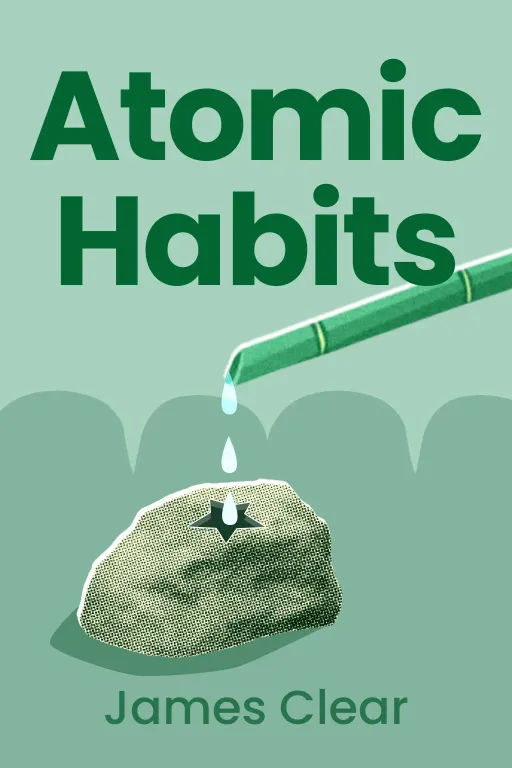
Nova: It really does. And that's the revolutionary idea at the heart of James Clear's "Atomic Habits," which we're diving into today. We see this book as an operating system for continuous improvement, which is why I'm so excited to have you here, Mich. As someone who lives and breathes systems thinking, this feels right up your alley.
Mich: I’m thrilled to be here. The concepts in this book resonate deeply with how I think about building anything, whether it's a team, a product, or even a personal practice.
Nova: Perfect. Today we'll dive deep into this from two powerful perspectives. First, we'll explore the radical idea of 'Identity-Based Habits'—why becoming a certain type of person is more powerful than achieving a certain goal. Then, we'll break down the engine behind that change: the concept of 'Systems Over Goals' and the surprising power of the 1% improvement.
Deep Dive into Core Topic 1: The Identity-First Principle
SECTION
Nova: So, Mich, as a leader, you're constantly setting targets, right? Quarterly revenues, project deadlines, growth metrics. But James Clear argues we're starting in the wrong place. He says true, lasting behavior change is actually change. What does that even mean to you?
Mich: It's a fundamental shift in perspective. It’s moving from the what to the who. We're so trained to think in terms of outcomes: "I want to lose 10 pounds," or "I want to increase team productivity by 15%." Those are outcomes. Clear suggests we should start with identity: "I want to be a healthy person," or "I want to be an effective leader."
Nova: Exactly! He breaks it down into three layers of change. The outermost layer is changing your outcomes—the results. The middle layer is changing your process—your habits and systems. But the deepest, most powerful layer is changing your identity—your beliefs, your self-image. Most people start from the outside in, but the most sustainable change happens from the inside out.
Mich: And when you start with identity, the behaviors follow more naturally. It’s no longer about forcing yourself to do something; it’s about acting in alignment with who you believe you are.
Nova: You've hit on his most powerful example. He talks about two people who are offered a cigarette. The first person says, "No thanks, I'm." This person still sees themselves as a smoker who is trying to change. The second person says, "No thanks,."
Mich: Wow. That's it right there. The language reveals the identity. The second person has already made the internal shift. Resisting the cigarette isn't a sacrifice; it's just a natural expression of who they are. They're a non-smoker.
Nova: Precisely. And Clear says every action you take is a vote for the type of person you wish to become. When you go to the gym, even for five minutes, you're casting a vote for "I am a person who doesn't miss workouts." When you read one page of a book, you're casting a vote for "I am a reader." These small votes build up over time and solidify your identity. He tells this great little story about a man who lost over 100 pounds. His whole strategy was to ask himself one simple question before every action: "What would a healthy person do?"
Mich: That’s a beautiful, practical application. In a leadership context, that's the difference between a manager who just ticks off tasks and a leader who embodies the company's vision. A leader who says, "I want to build a more innovative team," is focused on an outcome. But a leader who starts asking, "What does an innovative leader?" and then starts acting that way—maybe by publicly celebrating small experiments, even the ones that fail—is casting a vote for that new identity. They the change they want to see.
Nova: And you mentioned an interest in the spiritual application of this. How do you see it connecting there?
Mich: It's the same principle, just on a different plane. It’s the difference between saying, "I will try to be more patient," which is a process-goal, and internalizing, "I am a patient person." When you believe you a patient person, you approach a frustrating situation differently from the start. Your default response begins to shift because your identity is the anchor. It’s not about spiritual things; it's about embodying the virtues you aspire to. It’s a much deeper, more integrated way to live.
Nova: I love that. It’s not a to-do list, it’s a to-be list.
Mich: Exactly. And once you know who you want to be, the next logical question is... how? How do you build that identity?
Deep Dive into Core Topic 2: Systems Over Goals
SECTION
Nova: You've set me up perfectly, Mich. You're casting these votes for your new identity, but you need a reliable ballot box—a system to make those votes count, day in and day out. This brings us to Clear's second big idea: focus on systems, not goals. He says, "You do not rise to the level of your goals. You fall to the level of your systems."
Mich: That line is so powerful. Goals are about a momentary result. Systems are about the process you follow continuously. Winners and losers often have the same goals; what separates them is the system they use to make progress.
Nova: And the most incredible story he uses to illustrate this is the transformation of British Cycling. For a hundred years, they were the definition of mediocre. They had won a single gold medal in a century. Top bike brands wouldn't even sell them equipment because they didn't want to be associated with their poor performance.
Mich: A century of mediocrity. That’s a tough reputation to shake.
Nova: Right? Then, in 2003, they hired a new performance director, Dave Brailsford. He had a philosophy he called "the aggregation of marginal gains." His belief was that if you broke down everything you could think of that goes into riding a bike, and then improved it by just 1 percent, you would get a significant increase when you put it all together.
Mich: So he wasn't looking for one giant breakthrough. He was hunting for hundreds of tiny advantages.
Nova: Hundreds! And they went to almost absurd lengths. They redesigned bike seats to be more comfortable. They tested different massage gels to see which one led to the fastest muscle recovery. They hired a surgeon to teach the riders the best way to wash their hands to avoid getting sick. They even painted the inside of the team truck white to make it easier to spot little bits of dust that could compromise the finely tuned bikes.
Mich: That’s a systems-thinker’s dream. It’s about controlling every possible variable, no matter how small. It’s obsessive, but in a productive way.
Nova: It's beautifully obsessive! And the results were staggering. In the 2008 Beijing Olympics, the British Cycling team won 60 percent of the available gold medals. At the 2012 London Olympics, they set nine Olympic records and seven world records. A British cyclist finally won the Tour de France for the first time in 2012, and they went on to win it five times in six years. They went from a laughingstock to arguably the most successful team in modern cycling history.
Mich: And it wasn't because of a single, heroic goal. It was because they built a system of continuous, tiny improvements. For a leader, this is gold. You don't just tell your team, "Increase sales by 20%." That's a goal. The system is, "This week, we will improve our sales call script by 1%. We will reduce our follow-up email response time by 1%. We will refine one slide in our customer onboarding deck." You build a system of winning, and the goal takes care of itself.
Nova: It also changes the emotional landscape. A big goal can feel intimidating and far away. But a 1% improvement? That feels achievable. Clear does the math: if you get 1% better each day for one year, you'll end up 37 times better by the time you're done. The compounding is what creates the magic.
Mich: It completely removes the pressure of the big, scary number and just focuses you on the next small, concrete action. It’s about winning the day. If you win enough days, you win the year. That's a system.
Synthesis & Takeaways
SECTION
Nova: So, when we put it all together, it feels like a powerful, two-part formula for any kind of transformation. First, you start with identity. You decide who you want to be.
Mich: Right. Not what you want to achieve, but who you want to become. The person for whom those achievements are a natural byproduct.
Nova: And second, you build a system of tiny, 1% improvements—atomic habits—that act as daily votes for that new identity. You prove it to yourself with small, systematic wins.
Mich: It’s elegant because it connects the profound 'why' of your identity with the practical 'how' of a daily system. One without the other is incomplete. A great identity without a system is just a dream. A system without a guiding identity can feel robotic and meaningless.
Nova: So, as we wrap up, what’s the one thought or challenge you'd want to leave with our listeners, especially those in leadership roles who are trying to build better systems in their own lives?
Mich: I think the challenge for all of us is to shift our focus. So my question to our listeners is this: Forget your Q4 targets for a moment. Who do you need to to make those targets inevitable? Are you a leader who is decisive? A leader who is relentlessly prepared? A leader who empowers their team? Pick one. And then ask yourself: what is the single, 1% 'vote' you can cast for that identity, right after this podcast ends?
Nova: I love that. Make it small.
Mich: Make it tiny. Maybe it's as simple as putting your running shoes by the door. That's not about running a marathon; it's a vote for being a person who doesn't miss workouts. Maybe it's opening your calendar and scheduling 15 minutes tomorrow just to think. That's a vote for being a strategic leader. Don't worry about the outcome. Just cast the vote. That's how real change begins.









