

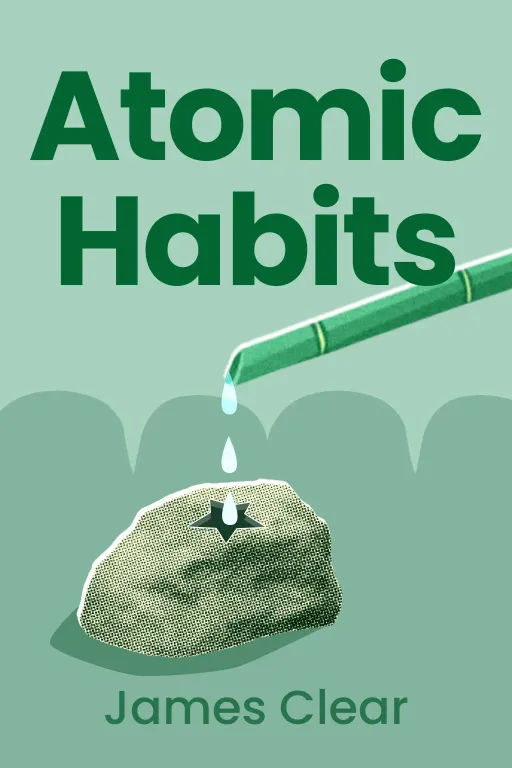
The Architect of You: Building a Systems-Driven Life with Atomic Habits
Golden Hook & Introduction
SECTION
Nova: What if I told you that improving by just 1% each day doesn't make you 365% better in a year, but nearly 37 better? It sounds like a trick, but it's the mathematical heart of James Clear's 'Atomic Habits,' and it's a principle that took the British Cycling team from a century of mediocrity to total global dominance. They didn't do it with one giant leap; they did it by obsessing over tiny, 1% improvements, from the pillows they slept on to the massage gel they used. This isn't just about sports; it's a blueprint for leadership and life.
Nour Ghribi: That number is staggering, Nova. Thirty-seven times better. It immediately makes you question our typical approach to improvement, which is always about massive, disruptive change. The idea that something so small could have such an outsized impact is, for an analytical mind, incredibly compelling.
Nova: Exactly! And that's why we're so excited to have you here, Nour, to help us unpack this. Because this book isn't just a collection of tips, it's an operating manual for building better systems in our lives. Today, we're going to deconstruct this blueprint from three perspectives. First, we'll explore that surprising power of tiny gains and why building systems is far more important than setting goals.
Nour Ghribi: The core of being systems-driven. I love it.
Nova: Then, we'll discuss the most crucial shift of all: changing your identity, not just your actions.
Nour Ghribi: Which feels like the bridge between the 'what' and the 'who' we want to be.
Nova: Perfectly said. And finally, we'll equip you with a simple four-step toolkit to put it all into practice and become the architect of your own life. Ready to dive in?
Nour Ghribi: Let's build. I'm ready.
Deep Dive into Core Topic 1: The 1% Compounding Effect: Why Systems Trump Goals
SECTION
Nova: Alright. So let's start there, Nour, with that incredible story of British Cycling. It perfectly illustrates this first, massive idea from the book: You don't rise to the level of your goals. You fall to the level of your systems.
Nour Ghribi: That line is worth pausing on. It completely inverts the usual corporate mantra of 'setting big, hairy, audacious goals.'
Nova: It really does. So, picture this: it's 2003. British Cycling has been a laughingstock for a hundred years. They'd won a single gold medal in their entire history. Things were so bad that top bike manufacturers wouldn't even sell them bikes because they didn't want their brand associated with the team's failures.
Nour Ghribi: Wow. That's not just underperforming, that's a cultural crisis.
Nova: A total crisis. So they hire a new performance director, Dave Brailsford. And his strategy is something he calls "the aggregation of marginal gains." His belief was that if they could just improve every single thing that goes into riding a bike by just 1 percent, those gains would compound into a remarkable increase in performance.
Nour Ghribi: So he wasn't looking for a silver bullet. He was looking for a thousand tiny advantages.
Nova: A thousand of them! And the details are what make this story so brilliant. They didn't just focus on the obvious things. Of course, they redesigned the bike seats to be more comfortable and rubbed alcohol on the tires for better grip. But then they went further. They tested different massage gels to see which one led to the fastest muscle recovery. They hired a surgeon to teach the riders the best way to wash their hands to reduce the chance of getting a cold.
Nour Ghribi: A surgeon for handwashing? That's an incredible level of detail.
Nova: Isn't it? They determined the best pillow and mattress that led to the best night's sleep for each individual rider. They even painted the inside of the team truck white. Any idea why?
Nour Ghribi: Let me guess... to spot any specks of dust that could get into the finely tuned bike mechanics and degrade performance by a tiny fraction?
Nova: You got it! To spot dust. Each of these things, on its own, is almost laughable. It's trivial. But what happened when they were all put together?
Nour Ghribi: The 37x effect, I imagine.
Nova: Exactly. The results were staggering. In the 2008 Beijing Olympics, they won 60 percent of the available gold medals. In 2012 in London, they set nine Olympic records and seven world records. A British cyclist finally won the Tour de France for the first time ever in 2012, and they kept winning it for years after. It was total dominance, all built on the back of a system of tiny, relentless improvements.
Nour Ghribi: That's such a powerful reframe for leadership. We're so often focused on the big, audacious goal—the quarterly target, the product launch. But Brailsford's genius was realizing the goal is just a destination. The is the vehicle. His job wasn't to yell 'win the race!' but to architect hundreds of tiny, reinforcing processes that made winning almost inevitable. It shifts the leader's role from a cheerleader to a systems designer.
Nova: A systems designer. That's the perfect term for it. You're not just hoping for a good outcome; you're building the machine that produces good outcomes over and over again.
Nour Ghribi: And it's more sustainable. A big goal can be demoralizing if you're far away from it. But a system gives you a win every single day. Did I follow the process today? Yes. That's a win. It keeps the motivation going. It's about the process, not just the prize.
Deep Dive into Core Topic 2: Identity-Based Habits: Becoming the Architect of Your Character
SECTION
Nova: Exactly! From a systems designer for a team to a systems designer for yourself. And that brings us to what I think is the most profound idea in the book: true behavior change is identity change.
Nour Ghribi: This is the part that really resonated with me. It moves beyond simple behavior modification and into the realm of personal philosophy.
Nova: It does. Clear makes this brilliant distinction between three layers of change. The outer layer is changing your outcomes—like losing weight or publishing a book. The middle layer is changing your process—like implementing a new workout routine or a writing schedule. But the deepest layer, the core, is changing your identity—your beliefs, your self-image.
Nour Ghribi: And most people start from the outside in. They focus on the outcome they want, which is why it often doesn't stick.
Nova: Precisely. Clear argues that the most effective way to change is from the inside out. You start with you wish to become. He gives this simple but mind-blowing example. Imagine two people trying to quit smoking. Someone offers them a cigarette. The first person says, "No thanks, I'm."
Nour Ghribi: Okay, I see where this is going. Their identity is still that of a smoker who is struggling. They are depriving themselves.
Nova: Exactly. The second person says, "No thanks, I'm." It's a small shift in language, but it's a monumental shift in identity. The second person no longer identifies with the old behavior. It's not a part of who they are. Resisting isn't a sacrifice; it's just a natural expression of their new identity.
Nour Ghribi: This is the key, isn't it? It applies everywhere. In my work, it's the difference between 'I need to finish this report' and 'I am the kind of person who delivers excellent work on time.' The first is a chore, the second is a standard of being.
Nova: Yes! And how do you build that new identity? Clear says every action you take is a vote for the type of person you wish to become. When you choose to go for a run, you're casting a vote for 'I am a healthy person.' When you choose to read a page of a book instead of scrolling on your phone, you're casting a vote for 'I am a reader.'
Nour Ghribi: I love that metaphor. A vote. It's not about one single, heroic action. It's about winning an election with a majority of small, consistent actions. For spiritual growth, it's not 'I should meditate,' but 'I am a person who cultivates mindfulness.' And so, sitting for two minutes isn't a failure to meditate for an hour; it's a successful vote for that identity. You're literally building your character, one action at a time.
Nova: You're building your character. That's the whole game. The goal isn't to read a book; the goal is to become a reader. The goal isn't to run a marathon; the goal is to become a runner. The habit is just the vehicle for becoming.
Deep Dive into Core Topic 3: The Four Laws: A Practical Toolkit for Habit Design
SECTION
Nour Ghribi: Okay, so if we have our system-oriented mindset and we've decided on the identity we want to build, vote by vote... we still have to actually the thing. Especially on the days we don't feel like it. How do we engineer that?
Nova: You're building your character, vote by vote. I love that. So, how do we make sure we're casting the right votes consistently? That's where Clear gives us this beautifully simple toolkit: The Four Laws of Behavior Change. He basically says every habit follows a four-step loop: Cue, Craving, Response, Reward. And to build a good habit, you just need to engineer each step.
Nour Ghribi: An engineer's toolkit for behavior. I'm listening.
Nova: The first law is. This is about the cue. Most of our bad habits are triggered by obvious cues in our environment. So, to build a good habit, design your environment to make the cues for your good habits obvious and visible. Want to read more? Don't leave your book on a shelf; leave it on your pillow.
Nour Ghribi: So you're essentially creating a visual to-do list that you can't ignore.
Nova: Exactly. The second law is. This is about the craving. You can make a habit more attractive by pairing an action you to do with an action you to do. He calls it 'temptation bundling.' For example, you only let yourself listen to your favorite podcast while you're on a walk.
Nour Ghribi: Ah, so you're hijacking the dopamine hit from the 'want' and attaching it to the 'need.' That's clever.
Nova: It's very clever! The third law is. This is about the response, and it's my favorite. He introduces the Two-Minute Rule. When you start a new habit, it should take less than two minutes to do. 'Read before bed' becomes 'read one page.' 'Go to the gym' becomes 'put on your workout clothes.' That's it. The point is to master the art of showing up.
Nour Ghribi: That removes all the friction. The inertia is the hardest part. Anyone can put on their workout clothes. And once you've done that, you're much more likely to actually work out.
Nova: You're already halfway there! And the final law, number four, is. This is about the reward. The problem with good habits is the reward is often delayed. The problem with bad habits is the reward is immediate. So, you need to find a way to give yourself an immediate win. The simplest way? A habit tracker. That little hit of satisfaction you get from checking a box or, like in one story, moving a paper clip from one jar to another, is enough to tell your brain, 'Hey, that was good. Let's do it again.'
Nour Ghribi: And as a leader, you can use these to shape team culture. Make the desired behavior by celebrating it publicly. Make it by linking it to shared team goals and values. Make it by removing bureaucratic friction and providing the right tools. And make it with immediate, genuine, positive feedback. You're not just managing people; you're engineering an environment for their success.
Synthesis & Takeaways
SECTION
Nova: That's it! You've just summarized the entire leadership philosophy of the book in four sentences. It's a complete model. So we've gone from the power of 1% gains, to building systems, to shaping our identity, and finally to the four laws that make it all happen.
Nour Ghribi: It really is a powerful, integrated system. It's not just a list of hacks; it's a way of thinking about progress and about who we are. It feels less about brute-force willpower and more about elegant design.
Nova: Elegant design. I love that. It's about being the architect of your habits, and ultimately, the architect of your life.
Nour Ghribi: It really is. And I think the best way to start isn't by trying to overhaul everything. That's the old way of thinking. The 'Atomic Habits' way would be to start small. It's by picking one thing. So, the question for everyone listening is this: What is one small, two-minute action you can take today that would be a vote for the person you want to become?
Nova: Mmm. That's the question.
Nour Ghribi: Don't just think about it. Do it. Put your running shoes by the door. Open your journal to a blank page. Take out one ingredient for a healthy meal tomorrow. That's the first brick in your new system. That's the first vote.
Nova: A perfect place to end. Nour, thank you for helping us build this understanding today.
Nour Ghribi: It was my pleasure, Nova. A truly foundational conversation.









