The Alchemy of Action: Crafting the Systems of Success with Charvi Kashyap
Golden Hook & Introduction
SECTION
Shakespeare: A mere three and a half degrees. A shift so microscopic, a traveler would scarce feel the tilt of the wings. Yet, fly from Los Angeles with that tiny deviation, and instead of the towering spires of New York, you land in the quiet halls of Washington, D. C. Such is the terrifying, beautiful power of the unseen trajectory. We believe our lives are defined by grand, sweeping gestures, by the tempest of monumental choices. But in truth, we are carved by the quiet, relentless chisel of the everyday. Welcome to the stage of self-mastery. Today, we are joined by a visionary mind from the realm of technology and enterprise, a leader who seeks to marry the poetry of ambition with the prose of daily discipline. Welcome, Charvi Kashyap.
Charvi Kashyap: Shakespeare, what an intro. You know, that airplane analogy hits different when you're in the startup world. In tech, we are constantly obsessed with the destination, the massive launch, the exit, the big pivot. But that three-point-five-degree shift? That is the real magic. It is the daily code commits, the tiny operational tweaks, the micro-habits that actually decide where your company, and your life, lands. I am so excited to dive into this with you.
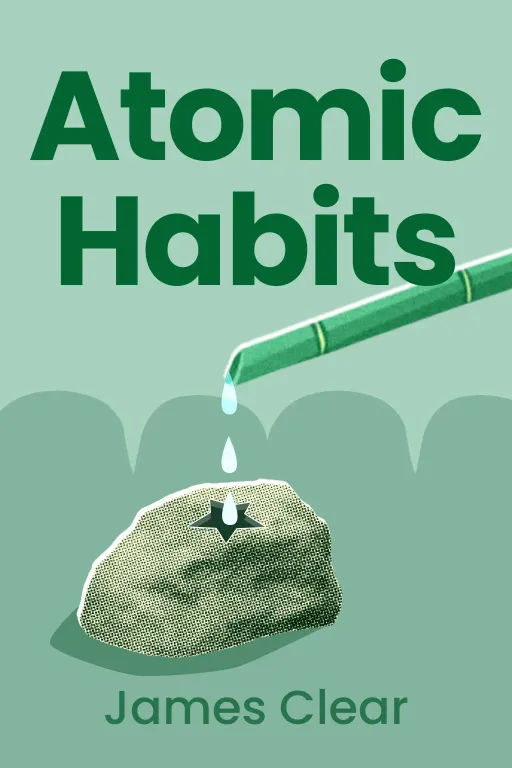
Shakespeare: And dive we shall, into the very clockwork of human behavior. Today, we take James Clear’s masterpiece, Atomic Habits, and hold it up as a mirror to our souls. We shall dismantle this text through three distinct acts. First, we will explore the grand illusion of goals and why we must instead worship at the altar of systems. Second, we shall journey inward to discover how our habits shape our very identity, transforming our spiritual and professional lives. And finally, we will uncover the art of environmental design, making success as effortless as breathing and failure an impossibility. Tell me, Charvi, as an entrepreneur standing at the dawn of your journey, does the word discipline feel like a heavy chain, or a key to liberation?
Charvi Kashyap: Honestly? It used to feel like a straightjacket. As an ENFP, I thrive on ideas, energy, and spontaneity. I want to build cool things, feel the vibe, and run with inspiration. But I have realized that relying on raw inspiration is a terrible business model. Inspiration does not scale. Systems do. When I read Clear’s work, I realized that discipline isn't about restricting my freedom; it is about automating the basics so my mind has the free space to actually create and lead.
Deep Dive into Core Topic 1
SECTION
Shakespeare: Ah, you speak of the grand paradox. To automate the mundane is to liberate the divine. Let us look to the year 2003, to the rain-slicked roads of Great Britain. For a century, the British Cycling team was a tragedy of mediocrity. One single gold medal in a hundred years of Olympic games. No British rider had ever tasted victory at the Tour de France. They were so thoroughly dismissed that bike manufacturers refused to sell them gear, fearing it would tarnish their reputation. Then came Dave Brailsford. He did not seek a miraculous savior or a revolutionary training regime. No, he sought the aggregation of marginal gains. A one percent improvement in everything they did.
Charvi Kashyap: This story is legendary in tech circles, but people often miss the sheer granularity of what Brailsford did. They did not just train harder. They redesigned the bike seats for comfort. They rubbed alcohol on the tires for better grip. They wore electrically heated overshorts to keep their muscles at the perfect temperature. They even hired a surgeon to teach them how to wash their hands to avoid catching colds.
Shakespeare: Indeed, they even painted the inside of their team truck white, so that the smallest speck of dust, which might degrade the performance of their finely tuned machines, could be spotted and swept away. They sought the one percent in the pillow a rider slept upon, the massage gel they rubbed upon their weary limbs. And what was the harvest of this meticulous sowing? At the 2008 Beijing Olympics, they captured sixty percent of the gold medals. In London, they set nine Olympic records and seven world records. Bradley Wiggins, and then Chris Froome, conquered the Tour de France. A decade of absolute, unparalleled dominance. All from the compounding of dust.
Charvi Kashyap: It is mind-blowing because, mathematically, if you get one percent better each day for a year, you end up thirty-seven times better. But if you get one percent worse, you decline almost to zero. In a startup, we often suffer from what I call goal-fatigue. We set these massive, audacious goals, like reach ten thousand users, or raise a million dollars. But a goal is just a snapshot of a future state. It does not tell you how to get there. Clear writes that winners and losers have the exact same goals. The difference lies in their systems.
Shakespeare: A profound truth. The goal is but a compass, pointing north. It does not walk the path for you. You do not rise to the level of your goals; you fall to the level of your systems. When we focus solely on the finish line, we rob ourselves of the joy of the race. We tell ourselves, once I reach this milestone, then I shall be happy. We postpone our joy, placing it hostage to a future that may never arrive. But a system? A system is a daily ritual. To love the system is to love the present moment.
Charvi Kashyap: Exactly. And as a leader, if you are only celebrating the big wins, you are creating a highly volatile culture. Your team’s morale becomes a roller coaster. But if you build a system where the daily process is the win, you create stability. For me, in my spiritual life and my work, I had to stop saying, I want to be a highly spiritual person, or I want to build a massive tech company. I had to ask, what is the daily system of a grounded leader? Is it ten minutes of silent reflection before the screen lights up? Is it reviewing three lines of code with absolute presence? It is about shifting the focus from the mountain peak to the step right in front of you.
Shakespeare: The step in the dust. Yet, we must speak of the shadow that hangs over this path. The Plateau of Latent Potential. We practice our daily rituals, we write our code, we offer our prayers, and yet, the heavens remain silent. No breakthrough appears. The ice cube sits in a room of twenty-five degrees. We warm the room to twenty-six, twenty-seven, twenty-eight, twenty-nine, thirty, thirty-one. Still, it remains solid. The amateur despairs and cries, I have labored in vain. But then, the temperature touches thirty-two degrees. The ice begins to melt. Was the work from twenty-five to thirty-one wasted?
Charvi Kashyap: Never. It was stored. That is the hardest part of being an entrepreneur. You are putting in the work, building the product, doing the outreach, and the graph looks completely flat. You feel like you are shouting into a void. But that is just the lag phase. The results of our habits are always delayed. You have to trust that the energy you are putting into the system is being compiled. It is like writing code. You write hundreds of lines, and nothing works until you fix that one final syntax error, and suddenly, the whole system boots up.
Identity-Based Habits
SECTION
Shakespeare: It boots up because the very architecture has changed. This brings us to our second act, the deep sanctuary of the self. Clear speaks of three concentric circles of change. The outermost is the outcome, the results we seek. The middle is the process, the habits we perform. But the innermost, the holy of holies, is identity. It is our beliefs, our worldview, our self-image. Most mortals begin from the outside. They say, I wish to be thin, therefore I must run, and thus I shall change. But this is a fragile house built upon sand.
Charvi Kashyap: Yes, outcome-based habits are incredibly hard to maintain because they fight against your internal narrative. If you still view yourself as a lazy person who hates exercise, your brain will eventually rebel against the running routine. I love the example Clear gives of the two people offered a cigarette. The first says, No thanks, I am trying to quit. It sounds good, but their identity is still, I am a smoker who is trying not to smoke. The second person says, No thanks, I am not a smoker. That is a massive shift. It is a complete identity rewrite.
Shakespeare: A masterstroke of self-definition. To say, I am not a smoker, is to align the conscious will with the subconscious soul. The battle is won before it is even fought. Every action you take is a vote for the type of person you wish to become. If you write a single page of prose, you do not merely produce words; you cast a vote for the identity of a writer. If you play a single game of chess, you vote for the identity of a strategist.
Charvi Kashyap: This concept of habits as votes is so empowering. It takes the pressure off perfection. You do not need a unanimous vote to win an election; you just need a majority. If I have a bad day and miss a workout, or lose my temper, I haven't failed. I just cast one vote for the old identity. I just need to make sure my next action is a vote for the new one. For my spiritual life, this was a game-changer. I stopped trying to force myself to meditate for an hour. Instead, I asked, What would a mindful, grounded person do? A mindful person doesn't check their phone the second they open their eyes. So, by leaving my phone in another room, I cast a vote for being a mindful person.
Shakespeare: You speak of the quiet dignity of self-trust. We must ask ourselves, what is the identity we wish to embody as leaders? A leader is not merely one who commands armies or signs contracts. A leader is a custodian of focus, a harbor of calm in a raging storm. If we wish to lead others, we must first govern ourselves. How do you, Charvi, translate this identity of a systems-driven leader into your daily professional performance?
Charvi Kashyap: It starts with changing the questions I ask myself. Instead of asking, How do I get more work done today? which is very outcome-focused, I ask, What would a systems-driven leader do right now? A systems-driven leader would not multitask and answer emails while in a deep-work session. They would protect their focus. They would document their processes so their team can work autonomously. They would prioritize clarity over chaos. Every time I close my email tab to focus on deep strategy, I am not just completing a task; I am proving to myself that I am a disciplined leader. The evidence builds up, and eventually, the belief becomes natural.
Shakespeare: The belief becomes the bedrock. The most practical way to change who you are is to change what you do. We are not born with a fixed destiny written in the stars. Our genes may draw the borders of our playing field, as the great swimmer Michael Phelps was gifted with a torso built for the water, and the runner Hicham El Guerrouj was blessed with legs built for the wind. But the game itself is played through our choices. We must find the arena where our natural gifts align with our daily rituals.
Charvi Kashyap: That is such an important point for founders. We often try to copy other successful entrepreneurs. We see someone waking up at 4:00 AM, drinking green juice, and working eighteen hours, and we think, I have to do that to succeed. But if that style of work completely drains your energy and clashes with your personality, you will burn out. You have to design a game where the odds are in your favor. For me, as an ENFP, I need collaborative energy. I need visual mapping. So, my systems have to incorporate those elements. I don't force myself into a rigid, sterile corporate routine. I build a system that leverages my curiosity and creativity, but adds the guardrails of consistency.
Deep Dive into Core Topic 2
SECTION
Shakespeare: Let us then speak of these guardrails, of how we construct the fortress of our environment. This is our third act, the mastery of the physical world. We believe we are creatures of free will, guided by our noble thoughts. Yet, we are deeply subservient to our eyes. We choose our drinks in the hospital cafeteria not because of a deep, spiritual thirst, but because the water was placed at eye level in the refrigerator, and the soda was hidden in the shadows. We are shaped by the architecture of our surroundings.
Charvi Kashyap: Oh, absolutely. The hospital cafeteria study by Dr. Anne Thorndike is a classic. They didn't tell anyone to drink water. They didn't give a lecture on health. They just changed the physical layout. Water sales went up by over twenty-five percent, and soda sales dropped by eleven percent. It proves that environment is the invisible hand that shapes human behavior. If you want to make a habit a big part of your life, you have to make the cue incredibly obvious. If I want to practice my guitar more, and it is tucked away in its case in the back of the closet, I will never play it. But if it is sitting on a stand in the middle of my living room, the cue is staring me in the face every single day.
Shakespeare: And conversely, if we wish to banish a demon, we must make its face invisible. Self-control is a beautiful myth. The souls who exhibit the greatest self-control are not those who possess a heart of iron, capable of resisting temptation at every turn. No, they are those who simply design their lives to avoid temptation. They do not leave the siren’s song playing in their ears; they plug their ears with wax and bind themselves to the mast.
Charvi Kashyap: Yes, relying on willpower is a losing strategy. Willpower is a battery that drains throughout the day. If you are a founder, and you have spent eight hours making high-stakes decisions, your willpower is at zero by 6:00 PM. If your phone is sitting next to you on the desk, buzzing with notifications, you will check it. You have to automate the friction. I love the story of Victor Hugo. In the summer of 1830, he was facing an impossible deadline for his book, The Hunchback of Notre Dame. He had spent the entire year procrastinating, hosting parties, traveling. So, what did he do? He gathered all his clothes, locked them in a chest, and gave the key to his assistant. He was left with nothing to wear but a massive grey shawl.
Shakespeare: A magnificent image. The great author, stripped of his finery, wrapped in a blanket of his own making, staring at the blank page. He could not leave his chambers. He could not walk the streets of Paris or drink in the taverns. He had no clothes. He was a prisoner of his own design. And in that confinement, his genius flourished. He wrote with a furious, uninterrupted passion, finishing his masterpiece weeks before the deadline. He did not rely on inspiration; he relied on the absolute impossibility of escape.
Charvi Kashyap: That is the ultimate commitment device. A choice you make in the present that locks in your behavior in the future. In the digital age, we have to do this with technology. I have a friend who uses an outlet timer on his internet router. At 10:00 PM every night, the timer cuts the power. The internet goes dead. No more scrolling, no more late-night emails. The environment forces him to wind down and go to sleep. It is brilliant because it takes the decision out of his hands.
Shakespeare: It is the automation of virtue. Consider John Henry Patterson, a humble merchant in Dayton, Ohio, in the year 1844. His store was plagued by a silent thief, the dishonesty of his own clerks who slipped coins from the open till. He did not embark on a grand campaign of moral reform. He did not preach sermons on honesty. Instead, he purchased a new invention: Ritty’s Incorruptible Cashier. The first cash register. It locked the coins away; it chimed with a loud bell whenever a sale was made, forcing the transaction into the light of day. The theft vanished overnight. The business transformed from loss to a magnificent profit. He did not change their hearts; he changed their machine.
Charvi Kashyap: He changed the friction. To make a bad habit impossible, you increase the friction. To make a good habit inevitable, you reduce the friction to zero. In my work, if I want to write a weekly newsletter, I prime the environment the night before. I close all my tabs except the writing software. I put my notes on the screen. When I sit down in the morning, there is zero friction. I don't have to search for my outline or decide what to write. The slide is already greased. I just have to push off.
Shakespeare: Standardize before you optimize. You cannot refine a statue that has not been cast. We must master the art of showing up, even if only for a fleeting moment. This is the wisdom of the Two-Minute Rule. When you begin a new habit, it must take less than two minutes to perform. If you wish to read, read but one page. If you wish to meditate, sit for but sixty seconds. If you wish to run, put on your shoes and stand on the porch.
Charvi Kashyap: This sounds so counterintuitive to high-achievers. We think, what is the point of going to the gym for five minutes? That won't build muscle. But Clear’s point is that you have to establish the habit of showing up before you can improve it. A habit must be established before it can be optimized. If you don't master the art of showing up, you have nothing to work with. I had a reader of my blog tell me they lost over a hundred pounds by using this rule. They drove to the gym every day, walked inside, stayed for five minutes, and then left. It sounds crazy, but they were mastering the identity of a person who goes to the gym. Once that identity was locked in, the workout part was easy.
Shakespeare: They became the person who crosses the threshold. And once you are inside the temple, the worship begins naturally. But we must also speak of the fire that keeps the engine running. The Goldilocks Rule. We are creatures who crave novelty, yet we are easily broken by excessive challenge. We find our peak motivation when we play on the very edge of our abilities. Not too easy, lest we fall into the deep slumber of boredom. Not too hard, lest we are crushed by the weight of anxiety. But just manageable.
Charvi Kashyap: This is the sweet spot. In psychology, they talk about the flow state, which happens when a task is about four percent beyond your current ability. Think of playing tennis. If you play against a professional, you get frustrated because you can't return a single ball. If you play against a toddler, you get bored. But if you play against someone who is just slightly better than you, you are fully engaged. Every point is a battle. That is the Goldilocks zone.
Shakespeare: It is the path of Steve Martin, the great jester of our modern age. In 1955, a boy of ten years, he began his journey at the magic shop of Disneyland. He did not leap onto the grand stages of television. He spent ten years learning, four years refining, and four years as a wild success. He would add but a minute of new material to his act each year, keeping the foundation of what he knew, but pushing ever so slightly into the unknown. He managed the difficulty of his craft with the precision of an alchemist.
Charvi Kashyap: But there is a dark side to this, isn't there? Once a habit becomes automatic, once we can do it on autopilot, we stop thinking about how to do it better. We fall into the trap of complacency. We think because we have been doing something for years, we are experts. But experience without deliberate practice is just repetition, not mastery.
Shakespeare: You speak with the sharp edge of truth. Habits are necessary, but they are not sufficient for greatness. Mastery is the marriage of automatic habits and deliberate practice. We must establish our rituals, yes, but we must also implement a system of reflection and review. Look to the legendary Pat Riley and his Los Angeles Lakers of 1986. They were a team of immense talent, yet they had stumbled in the playoffs. Riley did not demand a miracle. He created the Career Best Effort program. He tracked their statistics, not just points, but the unsung deeds, the blocks, the dives, the sacrifices. He asked each player to improve their output by a mere one percent over their historical baseline.
Charvi Kashyap: And they won back-to-back championships. It is about feedback loops. If you don't measure and review, you can't adjust. In tech, we call this the post-mortem or the sprint retrospective. Every week, we look at what went well, what broke, and how we can iterate. I have started doing this in my personal life too. Every Sunday, I do a quick review. Did I stick to my identity-based habits? Where did I face friction? How can I prime my environment for the upcoming week? It keeps me conscious. It prevents my habits from becoming mindless routines.
Synthesis & Takeaways
SECTION
Shakespeare: We have journeyed far today, from the rain-swept velodromes of Britain to the quiet study of Victor Hugo, from the clockwork of the cash register to the grand stage of our own identity. Let us gather the threads of this tapestry. We must remember that success is not a monument to be built and left to stand. It is a system to be constantly refined, an endless process of polishing the mirror of the soul.
Charvi Kashyap: Absolutely. If there is one thing I want everyone listening to take away, especially the dreamers and entrepreneurs out there, it is this: stop obsessing over the goals. The goals will take care of themselves if you build the right machinery. Focus on your identity. Ask yourself every morning, Who do I want to be? and then use the Two-Minute Rule to cast a vote for that person. If you want to be a writer, write one sentence. If you want to be a leader, send one encouraging message. Let the votes compound.
Shakespeare: The Sorites Paradox of the soul. One single coin does not make a man rich. Yet, add another, and another, and another, and at some point, the heap becomes a treasure. Your tiny habits are those coins. Do not despise the smallness of your beginnings. For in the quiet, daily repetition, we do not merely change our actions. We change ourselves.
Charvi Kashyap: That is beautiful, Shakespeare. A perfect note to end on. Let's go cast some votes today.
Shakespeare: Go forth, fair listeners, and design your stage. Until our paths cross again in this theater of life, keep your systems true, your identity small, and your vision grand. Fare thee well.