Personalized Podcast
Golden Hook & Introduction
SECTION
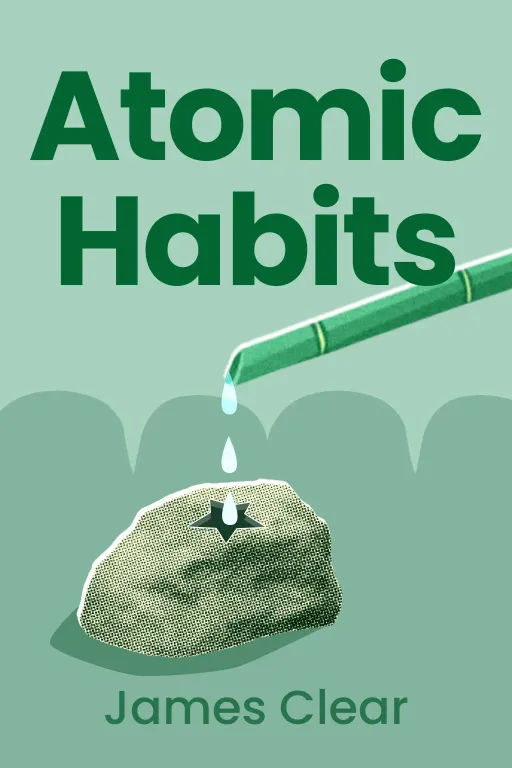
Nova: Imagine a pilot taking off from Los Angeles, bound for New York. Just before takeoff, the pilot shifts the plane's heading by a mere three and a half degrees south. It seems like nothing, right? A tiny, almost imperceptible adjustment. But as the plane flies across the country, that tiny deviation compounds. Instead of landing in New York, the passengers step off the plane in Washington, D. C., hundreds of miles away. This is the beautiful, and sometimes terrifying, reality of atomic habits. Small, daily course corrections dictate our ultimate destination. Welcome to the show! I am Nova, and today we are diving deep into James Clear's masterpiece,. Joining me is the brilliant legal mind and analytical strategist, Ximena. Ximena, it is wonderful to have you here.
Ximena: Thanks, Nova. It is great to be here. That airplane analogy is the perfect entry point. As someone who spends all day analyzing systems, structures, and rules, I find the math of habits absolutely fascinating. If you get just one percent better each day for a year, you end up thirty-seven times better. But if you get one percent worse, you decline almost to zero. It is a compounding interest formula for human potential.
Nova: It really is! And today, we are going to tackle this book from three distinct, powerful angles. First, we will explore the profound shift from goal-chasing to identity-based systems. Second, we will discuss how to architect our environments to make discipline effortless. And finally, we will focus on how to maintain peak motivation and avoid complacency through systematic reflection. We want to help you internalize these principles to become a disciplined, consistent, and systems-driven leader in your work, your personal growth, and even your spiritual life. So, let's dive right in!
Deep Dive into Core Topic 1
SECTION
Nova: Let's start with a quote from James Clear that always blows my mind: "You do not rise to the level of your goals. You fall to the level of your systems." We are so conditioned to focus on goals, aren't we? "Win this case," "lose ten pounds," "read the Bible in a year." But Clear argues that goals are actually the problem. Ximena, from a strategic, analytical perspective, why is relying on goals such a fragile strategy?
Ximena: Well, Nova, from a systems design perspective, goals have several structural flaws. First, there is a survivor bias. We look at winners and assume their goals made them win, but the losers had the exact same goals. The goal is a constant, not a variable. The variable is the system. Second, goals create a binary conflict: you are either achieving your goal and happy, or you are failing and miserable. And third, goals often create a yo-yo effect. Once you cross the finish line, you stop doing the very things that got you there because the motivator is gone.
Nova: Oh, absolutely! It is like the runner who trains for a marathon, crosses the finish line, and then doesn't run again for months. The system was built on a temporary target, not a permanent identity. And that brings us to Clear's three levels of behavior change: outcomes, processes, and identity. Outcomes are what you get. Processes are what you do. Identity is what you believe. Clear says most of us build outcome-first habits, but the real magic happens when we build identity-first habits.
Ximena: Exactly. Think of it like a legal framework. Outcomes are like individual court verdicts. Processes are the rules of civil procedure. But identity? Identity is the Constitution itself. It is the core set of beliefs that governs everything else. Clear uses a brilliant example of two people resisting a cigarette. When offered a smoke, the first person says, "No thanks, I am trying to quit." It sounds reasonable, but they still identify as a smoker who is trying to be different. The second person says, "No thanks, I am not a smoker." That is a fundamental identity shift. The behavior naturally flows from who they believe they are.
Nova: That is such a powerful distinction! "I am not a smoker" versus "I am trying to quit." It completely changes the cognitive load required to make the right choice. For someone like you, Ximena, who is looking to apply this to leadership, work performance, and even spiritual life, how do we practically bridge that gap? How do we start voting for a new identity?
Ximena: It is a two-step process, Nova. First, you decide the type of person you want to be. Second, you prove it to yourself with small wins. Let's apply this to spiritual life, which can often feel abstract or guilt-driven. Instead of setting a goal like "I must pray for thirty minutes every morning," which is outcome-based and easy to fail at, you shift the identity. You ask: "What would a spiritually grounded, disciplined person do?" Well, a spiritually grounded person prioritizes reflection. So, you start with a tiny, atomic habit: reading one verse of scripture or sitting in silent prayer for just two minutes every single morning. Each time you do that, you cast a vote for being a spiritually grounded person. Over time, the evidence accumulates, and your self-belief shifts.
Nova: I love that phrase: "casting a vote." Every action is a vote for the person you want to become. It takes the pressure off perfection. You don't need a landslide victory; you just need a majority vote!
Ximena: Precisely. In the legal world, we rely on the weight of evidence. You don't prove a case with a single, dramatic statement; you prove it by accumulating consistent, undeniable pieces of evidence. Your habits are the evidence of your identity. If you write one page a day, you have evidence that you are a writer. If you organize your desk every evening, you have evidence that you are organized. It is incredibly empowering because it means you don't have to wait for the outcome to feel successful. The success is in the execution of the system.
Deep Dive into Core Topic 2
SECTION
Nova: That is a perfect transition to our second core topic: choice architecture and the environment. We like to think we have total free will, but Clear argues that motivation is highly overrated. Environment often matters much more. He calls environment the "invisible hand" that shapes human behavior. Let's look at a fascinating study from the book: the hospital cafeteria drink experiment led by Dr. Anne Thorndike in Boston. Ximena, can you walk us through what happened there? It is such a clear demonstration of this principle.
Ximena: Oh, this study is a masterclass in choice architecture. Dr. Thorndike and her team wanted to improve the eating and drinking habits of hospital staff and visitors, but they did not want to use willpower, persuasion, or even verbal prompts. They simply changed the physical layout of the cafeteria. Originally, the refrigerators next to the cash registers were stocked only with soda. The researchers added water as an option to those fridges, and they also placed baskets of bottled water throughout the food stations. Soda was still fully available, but water was now highly visible and easily accessible.
Nova: And the results were staggering, right?
Ximena: Unbelievable. Over the next three months, soda sales decreased by over eleven percent, while bottled water sales shot up by nearly twenty-six percent. No one was told to drink water. There were no motivational posters. The customers' choices shifted purely because the visual cues in their environment shifted. As an INTJ, this makes perfect sense to me. Humans naturally gravitate toward the path of least resistance. If you make the cues of your good habits obvious and the cues of your bad habits invisible, you bypass the need for willpower entirely.
Nova: It is so true! We think we are in control, but we are highly visual creatures. Think about the Dutch energy crisis study from the 1970s. Researchers found that some homeowners in a suburb near Amsterdam used thirty percent less energy than their neighbors. The only difference? The location of the electrical meter. In the high-energy homes, the meter was in the dark basement. In the low-energy homes, the meter was in the main hallway, where the homeowners saw it every single day. The visual cue of seeing the numbers tick up made conservation automatic.
Ximena: It is all about feedback loops and friction. In the legal field, we talk about reducing friction to make compliance easier. If a process is too complicated, people will find workarounds, even if they have the best intentions. The same applies to our personal lives. If you want to practice the guitar more, but it is tucked away in a case in the back of your closet, you won't play. The friction is too high. But if you place the guitar on a stand in the middle of your living room, the cue is obvious, the friction is low, and the habit becomes almost inevitable.
Nova: Exactly! And the reverse is true for bad habits. If you want to stop checking social media while working, you have to increase the friction. Don't just close the tab. Put your phone in another room, or give it to a colleague, or use an app that blocks access. Make it difficult! I love the story of Victor Hugo writing. He was facing an impossible deadline because he had spent the previous year socializing and procrastinating. So, what did he do? He bought a giant knitted shawl, locked away all his formal clothes in a chest, and gave the key to his assistant. He literally had nothing to wear outside. He had to stay in his study and write. And he finished the book two weeks early!
Ximena: That is the ultimate commitment device! A choice you make in the present that controls your actions in the future. It is brilliant because it acknowledges that our future selves are weak. When I am planning my week on Sunday, I am highly rational and disciplined. But on Wednesday afternoon, when I am tired and stressed, my willpower is depleted. By using commitment devices—like scheduling automatic transfers to a savings account, or using an outlet timer to shut off the internet at ten p. m. like habits expert Nir Eyal does—we protect our future selves from our own weakness.
Nova: Yes! We automate our discipline. And for a leader, this is crucial. If you want a consistent, high-performing team, you don't just demand higher motivation. You design a workflow environment where the right actions are the easiest to take. You prime the environment for success. Ximena, how do you prime your workspace to reduce cognitive friction?
Ximena: I use a strategy inspired by an IT developer named Oswald Nuckols, called "resetting the room." At the end of every workday, I spend five minutes preparing my desk for the next morning. I close all unnecessary tabs, organize my physical files, and write down the single most important task for the next day. When I sit down in the morning, there is zero friction. I don't have to decide what to do or clear away clutter. The environment is already primed for deep work. It is a tiny habit, but it saves an immense amount of mental energy.
Deep Dive into Core Topic 3
SECTION
Nova: That is incredibly practical. Now, let's move to our third core topic: maintaining peak motivation and avoiding the dark side of habits. This is where we go from being merely good to being truly great. Clear introduces the Goldilocks Rule, which states that humans experience peak motivation when working on tasks that are right on the edge of their current abilities. Not too easy, not too hard, but just manageable. Ximena, how does this apply to long-term consistency, especially when the initial excitement of a new habit wears off?
Ximena: The Goldilocks Rule is essential because the greatest threat to success is not failure; it is boredom. When we start a habit, it is exciting because it is novel. But as we repeat it, it becomes routine, and routine can lead to complacency. To stay motivated, we need to constantly introduce small challenges—roughly four percent beyond our current ability, according to flow state research. Think of Steve Martin's comedy career. He spent ten years learning, four years refining, and four years as a wild success. He didn't just tell the same jokes; he constantly tweaked his act, expanded his venues, and pushed the boundaries of his performance just enough to keep himself engaged and the audience surprised.
Nova: Yes! He kept himself in that sweet spot between boredom and anxiety. But there is a paradox here, isn't there? On one hand, we need habits to automate our lives. On the other hand, once a habit becomes automatic, we stop paying attention, and our performance can actually decline. Clear says, "Habits + Deliberate Practice = Mastery." How do we prevent our good habits from turning into mindless, mediocre routines?
Ximena: This is where the mastermind mindset really shines. We need a system for reflection and review. Look at the Los Angeles Lakers in the 1980s. They had an incredibly talented team with players like Magic Johnson, but they struggled to win back-to-back championships. Their legendary coach, Pat Riley, created a program called Career Best Effort, or CBE. He tracked every player's statistics, going all the way back to high school, to establish a baseline. Then, he asked each player to improve their output by just one percent over the course of the season. He didn't just track points; he tracked "unsung hero" deeds like diving for loose balls or blocking out opponents. By systematically reviewing this data and comparing it to past performances, the Lakers avoided complacency and won consecutive championships in 1987 and 1988.
Nova: That is such a powerful example of using data to drive continuous improvement. It is not about a massive overhaul; it is about that relentless one percent refinement. And we see this with elite performers everywhere. Eliud Kipchoge, the greatest marathon runner of all time, takes detailed notes after every single practice session, searching for tiny adjustments. Swimmer Katie Ledecky tracks her daily wellness, sleep, and nutrition on a scale of one to ten, and her coach reviews it weekly. Even comedian Chris Rock goes to small, intimate comedy clubs to test hundreds of jokes, keeping a notepad on stage to record which lines get a laugh and which ones fall flat. They all use structured reflection.
Ximena: Exactly. Reflection and review are the antidote to the downside of habits. For me, this means doing a weekly review. Every Friday afternoon, I look at my calendar, my task list, and my personal habits. I ask myself: "What went well this week? Where did I experience friction? What systems need adjustment?" It keeps me conscious of my behavior. Without that review, it is too easy to let bad habits slip back in or to keep doing things that are no longer effective. You have to remain the architect of your own life, not just the tenant.
Nova: "The architect of your own life, not just the tenant." Ximena, that is a gold-standard quote right there! And it requires us to keep our identity flexible. Clear warns that the tighter we cling to an identity, the harder it is to grow beyond it. If you define yourself solely as "I am a brilliant trial lawyer," what happens when you need to transition into a leadership role that requires delegation rather than individual combat? Or if you define yourself as "I am a healthy person," but an injury prevents you from working out the way you used to? We have to keep our identity small and adaptable.
Ximena: Yes, investor Paul Graham has a great essay on this: "Keep your identity small." If your identity is tied to a specific outcome or role, it is fragile. But if your identity is tied to a core value or a system of learning, it is incredibly resilient. Instead of "I am a runner," you shift to "I am the type of person who values physical health and resilience." That way, if you get injured, you can still swim, or walk, or focus on nutrition, and you are still living out your identity. It gives you the flexibility to adapt to whatever life throws at you.
Synthesis & Takeaways
SECTION
Nova: This has been such an incredibly rich conversation. As we wrap up, let's bring it all back to the core message of. The secret to results that last is never to stop making improvements. It is the Sorites Paradox—the ancient Greek puzzle of the heap of sand. One grain of sand does not make a heap. You add another, still no heap. You add another, and another. But eventually, at some precise moment, a single grain transforms the collection into a heap. Your daily habits are those grains of sand. On any given day, a single choice seems insignificant. But over time, they compound into a mountain of success.
Ximena: Beautifully said, Nova. If I had to leave our listeners, and especially my fellow analytical thinkers, with one actionable challenge, it is this: Identify the identity you want to cultivate. Do you want to be a disciplined leader? A spiritually grounded mentor? A highly focused professional? Write that identity down. And then, ask yourself: "What is the smallest, two-minute action I can take today to cast a vote for that identity?" Don't worry about the outcome. Just focus on the system. Standardize before you optimize. Show up consistently, and let the compounding interest of your habits do the rest.
Nova: "Standardize before you optimize." I love that. Show up first, perfect it later. Ximena, thank you so much for sharing your brilliant insights with us today. This has been an absolute masterclass in systems-driven growth.
Ximena: Thank you, Nova. It was an absolute pleasure.
Nova: And to all our listeners out there, remember: changes that seem small and unimportant at first will compound into remarkable results if you are willing to stick with them. Go cast your votes today, build your systems, and we will see you next time!