Unmasking Habit Loops: How to Build Lasting Change Without Sheer Willpower
Opening
SECTION
Nova: Name]` headers.
Golden Hook & Introduction
SECTION
Nova: What if I told you that building lasting positive habits has almost nothing to do with how much willpower you have, and everything to do with how lazy you are?
Atlas: Whoa, Nova, hold on. Lazy? I think a lot of our listeners, myself included, have been told the exact opposite our entire lives. That it’s all about grit, pushing through, white-knuckling it. Are you saying we've been lied to? Or, perhaps more charitably, severely misled?
Nova: Misled, Atlas, absolutely! Because the conventional wisdom around habit formation often sets us up for failure. We beat ourselves up for not having enough willpower, when the real problem lies elsewhere. We're talking about fundamental shifts in how we approach personal change, and that's precisely what we're unmasking today.
Atlas: Okay, I’m intrigued. Because if there’s a shortcut to lasting change that involves less internal struggle, I think everyone, especially those of us who value holistic health and consistent well-being, is leaning in right now.
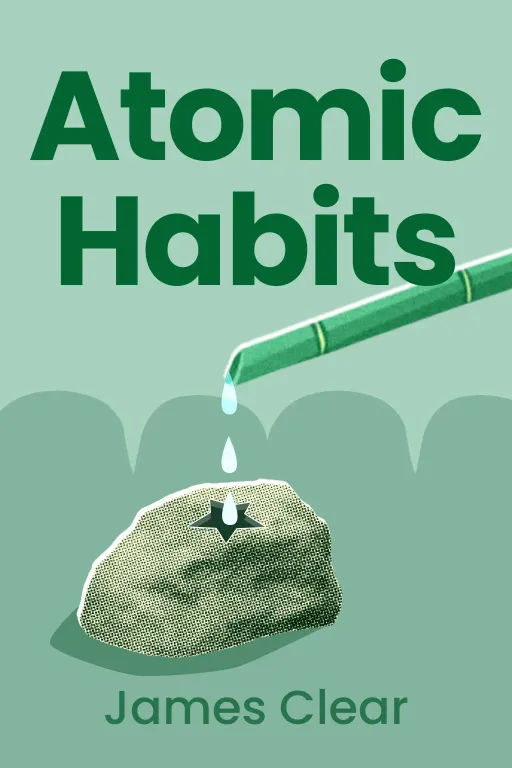
Nova: Exactly! And the masters of this domain are the brilliant minds behind two widely acclaimed books that have truly revolutionized our understanding of human behavior. We're diving into by James Clear and by Charles Duhigg. These aren't just popular self-help books; they're foundational texts in behavioral science, widely acclaimed for their rigorous research and transformative impact on millions, often cited as the definitive guides to understanding how our brains actually form and break habits.
Atlas: So, these aren't just anecdotes, there's some serious science behind this idea of being "lazy" into better habits?
Nova: Precisely. They show us that consistent motivation is less about brute force and much more about smart design. It's about strategically engineering your life for success, rather than constantly fighting against your own nature. It’s empowering because it shifts the blame from a perceived character flaw to a solvable design challenge.
The Willpower Myth and Systemic Change
SECTION
Nova: So, let’s tackle this willpower myth head-on. Many of us approach habit change like a New Year's resolution: we declare a grand goal—"I'm going to run a marathon!" or "I'll eat perfectly clean!"—and then we rely solely on this burst of initial motivation, or willpower, to carry us through.
Atlas: Oh man, I’ve been there. Every year. That initial surge of enthusiasm feels so powerful, like it can conquer anything. But then, about three weeks in, when the alarm goes off at 5 AM and it’s cold outside, that willpower just… evaporates. It’s like a battery that just runs out.
Nova: That's the trap! James Clear, in, makes a profound distinction. He argues that successful people and successful systems don't rely on superior willpower; they rely on superior systems. He shifts our focus from goals—like "I want to lose 10 pounds"—to systems—like "I want to become the type of person who never misses a workout." The key is to make good habits obvious, attractive, easy, and satisfying.
Atlas: Okay, so it’s not about me being inherently undisciplined, but about the of my environment? That’s actually really liberating to hear, especially for someone who's tired of feeling like they're constantly battling themselves. But how does that actually play out? Can you give me an example of making a good habit, say, "easy?"
Nova: Absolutely. Take someone who wants to read more, which is a common goal for many seekers of knowledge. Their current system might be: "I'll read before bed." But the book is downstairs on the coffee table, their phone is next to them, and they're already tired. That scenario requires a huge amount of willpower to get up, go downstairs, find the book, and then resist scrolling. The friction is too high.
Atlas: Yeah, that’s me. My phone usually wins that battle. It’s a powerful, almost magnetic pull.
Nova: So, a system-focused approach would be to make that habit incredibly easy. The "2-minute rule" from is brilliant here. Instead of setting an overwhelming goal like "read for an hour," make it "read for two minutes." And crucially, make it and. Leave the book right on your pillow, open to the page you left off. When you get into bed, the book is literally staring you in the face. It's almost harder to pick it up for two minutes.
Atlas: Oh, I like that. Two minutes is so small it feels almost silly to resist. It’s like a tiny, non-threatening invitation. But how does two minutes of reading, or two minutes of anything, actually lead to lasting change? That feels like a drop in the ocean for someone striving for a vibrant life.
Nova: That’s where the power of compounding comes in. Clear emphasizes that tiny, incremental changes, when compounded over time, lead to remarkable results. The two minutes isn't the ultimate goal; it's the. Once you've picked up the book and read for two minutes, you've successfully the habit. You've reinforced the identity of "someone who reads." Sometimes, you'll read for longer. Other times, it's just two minutes, and that's still a win. It builds momentum, and momentum is far more sustainable than sheer willpower.
Atlas: So, it's about reducing the friction to get started, making the entry point so small it feels negligible, and then letting the natural momentum of consistency take over. It’s like greasing the rails for your desired behavior, making the path of least resistance the path of positive change.
Nova: Exactly! And it's not just about making it easy; it’s about making it and. If you want to drink more water, put a full water bottle on your desk every morning, right where you can see it, maybe even a fun, colorful one. If you want to exercise, lay out your workout clothes the night before, right next to your bed. This environmental design is your silent, ever-present cheerleader, making good choices almost inevitable, without you having to constantly think about it. It removes the need for that exhausting internal debate.
Atlas: That sounds like a game-changer for anyone who’s ever felt drained by decision fatigue, trying to make the "right" choice over and over. It's about making the right choice the choice, the path of least resistance. That's a huge shift in perspective.
Deconstructing the Habit Loop: Cue, Routine, Reward
SECTION
Nova: And that naturally leads us to the second key idea we need to talk about, which often acts as the invisible engine behind these systems work so well. It’s the concept of the "habit loop," brilliantly broken down by Charles Duhigg in.
Atlas: The habit loop. I've heard that phrase before, but I'm not sure I fully grasp its mechanics. Is it like a self-fulfilling prophecy for our brains, constantly nudging us towards familiar behaviors?
Nova: It's even more powerful than that. Duhigg reveals that almost all behaviors, from brushing our teeth to scrolling through social media, are governed by a three-part neurological loop: the Cue, the Routine, and the Reward. The cue is the trigger that tells your brain to go into automatic mode. It could be a time of day, a place, a feeling, or other people. The routine is the behavior itself. And the reward is what your brain gets from completing the routine, which helps it remember the loop for the future and strengthens that neural pathway.
Atlas: So, a trigger, an action, and then a payoff. That makes sense on a basic level, but how does understanding this loop actually help us change or create new habits, beyond just making them "easy"? What’s the secret sauce here?
Nova: This is where the profound insight lies. You can’t really a bad habit; you have to it. The cue and the underlying reward often remain, because our brains are always seeking those payoffs, but you can intentionally change the routine. Think about a classic example Duhigg explores: how Starbucks trained its employees to handle difficult customers. They realized that when a customer got angry, it was a 'cue' for the barista to get stressed or defensive. The 'routine' would often be to argue or shut down. The 'reward' was a temporary feeling of being right, or avoiding confrontation.
Atlas: That sounds like a recipe for a bad customer experience, and a lot of internal stress for the barista. Not exactly conducive to well-being.
Nova: Exactly. So, Starbucks didn't try to make employees "have more willpower" to be nice. They engineered a new routine. The cue—an angry customer—remained. The desired reward—feeling in control, maintaining a positive interaction, and keeping the job—remained. But they taught baristas a new routine: use the "LATTE" method. Listen, Acknowledge, Take action, Thank, Explain. This provided a structured, positive routine that delivered the same, or even better, emotional reward.
Atlas: Ah, so it's about substituting a routine to achieve the that the brain was seeking. That's actually really inspiring. It feels like we're not just victims of our habits; we can actually decode and redirect them. But what about something more personal, like stress eating? For someone balancing holistic health and stress management, that’s a huge challenge. How would the habit loop apply there?
Nova: That’s a perfect example, and incredibly common. For stress eating, the 'cue' might be a feeling of anxiety, boredom, or emotional drain after a long day at work. The 'routine' is reaching for that bag of chips or tub of ice cream. The 'reward' isn't necessarily the taste or the calories; it's the temporary distraction, the comfort, the momentary relief from stress, or even just the sensory experience of chewing.
Atlas: That’s a powerful distinction. The reward isn't the food, it's the the food provides. I imagine a lot of our listeners can relate to that. The momentary escape. So, how do you change that routine? How do you figure out the reward?
Nova: You identify the cue, you identify the true, often hidden, reward, and then you experiment with a new routine that delivers that same reward. So, if the cue is stress and the true reward is comfort and distraction, instead of food, the new routine could be a 5-minute walk, calling a friend, listening to calming music, doing a quick breathing exercise, or simply engaging in a different, non-food-related sensory activity. It takes conscious effort at first, a deliberate substitution. But by consciously experimenting with new routines that satisfy that underlying craving, you can gradually re-wire the loop.
Atlas: That makes me wonder, then, are we just automatons reacting to cues and chasing rewards, or does this understanding give us more agency? Because it sounds like our brains are running on autopilot a lot of the time, and that can feel a bit disempowering.
Nova: That's the beautiful paradox. Understanding the habit loop isn't about surrendering to it; it's about gaining control it. It shows us where our willpower is best spent: not on fighting a baked-in routine with brute force, but on intelligently designing the cues and rewards, and consciously choosing new, healthier routines. It’s about becoming the architect of your own behaviors, rather than merely reacting to them. It’s about leveraging the brain’s natural wiring to work you, instead of against you.
Synthesis & Takeaways
SECTION
Nova: So, when we put James Clear’s focus on systems and environmental design together with Charles Duhigg’s deconstruction of the habit loop, a truly profound insight emerges. Lasting change isn't about having a superhuman reserve of willpower; it’s about becoming a skilled engineer of your own life, understanding the blueprints of your behavior.
Atlas: It’s like shifting from trying to paddle upstream with sheer strength, to understanding the currents and building a boat that glides effortlessly. That reframing alone is incredibly powerful for anyone seeking well-being and lasting transformation. It moves the conversation from personal failing to strategic problem-solving, which is a much more hopeful and sustainable approach.
Nova: Exactly! The profound insight here is that our environment and our understanding of the habit loop are far more potent tools for change than brute-force motivation. This approach offers true freedom, because it means you don't need to feel guilty about past failures or a perceived lack of discipline. You simply need to learn the mechanics and apply them, transforming frustration into consistent progress.
Atlas: So, for our listeners who are ready to stop battling themselves and start building that vibrant life, what's one tiny step they can take right now, today, to put these powerful insights into action?
Nova: Here’s your challenge, your very first tiny step: Identify one small habit you want to build. For the next 24 hours, make it incredibly short—just two minutes long—and link it to an existing routine you already do without thinking. So, if you want to meditate, do it for two minutes immediately after you brush your teeth. If you want to drink more water, take two sips immediately after you check your email. Make it so small, so simple, you can’t say no.
Atlas: I love that. It’s so accessible, and it perfectly embodies that shift from willpower to smart design. A two-minute commitment is something everyone can manage, and it builds that initial momentum. And for those of you who take that step, we want to hear about it! Share your tiny wins and how you’re engineering your habits. We’re all on this journey of growth together.
Nova: This is Aibrary. Congratulations on your growth!