

The 'Willpower' Myth: Why Discipline Alone Isn't Enough for Lasting Change
Golden Hook & Introduction
SECTION
Nova: What if everything you've been taught about discipline, grit, and willpower is actually undermining your long-term success?
Atlas: Whoa, hold on a second, Nova. That's a pretty bold claim. Most of us are constantly told we need grit, discipline to achieve anything meaningful. Are you telling me that's been a lie?
Nova: Not a lie, Atlas, but perhaps an incomplete truth. We often praise willpower as this grand, almost heroic quality, right? The key to success. But relying solely on it is, frankly, a recipe for burnout. Lasting change, the kind that sticks, isn't about having an endless well of grit. It's about designing your environment and your daily routines so that good choices become easy, almost automatic, and bad choices become remarkably difficult.
Atlas: That sounds incredibly appealing, especially for anyone who's ever felt like they're in a constant battle with themselves. I imagine a lot of our listeners, who are always striving for purposeful growth and self-awareness, have hit that wall of willpower fatigue.
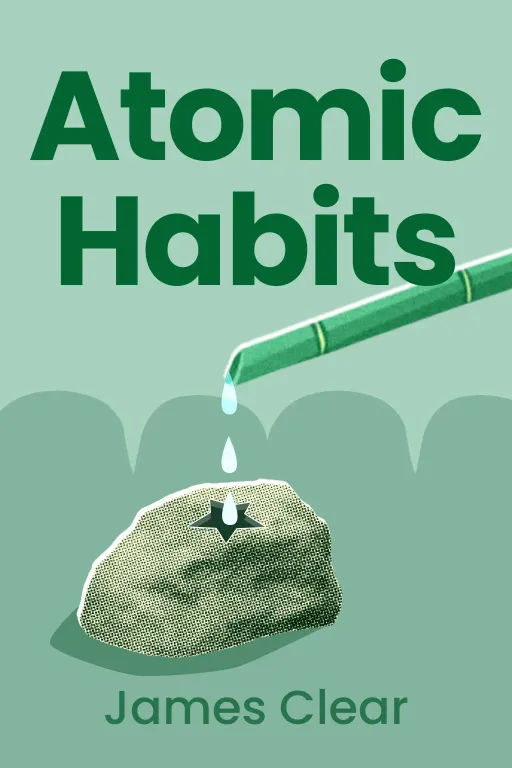
Nova: Exactly! And that's what we're diving into today, exploring this profound shift from brute-force willpower to intelligent systems. We're drawing heavily from two titans in this field: James Clear, author of the widely acclaimed "Atomic Habits," whose extensive research and popular newsletter have made behavioral science incredibly practical; and Charles Duhigg, a Pulitzer-winning investigative journalist who gave us "The Power of Habit," bringing a deep, storytelling lens to the science of habit formation. Their work truly illuminates this path.
Atlas: So, we're talking about a smarter way to grow, not just a harder way. I'm intrigued.
Beyond Willpower: The Myth of Grit and the Power of Systems
SECTION
Nova: Let's consider a scenario. Imagine an aspiring innovator, someone with brilliant ideas and boundless energy. They set ambitious goals: wake up at 5 AM, hit the gym, meditate for an hour, then dive into their passion project before work. For a few weeks, they're on fire, fueled by sheer determination. They push through the fatigue, ignore the cravings, and sacrifice sleep. But then, one stressful deadline, one late night, one minor illness, and the whole meticulously constructed routine crumbles. They feel like a failure, not because they lacked desire, but because their willpower eventually ran out.
Atlas: I know that feeling all too well, and I bet countless listeners do too. It’s that cycle of intense effort followed by an inevitable crash, then self-recrimination. But isn’t there still a place for discipline? I mean, some things just require you to push through, right? For our listeners who are resilient seekers, doesn't 'grit' imply a certain strength of character?
Nova: Absolutely, Atlas, discipline and grit have their place, especially in moments of crisis or intense focus. But they are finite resources, like a battery. You can charge them, but they drain. The key insight here is that for change – the kind that becomes part of who you are, not just what you force yourself to do – you need to shift from constantly and that battery to building systems that don't depend on its charge. Think of it like this: willpower is trying to swim upstream against a strong current every single day. A system is building a canal that redirects the current to flow in the direction you want to go.
Atlas: That’s a great analogy. So, you're saying a system is like creating a favorable current? But what does that actually look like in our daily lives? For someone who's used to just "trying harder," this might feel a bit abstract.
Nova: It's remarkably concrete. A system is about designing your environment, your choices, and your routines to make the desired behavior the path of least resistance. It's about making the good choice the choice, not the heroic choice. It's about putting guardrails on the road so you don't have to constantly exert effort to stay on track.
Engineering Effortless Growth: Habit Loops and Environmental Design
SECTION
Nova: And that naturally leads us to the second key idea: how do we actually these effortless growth systems? This is where James Clear and Charles Duhigg really shine. Clear, in "Atomic Habits," gives us four simple laws for building good habits and breaking bad ones: make it obvious, make it attractive, make it easy, and make it satisfying.
Atlas: I love the simplicity of that. "Make it easy" really resonates. For someone always seeking clarity, those four laws sound like a practical roadmap. But what's the science underneath all that? How do these habits actually form and stick without us needing to constantly think about them?
Nova: That's where Charles Duhigg's "The Power of Habit" provides the underlying mechanism: the habit loop. He breaks it down into three parts: the cue, the routine, and the reward. The cue is the trigger that tells your brain to go into automatic mode and which habit to use. The routine is the behavior itself. And the reward is what reinforces the loop, making your brain want that cue again. Think about it: the cue could be seeing your phone light up. The routine is grabbing it and checking social media. The reward is the shot of dopamine, the fleeting connection. The more you repeat this, the stronger the loop becomes, and the less conscious effort it requires.
Atlas: So, understanding that loop allows us to become almost like engineers of our own behavior. For someone driven by self-awareness, diagnosing those cues and rewards sounds like a powerful tool for reprogramming. Can you give an example of how environmental design plays into this, especially for someone trying to cultivate a new, positive habit?
Nova: Absolutely. Let's say you want to start exercising every morning. The old way is relying on willpower to drag yourself out of bed. The systems approach, using environmental design, makes it easy. Your cue could be your alarm. Your routine: getting dressed for the gym. Your reward: the feeling of accomplishment. To make it and, you lay out your workout clothes the night before, right next to your bed. Maybe you even sleep in your gym clothes. You place your water bottle and keys right by the door. The friction to starting is almost zero. The 'bad choice' of staying in bed now requires effort than the 'good choice' of just getting up and going because everything is already set up for success.
Atlas: That makes so much sense. It's about removing the obstacles before they even become a test of willpower. It’s like, instead of trying to be a superhero every morning, you just make the path to becoming one incredibly smooth. It’s not about being a different person; it’s about designing a different path for the person you already are.
Synthesis & Takeaways
SECTION
Nova: Precisely. This shift in thinking is profound. It moves us from a mindset of constant struggle and self-reproach to one of intelligent design and effortless growth. It’s about recognizing that our environment is often more powerful than our intentions. True self-improvement, true lasting change, isn't about fighting our nature with sheer force, but about aligning our environment and routines with the person we aspire to be. It's about making the good, purposeful choices the ones that just.
Atlas: That's actually really inspiring. It takes the pressure off and makes growth feel much more sustainable and, dare I say, enjoyable. So, for our listeners who are ready to make this shift, what's one tiny step they can take right now?
Nova: My challenge, pulling directly from these insights, is to identify just one small habit you want to build. Maybe it's drinking more water, reading a few pages, or taking a short walk. Now, think about how you can make it incredibly easy to start. Place the water bottle on your desk, put the book on your pillow, or lay out your walking shoes by the door. Engineer your environment so that the good choice is the default, the path of least resistance.
Atlas: I love that. It’s not about a grand overhaul, but a tiny, strategic adjustment that leverages the power of systems. It's about designing freedom, not just forcing discipline.
Nova: Absolutely. So, how might you redesign one small part of your environment this week to make a desired action inevitable? Think about that.
Nova: This is Aibrary. Congratulations on your growth!









