

The Unseen Force: Harnessing the Power of Habits for Rehabilitation Success.
Golden Hook & Introduction
SECTION
Nova: If I told you the secret to lasting success in rehabilitation isn't a miraculous breakthrough or some grand, heroic effort, but something so tiny you'd barely notice it, would you believe me?
Atlas: Oh man, that's a bold claim, Nova. My instinct, and probably a lot of our listeners' too, is that big problems require big solutions. We're talking about transforming lives here, not just… flossing. What's the magic trick?
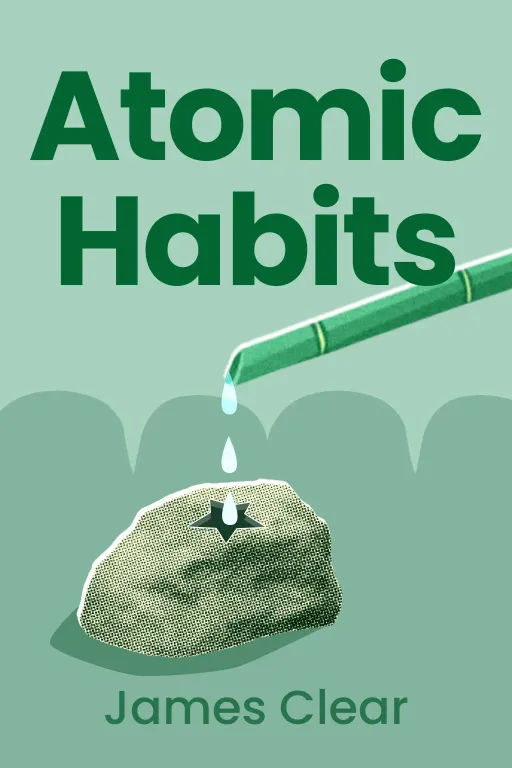
Nova: There's no magic trick, Atlas. It's an unseen force, a quiet revolution, really. And it's beautifully articulated in a book that has truly reshaped how millions think about change: "Atomic Habits" by James Clear. Clear, a brilliant writer and speaker, dedicated years to understanding the psychology and neuroscience behind habits, distilling it into a framework that's incredibly accessible and profoundly impactful. It's why his work has resonated with so many, from elite athletes to everyday individuals, and why it's so relevant for anyone aiming to improve well-being.
Atlas: Okay, so we're talking about habits, but "atomic"? That sounds… small. I'm intrigued, though. For those of us driven to improve lives and implement practical solutions, how do these "tiny" habits actually translate into something as significant as rehabilitation success? Because that sounds like a massive undertaking.
The Power of Tiny Habits in Rehabilitation
SECTION
Nova: Exactly, "small" is the operative word. The core idea, and the cold fact Clear presents, is that lasting change isn't about grand gestures. It's about tiny, consistent habits that compound over time for massive results. Think about a patient, let's say, recovering from a complex knee surgery. Their physical therapist hands them a detailed, 20-step daily exercise regimen.
Atlas: I'm already overwhelmed just hearing that. I imagine a lot of patients feel that way, staring at a list that feels like another full-time job.
Nova: Precisely. That feeling of being overwhelmed often leads to non-adherence, frustration, and ultimately, a slower, less effective recovery. But what if, instead of that daunting list, the therapist suggested just specific stretch? A single rep, every single day, right after they brush their teeth.
Atlas: Just one rep? That feels almost… insignificant. How does that possibly move the needle on a full knee recovery?
Nova: That's the deceptive power of it. The of the problem wasn't a lack of desire to heal, but the sheer mental friction of starting an overwhelming routine. The of introducing one tiny, consistent habit drastically lowers that barrier to entry. There's no mental debate, no procrastination. It's so easy, almost ridiculous not to do it. And here's the beautiful: that tiny, consistent action builds momentum. Within weeks, the patient isn't just doing that one stretch; they're naturally adding a second, then a third, and soon, they're completing a significant portion of their rehab without ever feeling the initial dread.
Atlas: Wow, I see what you mean. So it’s not about the magnitude of the single action, but the consistency and the psychological win of actually something. It’s like clearing a tiny path that eventually becomes a highway.
Nova: Exactly! It's about making the healthy choice the easy choice. It removes the internal struggle, the willpower drain. The tiny step isn't the destination; it's the gateway. This is crucial for designing effective, patient-centric rehabilitation programs that actually stick, leading to dramatically improved long-term outcomes.
Atlas: I can definitely relate to that. The biggest hurdle is always just starting, isn't it? That initial push. But how do we, as people who want to strategically design these kinds of impactful systems, actually that ease and consistency? Because a lot of what we do in healthcare feels anything but easy.
Atomic Habits: The Framework for Effective Rehabilitation Design
SECTION
Nova: That's where Clear's framework truly shines. He breaks down habit formation into four simple laws of behavior change: Make it Obvious, Make it Attractive, Make it Easy, and Make it Satisfying. These aren't just theoretical principles; they're a strategic roadmap for innovators.
Atlas: Okay, tell me more. For instance, for a patient needing to consistently monitor something, like tracking blood sugar, which can feel like a daily chore. How would these laws apply?
Nova: Perfect example. Let's break it down. First,. Instead of the test kit being tucked away in a drawer, place it right next to their coffee maker, or their morning medication. It's literally in their line of sight, a visual cue for action.
Atlas: Right, so it's not about remembering, it's about seeing. That makes sense. What about making it attractive? Because let's be honest, health tasks aren't always the most exciting.
Nova: That's the challenge, and it requires creativity. means pairing the desired habit with something they enjoy. Maybe they love listening to a specific podcast, or having a quiet moment of reflection in the morning. So, the rule becomes: "After I test my blood sugar, I'll allow myself to listen to my favorite podcast." The reward comes immediately after the habit.
Atlas: Oh, I like that. It's like tricking your brain into associating something positive with the chore. What about making it easy? Because some of these procedures can be quite fiddly.
Nova: Absolutely. is about reducing friction to the absolute minimum. If their current device is complex, can we find a simpler, one-touch model? Can we pre-set certain parameters? Can the supplies be delivered directly to their door? The less effort required, the more likely the habit will form. It's about removing obstacles, not just telling people to try harder.
Atlas: That sounds rough, but it's true. Willpower is a finite resource. So, obvious, attractive, easy… and then finally, satisfying. How do you make a medical routine?
Nova: This is crucial for long-term adherence. means providing immediate gratification. This could be a visual progress tracker – a simple sticker chart on the fridge, or an app that shows a clear trend line of their improved numbers. The brain loves immediate rewards. It reinforces the behavior. Seeing that positive trend, knowing they're actively contributing to their health, creates a sense of accomplishment.
Atlas: That's actually really inspiring. It’s about designing systems that genuinely improve human well-being, not just prescribing tasks. This isn't just for patients; it's for anyone designing policies or innovations in healthcare. It makes me wonder, how can we apply this not just to individual patients, but to the entire rehabilitation environment?
Synthesis & Takeaways
SECTION
Nova: That's the profound insight, Atlas. Lasting change in rehabilitation isn't fundamentally about a patient's willpower; it's about the systems we design around them. It's about making the healthy choice the obvious, attractive, easy, and satisfying choice. When we do that, we tap into fundamental human psychology, moving beyond just informing patients to actually enabling and empowering them through thoughtful design. This shift in perspective, from grand interventions to atomic habits, is truly an unseen force for profound and lasting success.
Atlas: That's a powerful reframing. It means we, as strategists and innovators, have a direct hand in shaping those outcomes. So, what's one tiny step, one atomic habit, listeners can take today to start implementing this?
Nova: Identify one small, daily habit that, if consistently followed, would significantly improve patient adherence to rehabilitation protocol you're involved with or thinking about. Then, apply Clear's four laws to that single habit. How can you make it more obvious, more attractive, easier to do, and more satisfying? Start there. The power isn't in the size of the step, but in the consistency of taking it.
Atlas: I love that. Focus on that one tiny leverage point. It’s a practical, impactful way to start improving lives right now.
Nova: This is Aibrary. Congratulations on your growth!









