

The Strategic Recharge: Building Unshakeable Habits
Golden Hook & Introduction
SECTION
Nova: You know, we're often told that if you just want it badly enough, if you just have enough willpower, you can achieve anything. What if I told you that's actually the biggest lie holding you back from your goals?
Atlas: Hold on, are you saying that the entire self-help industry, built on "just push harder," is fundamentally flawed? Because honestly, that's going to resonate with anyone who feels like they're constantly fighting an uphill battle with their own motivation.
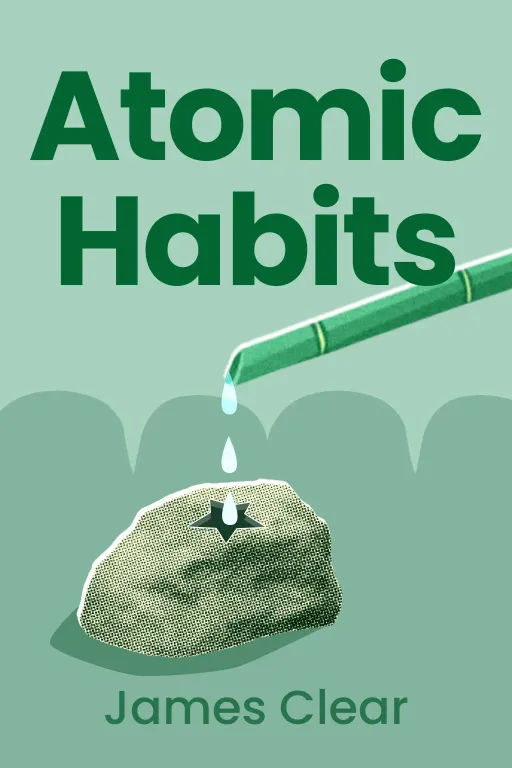
Nova: Absolutely. And today, we're unraveling that myth with insights from two pivotal works: "Atomic Habits" by James Clear, a wildly acclaimed book that distills behavioral science into a practical framework, and "The Power of Habit" by Charles Duhigg, a Pulitzer Prize-winning investigative reporter who revealed the hidden science behind our daily routines.
Atlas: Oh, I've heard "Atomic Habits" mentioned everywhere – it's practically a modern classic in productivity circles, known for its incredibly clear, step-by-step approach. And Duhigg, a reporter, bringing science to habits? That's fascinating. It’s like he’s uncovering the hidden gears in our daily lives.
Nova: Exactly. And what both of these brilliant minds ultimately show us is that your long-term success, your well-being, your productivity, it all depends not on some heroic act of willpower, but on designing the right systems.
The System's Edge: Why Willpower Isn't Enough
SECTION
Nova: So let's dive into that first idea: why systems beat willpower every single time. James Clear, in "Atomic Habits," really drives home that tiny changes, these 'atomic habits,' compound over time to produce remarkable results. He's not talking about monumental shifts; he's talking about making small, positive actions easy and automatic.
Atlas: That makes sense. I can definitely relate to the idea of starting with grand ambitions and then just, well, not following through. So are you saying that relying on willpower is a losing game for everyone? Even for high-achievers who pride themselves on sheer grit?
Nova: Even for them, Atlas. Willpower is a finite resource. Think of it like a muscle; it fatigues. If you're constantly relying on brute force to get things done, you're going to burn out. Clear's genius is in showing us how to build an environment that our well-being and productivity, rather than constantly battling against it.
Atlas: So it's not about having more discipline, it's about making discipline unnecessary? That’s almost counterintuitive for diligent students and growth-seekers who are always told to 'try harder.'
Nova: Precisely. He outlines four laws for building good habits: make it obvious, make it attractive, make it easy, and make it satisfying. Let's take "make it obvious" for instance. If you want to drink more water, don't just to. Put the glass out tonight. Fill it. Place it right where you'll see it first thing in the morning. Reduce the friction.
Atlas: Okay, so it’s about engineering your environment. For someone with a really busy schedule, like many of our listeners managing demanding roles, how subtle can 'obvious' be? Like, if I want to read more, does putting a book on my pillow actually work?
Nova: It absolutely can! The key is to make the cue so unavoidable that you almost stumble into the habit. Or, for a workout, laying out your clothes the night before. You're removing the decision-making step, which is where willpower often gets depleted. You're setting your future self up for success.
Atlas: I still struggle with that myself sometimes. I’ve tried to wake up earlier for years, and it always devolves into hitting snooze. So I guess the system isn't just about starting, it's about sustaining.
Nova: And that's where "make it easy" comes in. If a habit takes too much effort, we won't do it. Clear gives the example of an Olympic cycling team that didn't make one massive improvement, but hundreds of tiny ones. They optimized their bikes, their nutrition, their recovery, even the pillows they slept on. Each was a tiny, atomic improvement, but they compounded to create an unstoppable advantage.
Atlas: That's a great example. It really shifts the focus from a personal failing to a system design flaw. It’s empowering to think that if a habit isn’t sticking, I don't need more willpower; I need a better system.
Deconstructing Habits: The Cue, Routine, Reward Loop
SECTION
Nova: And that naturally leads us to the second key idea we need to talk about, which often acts as the psychological blueprint for what James Clear is building: Charles Duhigg's groundbreaking work on the 'habit loop' in "The Power of Habit." Duhigg, as an investigative reporter, just dug into the science of why we do what we do.
Atlas: So he’s breaking down the mechanics of it? What exactly is this habit loop?
Nova: He explains that every habit, good or bad, follows a three-step neurological loop: cue, routine, and reward. The cue is the trigger that tells your brain to go into automatic mode and which habit to use. The routine is the behavior itself – physical, mental, or emotional. And the reward is what your brain gets from the routine, which helps it decide if this loop is worth remembering for the future.
Atlas: Can you give an example? Because it sounds a bit abstract. Like, how does a random thought become a habit?
Nova: Let's use Duhigg's famous example of Febreze. When Procter & Gamble first launched Febreze, it flopped. They marketed it as an odor eliminator, a way to get rid of bad smells. But people with bad-smelling homes had become "nose blind" to their own odors. The cue wasn't working.
Atlas: So no one was buying it because they didn't realize they needed it?
Nova: Exactly. Then P&G discovered something fascinating. They noticed people who had just finished their homes would spray Febreze as a final touch – not to get rid of odors, but for the pleasant smell, the sense of completion. The cue became a clean room, the routine was spraying Febreze, and the reward was the fresh scent and the feeling of a job well done.
Atlas: Wow, that’s incredible. So they didn't change the product; they changed the and the. That's a huge shift in perspective.
Nova: It's everything. Once they reframed Febreze as a reward for cleaning, sales exploded. This principle applies to all our habits. If you want to stop stress-eating, you need to identify the cue and the reward. Then, you can consciously substitute a different routine that provides a similar reward.
Atlas: That makes me wonder, for our listeners focused on mindfulness and stress reduction, how can they identify their own cues, especially for those subtle, unconscious habits?
Nova: It often starts with observation, what some call "habit-spotting." Keep a journal for a few days. When you feel the urge to do something you want to change, ask yourself: What was the cue? What was I feeling? Where was I? Who was I with? And what reward did I get? Just that awareness begins to break the automaticity.
Atlas: But what if the reward is really powerful, like the instant dopamine hit from scrolling social media, or that momentary escape from stress? It feels almost impossible to substitute that.
Nova: It’s not easy, but it’s possible. The power of the loop is that you're not trying to eradicate the cue or the need for a reward. You're simply changing the routine. Instead of scrolling, maybe you do a two-minute meditation for a sense of calm, or call a friend for connection. It’s about fulfilling that underlying need in a healthier way.
Atlas: So basically, you’re saying that once we understand our habit loops, we gain a profound sense of control. It’s not about fighting ourselves, but about intelligently reprogramming ourselves.
Synthesis & Takeaways
SECTION
Nova: Precisely, Atlas. When we put these two brilliant minds together, James Clear gives us the architectural plans for building effective systems, and Charles Duhigg provides the psychological wiring diagram. They both show us that habits aren't moral failings, but predictable processes that can be engineered. The profound implication here is that our environment and our understanding of our own psychology, not just our raw discipline, can truly shape our destiny.
Atlas: That's actually really inspiring. It means personal growth isn't about some elusive, heroic struggle, but about smart design and consistent, tiny actions. It makes the idea of building unshakeable habits feel genuinely achievable.
Nova: It absolutely is. And for anyone listening who feels overwhelmed by big goals, remember Nova's Take: these books provide actionable blueprints for designing an environment that supports your well-being and productivity, rather than relying solely on motivation.
Atlas: So, for a tiny step today, I'd suggest something concrete: pick one small habit you want to start. Identify the cue – what will trigger it? Then, make the first step of the routine incredibly easy and obvious. Don't overthink it, just make that initial action frictionless.
Nova: Start small. Be patient. And watch those atomic habits compound.
Atlas: This is Aibrary. Congratulations on your growth!









