

The Power of Small Wins: How Tiny Progress Builds Momentum for Big Ambitions.
Golden Hook & Introduction
SECTION
Nova: What if I told you that "dreaming big," that mantra we've all been fed, is actually, secretly, terrible advice?
Atlas: Terrible advice? Whoa, Nova, that's a bold claim. Everything we hear, especially in the world of growth and innovation, is about setting audacious goals, moonshots, disrupting the status quo. Are you saying we should just… aim low?
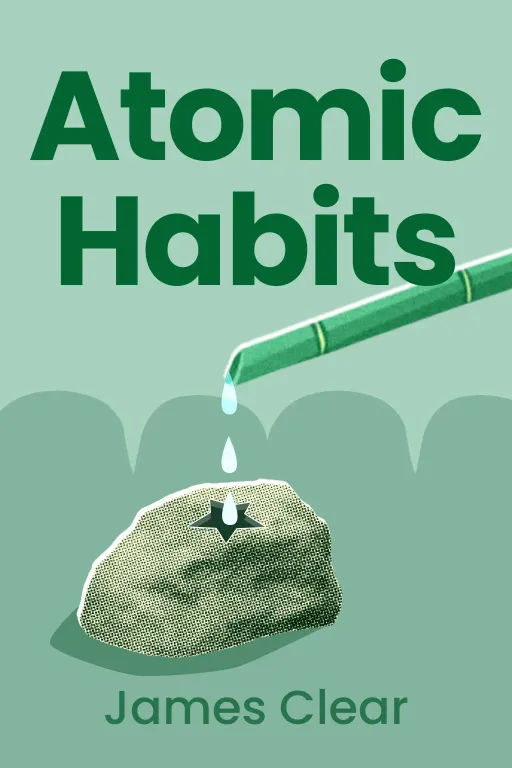
Nova: Not at all, Atlas! It's not about aiming low; it's about redefining the to those monumental ambitions. Today, we're diving into the profound wisdom found in books like by James Clear and by Charles Duhigg. These aren't just self-help bestsellers; they're foundational texts that have transformed how millions approach change, showing us that the secret to achieving massive success isn't through heroic, sporadic effort, but through the consistent, almost invisible power of tiny, daily actions. Clear, for example, is renowned for his systematic approach to behavior change, while Duhigg meticulously unpacks the science of habit loops.
Atlas: Right, I know both books are widely acclaimed for their practical insights. But how do these titans of habit science connect to this idea that dreaming big is somehow… detrimental? For anyone in a high-pressure role, the expectation is often to deliver groundbreaking, massive results.
Nova: Exactly the paradox we're here to unpack.
Deep Dive into Core Topic 1: The Overwhelm Paradox
SECTION
Nova: See, our brains are wired to resist massive, sudden change. When you stare at a colossal goal—say, building a billion-dollar company or running a marathon when you can barely jog a block—it feels like trying to scale a sheer, icy cliff face. The sheer magnitude triggers overwhelm, and often, paralysis. We get stuck before we even start because the gap between where we are and where we want to be feels insurmountable.
Atlas: That's a feeling I think many of our listeners, especially those building something from scratch, can intimately relate to. The pressure to innovate, to grow exponentially, can be absolutely crushing. But isn't that just part of the game? Isn't growth to be ambitious and, well, a little overwhelming?
Nova: It can be, but it doesn't have to lead to paralysis. What these authors, and indeed countless successful individuals, have shown us is that real, sustainable progress comes from consistently mastering small, almost invisible, daily actions. Think of it like this: no one runs a marathon by deciding to run 26 miles tomorrow. They start with a single step, then another, then a short jog. That tiny daily jog, compounded over months, is what builds the capacity for the marathon. It's the micro-improvements that lead to macro-results.
Atlas: That sounds almost too simple to be true, Nova. What's the science behind why 'tiny' is better than 'titanic'? Are we just tricking ourselves into feeling better, or is there a genuine biological and psychological advantage to this approach?
Nova: It's absolutely scientific. Our brains thrive on positive reinforcement. When you achieve a small, manageable task, even something as simple as putting on your running shoes, your brain releases a hit of dopamine. That's your brain saying, "Good job! Do that again!" This builds a positive feedback loop, reinforcing the behavior and, crucially, building self-efficacy—your belief in your own ability to succeed. Constantly failing at huge, unattainable tasks, on the other hand, drains your motivation and convinces your brain that you're incapable. Small wins are like tiny, consistent deposits into your self-belief bank account.
Atlas: So, it's about building a consistent stream of mini-victories that fuel momentum, rather than chasing a single, potentially demotivating, grand slam. That makes a lot of sense, especially when you're trying to sustain effort over long periods in a demanding environment.
Deep Dive into Core Topic 2: Architecting Momentum: Practical Frameworks for Building Unstoppable Micro-Habits
SECTION
Nova: Precisely. And if the 'why' makes sense, the next question is, 'how do we actually small effectively?' This is where James Clear's shines, particularly with his concept of the "Two-Minute Rule."
Atlas: The Two-Minute Rule. I've heard of it, but how does it work in practice, beyond just, say, tidying your desk?
Nova: It’s deceptively powerful. The Two-Minute Rule states that when you start a new habit, it should take less than two minutes to do. The goal is to make starting so easy that you can't say no. So, instead of 'write a chapter of my book,' it becomes 'write one sentence.' Instead of 'work out for an hour,' it's 'put on my gym clothes.' The point isn't the two minutes; it's showing up. It's about mastering the. Once you start, momentum often carries you further.
Atlas: Okay, the Two-Minute Rule makes perfect sense for personal habits, like reading or exercising. But how does this scale for someone trying to drive 0-1 growth in an AI native edtech startup? Like, how do you apply 'design one pixel' to 'launch a product' or 'secure Series A funding'? It feels like the stakes are so much higher, and the tasks are inherently more complex.
Nova: That's a brilliant question, Atlas, and it highlights why Clear's focus on is so crucial. It’s not about making a complex project two minutes long. It's about identifying the within that complex system that keeps the momentum going. For a startup driving 0-1 growth, instead of 'launch a product,' the two-minute rule might be 'identify one customer pain point to validate' or 'write three bullet points for the next investor deck.' For securing Series A, it might be 'review one paragraph of our pitch deck for clarity.'
Atlas: So it's about deconstructing the monumental into its absolute smallest, most frictionless first step, even in a professional context.
Nova: Exactly. And this ties beautifully into Charles Duhigg's work in, where he dissects the habit loop: cue, routine, reward. Even in a complex organizational setting, you can identify the cue that triggers a desired action, simplify the routine to make it achievable, and ensure there's a clear reward, even if it's just the feeling of progress. For instance, a leader aiming for more innovative ideas within their team could implement a "one-new-idea-per-week" micro-habit for themselves, and encourage their team to do the same. The cue might be 'Monday morning meeting,' the routine is 'share one new idea,' and the reward could be peer recognition or a dedicated 'idea board' where all ideas, no matter how small, are celebrated. It’s about building a for idea generation rather than waiting for a "big breakthrough" to magically appear.
Atlas: That's a much more tangible way to think about it for a strategic context. It shifts the focus from the overwhelming end goal to the consistent, repeatable process that towards that goal. It's not about making the goal smaller, but making the to the goal almost laughably easy.
Synthesis & Takeaways
SECTION
Nova: You've hit the nail on the head, Atlas. The profound insight here is that it's not about lacking ambition; it's about re-engineering the path to ambition. The small wins build the self-belief, the capability, and the sheer momentum necessary for bigger challenges. Think of it like a tiny snowball rolling down a hill. That initial push requires almost no effort, but if it's consistent, it gathers mass, speed, and becomes an unstoppable avalanche.
Atlas: So, it's about tricking your brain into thinking the big goal isn't so scary, by making the first step ridiculously easy and then letting compounding do its magic. It's a powerful shift in perspective for anyone who feels overwhelmed by the sheer scale of their aspirations.
Nova: Absolutely. And for our listeners who are feeling that exact overwhelm right now, whether it's in their professional lives, their personal growth, or even just managing the daily juggle, what's one tiny step they can take to get started?
Atlas: I think the "Two-Minute Rule" is the perfect starting point. It’s so simple, so frictionless.
Nova: It is. Pick one area where you want to see growth. Design a 'two-minute rule' habit you can start today, making it so easy you can't say no. Just two minutes. Don't worry about the outcome; just master the art of showing up.
Atlas: And we'd love to hear what "two-minute rule" habits you're starting today. Share your ideas and let’s build some momentum together.
Nova: This is Aibrary. Congratulations on your growth!









