

The Power of Small Habits: How to Build Lasting Health Routines.
Golden Hook & Introduction
SECTION
Nova: Forget everything you've heard about needing massive willpower or a complete lifestyle overhaul to get healthy. Seriously, throw it out the window. What if the secret to lasting health isn't about grand gestures, but about something so tiny, you might barely notice it?
Atlas: Wait, are you saying those New Year's resolutions we all make with such conviction are, deep down, just a well-intentioned lie? Because if so, you've just articulated the silent dread of millions.
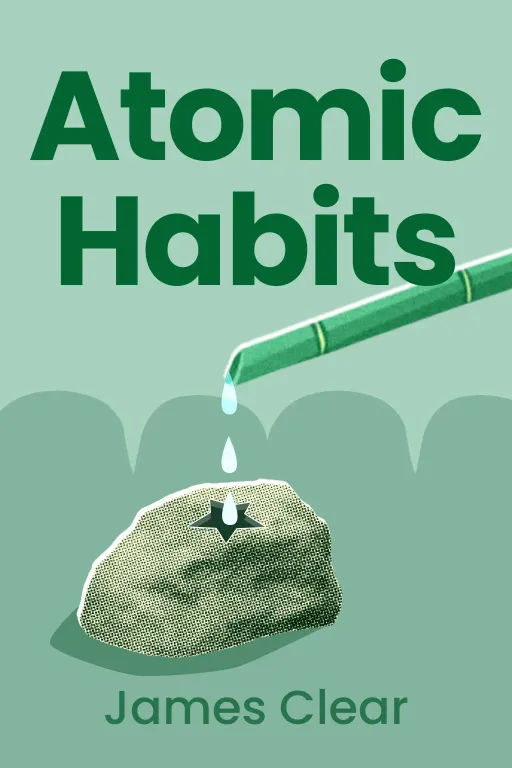
Nova: Well, Atlas, what I'm saying is that the cold, hard fact of human behavior is that big changes rarely happen overnight. Instead, they are the sum of countless small, consistent actions. And focusing on tiny, manageable habits is far more effective than aiming for those drastic overhauls in your health journey. We’re talking about a paradigm shift today, drawing profound insights from two giants in the field: James Clear’s groundbreaking work in "Atomic Habits" and Charles Duhigg’s seminal book, "The Power of Habit."
Atlas: Ah, James Clear. I’m curious, what's his origin story? Because his insights feel so... structured.
Nova: Clear, actually, has a fascinating background. He’s an author and speaker who focuses on habits and decision-making, but his personal journey is particularly compelling. He suffered a severe injury as a college baseball player, which forced him to completely rethink how he approached progress and recovery. It was through that experience, leveraging psychology and biology, that he truly honed his understanding of how small, consistent gains—those 'atomic' changes—can lead to monumental results. It’s science-backed, yes, but also deeply personal. And Duhigg, a Pulitzer Prize-winning journalist, he made the science of habits accessible to everyone, translating complex research into incredibly compelling narratives.
Atlas: That makes me wonder, for anyone trying to build new health habits, or even design health solutions for others, where do we even begin when the goal feels so immense? People want to feel better, have more energy, but the path often feels like climbing Mount Everest.
The 'Atomic' Approach: Building Health Habits Systematically
SECTION
Nova: Exactly. And that's where Clear's 'atomic' approach comes in. He gives us a practical framework, not based on sheer willpower, which is notoriously unreliable, but on designing systems. He distills habit formation into four simple laws: Make it Obvious, Make it Attractive, Make it Easy, and Make it Satisfying. Think of it like engineering your environment for success, rather than just hoping for it.
Atlas: That sounds almost too easy. What about when life gets in the way? Or when you're trying to build health solutions for diverse communities, where 'easy' might mean something entirely different than for someone with abundant resources?
Nova: That's a crucial point, Atlas. 'Easy' is always relative, and that's precisely where the "Compassionate Innovator" mindset comes in – understanding the user's context. Let's take a common health goal: drinking more water. Instead of just saying "I should drink more water," Clear's laws guide us. To make it, you might put a full glass of water on your nightstand every evening, so it's the first thing you see in the morning. Or place a water bottle right next to your computer.
Atlas: Oh, I like that. So, instead of relying on a vague intention, you're literally putting the cue right in front of you. It's almost like the water is shouting, "Hey, drink me!"
Nova: Precisely. Next, make it. This can be harder for something like plain water. But maybe you get a beautiful new water bottle you love, or you add a slice of lemon or cucumber to make it more appealing. You can also use "habit stacking" – pairing a desired action with an existing habit. For instance, "After I pour my morning coffee, I will immediately drink a full glass of water." The attraction here is leveraging the existing, pleasant routine of coffee.
Atlas: That’s a great way to put it. So you're attaching the new habit to something you already do without thinking. It's like a tiny, gentle hijack of your existing routine. But what about 'easy'? Sometimes simply remembering to drink water feels like a monumental task in a busy workday.
Nova: Right? To make it, you reduce friction. If your water bottle is always full, always within reach, that's easier than having to walk to the kitchen, fill it, and then walk back. For exercise, it might mean laying out your workout clothes the night before, or choosing a gym that’s literally on your commute path, so the effort of getting there is minimized. It’s about being lazy in a smart way.
Atlas: I can see how that would be powerful. It's not about forcing yourself to do something difficult, but about removing all the tiny obstacles that add up to resistance. It's almost like designing a frictionless pathway to the healthier choice.
Nova: And finally, make it. This is where the reward comes in. For water, it might be the feeling of hydration, or the mental satisfaction of crossing it off your daily to-do list. Maybe you track your water intake with a simple checkmark on a calendar, and seeing those checkmarks accumulate provides a visual reward. The point is, the immediate reward reinforces the behavior.
Atlas: So basically you’re saying, if we want to foster better health outcomes, whether for ourselves or for the systems we're designing, we need to think like architects of behavior. We need to engineer the environment, make the healthy choice the default, and ensure there's a clear, immediate payoff. It's not about shaming people into better choices, but making those choices almost inevitable.
Nova: Exactly. And the cumulative effect of these tiny, almost imperceptible changes, day after day, is what leads to truly transformative health improvements. It's the difference between trying to sprint a marathon and consistently taking one more step every day.
The 'Habit Loop' Unpacked: Understanding and Redesigning Health Behaviors
SECTION
Nova: And if Clear gives us the 'how-to' for systematically building new habits, Duhigg, with "The Power of Habit," gives us the 'why' behind the habits we already have. He unravels the hidden psychological machinery behind our daily choices, explaining that most of our behaviors operate on what he calls the "Habit Loop": Cue, Routine, Reward.
Atlas: So, it's like we're all walking around with these invisible programs running us? How do we even begin to identify our own cues and rewards, especially in complex, high-pressure environments where stress is constant, or when we're trying to understand the deeply ingrained behaviors of underserved populations?
Nova: That’s a really insightful question, and it's where Duhigg's work becomes so potent. He argues that almost every habit, good or bad, follows this three-step neurological pattern. The is the trigger that tells your brain to go into automatic mode and which habit to use. The is the behavior itself—physical, mental, or emotional. And the is what helps your brain decide if this loop is worth remembering for the future.
Atlas: Can you give an example? Because it sounds a bit abstract, and I think a lot of our listeners are thinking, "How does this actually apply to my midnight snack cravings, or why I always skip that morning walk?"
Nova: Absolutely. Let's take that late-night snacking example. The might be stress from a demanding day, or simply seeing the TV remote. The is going to the fridge, grabbing a bag of chips, and eating them. The isn't necessarily the taste of the chips, but the temporary distraction, the feeling of comfort, or the release of tension. Your brain, seeking that comfort, associates the cue with the routine and the reward, reinforcing the loop.
Atlas: Wow, that’s actually really inspiring. So, the key isn't to just fight the routine with willpower, but to dissect the loop itself? For someone trying to design health solutions, this means understanding the underlying 'why' of current behaviors before trying to introduce new ones.
Nova: Exactly. Duhigg’s breakthrough finding is that you can't really a bad habit; you have to it. The trick is to keep the cue and the reward the same, but change the routine. So, for the stress-induced snacking, when you feel that cue of stress, instead of going for chips, your new could be taking a five-minute walk, calling a friend, or meditating. The is still stress relief, but the behavior is now health-positive.
Atlas: That makes me wonder, how long does it take to actually change one of these deeply ingrained routines? Because it feels like breaking a habit is often described as this Herculean effort.
Nova: That’s a common misconception, Atlas. It's less about a specific timeline and more about consistent effort in identifying and experimenting with new routines. Duhigg shows us that the brain is always looking for efficiency. If the new routine consistently delivers the desired reward more effectively or with less negative consequence, the brain will eventually adopt it. This is why companies, for instance, have successfully re-engineered habit loops to promote their products, whether it's the consistent use of a new app or a different way to brush your teeth.
Atlas: So, for those of us who are interested in inclusive design principles and ethical AI frameworks for health, understanding these habit loops isn't just about personal self-improvement. It's about designing systems, products, and environments that gently guide people towards healthier choices by understanding their existing cues and desired rewards, especially for populations that might face systemic barriers to health.
Nova: Precisely. It’s about empathy in design. If you understand that a particular community faces stress-related cues leading to unhealthy routines, you can then design accessible, culturally relevant alternative routines that provide the same desired reward, whether that's social connection, comfort, or distraction. It moves beyond individual blame to systemic support.
Synthesis & Takeaways
SECTION
Nova: So, bringing it all together, what both Clear and Duhigg illuminate is this profound truth: our health is not a matter of occasional heroic efforts, but a continuous stream of seemingly insignificant choices. Clear gives us the practical blueprint for building good habits—make them obvious, attractive, easy, satisfying. Duhigg gives us the psychological depth to understand and redesign existing habits by dissecting the cue, routine, and reward.
Atlas: That’s actually really inspiring. So, for our listeners who are keen on designing inclusive, ethical health solutions, these principles aren't just about personal well-being, but about building systems that make healthy choices the default for everyone, right? It's about empowering people by understanding the mechanics of their daily lives, not just telling them what they should do.
Nova: Absolutely. It’s about leveraging these insights to create environments and tools that foster well-being, especially for women and underserved populations, where the default choices might not always be the healthiest due to systemic factors. If we can make the healthy choice the easy choice, the obvious choice, the attractive choice, we can create truly impactful, equitable solutions. It's a powerful blend of technical skill and deep empathy, which is exactly what our listeners, the compassionate innovators, bring to the table.
Atlas: I love that. It reframes the discussion from individual failing to systemic opportunity. So, if you're listening, identify one small health habit you want to start – maybe it’s drinking a glass of water first thing in the morning, or taking a five-minute stretch break. Make it ridiculously easy to do for just five days. Just five days. See what happens when you remove the friction.
Nova: That tiny step, consistently taken, is where the real power lies.
Atlas: This is Aibrary. Congratulations on your growth!









