The Power of Habit: Building Consistent Productivity
Golden Hook & Introduction
SECTION
Nova: Alright Atlas, quick game: I’ll say a common habit, you tell me the most ridiculous goal someone might set for it. Ready?
Atlas: Oh, I love this! Hit me.
Nova: Okay. Brushing your teeth.
Atlas: Brushing your teeth… Hmm, to achieve a level of oral hygiene so profound, your dentist weeps tears of joy and offers you a lifetime supply of artisanal floss.
Nova: Excellent! Okay, how about… making your bed in the morning?
Atlas: Oh, to create a micro-climate of such perfect order and serenity that it spontaneously generates a tiny, perfectly ironed butler who serves you coffee.
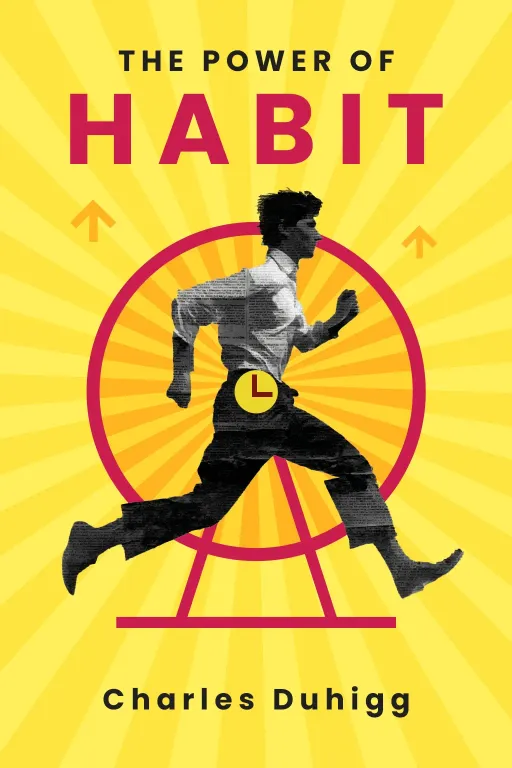
Nova: You’re too good at this! We’re talking about habits today, but not just any habits. We’re dissecting the very architecture of daily excellence, drawing from two titans of the habit-forming world: Charles Duhigg's "The Power of Habit" and James Clear's "Atomic Habits."
Atlas: That’s going to resonate with anyone who struggles with getting that butler to appear, or frankly, just getting out of bed. These books are widely acclaimed, and Duhigg's in particular gained massive popularity for revealing the hidden science behind why we do what we do. Clear's then came along to give us the practical blueprint. So Nova, where do we start with unraveling this habit mystery?
The Habit Loop – Understanding the Blueprint
SECTION
Nova: We start with Duhigg, and his groundbreaking concept of the 'habit loop.' It’s a deceptively simple three-part mechanism that underpins everything from our morning routine to organizational culture. He breaks it down into the cue, the routine, and the reward.
Atlas: Okay, so the cue is the trigger, the routine is the action, and the reward is what we get out of it. Makes sense on paper, but I’m curious, can you give an example? Like how does this play out in real life, beyond the obvious?
Nova: Absolutely. Duhigg masterfully illustrates this with the story of P&G and Febreze. Initially, Febreze was marketed as an odor eliminator, a product you’d use to get rid of bad smells. But it flopped. People who lived in smelly homes often couldn't even smell the odors themselves, so there was no 'cue' to use the product.
Atlas: Right, they were nose-blind to their own funk. No problem, no perceived need.
Nova: Exactly. P&G then shifted their marketing. They realized that people who their homes, even if they weren't particularly smelly, wanted a reward for their effort. After scrubbing, vacuuming, and tidying, they wanted a pleasant smell to signify completion, a fresh scent that said, "My house is clean now!"
Atlas: Oh, I see! So the new cue wasn't the bad smell, but the act of finishing cleaning. The routine was spraying Febreze, and the reward was that lovely, fresh scent and the feeling of accomplishment.
Nova: Precisely. The cue became the sparkling clean room, the routine was spraying Febreze as a final touch, and the reward was the sensory pleasure and the psychological satisfaction of a job well done. Febreze went from a flop to a billion-dollar product just by understanding and re-engineering that habit loop. It wasn't about willpower or a new chemical formula; it was about identifying the right cue and the right reward.
Atlas: Wow, that’s actually really inspiring. It means you can take almost any behavior, dissect its components, and then strategically insert new elements. It’s like being a detective for your own brain, or even for an entire organization’s behaviors.
Nova: And it’s not just about products. Duhigg also talks about keystone habits. These are small habits that, when adopted, have a ripple effect, leading to other positive changes in unrelated areas of your life. Think of it like a domino effect.
Atlas: Like what? What’s a keystone habit?
Nova: Exercise is a classic example. When people start exercising regularly, they often unconsciously begin to eat healthier, become more productive at work, reduce their stress, and even become more patient with their families. The keystone habit of exercise doesn't directly dictate these other changes, but it creates a framework, a different mindset, that makes those other good habits easier to adopt. Another great example is making your bed.
Atlas: My perfectly ordered micro-climate!
Nova: Exactly. It’s a tiny victory, but it sets the tone for the day, creating a sense of order and accomplishment right from the start, which can then spill over into other areas of productivity and focus.
Atomic Habits – Engineering Your Environment for Excellence
SECTION
Nova: Now, if Duhigg gives us the 'what' and 'why' of habits, James Clear’s "Atomic Habits" gives us the 'how.' Clear provides a practical, step-by-step framework for building good habits and breaking bad ones, focusing on small, incremental changes that lead to remarkable results over time. He distills it into four laws of behavior change: make it obvious, make it attractive, make it easy, and make it satisfying.
Atlas: Okay, so these are incredibly actionable. I’ve been thinking about how this applies to someone in a high-stakes team environment. It’s one thing to make my own bed, but how do I get an entire team to adopt a new, more efficient workflow?
Nova: That’s where Clear’s insights become incredibly powerful. Let’s take the 'make it obvious' principle. If you want your team to start a new reporting protocol, don't just send an email. Make the new template easily accessible, pin it on a shared drive, put a reminder on the team calendar, and maybe even have a visual cue in the office—a poster, a whiteboard reminder—that makes that new routine impossible to ignore.
Atlas: So it’s not about nagging, it’s about engineering the environment so the desired action is the most visible path. That sounds rough, but it makes so much sense. We often rely on willpower, but Clear argues willpower is finite.
Nova: Precisely. And that leads to 'make it attractive.' If the old way of doing things is comfortable, you need to make the new way more appealing. Maybe the new reporting protocol, while initially a change, eventually saves everyone time, or leads to clearer insights that get celebrated. Tie the new habit to something your team already enjoys or values. If they enjoy collaboration, make the new habit a collaborative effort.
Atlas: So it’s like pairing a desirable action with an undesirable one. If I want to make calls, I’ll do it while listening to my favorite podcast. For a team, maybe it’s doing the new workflow during a designated 'fun' meeting time, or tying it to a bonus system.
Nova: Exactly. And 'make it easy' is critical. This is the 'tiny step' principle. If the new workflow requires five complex steps, break it down into one single, obvious, easy step for the first week. Maybe it’s just opening the new template. Then, once that’s ingrained, add the next small step. Clear famously talks about the "two-minute rule"—if a habit takes less than two minutes, do it. It lowers the barrier to entry so much that resistance almost vanishes.
Atlas: So basically you’re saying, don’t try to overhaul everything at once. Just make the first step so ridiculously simple that it feels harder to do it. That’s actually really powerful for leaders looking to implement change. It mitigates the initial overwhelm.
Nova: And finally, 'make it satisfying.' This closes the loop that Duhigg identified. The reward has to be immediate and positive. If a team completes the new workflow, how do they get immediate satisfaction? Is it a quick win, a shout-out in a meeting, a visible progress tracker, or a simplified next step in their project? The satisfaction reinforces the habit, making it more likely to stick.
Atlas: In other words, we’re not just hoping for change, we’re designing for it. We’re moving from relying on fickle motivation to building systems that make good habits inevitable and bad ones impossible. That’s a game-changer for anyone looking for sustained productivity, not just a temporary burst.
Synthesis & Takeaways
SECTION
Nova: What emerges is this: productivity isn't just about willpower; it’s about engineering your environment and routines to support your goals. Both Duhigg and Clear provide the blueprints, just from slightly different angles. Duhigg helps us understand the hidden mechanisms—the habit loop and keystone habits that create systemic change. Clear gives us the practical, atomic-level tools to build those systems, making good habits obvious, attractive, easy, and satisfying.
Atlas: It’s kind of like Duhigg gives us the strategic map of the city, showing us where the major rivers and mountains are, and Clear gives us the architectural plans for the buildings within that city. You need both to truly build something lasting. The real power here lies in recognizing that our daily actions aren’t random; they’re responses to cues and desires for rewards. And once we understand that, we can actively design our lives, and our teams, for consistent excellence.
Nova: Absolutely. This isn't just about personal growth; it's about leadership development. It’s about understanding how to refine your influence by designing systems that empower your team to achieve more, almost effortlessly. It’s about becoming a skill architect, building consistent productivity from the ground up, one atomic habit at a time, within a well-understood habit loop.
Atlas: That’s actually really inspiring. So, for our listeners, the challenge isn’t to try harder, but to think smarter. To identify one tiny step they can make obvious, attractive, easy, and satisfying today. It's about becoming the architect of their own excellence.
Nova: And that, Atlas, is the ultimate takeaway. It's about continuous refinement, understanding that every small, intentional action contributes to a larger, more impactful outcome. This is Aibrary. Congratulations on your growth!