

The Human Operating System: Mastering Your Internal World for External Excellence.
Golden Hook & Introduction
SECTION
Nova: Okay, Atlas, what if I told you that the secret to achieving your biggest, most ambitious goals isn't about grand gestures or massive overhauls, but about something so tiny, you might not even notice it?
Atlas: Huh. That sounds almost… counter-intuitive, Nova. Most of the strategic orchestrators I know are thinking big, planning grand moves. 'Tiny' doesn't usually feature in their lexicon of 'impact.'
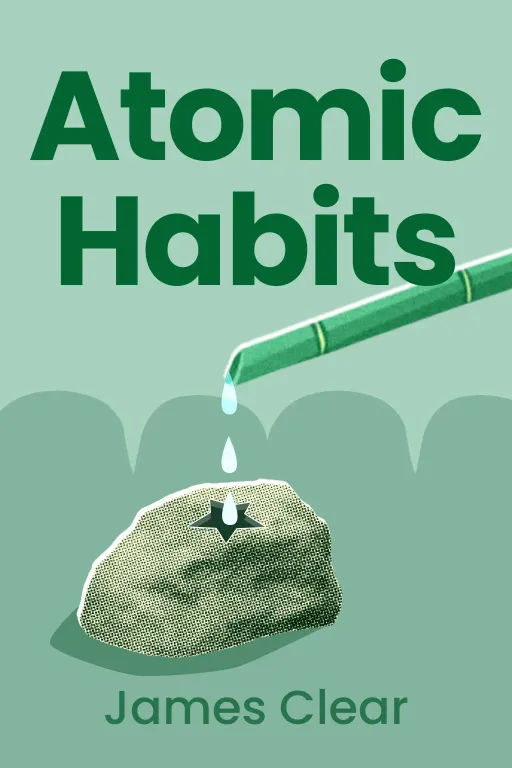
Nova: Exactly! And that's where the magic lies. Today, we're diving into what we're calling 'The Human Operating System,' and it’s all about mastering your internal world to unlock external excellence. We’re drawing heavily from two incredibly powerful books: first, James Clear’s groundbreaking work, Atomic Habits, which has become a modern classic for distilling behavioral science into incredibly actionable steps. And then, we’re pairing that with Mihaly Csikszentmihalyi’s seminal text, Flow: The Psychology of Optimal Experience, a book that truly pioneered our understanding of peak states.
Atlas: I’m curious. That sounds like a powerful combination. For someone who’s always optimizing external systems, like our listeners who are proactive architects, why should they suddenly shift focus to their 'internal operating system'? What's the immediate payoff?
Nova: The immediate payoff is sustainable impact and avoiding burnout, Atlas. Clear’s background as an entrepreneur and speaker allowed him to synthesize complex behavioral science into a framework that’s not just theoretical, but deeply practical. And Csikszentmihalyi, through decades of research across diverse fields, literally mapped out the conditions for optimal human experience. These aren’t just self-help platitudes; they're blueprints for how our minds and behaviors actually work.
Atlas: So, we're talking about more than just productivity hacks. This is about fundamental shifts.
Nova: Precisely. It’s about building a robust, resilient, and highly efficient internal engine.
The Power of Atomic Habits: Building Your Internal Operating System
SECTION
Nova: So let's start with Atomic Habits. Clear’s core philosophy is brilliantly simple: forget about goals. Focus on systems. He argues that if you want remarkable results, you don’t need to make radical changes. You need to make tiny, 1% improvements consistently. Think of it like the compound interest of self-improvement.
Atlas: That makes me wonder, for someone trying to orchestrate complex global projects, isn't 'tiny' just too slow? How does this idea of marginal gains actually scale up to massive impact? It feels like we're being told to move a mountain one pebble at a time.
Nova: That's a great point, and it’s where many people miss the true power. Consider the British Cycling team. For years, they were mediocre. Then, a new coach, Dave Brailsford, came in and implemented a 'strategy of marginal gains.' He didn't focus on one big thing; he broke down every single element of cycling and improved it by 1%. Better bike seats, more aerodynamic helmets, even the type of massage gel. They even taught riders how to wash their hands to reduce illness! Within five years, they dominated the Olympics and the Tour de France.
Atlas: Wow. So it wasn’t just about the bike, it was about the towel they used to dry the bike? That’s a level of detail that resonates with a proactive architect, but it still feels… microscopic.
Nova: It is, but the cumulative effect is exponential. Clear gives us four simple laws for behavior change: make it obvious, make it attractive, make it easy, and make it satisfying. If you want to build a good habit, make the cue obvious, make the action appealing, lower the friction to perform it, and ensure there’s an immediate reward. To break a bad habit, you do the opposite: make it invisible, unattractive, difficult, and unsatisfying.
Atlas: Okay, so if I want to stop, say, mindlessly checking email every five minutes, how do I identify the cue, not just the symptom? Because sometimes it feels like the cue is just… boredom, or the fear of missing something.
Nova: That's a perfect example of digging deeper than the surface. The 'cue' isn't just the notification sound. It’s often an internal state, like that feeling of boredom or anxiety, or even a specific situation—the moment you finish a task, or when you open your laptop. The key is to consciously observe what you were doing or feeling right the unwanted habit. Was it a moment of uncertainty? A slight lull in work? Once you identify that precise trigger, you can then design a better response. Instead of checking email, maybe you stand up and stretch, or take one deep breath.
Atlas: That makes sense. It's about designing your environment and your reactions, rather than just relying on willpower. It’s like building a better operating system for your own brain.
Achieving Flow: The Psychology of Optimal Experience for Peak Performance
SECTION
Nova: Precisely. And once those systems are humming, once you’ve built those consistent, positive habits, what happens when you truly engage with your work? That’s where 'flow' comes in. Csikszentmihalyi, through decades of research studying everyone from artists to surgeons to athletes, discovered this universal state of optimal experience. He describes flow as a state of complete absorption in an activity, a feeling of energized focus, full involvement, and enjoyment in the process of the activity itself. Time seems to disappear. You forget yourself.
Atlas: Sounds great, but for someone navigating constant demands, back-to-back meetings, and emergent crises, doesn't 'flow' feel like a luxury? How do you there intentionally when you're constantly being pulled in a dozen directions? It feels like the opposite of my daily reality.
Nova: I hear you. It's not about escaping reality; it's about structuring your engagement with it. Csikszentmihalyi identified three key conditions for flow: first, clear goals. You know exactly what you need to achieve. Second, immediate feedback. You can tell, moment by moment, if you’re succeeding or failing. And third, a balance between challenge and skill. The task should be just difficult enough to stretch you, but not so difficult that it causes anxiety, nor so easy that it causes boredom.
Atlas: So, it’s not about finding a quiet cabin in the woods. It’s about designing your work. Like a strategic orchestrator setting up a project with clear milestones and real-time data, and then engaging with a problem that pushes their abilities.
Nova: Exactly! Think of a software developer debugging a complex piece of code. They have a clear goal: fix the bug. They get immediate feedback: the code either works or it doesn't. And the challenge is perfectly matched to their skill. Hours can pass in what feels like minutes. That’s flow. It's not just for creative types; it’s for anyone engaged in deep, focused work.
Atlas: And if we're in this state of flow, does that mean we're actually the overwhelm that can lead to burnout, rather than just pushing through it? Because that's a huge concern for many of our listeners.
Nova: Absolutely. Flow is inherently enjoyable and energizing. When you're in flow, you're not depleting your willpower; you're actually recharging. It makes work feel less like a chore and more like a reward. It's an antidote to the mental exhaustion that comes from constant task-switching and superficial engagement. It’s a key component of sustainable impact.
Synthesis & Takeaways
SECTION
Nova: So, bringing these two ideas together, atomic habits are the tiny, consistent actions that build the foundation, the robust internal operating system. And flow is the peak performance state that allows that system to run at its absolute best. It’s about building the discipline to show up, and then having the conditions to fully engage when you do. This synergy is how you master your internal world, not just to survive, but to truly excel externally and avoid that creeping burnout.
Atlas: That’s actually really inspiring. For someone who’s constantly optimizing external systems and processes, this is a powerful reminder that the most critical system to optimize is the one within. What’s one tiny internal 'update' they can implement today to start this journey, beyond just observing a cue?
Nova: I would say: identify one small area of your day—maybe the first 15 minutes of work, or the last 15 before bed—and design it for atomic habit. Make it obvious, attractive, easy, and satisfying. And then, for your most important work, carve out a single, uninterrupted block of time, even if it’s just 30 minutes, and define a clear, immediate goal for that block. Try to enter that flow state. It’s about intentional design, not just hoping it happens.
Atlas: It sounds like taking the same strategic, proactive approach we apply to big projects and applying it to our own minds. That’s a profound shift.
Nova: It is. And it’s the most impactful shift you can make.
Atlas: This is Aibrary. Congratulations on your growth!









