

The Hidden Power of Routine: How Small Habits Build Big Success
Golden Hook & Introduction
SECTION
Nova: What if everything you thought about making big, life-altering changes was completely wrong? What if the secret to monumental success isn’t a grand, heroic leap, but something far smaller, far quieter, and frankly, a little… boring?
Atlas: Hold on, boring? I mean, Nova, we're constantly told to "go big or go home," to "hustle," to make these dramatic shifts. The idea that something "boring" could be the key to unlocking massive success feels almost counterintuitive, like a trick.
Nova: Exactly! And that's the "cold fact" we're diving into today. This idea that building new paths or skills can feel like an overwhelming mountain to climb. But true, lasting change, the kind that reshapes your entire trajectory, doesn't come from giant leaps. It grows from tiny, consistent actions.
Atlas: That makes me wonder, how do you even begin to tackle that overwhelming mountain with "tiny" steps? It almost sounds like you're suggesting we just chip away at it with a spoon.
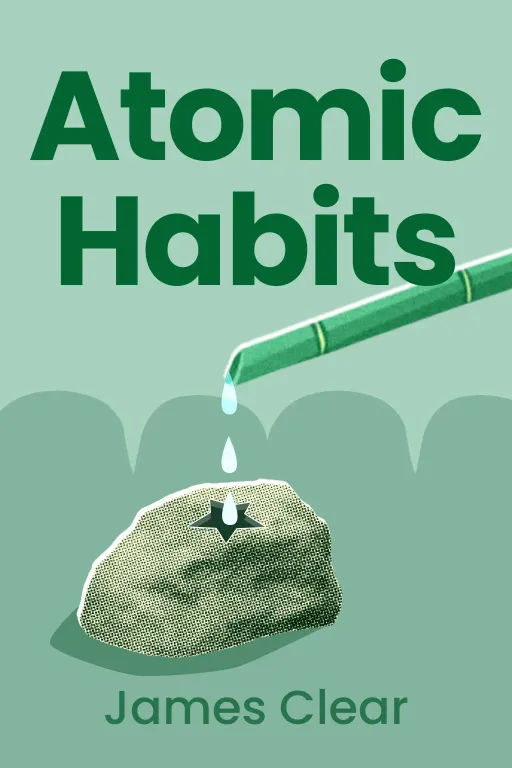
Nova: Well, it’s less about a spoon and more about understanding the underlying architecture of change. Today, we're drawing insights from two phenomenal books: "Atomic Habits" by James Clear and "The Power of Habit" by Charles Duhigg. Both authors, coming from backgrounds in performance psychology and investigative journalism respectively, offer frameworks that demystify human behavior, showing us that lasting change isn't about willpower alone, but about understanding and designing our systems.
Atlas: So, it's not just about pushing harder, but about pushing smarter, by understanding the mechanics of how we actually operate?
The 1% Improvement Principle: How Tiny Changes Lead to Massive Results
SECTION
Nova: Precisely. Let's start with James Clear and his "1% improvement" principle from "Atomic Habits." The core idea is deceptively simple: getting just 1% better every day. It doesn't sound like much, right?
Atlas: I mean, 1% sounds almost negligible. If I get 1% better at… anything, how does that translate into anything real? Like, what's a concrete example of a "1% improvement" in someone's daily life that actually makes a difference? I can barely feel 1% of a difference.
Nova: Ah, but that's the magic of compounding. Think of an airplane taking off from Los Angeles, heading for New York. If the pilot adjusts the nose just three and a half degrees south, an almost imperceptible change at the outset, they won't land in New York. They'll land in Washington D. C. a completely different destination.
Atlas: Wow. That's a powerful analogy. So it's not about one big correction, but a consistent, small adjustment over time that leads to a dramatically different outcome.
Nova: Exactly. And the most compelling case study for this is the British Cycling team. For decades, they were, frankly, mediocre. Then, in 2003, they hired Sir Dave Brailsford as their performance director. His strategy? "The aggregation of marginal gains." He didn't just try to improve one thing by 1%. He looked for a 1% improvement in they did.
Atlas: Everything? Like what? Training regimens?
Nova: Beyond that. They optimized bicycle seat design, found the best massage gels for recovery, tested different fabrics for racing suits, even identified the perfect pillow for each athlete to ensure optimal sleep. They even painted the inside of the team truck white to spot dust better and prevent mechanical issues.
Atlas: That's incredible. So it's about making the system better, not just trying harder. But for someone trying to learn a new skill or make a career change, how do you even identify those "1% improvements" when you're not a world-class athlete with a team of experts?
Nova: That’s where Clear's four laws of behavior change come in: Make it Obvious, Make it Attractive, Make it Easy, and Make it Satisfying. These are the levers you pull. If you want to read more, make the book obvious by putting it on your pillow. If you want to eat healthier, make the healthy food attractive by preparing it deliciously. It's about designing your environment and your actions to you towards those tiny, positive steps.
Atlas: Ah, so it's less about willpower and more about architectural design for your daily life. I like that. It takes the pressure off feeling like you have to be super disciplined all the time.
Deconstructing the Habit Loop: Understanding How Habits Are Formed and Reshaped
SECTION
Nova: It absolutely does. And that naturally leads us to the second key idea we need to talk about, which often acts as the engine behind those 1% improvements: Charles Duhigg's "habit loop." In "The Power of Habit," Duhigg reveals the science behind how habits are formed.
Atlas: Okay, so we're basically Pavlov's dogs, but with donuts. That makes sense, but how does understanding this "loop" actually help us a habit? If the reward is still there, won't we just keep doing the routine?
Nova: That's the brilliant part. The habit loop consists of three parts: the cue, the routine, and the reward. The cue is the trigger – seeing a delicious cake. The routine is the behavior – eating the cake. And the reward is the satisfaction – the sugar rush, the momentary pleasure. The key to changing a habit isn't to try and fight the cue or ignore the reward. It's to.
Atlas: Oh, I see. So it's not about eliminating the desire for the reward, but finding a healthier or more productive way to get it. Give me an example of how this plays out in real life.
Nova: One of Duhigg’s classic examples is the story of Febreze. When P&G first launched it, it flopped. People used it, but didn't buy more. Why? Because the cue was a bad smell, and the reward was… no smell. There was no positive reinforcement. P&G then rebranded it, focusing on the of freshness. The cue became a clean room, and the reward was the pleasant, clean scent. Sales skyrocketed. It wasn't about eliminating the bad smell, but about adding a positive, satisfying reward to a cleaning routine.
Atlas: That's fascinating. So the reward is crucial. It’s the brain saying, "Yes, do that again!"
Nova: Exactly. Another example Duhigg shares is of a man who successfully stopped biting his nails. He identified the cue: stress. The reward: a form of stimulation or relief. So, instead of trying to just stop, he changed the routine. Whenever he felt stressed, instead of biting his nails, he would tap his desk. Same cue, similar reward, but a different, non-destructive routine.
Atlas: That’s a genius psychological hack. So, if we combine Clear's 1% improvements with Duhigg's habit loop, we're essentially designing our environment and our actions for success, rather than just hoping for it or relying on sheer willpower. It sounds like a cheat code for life.
Synthesis & Takeaways
SECTION
Nova: It really is, Atlas. It fundamentally shifts our focus from outcome to system. Instead of constantly battling our willpower, we become architects of our own behavior. We design systems where growth is not just possible, but almost inevitable. It's about understanding that every tiny decision, every small action, is a vote for the person you want to become.
Atlas: That's actually really inspiring, because it takes the pressure off. It's not about being a superhero; it's about being a smart designer of your own life, understanding the levers of change. So, for our listeners, what's one tiny step they can take today to put these powerful insights into action?
Nova: This is the "tiny step" we want everyone to try: Pick one small habit you want to start or stop today. Make it so tiny you literally cannot say no to it, then do it. Don't aim to read for an hour; aim to read one page. Don't plan to run a marathon; just put on your running shoes. The goal is to build consistency, not intensity, at the start.
Atlas: I love that. It’s about building momentum, making it so easy that the barrier to entry is practically non-existent. It transforms that overwhelming mountain into a gentle, consistent slope.
Nova: And remember, those tiny slopes compound into massive peaks over time. It’s the hidden power of routine, building big success, one small, intentional step at a time.
Atlas: Absolutely. What a powerful way to look at personal growth.
Nova: This is Aibrary. Congratulations on your growth!









