

The Hidden Power of Habits: How Small Changes Lead to Big Results.
Golden Hook & Introduction
SECTION
Nova: What if I told you that the belief you need grand, sweeping gestures to change your life is actually the biggest obstacle to real transformation? That the desire for a sudden, dramatic overhaul is precisely what keeps us stuck?
Atlas: Hold on, Nova, that sounds almost counter-intuitive. We’re constantly bombarded with messages about big transformations, radical makeovers, overnight successes. Are you saying all that is... a trap?
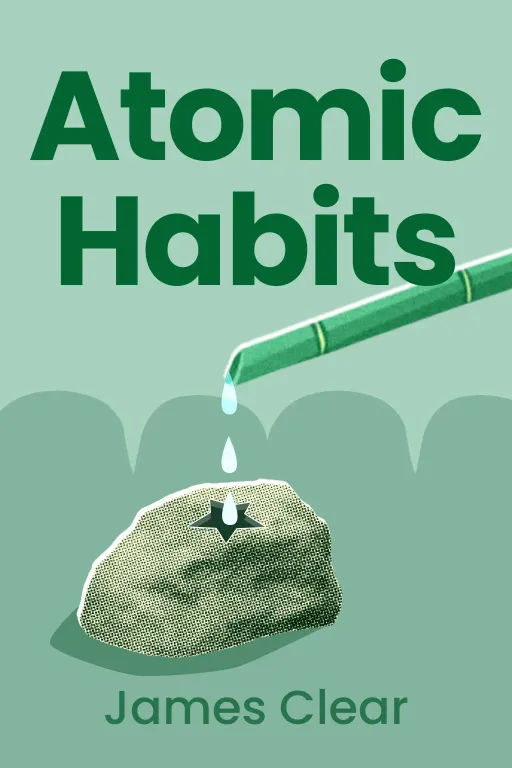
Nova: Not a trap, Atlas, but perhaps a misdirection. Today, we’re diving into a book that fundamentally reshapes how we think about change: James Clear’s. What’s fascinating about Clear is that he didn't start as a habit guru; he began by meticulously documenting and experimenting with his own habits after a serious baseball injury. He turned a very personal, challenging recovery into a universal framework for change, proving these aren’t just theories, but lived-in principles.
Atlas: Oh, I like that. So, his insights are grounded in personal experience, not just academic study. That immediately makes me think about how even the most complex problems, the ones we usually try to solve with massive interventions, might actually yield to something much, much smaller.
The Compounding Power of Tiny Actions
SECTION
Nova: Exactly. Clear’s core argument, and our first deep dive, is the almost magical compounding power of tiny actions. We tend to overestimate the importance of one defining moment and underestimate the value of making small improvements every single day. Think about it like an airplane. If a pilot adjusts the nose by just a few degrees at the start of a long flight, they don't land a few feet away from their destination. They land in an entirely different country.
Atlas: That’s a great analogy. It’s like the financial concept of compound interest, but for our lives. But it's hard, isn't it? We crave instant gratification. Making a 1% improvement often feels invisible, especially when you're trying to learn something new or break a deep-seated procrastination habit. How do you stay committed when the results are so delayed?
Nova: That's where the "hidden power" comes in. The results are delayed, but they are absolutely accumulating. Consider the story of the British cycling team, Team Sky, led by Dave Brailsford. For decades, British Cycling had been mediocre. Then, Brailsford implemented what he called "the aggregation of marginal gains." He believed if you improved every single thing you could by just 1%, those small gains would add up to remarkable results.
Atlas: So, what did that actually look like? Did they just train a little harder?
Nova: Oh, it was far more granular than that. They didn't just train harder; they analyzed every single aspect of cycling. They redesigned bike seats for comfort, found the most aerodynamic racing suits, tested different types of massage gels to aid muscle recovery. They even hired a surgeon to teach riders how to wash their hands properly to reduce the chance of illness. They painted the inside of their team truck white to spot dust better, ensuring maintenance. Each improvement was tiny, barely noticeable on its own.
Atlas: Wow. That's incredibly meticulous. I mean, washing hands to win an Olympic medal? That sounds almost absurd, but the principle is clear. It’s not about one big leap, but thousands of tiny, almost invisible steps.
Nova: Precisely. And the outcome? Within five years, Team Sky won the Tour de France. They went on to win 178 world championships and 66 Olympic gold medals in the next decade. Their success wasn't due to one revolutionary breakthrough, but the relentless pursuit of marginal gains. It’s about creating a system where success becomes an inevitable outcome of consistent micro-actions.
Atlas: That’s an incredible transformation, but it raises a question for me. For them, the ultimate reward was tangible—gold medals, Tour de France victories. For a curious learner like me, or many of our listeners passionate about expanding their knowledge, the "reward" of consistent reading or structured learning can feel less immediate. How do we keep that 1% going when the finish line isn't a podium?
Nova: That’s a brilliant question, Atlas, and it leads us directly to our second core idea: understanding the mechanics of how habits actually form. Because once you understand the underlying psychology, you can engineer your environment and your choices to make those 1% improvements not just sustainable, but almost automatic.
Unpacking the Habit Loop: Cue, Craving, Response, Reward
SECTION
Nova: This brings us to Charles Duhigg’s groundbreaking work on the "Habit Loop." He revealed that every habit, good or bad, follows a predictable four-step pattern: Cue, Craving, Response, and Reward. Understanding this loop is like having the blueprint to your own behavior.
Atlas: Okay, so "Cue, Craving, Response, Reward." Can you break that down for me with a really relatable example? Something we all probably do without thinking, like checking our phones?
Nova: Absolutely. Let's take that exact example. First, the. This is the trigger that initiates the behavior. It could be your phone buzzing with a notification, seeing your phone on the table, feeling a moment of boredom, or even just walking into a quiet room. It's the spark.
Atlas: So, just the sight of my phone can be a cue. Got it. What's next?
Nova: Next is the. This is the motivational force behind every habit. You’re not craving the phone itself; you’re craving the it creates. You might crave connection, distraction, novelty, or relief from boredom. The craving is the desire for a change in your internal state.
Atlas: Ah, so it’s not the act of scrolling, but the temporary escape or stimulation that I’m actually after. That makes sense.
Nova: Precisely. Then comes the. This is the actual habit you perform—picking up your phone, unlocking it, opening a social media app, or mindlessly scrolling. It’s the physical or mental action.
Atlas: And finally, the, which I assume is the temporary satisfaction I get from that scroll?
Nova: Exactly. The is the end goal of every habit. It's the feeling of satisfaction, the hit of dopamine from seeing a new post, the temporary relief from boredom. This reward signals to your brain that the habit is worth remembering and repeating. Over time, this loop becomes so ingrained that the cue automatically triggers the craving, which almost effortlessly leads to the response, and then the reward reinforces it.
Atlas: That’s incredibly clear. So, for a curious learner who wants to build better study habits, or maybe break the habit of getting distracted by new shiny knowledge areas before mastering one, how do we actually this loop? How do we make the "Response" something productive instead of a distraction?
Nova: That's where James Clear’s "Four Laws of Behavior Change" come in, which are essentially practical ways to manipulate Duhigg’s habit loop. To build a good habit, you need to:
Atlas: So, it's about systematically redesigning the environment and the experience, rather than relying solely on willpower. That’s a huge shift from how most of us approach self-improvement. It really takes the burden off the individual and places it on the system.
Synthesis & Takeaways
SECTION
Nova: That’s the profound insight, Atlas. The "hidden power of habits" isn't just about doing small things; it's about understanding that those small things are the fundamental units of a powerful, self-reinforcing system. Our future isn't determined by our grandest intentions, but by the smallest, most consistent choices we make every single day within these loops.
Atlas: It’s a powerful reminder that even for those of us who love to dive deep into complex topics and seek intellectual breakthroughs, the path to sustained growth and mastery often lies in these micro-foundations. It shifts the focus from the heroic effort to the intelligent design of our daily lives.
Nova: Exactly. So, for every listener out there, the most impactful tiny step you can take today is simple: choose one small habit you want to start or stop, and identify its specific cue. Just that one insight into your own behavior can be the spark for a profound, compounding transformation. It's about becoming an architect of your own habits, rather than a prisoner of them.
Atlas: That’s a truly actionable takeaway, Nova. Understanding the "why" and "how" behind our actions, even the smallest ones, really does unlock a different kind of power. It’s about building a future, one atomic habit at a time, and letting the compound effect do the heavy lifting.
Nova: It’s about realizing that consistent, incremental progress, however tiny, is infinitely more powerful than sporadic, monumental change. The hidden power is revealed when you commit to the almost imperceptible.
Atlas: Absolutely. This is Aibrary. Congratulations on your growth!









