

The Daily Ritual: Small Habits for Lasting Health
Golden Hook & Introduction
SECTION
Nova: I was today years old when I realized that trying to make "big" changes for my health was actually the biggest mistake. It turns out, the secret isn't a monumental effort, but something so tiny it almost feels like cheating.
Atlas: Cheating? That's quite a claim, Nova. My ears are definitely perked up. What kind of secret are we talking about here? And where does this wisdom come from, because if it means I don't have to overhaul my entire life to be healthier, I am all in.
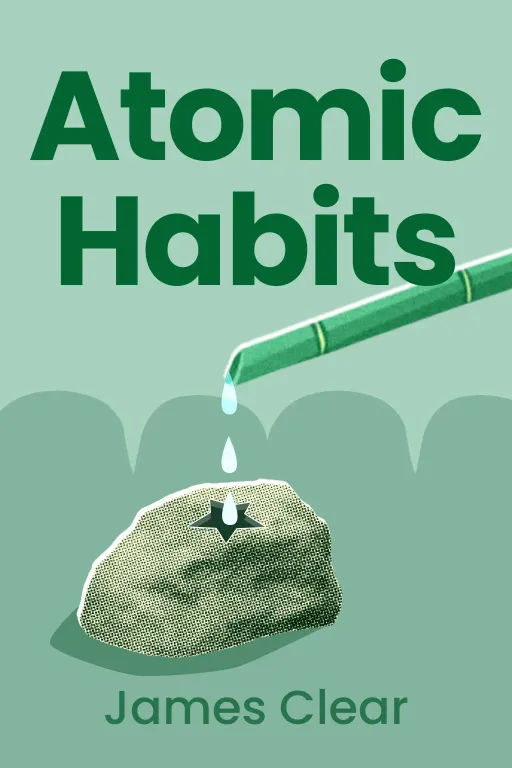
Nova: Well, it comes from a deep dive into "Atomic Habits" by James Clear. And what's fascinating about Clear is his own journey. He wasn't just some academic theorizing about behavior; he was a collegiate baseball player who suffered a truly devastating injury. He had to rebuild his life, literally, through systematic, tiny improvements. That personal crucible gave his work this incredible practical depth, showing how these small, almost invisible choices, actually hold the blueprint for our long-term health.
Atlas: Oh, I like that. So it's not just theory; it's battle-tested. For anyone who's ever tried to make a big change and felt overwhelmed, that personal story already resonates. So, today we're diving deep into why those 'tiny steps' are far more powerful than we imagine, and then we'll discuss how designing your world can make healthy choices almost inevitable.
The Power of Atomic Habits: Why Small Changes Compound into Lasting Health
SECTION
Nova: Exactly. Because the cold, hard truth is that big changes are intimidating. They feel like climbing Everest when you haven't even tied your shoelaces yet. But lasting health, true wellness that sticks, it comes from tiny, consistent actions. It's not about heroic leaps of willpower, it's about making small, repeatable habits so incredibly easy that they become automatic.
Atlas: Okay, but wait. This sounds great, but isn't it just about willpower? I mean, if I want to be healthy, I just need to try harder, right? Just grit my teeth and get it done? That's what we're always told.
Nova: That's a common misconception, Atlas, and it's precisely where James Clear offers a profound insight. He argues that willpower is a finite resource, and if you rely solely on it, you're setting yourself up for failure. Instead, he gives us four simple laws for habit building: Make it obvious, make it attractive, make it easy, and make it satisfying. Think of it like a rocket launch. A tiny adjustment in the trajectory at the beginning has a massive, massive impact on where that rocket lands millions of miles away. Your small daily habits are those initial, critical adjustments.
Atlas: That's a great analogy. So, the goal isn't to white-knuckle your way through it, but to build a system where the good choices are almost inevitable. But how does 'make it easy' apply to someone who, let's say, dreads the gym? Like, really dreads it.
Nova: Let's take someone who dreams of running a marathon, but the thought of even a 30-minute run feels like a mountain. Instead of aiming for that 30-minute run, their "atomic habit" is simply to put on their running shoes for five minutes a day. That's it. No running required. Just the shoes.
Atlas: Just the shoes? That sounds a bit out there. What's the point of that?
Nova: The point is to reduce the friction to almost zero. It's so easy that you can't say no. You get a psychological win for just doing that tiny step. After a few days, those shoes are on, and you might think, "Well, I'm already dressed, maybe I'll just walk around the block." And then, maybe you'll jog a little. The act of putting on the shoes compounds. It's not about the intensity of the workout in the beginning; it's about consistently showing up, even if it's just for those five minutes of getting ready. You're building an identity as "a person who wears running shoes daily."
Atlas: So, the goal isn't to be a fitness guru on day one, it's just to... put on pants? And then the rest kind of follows? I guess that makes sense. It's like tricking your brain into starting the difficult thing.
Nova: Precisely. It's about making the starting line so close to your current position that you don't even perceive it as a barrier. And that leads us perfectly into our second core idea.
Designing Your Environment for Inevitable Health: Making Good Habits Automatic
SECTION
Nova: And that naturally leads us to the second key idea, which is often the silent architect of our success or failure: our environment. We often think of our choices as purely internal, but our surroundings play a massive role in shaping our habits, often without us even realizing it.
Atlas: You mean like, the feng shui of our health? My fridge is currently an archaeological dig site, so I'm guessing that's not exactly optimized for healthy eating. Come on, how much impact can my cluttered counter have on my long-term health?
Nova: laughs It's a huge impact, Atlas! Think of it this way: Clear's framework fundamentally solves the problem of habit formation by providing a practical, step-by-step approach. A massive part of that is making good habits "obvious" and "easy," and that often comes down to actively designing your environment. We can literally architect our choices by making the healthy path the path of least resistance.
Atlas: So, if I want to drink more water, it's not about reminding myself every hour, it's about... what, putting a water bottle in my hand while I sleep? Because I've tried the reminders, and they just become background noise.
Nova: That's a great question, and you're hitting on the core of environmental design. Let's take that water example. Instead of just "trying" to drink more, one vivid case study is someone who places a full glass of water on their bedside table every single night, right next to their phone charger. The moment they reach for their phone in the morning, the water is obvious. It's right there. It's easy. They often take a sip, or even drink the whole glass, before even checking their notifications.
Atlas: Wow. That's actually really inspiring. It's like removing the decision entirely. You don't have to to drink water; it just happens as part of your morning routine. For someone who's constantly learning and thinking, it's like optimizing your study space, but for your body. It's about reducing the friction to do the right thing, almost making it impossible to.
Nova: Exactly! Or, conversely, making bad habits invisible and difficult. If you want to eat less junk food, don't just rely on willpower when you're hungry. Hide the unhealthy snacks in the back of a high cupboard, or better yet, don't buy them at all. Keep healthy snacks like fruit or pre-cut veggies visible on the counter. You're not battling your cravings with brute force; you're simply making the healthy choice the default path. You're leveraging the environment to make your good intentions a reality.
Atlas: I totally know that feeling. I've definitely eaten whatever was closest when I was tired, regardless of how good it was for me. So this isn't about self-deprivation; it's about setting yourself up for success by making the right choices easier than the wrong ones. It's about building a system, not just relying on a fleeting burst of motivation.
Synthesis & Takeaways
SECTION
Nova: That's the profound insight, Atlas. Lasting health isn't about those monumental, intimidating overhauls. It's about the cumulative power of tiny, repeatable actions. It's about understanding that our habits are a product of our systems, not just our intentions. By making good habits obvious, attractive, easy, and satisfying, and by intelligently designing our environment, we can literally engineer our way to better health, one tiny, atomic step at a time.
Atlas: So, what's the absolute smallest, most 'atomic' step someone can take right after listening to this, to put these powerful ideas into practice? For all our listeners who are passionate about learning and deep thinking, what's the one thing they should do first?
Nova: I'd say, choose one health habit you want to start. Just one. It could be as simple as drinking a glass of water first thing in the morning, or taking a five-minute walk during your lunch break. Then, make it incredibly easy to do for just one week. Focus on the ease, the consistency, not the intensity. The goal is to build that initial momentum, to get that first psychological win, and let the compounding begin.
Atlas: That's actually really inspiring. It's not about perfection; it's about progress. And it starts with something so small, it feels almost… effortless. The elegance of simplicity, right? Deep thinking often leads to the most straightforward, powerful solutions.
Nova: Absolutely. The invisible power of small changes is truly remarkable.
Nova: This is Aibrary. Congratulations on your growth!









