

The 'Compounding' Trap: Why Small Habits Build Massive Wealth.
Golden Hook & Introduction
SECTION
Nova: What if I told you that the biggest financial mistake you're making isn't buying too many lattes, but waiting for the 'big break'?
Atlas: Whoa, Nova, that's a bold claim right out of the gate! I imagine a lot of our listeners are actually of that big break, that one investment that changes everything, or the sudden windfall. You're saying that's a mistake?
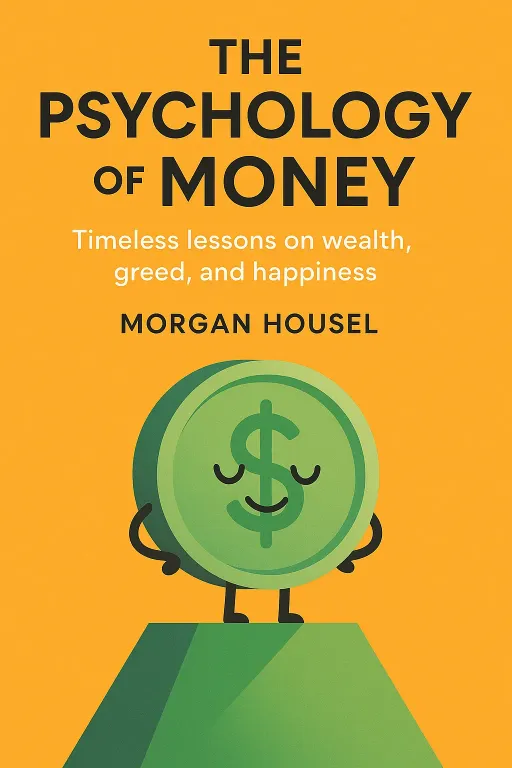
Nova: I am, Atlas. And it's a trap many of us fall into, myself included at times. Today, we're dissecting two titans in the world of personal growth and finance that completely flip that script: Morgan Housel's "The Psychology of Money" and James Clear's "Atomic Habits."
Atlas: Ah, Clear's work is fantastic. I know he’s not just a theorist; he’s a renowned expert on habits, decision-making, and continuous improvement. He literally built a framework that helps millions engineer their success. That's a pretty strong endorsement for a book.
Nova: Absolutely. And when you combine Clear's practical framework with Housel's profound insights into our financial behavior, you get a powerful understanding of why true wealth isn't about grand gestures or waiting for lightning to strike. It's built, brick by brick, by the small, consistent actions you take every single day.
The Behavioral Blueprint: Why Money is More Psychology Than Math
SECTION
Nova: So, let's start with Morgan Housel and "The Psychology of Money." His core premise is almost startling in its simplicity: financial success is far more about behavior than it is about intelligence or complex math.
Atlas: Oh, I see. So you're saying someone with an MBA from a top university could still make terrible financial choices, while someone with, say, a high school diploma could become incredibly wealthy, just through their actions? That sounds counterintuitive. For our listeners who are strategic builders, you'd think the more knowledge, the better, right?
Nova: Exactly! Housel fills his book with examples of highly educated, incredibly intelligent people making financially ruinous decisions, not because they lacked knowledge, but because their behavior—their emotions, their biases, their impatience—overrode their logic. He argues that things like greed, fear, and even just the human tendency to compare ourselves to others, are far more potent forces in our financial lives than any spreadsheet ever could be.
Atlas: That makes sense. I can definitely relate to getting swept up in market hype, or even the opposite, panicking and pulling back when things get volatile. It's like your brain knows what it do, but your gut screams something else entirely.
Nova: Precisely. Housel has this great way of simplifying it. He talks about the "man in the car" analogy – you might have the most brilliant driver in the world, someone who knows every intricacy of the engine and every rule of the road. But if that driver is reckless, impatient, or constantly distracted, they're still going to crash. It’s not about how smart you are, it’s about how you.
Atlas: So, for someone aiming for financial independence and security, it’s less about finding the next big stock tip and more about mastering their own impulses?
Nova: Fundamentally, yes. He emphasizes the importance of knowing your "enough." That behavioral trait – understanding when you have enough, when to stop taking excessive risks, when to be content – is often what separates enduring wealth from fleeting gains. It's a psychological boundary, not a mathematical one.
The Atomic Advantage: Engineering Your Way to Financial Freedom
SECTION
Nova: And this idea of "enough" and consistent, disciplined behavior brings us perfectly to James Clear's "Atomic Habits," which literally gives us the blueprint for to implement that behavior.
Atlas: Okay, so Housel tells us behavior matters. Clear tells us to change it. I’m curious, Nova, Clear’s whole premise is about "atomic" habits, meaning tiny, almost microscopic changes. For someone with a big vision for their financial future, how do these tiny shifts actually move the needle significantly? It almost sounds too easy.
Nova: That's the brilliance, and the trap, actually. We often dismiss small changes because their impact isn't immediately obvious. Clear’s famous example is the 1% improvement. If you get just 1% better at something every single day for a year, you end up 37 times better by the end of it. Not 365% better, but 3,700% better.
Atlas: Whoa, 37 times better? That’s an insane compound effect. It's like an airplane slightly off course. A tiny adjustment at the start means a completely different destination hours later.
Nova: Exactly! It's the same in finance. That 1% could be consistently saving an extra dollar, or spending 15 minutes learning about a new investment strategy, or even just tracking your expenses for a week. Alone, it feels insignificant. Compounded over years, it's transformative. Clear gives us four laws for building good habits: Make it Obvious, Make it Attractive, Make it Easy, Make it Satisfying.
Atlas: For our listeners who are strategically building their wealth, how does this "make it easy" concept translate beyond just automating savings? What if I want to start investing strategically or pay down debt more aggressively?
Nova: Great question. Let's take "Make it Easy." If you want to invest strategically, instead of saying, "I'm going to research 10 companies this weekend," which feels like a monumental task, you could say, "I'm going to read one market report for 15 minutes today." Make it so easy you can't say no. Or if you want to pay down debt, instead of just making the minimum payment, make it a habit to round up every payment to the nearest ten or hundred dollars. It feels like a small, almost invisible adjustment, but it makes it easier to do consistently.
Atlas: And "Make it Satisfying"? How do you make something like debt repayment satisfying? It usually feels like a chore.
Nova: That's where tracking comes in. Clear emphasizes visual progress. Create a simple chart, use an app, or even just a spreadsheet. Seeing that debt number shrink, or your investment portfolio grow, even by small increments, provides immediate satisfaction. It's the feedback loop that tells your brain, "Hey, this small action is working!" This reinforces the habit, making it more likely to stick.
Synthesis & Takeaways
SECTION
Nova: So, when you put Housel and Clear together, it's incredibly powerful. Housel shows us our behavior is the linchpin of financial success and pitfalls to avoid. Clear then hands us the practical tools to actually that behavior, one tiny, atomic habit at a time.
Atlas: That’s such a clear synergy. It’s about understanding our own financial psychology to avoid the pitfalls, and then systematically building habits that leverage the power of compounding, even if it feels insignificant at first. It’s less about a financial sprint and more about a marathon built on consistent, intentional steps.
Nova: Exactly. And this isn't just about money. It's about building a better life. The core message is that true wealth and growth compound from tiny, disciplined habits. So, our tiny step for listeners today, directly from the book's insights, is to identify just one small financial habit you can start today.
Atlas: Just one? Like what?
Nova: Like tracking every single coffee purchase for a week. The goal isn't necessarily to buying coffee, but to build the. It's about making the invisible visible. The insights Housel shares about the power of knowing what you’re doing, combined with Clear's emphasis on making that action obvious and satisfying, creates a powerful foundation.
Atlas: What if someone feels like that's too small? Like it won't move the needle fast enough for their vision of building serious wealth or securing their future?
Nova: The needle move, Atlas. And more importantly, you're building the muscle of consistency and discipline. That's the real, enduring wealth. Remember, the biggest, most majestic oak trees in the forest started from the smallest acorns, consistently watered and nurtured over time. Your financial growth is an architectural process; you're building it brick by brick, one atomic habit at a time.
Atlas: That's a powerful image. It really frames financial growth as an architectural process, building brick by brick, just like many of our listeners are literally building their careers and lives.
Nova: This is Aibrary. Congratulations on your growth!









