

The Art of Living: Cultivating Wisdom and Well-being
Golden Hook & Introduction
SECTION
Nova: Here’s a little secret: I can tell you one thing you’re probably doing wrong with your self-improvement goals, and it has nothing to do with willpower. In fact, it's about what you willpower is.
Atlas: Oh, I like that. So, you're saying it's not my fault my New Year's resolutions usually last until, say, January 15th? Please tell me more, because I imagine a lot of our listeners feel like they're constantly fighting an uphill battle against themselves.
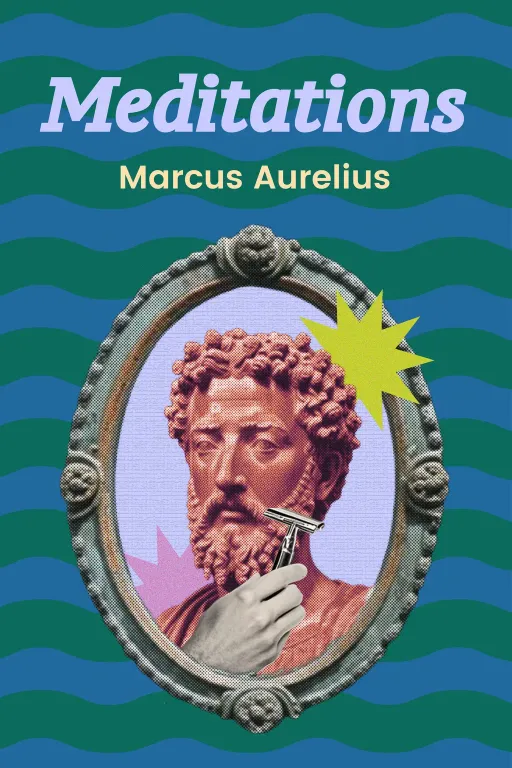
Nova: Exactly. It's often not a battle of strength, but a misunderstanding of the terrain. Today, we’re peeling back the layers on how to truly cultivate wisdom and well-being, drawing from brilliant minds. We’ll be diving into the insights from Marcus Aurelius's timeless work, "Meditations," and Ryan Holiday and Stephen Hanselman’s accessible guide, "The Daily Stoic." We’ll also explore James Clear's game-changing book, "Atomic Habits."
Atlas: What a lineup! From ancient Roman emperors to modern habit scientists. It's fascinating how a Roman emperor's personal journal, written not for publication but for self-reflection, has become one of the most widely read philosophical texts centuries later. It’s almost like he stumbled upon universal truths that resonate across time.
Nova: Absolutely. It’s a testament to the enduring power of Stoicism. And Clear's "Atomic Habits" was a runaway success, selling millions and becoming a go-to for anyone looking to make real changes. It’s rare to see a book on habits achieve such broad acclaim and practical impact.
Atlas: So basically you’re saying we’re taking the wisdom of the ages and supercharging it with modern scientific strategies for personal development?
Nova: Precisely. Today, we'll explore how Stoic wisdom offers a powerful framework for navigating life's challenges. Then, we'll discuss the science of small habits and continuous improvement. And finally, we'll focus on how integrating these two seemingly different approaches can create a more resilient and intentional path for your personal development.
Ancient Wisdom for Modern Challenges: The Power of Stoicism
SECTION
Nova: Let's start with Stoicism, particularly through the lens of Marcus Aurelius. His "Meditations" is essentially his private journal, filled with thoughts and reflections he wrote to himself, often on military campaigns or while governing a vast empire during tumultuous times. It’s a raw, unvarnished look at how one of the most powerful men in the world tried to maintain his inner peace and moral compass.
Atlas: That's incredible. I mean, imagine the pressure he was under. Emperor of Rome, constantly dealing with wars, plagues, political intrigue… and he's writing down notes to himself about staying calm? It makes me wonder, what's one core Stoic idea from Aurelius that immediately speaks to our modern, often chaotic world?
Nova: There’s a central tenet: the dichotomy of control. Aurelius constantly reminded himself to distinguish between what he could control and what he couldn't. He knew he couldn't control external events – wars, epidemics, the actions of others – but he control his judgments, his desires, his aversions, and his actions.
Atlas: That makes perfect sense, but it also sounds really hard to do in practice. Like, if my internet goes out in the middle of a crucial work meeting, my immediate reaction isn't usually, "Ah, an external event beyond my control." It's more like, "Why is this happening to me?!"
Nova: And that's where the practice comes in. Ryan Holiday and Stephen Hanselman's "The Daily Stoic" makes this ancient philosophy incredibly accessible. They break down these complex ideas into daily reflections, showing how people like us, dealing with our own versions of 'internet outages' and 'email bombardments,' can apply these principles. They emphasize that Stoicism isn't about being emotionless; it's about not letting your emotions control you.
Atlas: So it's not about suppressing the frustration, but recognizing it, acknowledging it, and then choosing a rational response instead of just reacting impulsively?
Nova: Exactly. Think of it like this: a storm hits, and your ship is tossed. You can't control the storm, but you can control how you prepare your ship, how you react to the waves, and how you steer. The Stoics believed that virtue – living in accordance with reason – was the highest good, and everything else was indifferent. It's a powerful framework for developing mental resilience.
Atlas: That's actually really inspiring. Because if you can truly internalize that, it gives you a sense of agency even when the world feels completely out of control. It shifts the focus from 'what's happening to me' to 'how will I respond to what's happening.'
Nova: They even have a concept called 'premeditatio malorum,' which literally means the premeditation of evils. It’s about envisioning potential difficulties or setbacks in advance, not to dwell on them, but to mentally prepare for them. So, when the internet go out, you've already considered that possibility and can respond more calmly.
Atlas: Okay, so it’s like a mental fire drill. You practice the response before the fire actually starts. That actually sounds like a really practical tool for managing anxiety and stress. Instead of just hoping things go well, you're mentally rehearsing how to handle it if they don't.
Nova: It builds a kind of inner fortress, allowing you to maintain tranquility amidst chaos. It’s about understanding that most things are outside your sphere of influence, and focusing your energy solely on what is within it—your thoughts, your actions, your character.
Building a Life of Continuous Improvement: The Science of Tiny Habits
SECTION
Nova: And that naturally leads us to the second key idea we need to talk about, which often acts as a powerful complement to what we just discussed: the science of small habits. James Clear’s "Atomic Habits" unpacks how tiny changes, those 'atomic habits,' can lead to remarkable results. He argues that improvement is not about radical transformation, but about compound interest in your behavior.
Atlas: Oh man, I’ve heard so many people rave about this book. It’s like the holy grail for anyone who wants to actually stick to their goals. But what's the core insight? Because I still feel like I need monumental effort to get anything done.
Nova: Clear’s central premise is that you don't rise to the level of your goals; you fall to the level of your systems. He dismantles the myth that you need massive motivation or a huge breakthrough. Instead, he focuses on making tiny, incremental improvements – what he calls 'atomic habits' – that compound over time. It’s about making your desired behaviors easy, attractive, obvious, and satisfying.
Atlas: So, it's not about waking up at 5 AM and running a marathon on day one. It's about, what, putting your running shoes by the door?
Nova: Exactly! He uses a fantastic example: if you want to read more, don't aim to read a book a week. Just aim to read one page a day. Or even simpler, just the book. The goal isn't the page count initially; it's showing up. He calls this 'the Two-Minute Rule': if you can do it in less than two minutes, just do that. Make it so easy you can't say no.
Atlas: That’s a great way to put it. Because the biggest hurdle is often just getting started, right? That initial friction. If you make it ridiculously easy to start, you're halfway there. So, it's about designing your environment and your routine to make the good habits almost inevitable.
Nova: Precisely. He introduces the four laws of behavior change: make it obvious, make it attractive, make it easy, and make it satisfying. For instance, if you want to eat healthier, make healthy food obvious by keeping it on the counter, and unhealthy food hidden. Make it easy by prepping meals on Sunday.
Atlas: I can see how that would be effective. We often blame a lack of willpower, but it sounds like Clear is saying we're just not setting ourselves up for success. It's about engineering your environment, not just gritting your teeth.
Nova: He uses the analogy of a small rudder on a massive ship. You might only turn it a few degrees, but over a long journey, that tiny adjustment changes your entire destination. Consistent, incremental improvements are the bedrock of lasting personal growth and achievement. It's not about being perfect; it's about showing up, even if it's just for a minute. That consistency is what builds identity, and that identity then drives your actions.
Atlas: That’s actually really powerful. It shifts the focus from the outcome to the process, and to who you become in the process. You're not just trying to a habit, you're trying to the type of person who does that habit.
Integrating Wisdom & Habits: Designing a Resilient and Intentional Life
SECTION
Nova: And this brings us to the fascinating intersection of these two powerful approaches. How might integrating ancient Stoic wisdom with modern habit science create a more resilient and intentional path for your personal development?
Atlas: That’s a deep question. On one hand, you have Stoicism, which is all about mental fortitude, accepting what you can't control, and cultivating inner peace. On the other, you have Atomic Habits, which is very action-oriented, about building systems and tweaking behaviors. They almost seem like two sides of a coin.
Nova: They are. Think of Stoicism as providing the robust operating system for your mind, giving you the mental resilience to face setbacks and accept the inevitable bumps in the road. It teaches you to detach from outcomes you can't control. Then, Atomic Habits provides the powerful applications and daily routines that allow you to consistently act on what you control.
Atlas: So, Stoicism helps you control your reactions when a habit goes off track, and Atomic Habits gives you the tools to get back on track or even prevent it from going off track in the first place? Like, if I'm trying to establish a meditation habit, and I miss a day, the Stoic in me says, 'Okay, that's an external event, don't let it derail your whole week.' And the habit scientist in me says, 'How can I make it easier tomorrow so I don't miss again?'
Nova: Exactly! The Stoic mindset helps you manage the inevitable failures or missed days with equanimity, preventing the downward spiral of self-judgment. Instead of saying, "I messed up, I'm a failure," you say, "That happened, now what's the next right action?" And the habit science then provides concrete strategies to make that 'next right action' almost automatic.
Atlas: That’s a brilliant synergy. It's about building an unshakeable inner core while constantly refining your outer actions. It's not just about doing more, it's about being more resilient and more intentional about you do things.
Nova: Consider a challenging goal, like learning a new skill. Stoicism helps you manage the frustration of slow progress, the inevitable plateaus, and the fear of failure. It teaches you patience and perseverance by focusing on the effort, not just the outcome. Atomic Habits then gives you the practical blueprint to break that skill down into tiny, manageable daily practices, ensuring consistent progress, however small.
Atlas: So, you're using Stoicism to guard against burnout and self-sabotage, and Atomic Habits to ensure steady, reliable growth. It's like having both a bulletproof vest and a meticulously planned route for your journey.
Nova: Precisely. It creates a feedback loop: your Stoic resilience allows you to stick with your habits even when motivation wanes, and your successful habits reinforce your sense of agency and inner strength. It's a truly holistic approach to designing a life that is not only robust against adversity but also meticulously designed for continuous, meaningful evolution.
Synthesis & Takeaways
SECTION
Nova: So, as we wrap up, what's one key takeaway you hope our listeners carry with them from this exploration of ancient wisdom and modern habits?
Atlas: For me, it’s the power of the tiny step, both mentally and physically. The idea that you don't need a grand, sweeping gesture to change your life. You need to pick one Stoic principle—like focusing on what you can control—and then apply it to one situation today. And pair that with making one tiny habit so easy you can't skip it. It's the small, consistent actions and mental adjustments that truly transform us.
Nova: I agree. It’s about building a life that is both resilient from the inside out, and intentionally designed from the outside in. The profound insight here is that true personal development isn't just about accumulating knowledge or achieving goals. It’s about cultivating an inner operating system that can weather any storm, coupled with external systems that automatically steer you towards your best self. It's an ongoing, iterative process of self-mastery.
Atlas: That gives me chills, honestly. It’s a hopeful message, because it means that real, lasting change is within reach for everyone, not just those with superhuman willpower. It's about strategy, not just struggle.
Nova: Absolutely. And for our listeners, we'd love to hear: how might integrating ancient wisdom with modern habit science create a more resilient and intentional path for personal development? Share your thoughts with us.
Atlas: This is Aibrary. Congratulations on your growth!









