

Mastering Habits for Sustainable Product Growth
Golden Hook & Introduction
SECTION
Nova: Most of us have been taught that to achieve something big, you need to set a big goal. A grand vision. A moonshot. But what if that conventional wisdom is actually holding us back from the very growth we’re striving for?
Atlas: Oh, I've been there. The shiny new year's resolution, the ambitious product roadmap. And then… the inevitable fizzle. You’re saying the problem isn't our ambition, but our approach?
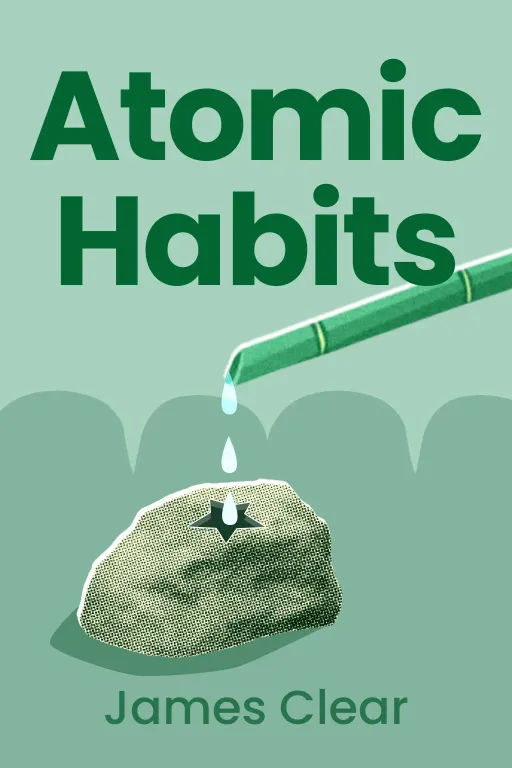
Nova: Exactly. We're talking about a profound shift in perspective today, inspired by two seminal works: James Clear's "Atomic Habits" and Charles Duhigg's "The Power of Habit." Clear, for instance, started his journey not from a place of academic theory, but from a very personal recovery after a devastating baseball injury. His insights into small, consistent improvements came from rebuilding his own life, piece by tiny piece.
Atlas: Right, like finding the courage to even try again after a setback that big. That’s a powerful origin story. So, we're not just getting theory, we’re getting battle-tested wisdom here.
Nova: Absolutely. And that wisdom points us to a counter-intuitive truth: sustainable product growth, or any growth for that matter, isn't about those grand, heroic gestures. It's about cultivating a culture of tiny, repeatable actions that compound over time.
Atlas: So, it's less about the finish line and more about the daily jog, but a very daily jog. This really resonates with anyone who’s ever launched a product, seen initial excitement, and then wrestled with how to keep that momentum going year after year.
Nova: Precisely. Today, we're going to dive deep into why focusing on systems rather than just goals is the secret sauce for lasting change. Then, we'll discuss the fascinating science behind how habits actually work and, more importantly, how we can consciously re-engineer them to architect success in our daily product rituals.
The Science of Lasting Change: Systems Over Goals
SECTION
Nova: Let's start with this idea of systems over goals. James Clear, in "Atomic Habits," really hammers this home. He argues that if you want to predict your future, look at your systems, not your goals. A goal might be to launch a revolutionary new feature. A system is the daily stand-up, the weekly code review, the iterative feedback loop, the 1% improvement in onboarding every single week.
Atlas: Okay, so you’re saying the goal itself is almost a distraction from the real work? That's a bit out there, because we're always told to set SMART goals and visualize success.
Nova: Well, it’s not that goals are bad, but they’re often misapplied. Goals are useful for setting a direction, but systems are what actually make progress. Think about it: every Olympic gold medalist has the goal of winning. But it's their training system, their nutrition, their recovery, their mental preparation – that's what differentiates them. If you completely ignored the outcome and just focused on optimizing your training system, you'd likely still achieve remarkable results.
Atlas: That makes sense. It’s like, if my goal is to build a product that acquires a million users, I can visualize that all day. But if my system for product development is broken – if our user research is superficial, if our sprints are chaotic, if our internal communication is a mess – then that goal is just a hopeful fantasy.
Nova: Exactly! Clear says, "You do not rise to the level of your goals. You fall to the level of your systems." This is a profound insight. For product leaders and builders, it means shifting focus from the 'what' to the 'how.' How do we collect feedback? How do we prioritize? How do we test? How do we communicate internally and externally?
Atlas: That's actually really inspiring. It takes the pressure off the monumental, often intimidating goal, and puts it onto something more manageable: the consistent, tiny improvements in our processes. For founders trying to sustain their journey, this is key to avoiding burnout. It's not about one massive push, but a thousand small, deliberate steps.
Nova: Right. And Clear provides this brilliant framework for building these systems. He talks about making habits obvious, attractive, easy, and satisfying. These aren't just personal productivity hacks; they're principles for designing effective product development workflows. How do you make the process of doing user research obvious to everyone on the team? How do you make contributing to documentation attractive?
Atlas: I’m curious, can you give an example of how making a product habit 'easy' might look for a team? Because sometimes it feels like product work is inherently complex.
Nova: Absolutely. Take the habit of collecting customer feedback. If your system involves logging into multiple tools, exporting data, then manually compiling it, that's difficult. Making it easy might mean integrating a simple, one-click feedback mechanism directly into your product, automatically routing it to a centralized dashboard, and scheduling a dedicated, protected 15-minute slot daily for the product manager to review it. The 'tiny step' here is making the of feedback collection and review so frictionless, you can't say no.
Atlas: So, it's about reducing the friction points in the system itself. That’s a powerful idea. It’s not just about getting people to things, but designing the environment and the process so the desired actions are the path of least resistance.
Nova: Precisely. And this leads us perfectly into our second core idea, which delves into the mechanics of these systems work, by understanding the very nature of habits themselves.
Architecting Success: Deconstructing and Re-engineering Habits
SECTION
Nova: So, if Clear gives us the 'how-to' for building better systems, Charles Duhigg, in "The Power of Habit," gives us the 'why' behind it all. He unveils the neurological loop that underpins every habit: the cue, the routine, and the reward. Understanding this loop is like having the blueprint to human behavior.
Atlas: Oh, I see. So Clear tells us to build a better machine, and Duhigg tells us how the engine of that machine actually works. This sounds like it could be incredibly powerful for leaders trying to build better team processes.
Nova: It is. Duhigg's work reveals that habits aren't just individual quirks; they're fundamental to how organizations function. Think about a product team. The 'cue' might be the end of a sprint, the 'routine' might be a chaotic, unstructured retrospective, and the 'reward' might be the temporary relief of moving on to the next thing without truly learning.
Atlas: Wow. So, if we understand that, we can intentionally re-engineer it. Instead of a chaotic retrospective, the cue is still the end of the sprint, but the routine becomes a structured, facilitated session focused on actionable insights, and the reward is a tangible improvement implemented in the next sprint.
Nova: Exactly! Duhigg gives us the power to identify these loops. He tells us about a fascinating case study involving a company called Alcoa, where the CEO, Paul O'Neill, famously transformed the company's performance by focusing on one keystone habit: worker safety.
Atlas: Worker safety? Not profit, not market share? That sounds counterintuitive for a CEO.
Nova: It absolutely did at the time. But O'Neill understood that improving safety wasn't just about reducing accidents; it was a keystone habit that required re-engineering communication, process efficiency, and management accountability. To make safety paramount, everyone had to communicate problems immediately, managers had to act quickly, and processes had to be streamlined.
Atlas: So, by focusing on this one keystone habit, he inadvertently built a system that improved everything else – communication, quality, efficiency, and ultimately, profitability. That’s incredible. It’s like a domino effect.
Nova: Precisely. The cue was an injury, the routine was a rapid, data-driven response and problem-solving, and the reward was a safer, more efficient workplace. This dramatically improved Alcoa's financial performance because it forced them to build better systems. For product teams, this means identifying those keystone habits. Maybe it's a commitment to detailed user stories, or a daily 15-minute reflection on a core metric.
Atlas: So for product leaders, this means we should be looking for those 'keystone habits' in our own teams or our product development cycle. What's one small habit that, if consistently improved, would ripple out and positively affect everything else?
Nova: That's the million-dollar question, isn't it? It might be something as simple as ensuring every meeting has a clear agenda and clear action items, or that every bug report includes steps to reproduce. These tiny, repeatable actions, when consistently applied, lead to remarkable results. It's about designing your environment, your processes, and your team's interactions so that the desired habits become inevitable.
Atlas: That's a great way to put it – making the desired action inevitable. And it really speaks to the user profile we have in mind: pragmatic, grounded, and driven by impact. This isn't just theory; it's a practical toolkit for building sustainable growth.
Synthesis & Takeaways
SECTION
Nova: So, by combining Clear’s focus on systems over goals and Duhigg’s understanding of the habit loop, we get a powerful framework. Sustainable product growth isn't about chasing the next big trend or executing a heroic, one-off initiative. It's about meticulously designing the tiny, almost invisible daily rituals that, when compounded, create an unstoppable force of innovation and improvement.
Atlas: It’s about building the muscle memory of success, rather than just flexing for a moment. And it applies not just to the product, but to the well-being of the founders and the team. A sustainable journey is built on sustainable habits.
Nova: Exactly. It’s about cultivating a culture where the desired actions are the easiest actions, where the cues for good habits are obvious, and the rewards are satisfying. This shift from 'what' to 'how' is what truly builds lasting value.
Atlas: This gives me chills, honestly. It takes the pressure off the outcome and puts the power back into our daily choices and our daily systems. For anyone feeling overwhelmed by ambitious goals, this is a profound reminder that mastery comes from consistency, not intensity.
Nova: Absolutely. And it's a powerful message for anyone looking to build something that truly lasts. Start small, stay consistent, and trust the system.
Atlas: That's a perfect example of what we're talking about. So, for our listeners, we want to encourage you to identify just one tiny step you can take this week to improve a core product metric or team process. Make it so easy you can't say no.
Nova: And then, tell us about it. Share your tiny step and the system you're building. Let's see how those atomic habits start to compound for you.
Atlas: This is Aibrary. Congratulations on your growth!









