

Mastering Habits for Strategic HR Impact
Golden Hook & Introduction
SECTION
Nova: Alright, Atlas, quick game. I’ll give you a common HR challenge, and you give me the most ineffective solution you can think of. Ready?
Atlas: Oh, I like this! Hit me.
Nova: Okay. Problem: low employee engagement. Go!
Atlas: Hmm, low employee engagement… obviously, a mandatory, 8-hour team-building retreat involving trust falls and a motivational speaker who shouts a lot.
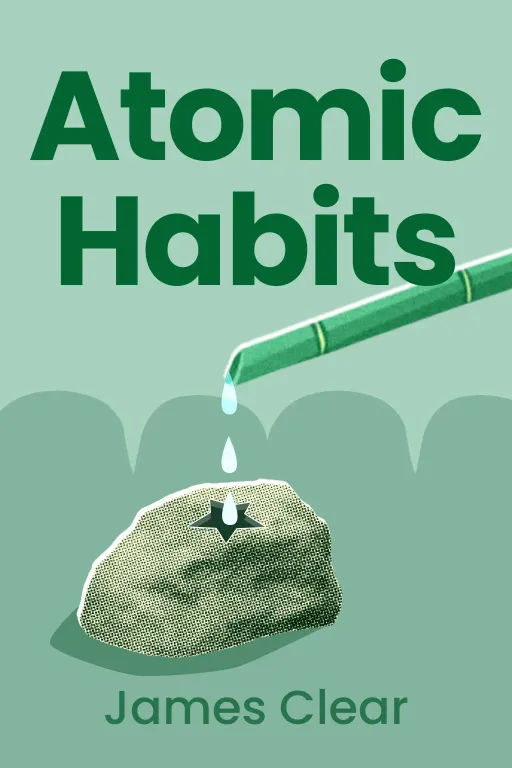
Nova: Exactly! And why does that feel so universally… wrong? Because it’s a huge, one-off event. It’s the opposite of what James Clear argues in his massively acclaimed book, Atomic Habits.
Atlas: You know, it’s funny, Clear’s book has become almost a modern classic in the self-help and productivity space, yet you rarely hear it discussed through the lens of strategic HR. It’s almost like it’s too simple for corporate strategy.
Nova: And that’s precisely where we’re making a mistake! Clear, coming from a background of sports and personal development, shows us that monumental transformations aren't the key. It's the small, consistent changes that lead to remarkable results. He really drills down on system design over goal setting, which is a game-changer for enduring change.
Atlas: So, we’re talking about moving beyond the grand, flashy initiatives and looking at the microscopic movements that actually shift the needle?
Nova: Precisely. And that naturally leads us to the heart of our discussion today: how the science of habits, particularly from Clear’s Atomic Habits and Charles Duhigg’s equally impactful The Power of Habit, can revolutionize strategic HR. Today, we'll dive deep into how these micro-mechanics can drive macro-success. First, we’ll explore the underlying science of habit formation and why it matters to HR. Then, we’ll discuss how to build an HR habit blueprint, focusing on tiny, actionable steps.
The Micro-Mechanics of Macro-Success
SECTION
Nova: So, let's start with the micro-mechanics of macro-success. Both Clear and Duhigg, in their widely read works, essentially dissect how habits work. Clear, with Atomic Habits, really popularized the idea that an atomic habit is a tiny change, a little building block that’s part of a larger system.
Atlas: Right, like that famous quote, "You don't rise to the level of your goals, you fall to the level of your systems."
Nova: Exactly! And that’s such a profound insight for HR. Think about it: how many times do we set ambitious goals for training programs, performance improvements, or culture shifts, only to see them fizzle out? Clear would argue it's because we're focusing on the outcome, not the system that produces the outcome.
Atlas: I can definitely relate to that. For our listeners who are constantly designing new initiatives, it’s easy to get caught up in the big vision – the "what" – but the "how" often gets neglected or feels overwhelming.
Nova: And that’s where Duhigg’s work in The Power of Habit provides the perfect complement. Duhigg, a Pulitzer Prize-winning journalist, really broke down the neurological loop of habit formation: cue, routine, reward. He gives us the framework to understand we do what we do. He illustrates this beautifully with the story of how Procter & Gamble discovered the "Febreze habit" back in the late 90s.
Atlas: Oh, I know this one! They initially marketed Febreze as an odor eliminator, right? Like, for really stinky stuff.
Nova: Exactly. Their initial marketing focused on eliminating bad smells – dirty diapers, cigarette smoke, dog beds. But sales were sluggish. People who lived with those smells often didn't even notice them anymore, or they felt ashamed. The cue wasn't effective.
Atlas: So, the cue wasn't "stinky house," because the people who needed it most didn't perceive it that way.
Nova: Right. Then, a researcher visited a woman who kept her house impeccably clean. After she finished cleaning, she’d spritz Febreze as a final touch, not to eliminate odors, but for the pleasant scent, the "finishing touch." That was the 'aha!' moment.
Atlas: So the cue shifted from "something smells bad" to "I just finished cleaning."
Nova: Precisely. The routine became spraying Febreze, and the reward was the pleasant, fresh scent and the feeling of accomplishment from having a perfectly clean home. P&G pivoted their marketing to focus on this "reward" of a fresh scent as the final step in a cleaning routine. And Febreze became a multi-billion dollar product.
Atlas: Wow, that’s a perfect example of understanding the habit loop. It’s like they weren’t selling a product; they were selling a feeling, tied to an established routine.
Nova: And that’s the magic. For HR, this means consciously designing habit loops for desired behaviors. Instead of just launching a new compliance training, we need to ask: What’s the cue for employees to engage? What’s the routine we want them to follow? And what’s the immediate, desirable reward that reinforces that routine?
Atlas: So, for a new HR software rollout, the cue isn't just an email saying "new system is live." It might be "I just opened my laptop in the morning." The routine is "log into the new system for 5 minutes." And the reward could be "I completed one small task, and now I feel less overwhelmed."
Nova: Exactly! It’s about making the desired action obvious, attractive, easy, and satisfying, as Clear would say. It’s a profound shift from dictating policies to designing environments that naturally encourage growth and efficiency.
Your HR Habit Blueprint
SECTION
Nova: So, let's move from the theoretical to the practical. How do we, as HR professionals, start building our own HR habit blueprint? Because it's not about implementing a massive new system overnight. It's about tiny steps.
Atlas: That’s going to resonate with anyone who feels overwhelmed by the sheer scale of change management. So, where do we start with these "tiny steps"?
Nova: Clear suggests identifying one recurring challenge and then brainstorming how a new, small habit could mitigate it. Let’s take the example of employee feedback. Many companies struggle with getting meaningful, regular feedback.
Atlas: Oh, absolutely. It’s either an annual review that feels like a firing squad, or it’s completely ad-hoc and inconsistent.
Nova: Right. So, a tiny step might be: "Every Friday at 4 PM, I will open a specific shared document and write down one piece of positive feedback I observed about a colleague that week, and then I'll send it."
Atlas: So, the cue is the time and day. The routine is super small – just one piece of feedback. And the reward is the act of giving positive feedback and the feeling of making a difference. That’s much less daunting than "give regular feedback."
Nova: And it builds. Over time, that one piece becomes two, then three. The system creates the consistency. Clear emphasizes that you vote for the person you want to become with every action you take. HR can help employees vote for the team member, the leader, the innovator they want to become.
Atlas: I’m curious, how does understanding individual habit loops inform more empathetic and effective performance management strategies within a team? Because we’re not all wired the same way.
Nova: That’s a deep question, Atlas, and it gets to the heart of empathetic HR. If we understand that someone might have a habit loop of procrastination, we can intervene at the cue or reward stage. It’s not just about saying "stop procrastinating." It’s about helping them identify the cue and design a new routine with a healthier reward.
Atlas: So, instead of just telling someone they need to improve their time management, we help them identify their specific triggers and then co-create a new, small routine that serves a similar reward, but in a productive way.
Nova: Exactly. It’s about coaching, not just commanding. It's about designing an environment where the path of least resistance is the path of growth. This aligns so well with the "Growth Seeker" aspect of our user profile – it’s about nurturing human potential.
Atlas: And the "Healing Moment" you mentioned earlier, acknowledging that change is a process, not an event. That’s so crucial for HR, isn't it? Because we often expect immediate, dramatic shifts.
Nova: Absolutely. Every small step forward is a victory worth celebrating, both for yourself and your team. Whether it’s a tiny habit of giving feedback, learning a new skill for 15 minutes a day, or even just taking a brief mindfulness break, these small victories accumulate. That positive reinforcement is the reward that strengthens the new habit loop. It’s about building a culture where continuous improvement isn't a heavy burden, but a series of small, achievable wins.
Synthesis & Takeaways
SECTION
Nova: So, what we’ve really explored today is the profound impact that understanding the science of habits can have on strategic HR. It’s about shifting our focus from grand, often unsustainable goals to designing robust, supportive systems.
Atlas: It’s the idea that true transformation in an organization, whether it’s in training, culture, or performance, doesn’t come from a single, heroic effort, but from the relentless accumulation of tiny, almost imperceptible improvements.
Nova: And it’s wonderfully empowering, isn't it? It means that even the smallest change, consistently applied, can lead to monumental results over time. For HR, this means fostering a culture of continuous improvement by making desired behaviors obvious, attractive, easy, and satisfying.
Atlas: It’s about being an architect of habits, not just a manager of people. It makes me think that the most strategic HR move isn't a new policy, but helping every individual identify and build one tiny, positive habit.
Nova: Beautifully put, Atlas. And that’s the lasting insight: by mastering the micro-mechanics of habits, HR can unlock macro-success, turning individual growth into collective strength. What one tiny habit will you implement this week to create a ripple effect in your team?
Atlas: That’s a powerful question to end on. I think I’ll start by dedicating 15 minutes every morning to strategic planning, before the email avalanche hits. Just 15 minutes.
Nova: Love it. And for all our listeners, we'd love to hear what tiny HR habit you're going to start building. Share your insights with us on social media! This is Aibrary. Congratulations on your growth!









