

How to Build Unshakeable Habits Without Relying on Willpower.
Golden Hook & Introduction
SECTION
Nova: What if I told you that building incredibly strong habits, the kind that stick for life, actually has almost nothing to do with how much willpower you have?
Atlas: Whoa, hold on a second, Nova. That flies in the face of pretty much every New Year's resolution I've ever made. My entire adult life has been a testament to the idea that I just need willpower. Are you telling me I've been approaching this all wrong?
Nova: Absolutely, Atlas. We've been sold a bit of a myth, haven’t we? The real engine of lasting change, the secret to unshakeable habits, isn't some internal reservoir of grit that we constantly have to refill. It’s about intelligently designing our environments and our systems. It's about making success almost inevitable.
Atlas: Okay, so you’re saying it’s less about personal failing and more about strategic setup? That’s a fascinating angle. What brilliant minds are guiding us through this paradigm shift today?
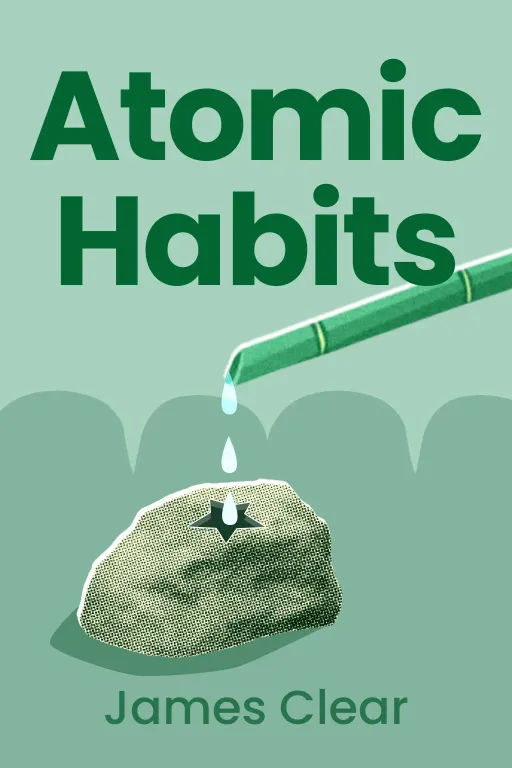
Nova: We're drawing our insights primarily from two titans in the field: James Clear's phenomenal book, "Atomic Habits," and Charles Duhigg's groundbreaking work, "The Power of Habit." Clear’s book, by the way, has become a global phenomenon, translated into dozens of languages and selling millions, which is a testament to how profoundly practical and impactful its strategies are for everyday people. And Duhigg, a Pulitzer Prize-winning investigative journalist, brought an incredible scientific rigor to the topic, really digging deep into the neurological underpinnings of why we do what we do.
Atlas: That’s a powerful combination – practical application backed by deep scientific investigation. So, if it’s not willpower, what’s the first big piece of this puzzle we need to understand? Where do we even begin to design this "inevitable success"?
The Environment Over Willpower: Designing for Automatic Success
SECTION
Nova: The first big piece, Atlas, and where Clear really shines, is understanding that your environment is vastly more powerful than your motivation. We often think of our habits as a choice we make in the moment, but the truth is, our surroundings are constantly dictating our actions, often subconsciously. Clear argues for focusing on "1% improvements" – tiny, almost imperceptible changes that compound into massive results over time. It's about making good habits obvious, attractive, easy, and satisfying, and bad habits the opposite.
Atlas: I guess that makes sense. It's like if you want to eat healthier, you don't keep ice cream in the freezer. But for someone in a high-pressure corporate environment, where every moment is scheduled and your "environment" is often a chaotic inbox or back-to-back meetings, how do you even begin to 'design' your environment without feeling completely overwhelmed? Isn't that just adding another task to an already overflowing plate?
Nova: That’s a great question, and it speaks to the strategist in you. The beauty of Clear's approach is that it’s not about adding more to your plate, but about subtly reorganizing the existing elements. Think about the British cycling team under Dave Brailsford. They were mediocre, then they brought in Brailsford who introduced the concept of "the aggregation of marginal gains." He didn't tell them to train harder. He focused on 1% improvements: finding the most aerodynamic bike seat, using the best massage gel for recovery, teaching riders how to wash their hands to reduce illness, even painting the inside of the team truck white so they could spot dust that might affect bike performance.
Atlas: Wow. So, they weren't just training; they were optimizing everything from their pillow to their bus floor. It’s about creating a system where every tiny detail nudges you towards the desired outcome, rather than fighting against a setup that makes it harder.
Nova: Exactly. For our listeners, this translates into strategies like "habit stacking." Instead of trying to force a new habit, you pair it with an existing one. "After I pour my morning coffee, I will meditate for one minute." Or "After I take off my work shoes, I will immediately put on my running shoes." It leverages the momentum of an established routine. Or, making your desired habit obvious: if you want to read more, leave a book on your pillow. If you want to drink more water, keep a full water bottle on your desk.
Atlas: So it's less about self-flagellation and more about self-compassion through thoughtful setup. You’re essentially tricking your future self into doing the right thing by making it the path of least resistance. That resonates deeply. It’s like, instead of relying on a surge of motivation, you’re building a river that naturally flows in the right direction.
The Habit Loop Unveiled: Decoding Cues, Routines, and Rewards
SECTION
Nova: Precisely. And that river analogy is perfect because it leads us beautifully into our second core idea, which dives into the very currents of that river: Charles Duhigg's profound insights into the "habit loop." While Clear gives us the practical architecture, Duhigg reveals the hidden engine beneath it all: the cue, routine, reward loop. Understanding this loop is like having the diagnostic tools for almost any behavior, personal or organizational.
Atlas: That’s incredible. So you’re saying there’s a fundamental, repeatable pattern to all our automatic behaviors? That sounds like a superpower if you can decode it. What exactly is this loop, and how do we even begin to identify it in our own lives?
Nova: It’s surprisingly simple, yet incredibly powerful. Every habit, Duhigg explains, starts with a —a trigger that tells your brain to go into automatic mode and which habit to use. Then there's the —the behavior itself, which can be physical, mental, or emotional. And finally, the —which helps your brain figure out if this particular loop is worth remembering for the future. He illustrates this beautifully with the story of Eugene Pauly, a man who suffered severe amnesia after a viral encephalitis infection. Eugene couldn’t remember his own past, couldn’t form new memories, yet he could still form new habits.
Atlas: That’s fascinating! How could someone with no short-term memory still learn new behaviors? It sounds almost contradictory.
Nova: It was. Eugene’s basal ganglia, a primitive part of the brain, was still intact. Researchers would put food in his kitchen, and while he couldn’t tell them he was going to the kitchen, if he heard a specific TV jingle, he’d reliably walk to the kitchen and find the snack. His brain had formed a new habit loop, completely independent of his conscious memory. This revealed that habits are often stored and executed without conscious thought.
Atlas: That’s incredible... but if habits are so ingrained and unconscious, how do we, as conscious, strategic thinkers, even begin to interrupt that loop? It sounds like we're fighting our own brains. For our listeners who are trying to break a long-standing pattern, like endlessly checking their phone, it must feel like an invisible force pulling them.
Nova: It can feel that way, but Duhigg offers what he calls the "Golden Rule of Habit Change." The key isn't to eliminate the cue or the craving entirely. That's often impossible. Instead, you keep the original cue, you keep the original reward, but you. So, if your cue is feeling bored at your desk, and your routine is mindlessly scrolling social media, and your reward is a brief hit of novelty or distraction... you identify that loop. Then, the next time boredom hits, instead of scrolling, you might try a different routine: stand up and stretch, call a colleague, or do one minute of deep breathing. The reward is still a break, a shift in focus, but the routine is healthier.
Atlas: So, the key isn't to eliminate the craving, but to redirect the impulse towards a healthier or more productive outcome. It’s like reframing the problem from "don't do X" to "do Y instead of X." That’s a much more empowering way to think about it.
Synthesis & Takeaways
SECTION
Nova: Exactly. When you synthesize Clear and Duhigg, you get a powerful roadmap. Clear gives us the practical "how-to" for building these advantageous environments and systems, focusing on those tiny, cumulative actions. And Duhigg gives us the "why" and the diagnostic "how-to" for understanding the deep mechanics of habits, allowing us to strategically intervene in existing loops. It becomes about designing your life for success, rather than constantly battling against your own nature.
Atlas: That’s a profound shift in perspective. Instead of seeing ourselves as willpower failures, we can see ourselves as architects of our own behavior. For someone who wants to take just one small step this week, what's a concrete action they can take based on these insights?
Nova: Identify just one small habit you want to build this week. And then, apply Clear's framework to it: make it obvious, make it attractive, make it easy, and make it satisfying. Don't try to overhaul everything. Pick one tiny thing, like drinking a glass of water first thing in the morning, and make it so easy and obvious that you almost can't do it.
Atlas: I love that. It brings it back to the power of those "1% improvements" you mentioned earlier. It’s not about a grand gesture, but about consistently nudging yourself in the right direction. Thank you, Nova, this has been incredibly insightful, and genuinely empowering.
Nova: My pleasure, Atlas. Ultimately, what both Clear and Duhigg show us is that true freedom isn't about monumental acts of willpower, but about the quiet dignity of intentionally shaping our small, daily decisions. It's about becoming the architect of our own automatic future.
Atlas: And what a future that can be. Thanks for tuning in, everyone. We hope this episode sparks some significant shifts in your daily routines.
Nova: This is Aibrary. Congratulations on your growth!









