

From Chaos to Calm: Architecting Your Day for Mental Well-being
Golden Hook & Introduction
SECTION
Nova: Here's a thought for anyone feeling overwhelmed, or like they're constantly running on fumes: what if the secret to a calmer, more productive day isn't about willpower, but about...?
Atlas: Oh, I love that. Less willpower? That sounds almost subversive in a world constantly telling us to "hustle harder" and "just push through." But I imagine a lot of our listeners, especially those managing high-stress lives or navigating ADHD, are nodding along right now, thinking, "Yes, please tell me more about less willpower!"
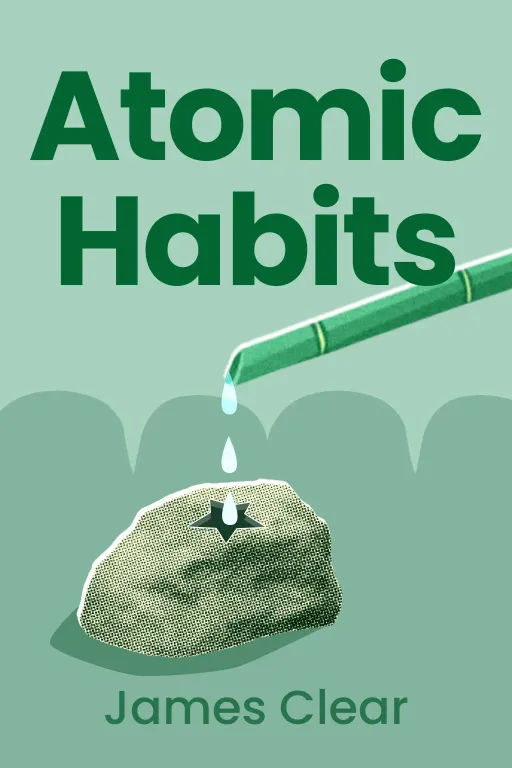
Nova: Exactly! Because the truth is, our willpower is a finite resource, and constantly battling against our own environment or an overflowing mental inbox is a recipe for burnout. Today, we're dissecting two titans of personal effectiveness that offer a different path: "Atomic Habits" by James Clear, a global phenomenon renowned for its incredibly actionable framework, and "Getting Things Done" by David Allen, a foundational text that's been shaping productivity for decades, though sometimes perceived as a bit daunting to start.
Atlas: Right, the ultimate practical toolkit for anyone who feels like their brain is trying to run a marathon and a library simultaneously. It's for the resilient explorer who's tired of just coping and wants to truly conquer their day. So, if we're not relying on willpower, Nova, what's the first critical shift these books suggest we make?
The Micro-Power of Tiny Habits and Environmental Design
SECTION
Nova: It’s all about the micro-power of tiny habits and what James Clear brilliantly terms environmental design. Clear's core insight, which resonated with millions, is that monumental change doesn't require monumental effort. It requires a series of almost imperceptible shifts, small actions that compound over time. He distills this into four simple laws for building good habits: make it obvious, make it attractive, make it easy, and make it satisfying.
Atlas: Okay, so it’s not about suddenly becoming a morning person who meditates for an hour, journals, and runs a marathon before dawn. It’s about... what, putting your running shoes by the bed?
Nova: Precisely! Let me give you a compelling example from Clear's book, one that really brings this to life. Think about the British cycling team. For decades, they were, frankly, mediocre. Then, a new performance director, Dave Brailsford, came in with a radical idea: the "aggregation of marginal gains." He didn't look for one big breakthrough. He looked for hundreds of tiny, one-percent improvements.
Atlas: One percent? That sounds almost negligible.
Nova: That’s the point! He looked at. They redesigned bike seats to be more ergonomic, used alcohol to clean tires for better grip, instructed riders on the best hand-washing techniques to avoid illness. They even researched the pillow types the riders used in hotels for optimal sleep. Each change, on its own, was tiny. But the cumulative effect? They went from decades of underperformance to winning the Tour de France five times in six years, and dominating Olympic cycling. It’s a powerful illustration that the environment, down to the smallest detail, shapes our actions far more than we realize.
Atlas: Wow. That's incredible. It's like they weren't just training athletes; they were architecting an entire ecosystem for success. For someone struggling with ADHD or just chronic overwhelm, who often feels like their brain is actively sabotaging them, this idea of environmental design feels incredibly liberating. It shifts the blame from a personal failing to a design challenge.
Nova: Exactly! Instead of saying, "I lack discipline," you ask, "How can I make this habit so easy, so obvious, so integrated into my environment, that my brain almost say no?" Want to eat healthier? Make healthy snacks visible on the counter and put junk food away in an opaque cupboard. Want to stop checking your phone while working? Put it in another room. Make the good habits obvious and attractive, and the bad ones invisible and difficult. It's about setting up your future self for success, rather than hoping past-you suddenly develops superhuman willpower.
Atlas: That's such a hopeful way to look at it. It's not about being a better person, it's about building a better system around the person you already are. So, we're designing our physical space to nudge us towards our goals. But what about the mental space? Because for many, the biggest chaos isn't just external; it's the relentless internal chatter of all the things we be doing.
Externalizing Your Mental Clutter: The Art of Getting Things Done
SECTION
Nova: That’s a perfect segue, because while tiny habits help us build positive routines, what about the overwhelming of inputs and commitments we need to manage? This is where David Allen's "Getting Things Done," or GTD, becomes indispensable. Allen's core philosophy is simple yet profound: your brain is for ideas, not them. Every single open loop, every unmade decision, every little "I should probably..." thought, is a drain on your cognitive energy.
Atlas: I totally know that feeling! It's like having 50 browser tabs open in your head, all running in the background, slowing everything down. You're trying to focus on one thing, but you can feel the hum of all those other unresolved tasks. So, what's Allen's solution? Just... write it all down?
Nova: That's the crucial first step: capture. Get every single thing that has your attention out of your head and into a trusted external system. Whether it's a physical inbox, an app, or a notebook, the medium matters less than the act of externalizing it. Imagine trying to remember groceries, a work email, your child's school event, a leaky faucet, and a friend's birthday all at once. Each of those is an "open loop," pulling at your attention, creating a low-grade hum of anxiety.
Atlas: But wait, for someone already overwhelmed, doesn't setting up a whole "system" feel like work? Like adding another layer of complexity when you're already drowning? That sounds rough.
Nova: That's a common initial reaction, and it's valid. The initial "mind sweep" and setup can feel like a project in itself. But the payoff is immense. Once everything is captured, you then it. Allen gives us a clear workflow: "Do it, delegate it, defer it, or delete it." If it takes less than two minutes, do it immediately. If not, decide if you'll delegate it, put it on your calendar, or file it away. The key is that once a decision is made about an item, and it's placed into a trusted system, your brain can let go of it. That frees up an enormous amount of mental bandwidth.
Atlas: That makes sense. It's not about doing more; it's about being clear on what needs to be done and when, so your brain isn't constantly screaming "Don't forget!" It's like having a personal assistant for your mental clutter. This is exactly the kind of strategic tool the self-mastery seeker needs – a way to leverage their unique wiring rather than fight against it.
Synthesis & Takeaways
SECTION
Nova: Absolutely. When you combine the power of "Atomic Habits" for building consistent, positive behaviors through environmental design, with "Getting Things Done" for systematically managing the relentless inflow of life's demands, you create a powerful synergy. You're not just hoping for a calmer mind; you’re architecting it. You're designing systems that support your mental well-being, rather than constantly relying on a faltering supply of willpower. It's about mastery over your environment, which then leads to mastery over your experience.
Atlas: So, for our listeners who are feeling that hum of overwhelm right now, what's the single most important, tiny, actionable step they can take to start this journey from chaos to calm?
Nova: The simplest, most powerful first step, echoing the "tiny step" from the book, is this: Identify one small, positive habit you want to build. Just one. For the next three days, make it incredibly easy to do for just two minutes. Maybe it's drinking a glass of water, maybe it's stretching, or maybe it's just writing down three things you're grateful for. Make it so easy you can't say no. Or, if the mental clutter is the dominant force, simply grab a piece of paper or open a note app, and for the next five minutes, write down that's on your mind. Every task, every worry, every idea. Just get it out.
Atlas: That’s actually really inspiring. It means you don't need to overhaul your entire life to feel a sense of control. You just need to start with one tiny, intentional action, or the immediate relief of offloading that mental burden. That's a profound shift from feeling powerless to feeling like an architect of your own well-being.
Nova: It truly is. The journey to self-mastery isn't about grand gestures; it's about the relentless accumulation of small, intentional choices that build momentum. By designing your environment and externalizing your mental load, you're not just managing your day; you're fundamentally reshaping your relationship with stress and unlocking a deeper sense of calm and capability. This is Aibrary. Congratulations on your growth!









