

Beyond the To-Do List: Cultivating True Discipline for Lasting Impact.
Golden Hook & Introduction
SECTION
Atlas: Okay, Nova, quick game. I say 'New Year's Resolution,' you give me the first thing that comes to mind, good or bad.
Nova: Oh, that's easy. 'Gym membership, unused.' Or maybe, 'diet, abandoned by February.'
Atlas: Exactly! It's like we're all caught in this cycle of grand intentions that just... fizzle.
Nova: It's the universal human experience, isn't it? We start with such incredible energy, such hope, and then a few weeks later, we're back to square one, wondering what went wrong.
Atlas: Right? And it always feels like a personal failing, like we just don't have enough willpower. But what if the problem isn't us, but our approach?
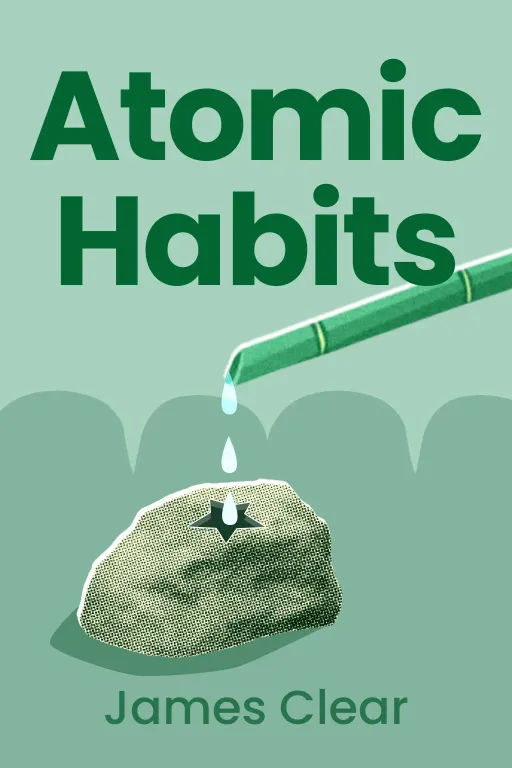
Nova: That’s precisely what we’re digging into today. We're going beyond the conventional wisdom of the 'to-do list' and diving into the profound insights from two giants in the field: James Clear, author of 'Atomic Habits,' and Angela Duckworth, who gave us 'Grit.' Both bring a fresh, evidence-based perspective to something often seen as purely willpower-driven.
Atlas: So, you're saying motivation isn't enough? That it's actually… unreliable? Because that feels a bit counterintuitive. Don't we need motivation to even start anything?
The Fading Myth of Motivation: Why Discipline Endures
SECTION
Nova: That's a great question, and it's where the 'cold fact' of the matter becomes clear. Motivation, at its core, is an emotion. It's a burst of energy, a feeling of excitement or urgency. And like all emotions, it’s powerful, but it's temporary. It ebbs and flows like a wave.
Atlas: Oh, I know that feeling. I have days where I feel like I can conquer the world, and then days where getting out of bed feels like a marathon.
Nova: Exactly. Relying solely on those bursts of inspiration leads to incredibly inconsistent progress. You're riding a wave, and when it crashes, you're left stranded until the next one rolls in. True, lasting change, as Clear argues so brilliantly in 'Atomic Habits,' comes from building small, repeatable systems, not from monumental willpower.
Atlas: But wait, don't we that initial spark, that motivation, to even get off the couch? How do you even begin a new habit without feeling driven to do it?
Nova: That's where Clear shifts our focus. Instead of focusing on the —say, 'I want to write a book'—he encourages us to focus on the and, even more powerfully, on our. It’s about asking: 'Who do I want to become?'
Atlas: So you're saying, if I just I'm a writer, I'll magically write a novel? That sounds a bit… self-helpy, if I'm honest.
Nova: It's not magic, it’s a subtle but profound shift. If your goal is 'I want to write a book,' you're focused on an outcome. If your identity is 'I am a writer,' you're focused on the process of becoming. A writer writes. So, the question becomes: what would a writer do today? They would sit down at their desk. They would open their laptop. Even if they only write one sentence.
Atlas: I can see that. It's less about the grand, intimidating goal, and more about the micro-actions that reinforce who you perceive yourself to be.
Nova: Precisely. Clear talks about tiny changes, compounded over time, leading to remarkable results. It’s making those actions so small and easy that you can't do them. The successful author doesn't wait for inspiration; they have a system. They show up. That's discipline, not a fleeting wave of motivation.
Atlas: So that's the 'cold fact' right there – motivation fades, but discipline endures. It’s about building those small, repeatable systems, almost invisible in their individual impact, but monumental over time.
Architecting Your Environment: The Science of Habit and Grit
SECTION
Nova: And those repeatable systems? They don't just appear out of thin air. We have to them. That's where the insights from both James Clear and Angela Duckworth really shine, bringing us to our second core idea: architecting your environment for success.
Atlas: Designing my environment? Are we talking about feng shui for productivity, or something more tactical?
Nova: More tactical, definitely! Clear lays out four simple laws of behavior change: make it obvious, make it attractive, make it easy, and make it satisfying. For example, if you want to eat healthier, make fruit obvious by placing it on the counter, make it easy by pre-chopping vegetables. Conversely, if you want to break a bad habit, make it invisible—remote control in a drawer, unhealthy snacks out of sight. You're literally designing your environment to make good choices the default.
Atlas: Okay, that's smart. It's like putting your running shoes by the bed so you trip over them in the morning. But what about when things get hard? Nova, we've all set up the fruit bowl, but then the pizza place calls. That's where grit comes in, right? Because even the best-designed environment can't completely eliminate temptation or difficulty.
Nova: Absolutely. This is where Angela Duckworth's work on 'Grit' becomes crucial. She defines grit as sustained passion and perseverance towards long-term goals. It's the ability to stick with things, even when they're difficult, boring, or when you face setbacks. Duckworth's extensive research demonstrates that grit is often a better predictor of success than talent or even IQ.
Atlas: So, it's not just about setting up the environment, but also building the mental muscle to push through. How do you 'build' grit, though? Is it like a workout for your willpower, or something more profound?
Nova: It's more like a workout for your. Duckworth emphasizes deliberate practice and, critically, a growth mindset. It's about seeing challenges not as insurmountable obstacles, but as opportunities to learn and grow. She uses the compelling example of West Point cadets: those with higher grit scores were significantly more likely to complete the rigorous training, regardless of their initial academic or physical talent. They saw setbacks as temporary and learned from them, rather than being defeated.
Atlas: That's powerful. So, combining Clear's habit design with Duckworth's grit means you're not just hoping for success, you're engineering it. You're setting yourself up to win, and then you're cultivating the resilience to keep winning, even when the initial motivation has long faded.
Nova: Exactly. It's the ultimate one-two punch. You design your environment to make good habits easy and bad ones hard, and then you cultivate the internal resilience – the grit – to stick with those habits until they become second nature, until they become.
Synthesis & Takeaways
SECTION
Atlas: So, it's about making consistency the default, and perseverance the superpower. No more waiting for motivation to strike, or feeling guilty when it doesn't. It's about showing up, every single day, in tiny, almost imperceptible ways that compound into massive, life-altering results. This truly goes beyond just a to-do list.
Nova: Precisely. And the tiny step for today, for every listener, is actually quite simple: Identify one small habit you want to build. Design a cue for it – something that naturally triggers it – and a small, immediate reward to make it satisfying. It could be as simple as: 'After I brush my teeth, I'll drink a glass of water, and then I'll feel a tiny burst of refreshment and accomplishment.'
Atlas: I love that. Start small, make it easy, make it satisfying. That's a habit I can definitely get behind. And we're not just talking about productivity here, right? This applies to relationships, learning, well-being, creative pursuits... everything that requires sustained effort.
Nova: Absolutely. It's about designing a life of intentional growth, rather than just a life of reaction. It's about cultivating true discipline for a lasting impact on everything that matters to you, transforming who you are, one tiny, gritty step at a time.
Atlas: That's a fantastic thought to leave our listeners with. What a powerful conversation, Nova.
Nova: Always a pleasure, Atlas.
Nova: This is Aibrary. Congratulations on your growth!









