

Beyond the Noise: Cultivating Focus and Clarity in a Distracted World
Golden Hook & Introduction
SECTION
Nova: Atlas, quick fire: what's the first thing that comes to mind when I say 'focus'?
Atlas: Oh man, my phone's battery percentage. It's usually low, just like my attention span sometimes.
Nova: I know that feeling! It’s a universal struggle, isn't it? And that's exactly what we're diving into today with our theme, "Beyond the Noise: Cultivating Focus and Clarity in a Distracted World." It’s an exploration of how to reclaim our most valuable asset – our attention – in a world designed to constantly snatch it away.
Atlas: Right? It feels like we're all swimming upstream against a tidal wave of notifications, alerts, and endless streams of content. It’s exhausting.
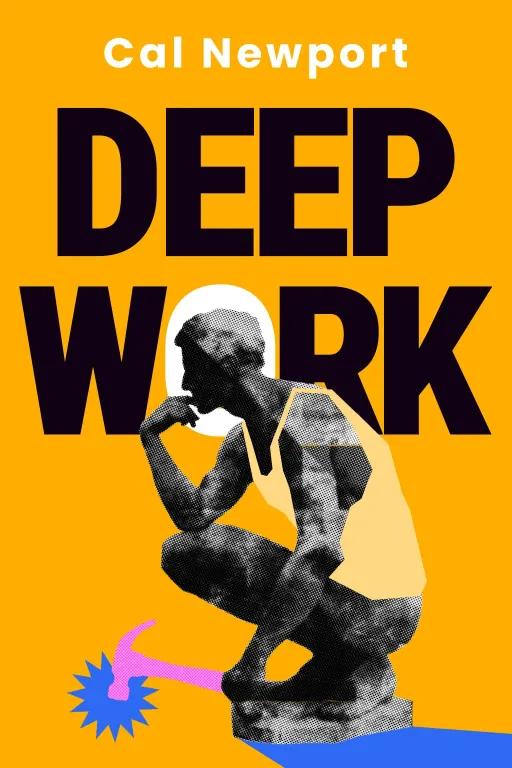
Nova: It really is. And the insights we’re discussing today are heavily influenced by two seminal works: Cal Newport's, which gained significant traction by challenging the hustle culture, and James Clear's, which became a global phenomenon for its refreshingly practical approach to behavioral change. Clear's work really shows how even small, seemingly insignificant shifts can compound into monumental results, making them incredibly relevant for anyone looking for tangible growth.
Atlas: That’s a great connection. So, we're talking about more than just willpower; we're talking about a strategic approach to attention.
Nova: Precisely. Because in today's always-on world, deep, focused work isn't just a nice-to-have; it’s a rare superpower. Constant distractions erode our ability to create truly valuable things. Reclaiming your attention is essential for innovation.
The Superpower of Deep Work
SECTION
Nova: So, let's start with that idea of "deep work." Cal Newport defines it as the ability to focus without distraction on a cognitively demanding task. It's intense, it's concentrated, and it's where the magic happens – where you produce high-quality, innovative output.
Atlas: Okay, but in a world of constant communication, isn't being 'always on' essential for staying competitive and responsive? For our listeners who are actively trying to disrupt a market or scale a new venture, how do you carve out deep work when you feel like you need to be agile and instantly available?
Nova: That's the million-dollar question, isn't it? And it leads us to the insidious cost of what's called "context switching." Every time you switch from a complex task to check an email, a social media notification, or even just a quick text, your brain leaves behind what researchers call "attention residue."
Atlas: Attention residue? What exactly do you mean by that?
Nova: Think of it like this: it's like trying to bake a perfect soufflé while juggling three other pans on the stove. You might manage to stir them all, but inevitably, something burns or falls flat because your full attention isn't on any one thing. That mental residue from the previous task lingers, making it harder to fully engage with the next. So, even a five-second glance at an email can derail serious concentration for minutes afterward.
Atlas: I can see that. So, it's not just about the time lost the distraction, it's about the quality of that time. But how significant is this 'mental residue' really? Give me a concrete example where this loss of focus cripples innovation.
Nova: Absolutely. Imagine a software engineer working on a groundbreaking algorithm. If they're constantly interrupted by team chats or emails, that complex problem-solving process is repeatedly fragmented. They might spend an entire day feeling busy, but make little actual progress. Now, take that same engineer, give them four hours of uninterrupted, notification-free time. We've seen cases where they solve a complex coding problem in that single block that would have taken a week of fragmented attention. This direct link between sustained focus and innovative output isn't theoretical; it's tangible.
Atlas: Wow, that's incredible. That makes absolute sense for output. But what about the emotional toll? For our listeners who are well-being advocates, is this constant distraction also draining our energy and resilience, even when we we're being productive?
Nova: Oh, absolutely. In fact, often what we perceive as "productive busyness"—the constant checking, the quick responses—is actually what Newport calls "shallow work." It feels busy, but it provides little fulfillment and is often mind-numbing, leading directly to burnout. Deep work, conversely, while cognitively demanding and sometimes exhausting in the short term, is deeply satisfying. It's where you feel a sense of accomplishment, mastery, and flow. That feeling is incredibly energizing and builds resilience precisely because you are engaging with something meaningful.
Architecting an Environment for Focus
SECTION
Nova: So, if deep work is this rare superpower, then how do we actually wield it? Because this isn't just about willpower. This is about building the fortress for our focus. This is where James Clear's insights from become incredibly powerful, especially the idea of consciously designing your environment.
Atlas: Okay, 'building a fortress' sounds dramatic, but I like the 'Architect' angle, that really resonates. For someone trying to scale a new venture or disrupt a market, 'designing an environment' might sound like a luxury. What's the 'tiny step' for someone who feels they have absolutely no control over their chaotic environment?
Nova: That's a brilliant question, and it gets to the heart of behavioral design. Clear teaches us about the "cue-craving-response-reward" loop. For focus, let's take a simple example: your phone is on your desk and it buzzes. That's the. The is to check it, to satisfy curiosity or avoid missing out. The is to pick it up and scroll. The is a hit of dopamine, or perhaps just relief from that nagging curiosity. To break this, we need to either make the cue invisible or the response incredibly difficult.
Atlas: So, it’s about strategically disabling the triggers. Making the "right" choice the "easy" choice, almost invisible, as you said earlier. That resonates with the disruptor who wants to make things frictionless for their users. But what about the 'Well-being Advocate' side of this? How does building these habits for focus actually contribute to sustainable growth and personal resilience, beyond just getting more done?
Nova: It's profound, actually. When you consciously design your environment to minimize distractions, you're not just improving your output; you're significantly reducing decision fatigue and mental clutter. Think about it: every time you not to check your phone, that's a small act of willpower. Over a day, that adds up. When you automate the choice to focus by physically removing the distraction, you free up immense mental energy. It’s like having fewer open tabs in your brain. This reduction in cognitive load directly reduces stress and builds resilience because you're consciously choosing how you spend your attention, rather than constantly reacting to external stimuli. You're in control.
Atlas: That’s a fantastic way to put it. It's about being proactive with your mental energy. So, beyond just turning off notifications, which I think most of us try to do, what's another practical, immediate step someone could take to start architecting their focus?
Nova: I love what Clear calls a "focus ritual." It's a consistent pre-deep work routine that signals to your brain it's time to concentrate. It could be something as simple as making a specific type of tea, putting on a particular playlist of instrumental music, or closing all unnecessary browser tabs and clearing your physical workspace. This ritual acts as a powerful behavioral nudge, a consistent cue that tells your brain, "Okay, it's time for deep work now. Let's get into flow."
Synthesis & Takeaways
SECTION
Nova: Ultimately, Atlas, cultivating focus isn't about being anti-technology or even anti-social. It's about intentionality. It's about recognizing that your attention is not just a resource; it is the most valuable currency you possess.
Atlas: And for our listeners who are constantly innovating and building, it's about understanding that true, disruptive innovation often comes from quiet, sustained effort, not just frantic activity. It's about designing a life where you're the architect of your attention, not its victim.
Nova: Exactly. And the tiny step we discussed earlier is such a powerful way to start. For the next 30 minutes, turn off all notifications and dedicate yourself to one single, important task. Notice the difference in your focus. It’s a small experiment, but the insights you gain can be truly profound.
Atlas: That's a powerful challenge. It's about proving to yourself what's possible when you reclaim that mental space. And for our disruptors, architects, and well-being advocates, that's where true impact begins.
Nova: Absolutely. Because in a world full of noise, clarity is your ultimate competitive advantage.
Atlas: This is Aibrary. Congratulations on your growth!









