Beyond Habits: The Power of Identity-Based Change
Golden Hook & Introduction
SECTION
Nova: Most of us think building good habits is about sheer willpower, right? You just grit your teeth, push through, and eventually, it sticks. But what if I told you that approach is fundamentally flawed, and actually sets you up for failure?
Atlas: Oh, I know that feeling! It’s like trying to hold sand in your fist. You start strong, you’re motivated, and then… poof. It’s gone. It feels like a personal failing, every single time.
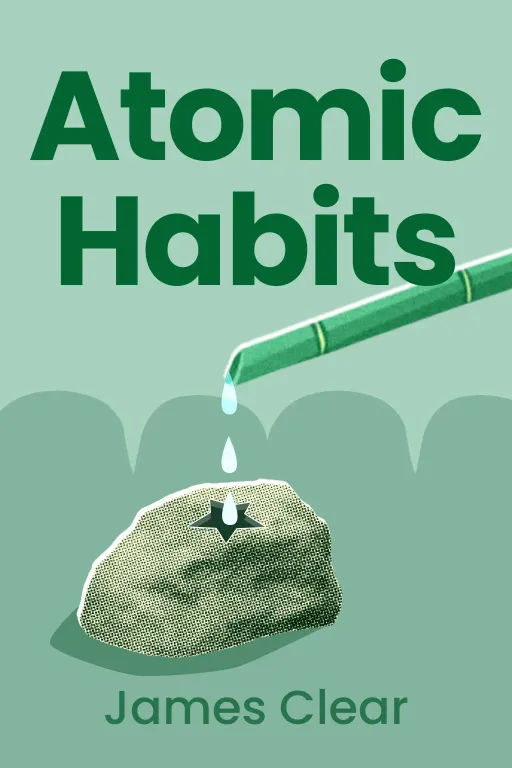
Nova: Absolutely! And that feeling of temporary change, that struggle with consistency, it’s not because you lack willpower. It’s because we’re often battling the wrong enemy. Today, we’re diving into a profound shift in thinking, one that moves us Beyond Habits and into the power of identity-based change. We’re drawing insights from giants in the field, particularly James Clear, whose book became a global phenomenon for its clarity and actionable wisdom, and Charles Duhigg, a Pulitzer Prize-winning journalist whose investigative deep dive in revealed the hidden science behind why we do what we do.
Atlas: That’s a powerful promise, Nova. Because if it’s not about willpower, then what is it about? For anyone who’s ever felt stuck in a loop of starting and stopping, this sounds like the missing piece.
The Identity Shift: Beyond Willpower to Who You Are
SECTION
Nova: It absolutely is the missing piece, Atlas. James Clear’s groundbreaking work really crystallizes this concept: true change starts deeper. It’s not about you want to achieve, but you want to become. He argues that focusing on an identity shift makes habits stick, almost effortlessly.
Atlas: Okay, but how does "who I want to become" actually translate into getting up for that 5 AM run? That sounds a bit out there, like positive affirmations without the actual action. Give me an example.
Nova: That’s a perfect example of the skepticism we often have! Let’s think about someone trying to become a regular reader. The willpower approach says, "I need to read 20 pages every day." The identity approach asks, "What kind of person reads 20 pages every day?" That person is a reader. So, when faced with the choice between scrolling social media or picking up a book, the "reader" identity makes the choice for them. It’s not a battle; it’s an alignment. Clear himself, coming from a background in collegiate baseball where small, consistent improvements were key, saw this play out in high-performance environments. Every rep, every study session, wasn't just an action; it was a vote for the identity of an elite athlete.
Atlas: Wow, that’s actually really inspiring. So it’s not about forcing yourself to do something, it’s about making a choice that aligns with your internal self-image. I can definitely relate to how that feels less like a chore and more like… just being yourself. So, how do we actually that person? Is it just pretending until it’s true?
Nova: It’s more profound than pretending. Every small action you take is literally a "vote" for the type of person you want to be. The more votes you cast, the stronger that identity becomes. It’s a continuous feedback loop. If you want to be a healthy person, a healthy person makes healthy choices. Each healthy choice is a vote. It’s about building a body of evidence for your desired identity, one tiny, consistent action at a time. It’s a powerful way for someone seeking self-mastery to genuinely embody their aspirations.
Engineering Your Habits: Deconstructing the Cue-Routine-Reward Loop
SECTION
Nova: And once you’ve decided you want to be, the next step is understanding our brains actually build those behaviors. This is where Charles Duhigg’s work in becomes indispensable. He pulls back the curtain on the science of habit formation through the "cue, routine, and reward" loop.
Atlas: So it's like a secret code for our brains? How do we crack it? As someone who’s always looking for practical solutions, this sounds like the tactical blueprint we need.
Nova: Exactly! It’s a three-step process our brains follow almost unconsciously. The is the trigger—it could be a time of day, a location, an emotion, or even other people. The is the behavior itself, the habit you perform. And the is the positive feeling or outcome that reinforces the loop, making your brain want to repeat it. Think about checking your phone: the cue might be a moment of boredom or a notification sound, the routine is picking up the phone and opening an app, and the reward is the dopamine hit from new information or social connection. Duhigg, through his deep dive into everything from corporate successes to personal transformations, showed how universal this loop is.
Atlas: That makes me wonder, how does this apply to something less tangible, like improving our communication or navigating difficult conversations, which is something we often talk about? That’s not a physical habit like checking a phone.
Nova: That’s a brilliant connection, Atlas, and it speaks to the deeper application of these principles. Nova's Take, for instance, suggests that these insights provide actionable steps to transform difficult conversations into opportunities for deeper understanding. Imagine the cue is a rising tension in a conversation. Our default routine might be to get defensive, interrupt, or shut down. The immediate reward is often a temporary feeling of self-preservation or control. But if we consciously reshape that routine—perhaps by pausing, practicing active listening, or asking clarifying questions—the reward shifts from temporary self-preservation to genuine connection and mutual respect. We become the 'empathetic communicator' we aspire to be, using the habit loop to our advantage, rather than being controlled by old, reactive patterns.
Atlas: That’s a great way to put it. So it's about being the 'architect' of our own responses, even in stressful situations. It's not just about building good habits, but consciously breaking down and rebuilding the ones that aren't serving us, especially in how we interact with others.
Synthesis & Takeaways
SECTION
Nova: Precisely. The beauty here is the synergy: identity gives you the —the direction and purpose—and understanding the habit loop gives you the —the practical mechanism for building those behaviors. Together, they create a powerful engine for enduring change. It moves us past the frustration of willpower and into a space of conscious design and self-mastery.
Atlas: But it still feels hard. Where do we even start? For listeners who crave self-mastery and genuine connection, this can feel like a big mountain to climb.
Nova: It’s not about climbing a mountain overnight, Atlas. That’s the old, willpower-based thinking. The tiny step here is profoundly simple: choose one small habit you want to build. Just one. And for the next week, instead of focusing on it, focus on the person who already does that habit. Ask yourself, "What would a healthy person do in this situation?" or "What would a kind communicator say?" And then, just take that one small vote. It’s about building momentum, not striving for immediate perfection. This iterative process fosters self-compassion, which is crucial for long-term growth.
Atlas: I love that. Focusing on the identity makes it feel less like a chore and more like an unfolding of who you already are, or who you're becoming. It’s not just about changing what you do, but changing who you are, one tiny, intentional step at a time.
Nova: Exactly. It’s a profound shift that leads to a life built on purpose, not just effort.
Atlas: That gives me chills.
Nova: This is Aibrary. Congratulations on your growth!