

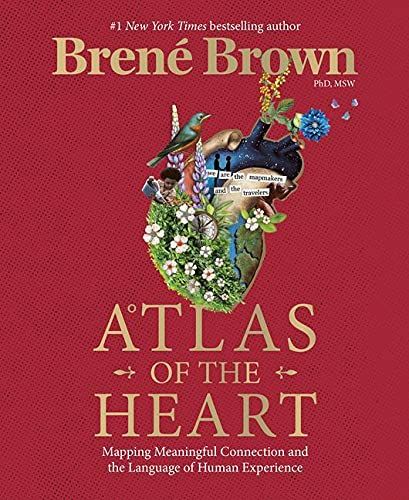
Atlas of the Heart
Introduction: Why We Need a Map for Our Feelings
Introduction: Why We Need a Map for Our Feelings
Nova: Welcome to The Deep Dive, the show where we unpack the ideas that shape how we live and connect. Today, we’re charting a course through one of the most essential human landscapes: our emotions, using Brené Brown’s brilliant book, Atlas of the Heart.
Nova: That’s the perfect starting point, Alex. Because Brown’s central thesis is that most of us operate with an emotional vocabulary of maybe ten words. We are functionally illiterate in the language of our own hearts. The isn't just a book; it’s a reference guide, a literal map, detailing eighty-seven distinct emotions and experiences that define what it means to be human.
Nova: Because 'bad day' is a black hole of meaning. If you tell your partner you’re having a 'bad day,' they can offer generic comfort. But if you can pinpoint that you’re feeling 'disappointment' mixed with 'resentment' because of a specific interaction, the conversation shifts entirely. It moves from vague complaint to actionable understanding. This book is about gaining precision to foster connection.
Nova: Exactly. It’s the difference between saying, 'I feel bad about what I did,' and saying, 'I feel guilt, which is the feeling that I have done something bad, versus shame, which is the feeling that I bad.' That distinction, that granularity, is the entire foundation of the Atlas. Ready to start exploring some of these territories?
Key Insight 1: Precision as a Pathway to Empathy
Emotional Granularity: The Power of Naming
Nova: Let’s start with the concept Brown calls emotional granularity. This is the core mechanism of the Atlas. It’s the ability to recognize and label our emotions with specificity. The research is clear: higher emotional granularity is linked to better mental health outcomes, better decision-making, and stronger relationships.
Nova: That’s a fantastic analogy. Brown cites research showing that when you label an emotion—when you put a name to it—you activate the prefrontal cortex, the rational part of your brain, which helps to calm down the amygdala, the emotional alarm center. So, naming it literally dials down the intensity of the feeling.
Nova: Precisely. And here’s where the Atlas becomes indispensable. It doesn't just give you the word; it gives you the coordinates. For example, it distinguishes between 'awe' and 'wonder.' Awe is often described as feeling small in the face of something vast and powerful—think standing at the Grand Canyon. Wonder is often more about curiosity and delight in the complexity of something, like watching a complex piece of machinery work perfectly.
Nova: It’s the breakdown point for empathy. If I feel awe, I need a different kind of response than if I feel wonder. If you can’t articulate the specific feeling, you can’t ask for the specific support you need. And on the receiving end, if someone tells you they feel 'sad,' you offer a hug. But if they say they feel 'melancholy'—a gentle, pensive sadness—they might actually prefer quiet company over intense comfort.
Nova: It is. And this precision is what allows us to move past the 'near enemies' of emotion. Brown spends a lot of time on these. They are feelings that look like the real thing but are actually roadblocks to connection. For instance, 'sympathy' often looks like empathy, but it keeps an emotional distance, whereas true empathy requires you to step into the feeling with someone.
Nova: It is. It’s saying, 'Get your shoes muddy, but first, know exactly what kind of mud you’re stepping into.' The goal isn't to eliminate difficult emotions—that’s impossible—it’s to stop being ambushed by them because you didn't recognize the signal they were sending.
Key Insight 2: Distinguishing Between the Most Confusing Emotions
Charting the Difficult Territories: Shame, Guilt, and Comparison
Nova: Absolutely. In the Atlas, she dedicates significant space to this because the difference dictates whether we move toward repair or spiral into self-loathing. Guilt is, 'I did something bad.' It’s tied to behavior, and it’s often productive because it motivates us to apologize or make amends. It’s a feeling that says, 'I need to fix this action.'
Nova: Precisely. And the Atlas helps us see the subtle cues that tell us which one we’re experiencing. If the feeling is accompanied by a desire to connect and repair, it’s likely guilt. If it’s accompanied by a desire to isolate and self-punish, that’s shame knocking. This distinction is vital for parenting, for leadership, for every relationship.
Nova: Yes, comparison is a huge emotional territory she maps out. She details how comparison—especially in the age of curated social media feeds—is a thief of joy, but it’s also a pathway to envy and jealousy, which she carefully separates.
Nova: Envy is wanting what someone else has—their new car, their promotion, their seemingly perfect vacation. It’s a two-party emotion: me and the object of desire. Jealousy, however, is the fear of losing something you already have because someone else might take it. It’s a three-party emotion: me, what I have, and the perceived rival.
Nova: Exactly. And this level of detail is why the book is so dense and rewarding. It’s not just a list; it’s a series of interconnected emotional ecosystems. She maps out how 'disappointment' is different from 'sadness,' how 'hope' requires vulnerability, and how 'joy' can sometimes be shadowed by 'foreboding joy'—the fear that something good won't last.
Nova: And recognizing that specific feeling—foreboding joy—allows you to acknowledge the fear without letting it poison the present moment. You can say, 'I recognize this feeling of wanting to protect this perfect moment, but I choose to stay present anyway.' It’s about recognizing the emotion as a visitor, not a permanent resident.
Key Insight 3: Using Emotional Language to Build Bridges
From Map to Movement: Application and Connection
Nova: So, we have the map, we have the vocabulary, and we’ve learned to distinguish between the tricky emotional neighbors. The final, and perhaps most critical, piece of the puzzle is application. How does this translate into real-world connection, especially in difficult conversations?
Nova: That’s the bridge to empathy. Brown emphasizes that empathy is not about fixing or agreeing; it’s about witnessing. But you can’t witness effectively if you’re guessing what the other person is feeling. Imagine a colleague is quiet in a meeting. If you assume they are 'angry,' you might approach them defensively. If you use your Atlas skills and realize they might be experiencing 'insecurity' or 'hesitation'—feelings related to self-doubt—your approach changes to one of gentle invitation.
Nova: Absolutely. The series, which is a fantastic companion piece, often shows scenarios where a leader uses precise language to address a team dynamic. Instead of saying, 'Stop being so negative,' a leader informed by the Atlas might say, 'I sense a lot of collective 'anxiety' about the next quarter’s projections. Let’s map out the specific points of 'uncertainty' so we can address them with data.'
Nova: And think about conflict resolution. So much conflict stems from one person feeling 'misunderstood' and the other feeling 'defensive.' If both parties can articulate their core emotional experience using the language of the Atlas, they stop fighting and start fighting the.
Nova: It is. And one of the most surprising takeaways I found was about the experience of 'belonging.' Brown maps out that true belonging isn't about fitting in—fitting in requires you to change who you are to be accepted. Belonging, as defined here, is about being seen and accepted for who you authentically are, including all 87 of those messy, complex emotions.
Nova: That’s the journey. It’s a lifelong practice of cartography for the soul.
Conclusion: Your First Step on the Map
Conclusion: Your First Step on the Map
Nova: We’ve covered a lot of emotional ground today, Alex, from the difference between awe and wonder to the critical separation of guilt and shame. If there’s one overarching message from Brené Brown’s, what is it for our listeners today?
Nova: I agree. The Atlas gives us the permission to be complex. It tells us that feeling a mix of 'relief' and 'anxiety' about a big life change is not a failure of character; it’s just being human. The book is a powerful antidote to the pressure to feel only one simple thing at a time.
Nova: Start small. Don't try to memorize all 87 this week. Pick one area where you often feel vague or stuck. Maybe it’s anger. Look up anger in the Atlas. See if you are actually feeling 'resentment,' 'indignation,' or 'outrage.' Next time that feeling arises, pause, name it precisely, and see how your response changes.
Nova: Excellent choice. Because when we can name it, we can tame it, and more importantly, we can share it. And sharing that precise truth is where the deepest, most meaningful human connection happens.
Nova: Thank you, Alex. And thank you to everyone listening for taking the time to explore the landscape of your own heart with us today. This is Aibrary. Congratulations on your growth!