

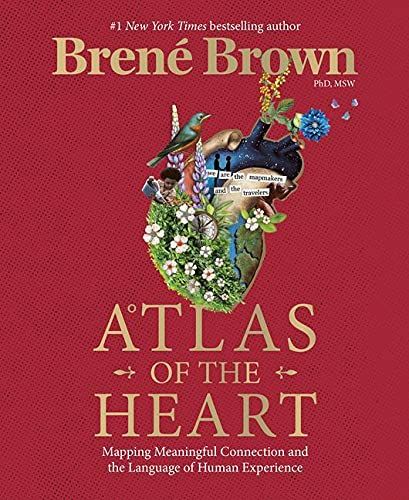
The Architect's Atlas: Mapping Emotion for Growth, Leadership, and Life
Golden Hook & Introduction
SECTION
Prof. Eleanor Hart: As a leader, you face a constant stream of data—financials, user metrics, performance reviews. But what about the most critical data of all: the emotional state of your team? What’s the real difference between a team member who is stressed and one who is overwhelmed? Or a competitor you envy versus one you admire? Get it wrong, and you risk burnout, toxic culture, and stalled growth. Get it right, and you unlock a powerful new lever for leadership.
Susan: That’s so true. We track everything, every click and every key performance indicator, but we often fly blind on the human element that actually drives all those numbers.
Prof. Eleanor Hart: Exactly. And that’s where our conversation starts today. In her book, Brené Brown argues that a precise emotional vocabulary isn't a soft skill; it's a strategic imperative. And today, we're exploring that atlas with someone who lives at the intersection of human behavior and growth strategy, Susan, the Chief Growth Officer of an AI edtech startup. Welcome, Susan.
Susan: Thanks for having me, Eleanor. I'm excited to dig in. This book feels less like a self-help guide and more like an operating manual for the human condition, which is incredibly relevant for anyone trying to build something new.
Prof. Eleanor Hart: I love that framing—an operating manual. Today we'll dive deep into this from two perspectives. First, we'll explore why simply an emotion is a leader's most underrated diagnostic tool. Then, we'll dissect the powerful and often destructive emotions of comparison, and how to transform them into a force for growth.
Deep Dive into Core Topic 1: Emotional Granularity: The Leader's Diagnostic Toolkit
SECTION
Prof. Eleanor Hart: So let's start with that first idea, Susan. The power of just naming an emotion correctly. Brené Brown calls this 'emotional granularity.' Why is this more than just semantics for a leader?
Susan: Oh, it's everything. It's the difference between being a doctor who says "you feel sick" and one who can diagnose the specific virus. A generic diagnosis leads to a generic, and likely ineffective, treatment. In leadership, if you can't accurately label the emotional state of your team, your interventions will miss the mark completely.
Prof. Eleanor Hart: Let's make that concrete with a classic example from the book: the difference between stress and overwhelm. Brown is so clear on this. She defines as a state where we feel our resources—time, energy, emotional capacity—are being taxed, but we believe we can still cope. It's that feeling of juggling a lot of balls, but you're still in the act of juggling.
Susan: Right, there's a sense of agency, even if it's frantic.
Prof. Eleanor Hart: Precisely. But, she says, is a different beast entirely. It's an intense feeling of being completely submerged and incapacitated. The juggling has stopped. The balls are on the floor, and you're just staring at them, unable to even think about picking one up. It's a system shutdown.
Susan: That distinction is the most critical diagnostic I can make as a leader. In the startup world, especially in a 0-to-1 growth phase, 'hustle culture' often glorifies stress. It's seen as a badge of honor, a sign that you're pushing boundaries. But as a leader, my job is to know the exact moment my team crosses the line from productive stress into destructive overwhelm.
Prof. Eleanor Hart: And what’s the difference in your response? How do you treat those two different "diagnoses"?
Susan: It's a night-and-day difference. If a team member tells me they're stressed, my response is strategic. We look at the workload together. I'll say, "Okay, let's prioritize. What's the one thing we must get done this week? What can we push? What can be good enough instead of perfect?" It's a coaching conversation about strategy and efficiency.
Prof. Eleanor Hart: You’re helping them juggle better.
Susan: Exactly. But if a team member is in overwhelm, that's not a coaching moment. That's a crisis intervention. My response is not "try harder" or "prioritize better." My response is, "Stop. What can I take off your plate right now? Not tomorrow, right now." Overwhelm is a signal that a process is broken, a resource is missing, or expectations are fundamentally misaligned. It’s a system failure, not an individual one. Trying to coach someone through overwhelm is like telling a drowning person to swim better. You have to throw them a life raft first.
Prof. Eleanor Hart: That's so powerful. And I imagine this isn't just theoretical. You see the impact in the work itself.
Susan: Absolutely. It's in the code, the marketing copy, the user support tickets. A stressed developer might work late and fix a critical bug. An overwhelmed developer might stay up all night and accidentally introduce ten more because their cognitive function is impaired. An overwhelmed marketer might default to a generic, bland campaign because they've lost the capacity for creative risk. It's a direct leading indicator of a drop in quality and innovation.
Prof. Eleanor Hart: And I have to ask, as a new mom, does this distinction between stress and overwhelm resonate on a personal level too?
Susan: Oh, wow. It's my daily reality. The stress of a busy workday, juggling meetings and deadlines, is one thing. The overwhelm of a sleepless night with a sick, crying baby, where you feel like you have nothing left to give... they are two completely different universes. And being able to name it, even just to myself or my partner, is the first step. It helps me say, "I'm not just tired, I'm overwhelmed," which means I need a different kind of support. It's not about getting a pep talk; it's about someone saying, "I'll take the baby, you go sleep for two hours." The diagnosis dictates the cure.
Deep Dive into Core Topic 2: The Comparison Matrix: Navigating Envy, Jealousy, and Admiration
SECTION
Prof. Eleanor Hart: That's such a powerful application, moving from diagnosis to intervention. And that leads us perfectly to our second area, which is an absolute minefield in any competitive field, especially tech: the emotions of comparison.
Susan: The comparison trap. It’s constant. You’re always looking at competitors, at other teams, at other people's careers. It can be a huge driver, but it can also be incredibly toxic.
Prof. Eleanor Hart: Well, the gives us a map to navigate this minefield. Brown lays out the key landmarks with such precision. First, there's. She defines this as the feeling we get when we want something that someone else has. It's a two-person emotion: me and you. "I want your job," or "I want your company's funding."
Susan: Simple enough.
Prof. Eleanor Hart: Then there's. This is different. It's a three-person emotion. It's the fear of losing something you to a third party. It’s not "I want your job"; it's "I'm afraid my star engineer is going to leave my team to take a job with you." It's rooted in the fear of loss.
Susan: Hmm, that’s a crucial distinction. Envy is about wanting to gain something; jealousy is about fearing to lose something.
Prof. Eleanor Hart: Exactly. And then there's the simmering, corrosive feeling of. This is the feeling that someone else's success or good fortune is fundamentally unfair. It's often tied to a sense of injustice. "They only got that Series A funding because they went to Stanford. It's not fair." But the North Star in this whole cluster, the emotion we want to cultivate, is. That's when you can look at someone's excellence or success and feel reverence for it, without feeling diminished yourself.
Susan: You've just given me a framework for culture engineering. As an ENTJ, I love this. You've described the four possible emotional states of a team member looking at a high-performer, or our startup looking at a bigger, more established competitor. It's a diagnostic matrix.
Prof. Eleanor Hart: A matrix! I love that. So as a Chief Growth Officer, an architect of culture, how do you use this matrix to steer the ship away from envy and resentment and towards admiration?
Susan: You have to be incredibly deliberate about it. It doesn't happen by accident. The default in a competitive environment is envy and resentment. To build a culture of admiration, you have to actively design for it. First, you change how you talk about success, both internally and externally. You celebrate the, not just the shiny outcome.
Prof. Eleanor Hart: What does that sound like in practice?
Susan: So, when we analyze a competitor who just launched a great feature, the envious response is, "Ugh, I wish we'd thought of that. Look at their press coverage." The resentful response is, "Well, they have 100 engineers, of course they could build that." The admiration-focused response, the one I coach my team to have, is analytical. We say, "Okay, let's deconstruct this. Look at the clever A/B test they must have run to validate this idea. Look at the elegance of their user interface. Let's admire the." That immediately shifts the team's mindset from a passive, covetous state to an active, learning state. It's no longer about them; it's about what their work can teach us.
Prof. Eleanor Hart: You're turning comparison into a free R&D session.
Susan: Precisely! It transforms a threat into an asset. The second thing you do is create abundant opportunities for people the team to share their own expertise. Envy thrives in a scarcity mindset, the belief that there's only so much success or recognition to go around. When you create platforms for everyone to be an expert in something—a lunch-and-learn, a project post-mortem, a mentorship program—you create a culture where individual excellence is seen as a contribution to the whole. It becomes a rising tide that lifts all boats, not a zero-sum game.
Prof. Eleanor Hart: So it’s about making excellence feel accessible and distributed, rather than concentrated in a few "stars."
Susan: Yes. It's about building a positive-sum culture. In a startup, you absolutely have to engineer for that. A zero-sum, envious culture will eat itself alive. A positive-sum, admiration-based culture will innovate and grow exponentially.
Synthesis & Takeaways
SECTION
Prof. Eleanor Hart: This has been so insightful. We have these two powerful, actionable ideas from. First, using precise language—emotional granularity—to correctly diagnose emotional states, like the critical difference between stress and overwhelm.
Susan: Which allows for the correct intervention. It's about precision leadership.
Prof. Eleanor Hart: And second, using the map of comparison emotions to strategically navigate the competitive landscape and build an internal culture of admiration, not destructive envy or resentment.
Susan: It’s about moving from simply reacting to the emotional weather to actually architecting the climate inside your organization. It's proactive, not reactive.
Prof. Eleanor Hart: So, for the leaders, the builders, the strategists listening to this, what is one single, actionable piece of advice you'd give them to start applying these ideas tomorrow?
Susan: It’s a simple change in language that yields massive results. In your next one-on-one meeting, resist the urge to ask the generic question, "How's it going?" or "How are you feeling?". Instead, try asking, "What are the two or three emotions that best describe your work week?"
Prof. Eleanor Hart: That feels... very direct. Potentially awkward.
Susan: It can be, the first time. You might get a blank stare. But it signals that you're willing to have a real conversation. It gives them the permission and the vocabulary to be specific. The data you get back is a game-changer. An answer like "I'm feeling anxious and a little resentful" is infinitely more useful than "I'm fine." It gives you a real problem to solve together. It's the difference between managing a spreadsheet of tasks and truly leading human beings.
Prof. Eleanor Hart: A perfect, actionable takeaway. It’s a small change in words that can lead to a huge change in connection and effectiveness. Susan, thank you for being our guide and architect today, and for mapping this out with us.
Susan: It was my pleasure, Eleanor. Thanks for a great conversation.