

The Art of Critical Inquiry: Unmasking Assumptions
Golden Hook & Introduction
SECTION
Nova: Atlas, quick game. I’ll give you a historical figure, you tell me their imaginary self-help book title, but it has to be about critical thinking. Ready?
Atlas: Oh, I like that! My brain’s already whirring. Hit me.
Nova: Okay. Winston Churchill.
Atlas: Hmm, Churchill… "Never Surrender Your Intellect: How to Out-Debate a Dictator and Your Inner Doubts."
Nova: Brilliant! Alright, how about Marie Curie?
Atlas: Marie Curie… "Question Everything, Even the Elements: A Guide to Illuminating Truths."
Nova: Perfect! And that's actually a pretty good segue into our topic today. We're diving into the essential art of critical inquiry, looking at how we can all sharpen our analytical edge to unmask assumptions and build intellectual resilience.
Atlas: That’s going to resonate with anyone who has to make high-stakes decisions based on complex information. We’re constantly bombarded with data, and it’s easy to just accept the first compelling narrative.
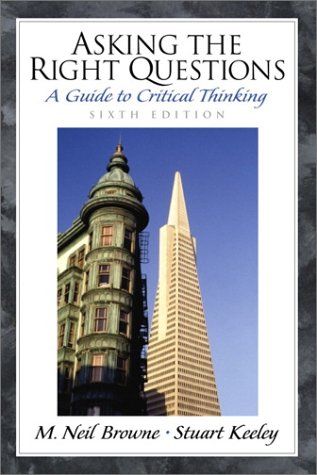
Nova: Exactly. And to guide us, we're drawing insights from two phenomenal books: "Asking the Right Questions: A Guide to Critical Thinking" by M. Neil Browne and Stuart M. Keeley, and the timeless "The Demon-Haunted World: Science as a Candle in the Dark" by the legendary Carl Sagan. What’s fascinating about Sagan’s work is how he, a renowned astrophysicist, dedicated so much of his life to promoting scientific literacy and critical thinking among the general public. He truly believed it was humanity's best defense against irrationality.
Atlas: I can see how that would be vital. For strategic analysts, the ability to critically evaluate information and question underlying assumptions isn't just a nice-to-have, it’s paramount. It ensures decisions are based on robust evidence, not flawed logic or wishful thinking.
Unmasking Hidden Assumptions: The Foundation of Critical Thinking
SECTION
Nova: Our first core idea, drawing heavily from Browne and Keeley, is all about unmasking hidden assumptions. Think of it like this: every argument, every claim, every piece of information you encounter, is built on a foundation of assumptions—some explicit, many implicit.
Atlas: Oh, I know that feeling. It’s like when someone presents a 'fact,' and it sounds perfectly logical, but then you dig a little and realize it's built on a house of cards.
Nova: Exactly! Browne and Keeley distinguish between descriptive assumptions and prescriptive assumptions. Descriptive assumptions are beliefs about the way the world. For example, if someone argues, "We should invest heavily in this new technology because it's cutting-edge," a descriptive assumption might be that "cutting-edge technology always leads to market success."
Atlas: That makes me wonder, how often do we even realize we're making these assumptions ourselves? It feels like we're just accepting things at face value.
Nova: Far too often! And that's the danger. These assumptions become invisible filters through which we process information. Prescriptive assumptions, on the other hand, are beliefs about the way the world. So, in that same tech example, a prescriptive assumption might be, "Innovation is always good, regardless of its social impact."
Atlas: In other words, it’s not just about what people is true, but what they is right or valuable. That's a deeper level of inquiry.
Nova: It absolutely is. And for our listeners, especially those who are constantly sifting through data to make impactful decisions, this is crucial. Imagine a strategic analyst evaluating a new market entry strategy. The presentation is slick, the numbers look great. But what if the underlying assumption is that 'consumer behavior in this new market will mirror our home market'? If that descriptive assumption is wrong, the entire strategy could crumble.
Atlas: So you're saying, before accepting any new claim or statistic, we need to ask ourselves: 'What evidence supports this? What alternative explanations are there? And what assumptions are embedded here?' It's like taking a claim and shaking it to see what falls out.
Nova: Precisely! And it’s not just about what's, but what's. Think about a company proposing a major shift to remote work. An explicit argument might be "it saves office space." But a hidden descriptive assumption could be "employees are equally productive working remotely" or a prescriptive one, "employee well-being is secondary to cost savings."
Atlas: That’s such a helpful distinction. It pushes you beyond the surface. It’s like when you’re presented with a 'solution' to a problem, but the solution itself is based on a fundamental misunderstanding of the problem's root cause. The book really highlights how crucial it is to dig into that.
Nova: Absolutely. And the authors, Browne and Keeley, really emphasize that this isn't about being cynical, it's about being intellectually responsible. It's about empowering yourself to make better judgments by understanding the full landscape of an argument. It’s about not being swayed by rhetoric that sounds good but lacks a solid foundation.
Embracing Scientific Skepticism: Battling Irrationality with Evidence
SECTION
Nova: Now, this natural transition brings us to our second core idea, beautifully articulated by Carl Sagan in "The Demon-Haunted World": the vital importance of scientific skepticism as a tool to combat irrationality and foster intellectual resilience.
Atlas: I’ve been thinking about this. It feels like we're living in a world where facts are often secondary to feelings or narratives. How does Sagan’s approach apply to that?
Nova: Sagan passionately advocates for scientific thinking as a kind of mental immune system. He wasn't just talking about lab coats and microscopes; he was talking about a mindset. It's about systematically applying skepticism, demanding evidence, and being open to changing your mind when new evidence emerges. He was really concerned with the rise of pseudoscience and how easily people could be misled without these tools.
Atlas: So it’s not about dismissing everything, but about asking for the proof. It’s like, 'Show me your work.'
Nova: Exactly! Sagan introduces what he calls a "baloney detection kit"—a set of critical thinking tools to evaluate claims. It includes things like independent confirmation of facts, encouraging substantive debate, not relying on authority, generating multiple hypotheses, and perhaps most importantly, not getting overly attached to your own hypotheses.
Atlas: That’s a great way to put it. It’s like building mental muscles to filter out the noise. For someone navigating consumer psychology or ethical marketing, this is invaluable. You’re constantly facing claims about what motivates people, or what’s 'ethical,' and you need a robust framework to test those ideas.
Nova: Absolutely. Think about the ethical innovator. They're trying to leverage AI and automation, but they need to question the assumptions baked into those algorithms. Are they biased? Are they fair? Without scientific skepticism, it’s easy to just accept the output as objective truth.
Atlas: That makes so much sense. We’ve all seen examples where algorithms, despite the best intentions, perpetuate existing biases because the data they were trained on was flawed.
Nova: Or even worse, when a system is designed with a particular outcome in mind, and the "evidence" is then cherry-picked to support that outcome. Sagan would call that a failure of critical inquiry. He talks about the human tendency for "confirmation bias," where we seek out information that confirms what we already believe and ignore evidence that contradicts it.
Atlas: Wow, that’s actually really inspiring. It frames skepticism not as negativity, but as a powerful act of intellectual integrity. It’s about building a better, clearer picture of reality.
Nova: It is. Sagan's work, which received widespread acclaim for its clarity and passion, really champions the beauty of the scientific method itself—its self-correcting nature, its humility in the face of the unknown, and its relentless pursuit of truth. He even faced some criticism from those who felt he was too dismissive of spiritual or non-scientific perspectives, but his core message was always about the of inquiry, not the conclusions themselves.
Atlas: So, the tiny step we can take, before accepting any new claim or statistic, is not just to ask for evidence, but to approach it with a keen, almost scientific, skepticism. To wonder about alternative explanations and to be mindful of our own preconceived notions.
Nova: Precisely. It’s about cultivating that intellectual resilience, that inner candle in the dark, as Sagan would say, that helps us navigate an increasingly complex world. It’s about trusting your insightful perspective and letting that curiosity be your superpower.
Synthesis & Takeaways
SECTION
Nova: So, bringing these two powerful ideas together – unmasking hidden assumptions and embracing scientific skepticism – what emerges is a truly robust framework for critical inquiry. It’s about building a mental fortress against flawed logic and wishful thinking, whether it comes from external sources or from within ourselves.
Atlas: It’s not just an academic exercise either. For anyone driven by meaningful impact, whether in business or personal growth, this is about making sure your actions are built on solid ground. It's about connecting those deep dives into understanding the 'why' with tangible, real-world applications.
Nova: Absolutely. When you understand the assumptions you're making, and you apply a skeptical, evidence-based lens to every claim, you move from reacting to information to actively shaping your understanding. You become a truly strategic analyst, capable of profound understanding and positive change. It’s a powerful internal shift.
Atlas: And it’s a journey, right? It’s not a one-and-done skill. It’s a muscle you have to keep exercising. That constant questioning, that humility to adjust your perspective, that's where the real growth happens.
Nova: Exactly. It's a lifelong commitment to intellectual honesty and growth. And that’s a journey we hope our listeners continue to embark on.
Atlas: This is Aibrary. Congratulations on your growth!