

The Community Builder's Blueprint: Beyond Followers to True Belonging
Golden Hook & Introduction
SECTION
Nova: Alright, Atlas, before we dive into today's deep subject, I’ve got a quick game for you. Give me your five-word review of what "community building" truly means, from your gut. No overthinking.
Atlas: Oh, I like that! Hmm. "Numbers lie; connection is gold."
Nova: Oh, that’s actually incredibly insightful, and it cuts right to the chase of our conversation today! You've nailed the core blind spot many of us fall into. We often chase the numbers, don't we? The follower counts, the subscriber lists, the likes. We mistake quantity for quality, broadcasting our message instead of cultivating a true sense of belonging.
Atlas: Exactly. It's like having a stadium full of people, but no one's actually talking to each other. Just a bunch of individuals in a big room.
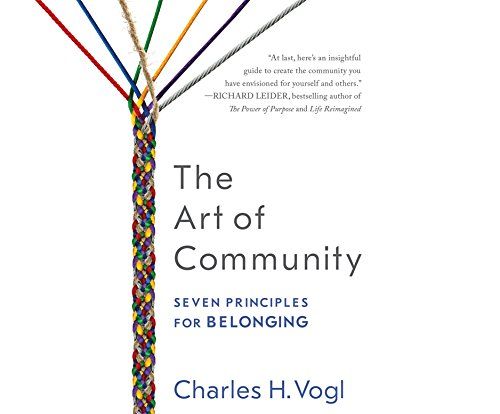
Nova: And that's precisely the shift we’re exploring today, inspired by the profound insights found in works like Charles Vogl’s "The Art of Community" and Seth Godin’s "Tribes." Godin, as many know, has this remarkable knack for taking complex human behavior and distilling it into actionable, often counter-intuitive, wisdom for leaders. Vogl, on the other hand, comes from a background of actually facilitating real-world communities, bringing a grounded, practical feel to his work. Together, they challenge us to move from being mere storytellers to becoming true community architects.
Atlas: So, it's not just about attracting attention, but about the environment for deep connection. I'm curious, though, Nova, can 'belonging' truly be 'built' or 'designed' in a world that feels so fragmented and individualistic? That sounds like a tall order.
Deep Dive into Core Topic 1: The Blind Spot – Beyond Followers to True Belonging
SECTION
Nova: That’s a fantastic question, and it gets right to the heart of the "blind spot" we just touched upon. The illusion is that if you build it—meaning, if you broadcast enough content or get enough eyeballs—they will come, and they will. But belonging is far more nuanced. Think of it this way: you could have a celebrity with 50 million followers on social media, yet they might feel incredibly isolated, broadcasting into a void of passive consumption.
Atlas: Now that you mention it, I imagine a lot of our listeners can relate to that feeling of putting content out there and not getting much back beyond a surface-level interaction.
Nova: Precisely. Now, contrast that celebrity with a small, tight-knit book club of maybe ten people. They meet weekly, they share deep thoughts, they support each other through life's challenges. Who has the stronger community? It’s not even a contest. The book club has true belonging, while the celebrity might just have an audience.
Atlas: But wait, looking at this from a growth perspective, isn't a bigger audience always better? More reach, more impact, more potential customers, right? Why wouldn't I want millions of followers if I'm trying to amplify a message or build a movement?
Nova: That's the instinctive pull, isn't it? The siren song of scale. But the trap is in mistaking reach for resonance. A large audience operating in a "broadcast" mentality—you send, they receive—is fundamentally different from a community built on an "architecture" mentality, where you design for interaction and shared experience. I’ve seen countless individuals and even brands amass huge online followings, only to struggle when they try to mobilize those followers for a cause, or even just foster genuine two-way interaction. It’s like shouting into a hurricane. You’re expending immense energy, but the signal-to-noise ratio is terrible.
Atlas: So, it's not that numbers are inherently bad, but that they're not the? What's the real, tangible cost of this blind spot for someone trying to build something meaningful?
Nova: The cost is significant, Atlas. It’s burnout from constantly feeding a beast that never feels satisfied. It's superficial engagement that doesn't translate into loyalty or advocacy. It’s a missed opportunity to tap into the profound human need for connection. People aren't just looking for information; they're looking for identity, for a place where they feel understood and valued. When you focus solely on quantity, you often neglect the very elements that foster that deep loyalty and lasting impact. You end up with a high-volume, low-value exchange. The energy spent chasing quantity could be far better invested in cultivating quality.
Deep Dive into Core Topic 2: The Architect's Toolkit – Designing for Deep Belonging
SECTION
Nova: This is where Vogl and Godin come in with their incredibly practical frameworks. They give us the blueprint for what true belonging and, crucially, how to build it. Vogl, in particular, illustrates that strong communities are built on three core pillars: shared rituals, clear boundaries, and a sense of sacred space.
Atlas: Rituals, boundaries, sacred space? That sounds a bit... well, ancient, or maybe overly formal for a modern online community or a professional network. How does that translate from some historical tribe to, say, a thriving online course or even just a dedicated Discord server?
Nova: Ah, that’s where the genius lies! These aren't about archaic ceremonies; they're about intentional design for human connection. Let's break them down with modern applications.
Nova: First,. This could be as simple as a weekly check-in question that everyone answers, a specific way members introduce themselves when new, or even a unique greeting or sign-off. Think about the difference between just 'liking' a post and a community where people actively celebrate each other's wins in a structured, designated thread or call. The ritual transforms a passive action into an active, shared experience.
Atlas: Right, like the way some online communities have a specific "Friday Wins" thread, or a mandatory "introduce yourself with your biggest current challenge" post for new members. It creates a pattern.
Nova: Exactly. It creates a pattern of interaction that builds familiarity and trust. Then there are. This isn't about exclusion for exclusion's sake, but about defining who belongs and why. What are the shared values? What's the common purpose? This could be a clear code of conduct, a specific mission statement, or even just a shared understanding of what topics are on-topic and off-topic. Clear boundaries make people feel safe, heard, and understood because they know what to expect and what's expected of them. It defines the container.
Atlas: That makes sense. I imagine a lot of our listeners who are trying to manage online groups or even just foster team cohesion struggle with that—the ambiguity. If everyone can say anything, anywhere, it quickly devolves.
Nova: Precisely. And finally,. This is a dedicated forum, a specific meeting time, or even a shared language or set of inside jokes that only members understand. It’s a place where the community’s unique identity lives, away from the noise of the outside world. This could be a dedicated weekly live Q&A session where members can share their struggles and successes, or a specific channel in a chat platform reserved for "vulnerability shares" with strict rules of engagement. It’s where the magic of deep connection happens.
Atlas: So, Godin's "tribes" are essentially these elements in action. Leaders are just connecting people who already these rituals, boundaries, and sacred spaces? They're identifying the existing desire and giving it a focal point?
Nova: Absolutely. Godin shows that people naturally seek out groups with shared interests and values. Leaders don't the desire for belonging; they it by providing that focal point, that shared story, that common enemy or goal. Think of the most successful fan communities, open-source projects, or even niche hobby groups. They organically develop their own rituals, their own norms of behavior, and their own dedicated spaces, making members feel intensely connected. The leader simply provides the spark, the initial gathering point.
Atlas: That’s a great way to put it. It sounds less about top-down control and more about intelligent facilitation. For someone trying to build a community around a shared interest, what does a "sacred space" look like on a daily or weekly basis that feels natural, not forced?
Nova: It can be incredibly subtle. It could be a dedicated thread where people only share their "aha!" moments from the week, or a specific time every day when everyone shares one thing they're grateful for. The key is consistency and exclusivity to that group. It's not about being exclusive to keep people out, but to create a sense of shared ownership and intimacy within. It’s the difference between a public park and your living room. Both are spaces, but one feels sacred because of the shared history and intimacy.
Synthesis & Takeaways
SECTION
Nova: Ultimately, both Vogl and Godin push us to shift our mindset. It’s not about accumulating an audience; it’s about intentionally designing the conditions for deep, meaningful connection. It’s about fulfilling that fundamental human need for belonging that algorithms and follower counts can never truly satisfy.
Atlas: So, the deep question from our blueprint today is: what small, repeatable ritual could you introduce to your audience or community this week to foster a greater sense of shared identity and belonging? That's actually pretty powerful, and surprisingly simple in its execution.
Nova: It really is. It could be as simple as a unique question to kick off a team meeting, a specific way to celebrate achievements in an online group, or even fostering a shared inside joke that only your community understands. These small, consistent actions are the building blocks of those "sacred spaces" and "boundaries" that deepen connection over time.
Atlas: It's easy to dismiss these things as minor, but when you look at the greatest, most resilient communities—online or offline—they all have these invisible threads woven through them. These rituals, these shared understandings, they're the glue.
Nova: Absolutely. Ultimately, building community isn't about collecting followers; it's about curating a culture where people feel truly seen, valued, and connected. It’s about fulfilling a fundamental human need that no amount of digital noise can ever truly replicate. This is Aibrary. Congratulations on your growth!