

Stop Guessing, Start Connecting: The Guide to Authentic Engagement.
Golden Hook & Introduction
SECTION
Nova: Community. Engagement. Tribe. Atlas, rapid-fire word association for those three. Go.
Atlas: Oh, I like that. Community? Uh, potluck. Engagement? Endless scroll. Tribe? That weird group chat I’m not sure how I got into.
Nova: Potluck, endless scroll, weird group chat. See, those are all, shall we say, with connection. But what if I told you that the secret to truly thriving communities lies not in those surface-level interactions, but in something far deeper?
Atlas: I'm listening. Because honestly, for anyone trying to build an audience, a movement, or just a truly connected group, it often feels like you're just throwing spaghetti at the wall and hoping something sticks.
Nova: Exactly. And that's precisely what our guide for today challenges. We're diving into the profound insights from a book that's been called a blueprint for the post-social media era: "Stop Guessing, Start Connecting: The Guide to Authentic Engagement." It’s a radical reframe of what it means to truly connect in a world obsessed with metrics and fleeting attention.
Atlas: A blueprint for the post-social media era? That's a bold claim. Because right now, for a lot of us, it feels like we're still very much the social media era, and the rules are constantly changing.
Nova: They are, but this book argues that the underlying human need for connection isn't. And it starts with a cold, hard fact that most people get wrong. We often focus on numbers—likes, followers, subscribers—thinking that's how you build a thriving community. But the truth is, true connection is the magnet. Authenticity turns passive observers into active, engaged participants.
The Authenticity Magnet: Beyond Numbers to True Connection
SECTION
Atlas: But wait, how do you authenticity? I mean, for someone who's trying to get their message seen, to build an impact, it’s easy to say 'be authentic,' but when you're looking at analytics, 'authenticity' isn’t exactly a column in your spreadsheet. It feels like a fuzzy concept when we're trying to build something tangible.
Nova: That's a brilliant point, Atlas. And it’s precisely where the paradigm shift happens. Think of it this way: imagine a stadium full of people watching a concert. They're all there, they're all consuming, but how many of them are truly connected to each other, or even to the band beyond the performance? Now, imagine a small campfire gathering. Fewer people, yes, but the shared stories, the warmth, the direct interaction – that’s a different level of engagement entirely. That's the difference between passive followers and active participants.
Atlas: So, it's like the difference between shouting into a megaphone in a crowded square versus having a conversation with someone across a kitchen table. One is about reach, the other is about resonance.
Nova: Precisely. And the book highlights that passive followers are easily distracted. They're scrolling past, they're half-listening. But active participants? They're invested. They show up, they contribute, they defend, they cheer you on. They're the ones who will carry your message forward, not just consume it.
Atlas: This is going to resonate with anyone who’s ever tried to launch a new idea or build a movement. You can have a million views, but if no one's actually anything with it, what's the point? How does an aspiring authority, someone driven by impact, shift from just broadcasting to actually fostering that genuine engagement? Because that’s where the real difference is made.
Nova: It starts with vulnerability, actually. Not oversharing, but a willingness to reveal your true motivations, your struggles, your genuine passion for the idea. It's about letting people see the human behind the message. When you share you care, not just you know, you invite others to connect on a deeper, more empathetic level. That shared humanity is the foundation.
Atlas: That makes sense. It’s about building trust, seeing someone as a real person, not just a brand or a source of information.
Leaders as Flag-Bearers: Rallying Existing Tribes
SECTION
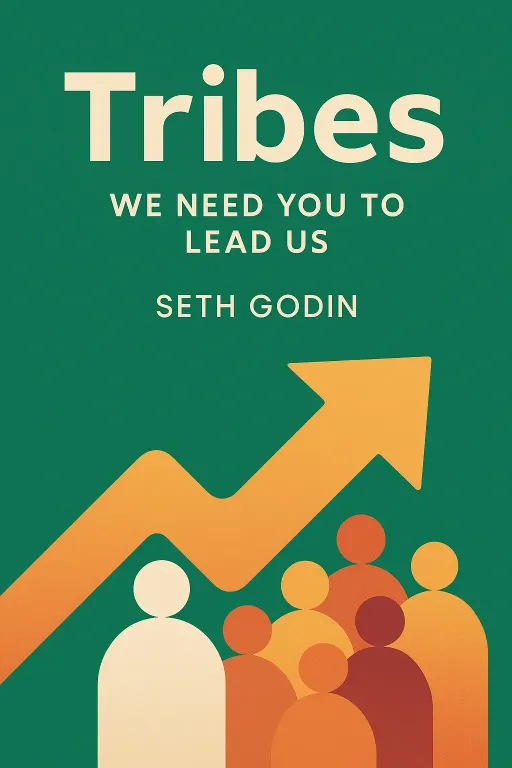
Nova: And this idea of genuine connection leads us directly to a fascinating reframe of leadership, as explored by Seth Godin in his foundational insights on "Tribes." Godin argues that true leaders don't tribes; they people who are already connected by an idea and then give them a rallying point. They give them a flag to wave.
Atlas: Wait, hold on. So, you're saying I don't my community? I just... it? That feels counter-intuitive for someone trying to lead and create impact. I thought the whole point was to be the visionary who brings people together.
Nova: That’s the common misconception! Godin’s insight is profound because it shifts your entire perspective. Think about it: every great movement, every passionate community, whether it's fans of a specific genre of music, environmental activists, or even just people passionate about a niche hobby like competitive birdwatching, they often already exist as a loosely connected group. They share a common interest, a common frustration, or a common dream.
Atlas: Competitive birdwatching, I love it.
Nova: The leader, in this context, isn't the one who invents the birdwatching, but the one who says, "Hey, all you competitive birdwatchers, here's a platform, here's a shared mission, here's a way for us to amplify our passion together." They articulate the shared idea, give it a name, a symbol—a flag. It’s the difference between creating a brand and creating a movement. A brand tries to attract people; a movement gives already aligned people something to belong to.
Atlas: That’s a powerful distinction. So, for our listeners who are trying to make a difference, who want to build a truly engaged community, how do they actually these existing ideas? What's their 'flag-detecting' superpower? Because if I’m not creating it, I need to know how to spot it.
Nova: It’s about deep listening and observation. It’s about paying attention to the conversations already happening, the frustrations being voiced, the unspoken desires. What are people already passionate about? What problems are they trying to solve on their own? What shared values keep surfacing in their interactions? Your role isn't to invent a new value, but to recognize a powerful, existing one and then articulate it so clearly that everyone who shares it says, "Yes! That’s what I believe!"
Atlas: So, it’s almost like being a skilled content curator, but for shared values. You’re finding the compelling stories that already exist within people and giving them a stage.
The Seven Pillars of Lasting Community: Structure for Shared Values
SECTION
Nova: Once you've found your tribe and given them a flag, the next challenge is making those connections. Because enthusiasm can be fleeting. And for that, we turn to Charles Vogl's "The Art of Community," which outlines seven enduring principles that have shaped communities for centuries.
Atlas: Seven principles? That sounds a bit like a checklist. Can community really be boiled down to a formula, especially when we're talking about authentic engagement and shared values, which feel so organic?
Nova: That's a fair question. And the key is that these aren't rigid, prescriptive rules. They're more like natural patterns of human interaction that foster belonging and endurance. Vogl studied everything from ancient guilds to modern online groups and found these recurring themes. Take "shared rituals," for example. It could be something as simple as a common greeting, a weekly check-in, or even a specific way of celebrating success within the group. These rituals reinforce identity and belonging.
Atlas: Okay, I see. So, it's not about being prescriptive, but about understanding the human psychology of belonging. Like, a secret handshake in a club, or a specific phrase that only insiders know. That makes sense for building a sense of 'us.' But how does someone like our strategic creator, who's building online, apply something like 'clear boundaries' without alienating people, especially when the goal is to be inclusive?
Nova: That's another brilliant nuance. "Boundaries" aren't about exclusion in a negative sense, but about defining what the community and. It's about clarity. What are the shared values we uphold? What kind of behavior is acceptable, and what isn't? It creates a safe space for people to truly connect because they know the rules of engagement. For an online community, it could be a clear code of conduct, or a stated purpose that everyone agrees to. It actually the authentic connection because everyone knows what they're signing up for.
Atlas: So, it gives the tribe a shared culture, a shared language, and a shared purpose, which in turn reinforces those shared values we talked about earlier. It’s like the framework that allows the flag to stand tall.
Nova: Exactly. These principles provide the structure for those shared values, turning abstract connection into concrete, enduring bonds. It's the difference between a fleeting gathering and a lasting movement.
Synthesis & Takeaways
SECTION
Nova: So, bringing it all together, we've moved from the cold fact that authenticity is the ultimate magnet, to Seth Godin's insight that leaders rally existing tribes by giving them a flag, and finally, to Charles Vogl's timeless principles that provide the enduring structure for those shared values.
Atlas: It’s a powerful progression: attract with authenticity, articulate the shared vision, and then build the framework to sustain it. And the tiny step from our guide this week? Identify one shared value within your potential audience and craft a single message around it. It’s about starting small, not trying to build Rome in a day, but finding that one resonant chord.
Nova: And that one resonant chord, that single message, can be the catalyst for profound impact. Because ultimately, whether you're an aspiring authority, a community builder, or a strategic creator, your drive is to make a difference. And you can only truly make a difference when you stop guessing and start genuinely connecting. Your unique voice, your perspective – it’s valuable. Trust it.
Atlas: That’s a fantastic way to put it. For anyone listening right now, if this conversation sparked an idea, a new way of looking at your community or your message, we’d love to hear your thoughts. Share your insights on social media, tell us what shared value you're going to focus on this week.
Nova: We're all in this journey of connection together.
Atlas: This is Aibrary. Congratulations on your growth!