

The 'Creative Architect' Trap: Why You Need Structured Freedom
Golden Hook & Introduction
SECTION
Nova: You know, Atlas, it's a common belief, almost an article of faith in creative circles, that true genius, true innovation, thrives on absolute freedom. No rules, just pure, unadulterated flow.
Atlas: Oh, I know that feeling. It’s the romantic ideal, isn’t it? The lone visionary, unconstrained, letting inspiration hit like lightning. It’s what many of our listeners, the creative architects building meaning, probably aspire to. But you’re saying that’s a trap?
Nova: Absolutely. What if that very idea, this pursuit of boundless, unstructured freedom, is paradoxically holding you back from truly building your legacy, from consistently translating those brilliant bursts into tangible, lasting impact?
Atlas: That’s a bold claim, but it makes me wonder. For someone who sees themselves as a visionary, a strategist, a cultivator, often juggling multiple complex projects, the idea of 'getting stuck' without structure feels very real.
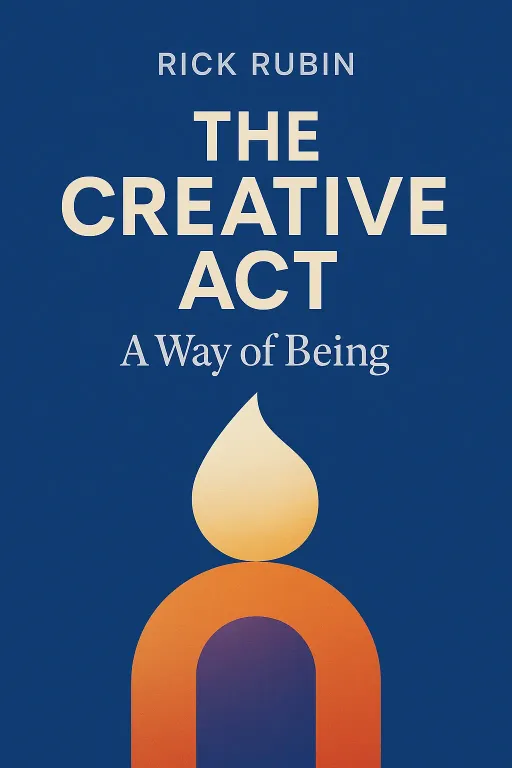
Nova: Well, today, we're dissecting that paradox. We're doing it through the lenses of two incredibly profound works: Rick Rubin's "The Creative Act: A Way of Being" and "Art & Fear: Observations On the Perils of Artmaking)" by David Bayles and Ted Orland. What's fascinating about Rubin is that he's not just a legendary music producer who's worked with everyone from Johnny Cash to Adele. He approaches creativity as a spiritual practice, a way of life, not just a job or a project.
Atlas: That’s a powerful distinction. It shifts the focus from 'what I produce' to 'how I live.'
Nova: Exactly. And Bayles and Orland, both artists themselves, wrote 'Art & Fear' from a place of deep understanding of the universal struggles artists face—the self-doubt, the fear of judgment, the challenge of persistence. It makes their insights incredibly raw and relatable for anyone trying to bring something new into the world. Their perspectives are less about external validation and more about the nature of the creating itself.
Atlas: That sets a perfect stage, because for our listeners, it’s not just about the output, but the meaning behind it. The impact.
The 'Creative Architect's' Dilemma: The Struggle Between Vision and Consistent Execution
SECTION
Nova: So let's dive into what we're calling the 'Creative Architect's Trap.' It's this feeling that many visionary individuals experience: you have these incredible, world-changing ideas. You see patterns others miss. You connect disparate concepts with ease. But you can also feel adrift without a clear process to execute them.
Atlas: That sounds rough. What does 'adrift' actually look like for a creative architect? Is it just procrastination, or something deeper?
Nova: It's far deeper than simple procrastination, Atlas. Imagine a brilliant, freestyle jazz musician. They can improvise breathtaking solos, spontaneous and raw. But ask them to lead a 50-piece orchestra through a complex symphony night after night, without a score, without a disciplined rehearsal process, and you’ll get chaos. Beautiful chaos, perhaps, but chaos nonetheless.
Atlas: So you're saying the 'brilliant bursts' are the dazzling solos, but the 'struggle with consistent impact' is the inability to conduct the full symphony?
Nova: Precisely. For the creative architect, this often manifests as a cycle. You get an inspired idea, a flash of insight, and you throw yourself into it with immense energy. It's exhilarating. But then, without a framework, without a structured approach, that initial energy dissipates. You might pivot to the next exciting idea before the first is fully realized, leaving a trail of potentially groundbreaking but incomplete endeavors.
Atlas: I imagine a lot of our listeners can relate to that. The pressure to constantly innovate, to always be on the cutting edge, can make it hard to settle down and truly cultivate one idea to completion. It’s like chasing fireworks instead of building a lighthouse.
Nova: That’s a fantastic analogy! And it’s compounded by the internal struggle. The very thing that makes you a visionary—your ability to see endless possibilities—can also make it difficult to commit to one path. There’s a fear of missing out on the big idea, or a fear that the current idea isn't perfect enough.
Atlas: So it’s not just about a lack of discipline, but almost an internal resistance to the very structure that could help. A kind of creative FOMO.
Nova: Yes, and that’s where the trap truly tightens. You end up with brilliant bursts, yes, but a struggle with consistent, tangible impact. Your vision remains largely unseen, a collection of half-built cathedrals in your mind, instead of the tangible legacy you're driven to create.
Structured Freedom: Nurturing Vision and Overcoming Creative Resistance
SECTION
Atlas: Okay, so if pure, unadulterated freedom can be a trap, what’s the alternative? How do we build structure without stifling the very vision we cherish? Because for a strategist, a cultivator, the last thing you want is a rigid, corporate blueprint suffocating your original thought.
Nova: That’s the million-dollar question, and it’s where the concept of "Structured Freedom" comes in. It’s not about choosing between freedom and structure, but integrating them. Rick Rubin, in "The Creative Act," speaks about creativity as a "way of being." He’s not giving you a 10-step plan to write a hit song. He’s offering a philosophy for nurturing ideas and overcoming internal resistance by listening to your inner voice.
Atlas: So it’s less about an external set of rules and more about cultivating an internal compass?
Nova: Exactly. He encourages creators to create a safe space for ideas, to treat them with reverence, to listen deeply to what the work to be, rather than imposing their ego on it. The structure here is the, the, the. It’s a framework built from the inside out.
Atlas: That makes sense. For a visionary, it’s about aligning with that deeper purpose, that inner drive to build meaning. But what about the fear? Because even with an internal compass, sometimes the wind just knocks you off course.
Nova: That’s where Bayles and Orland’s "Art & Fear" becomes so crucial. They tackle the universal struggles artists face: fear, self-doubt, the challenge of persistence. They remind us that the work itself is the reward. The "structure" they advocate isn't about a rigid schedule, but about showing up to the work anyway, even when you're scared, even when you doubt your ability.
Atlas: So the structure is the persistence, the resilience against the internal critics? It’s not about eliminating fear, but creating a process that allows you to work it?
Nova: Yes. Think of it like this: a river isn't free because it has no banks. It's free because the banks give it direction, allowing its powerful current to flow to the ocean. Without banks, it would just spread out into a stagnant swamp. "Structured Freedom" provides those banks for your creative current. It’s the framework that respects your vision while guiding its execution.
Atlas: I can see how that would be incredibly empowering for someone who’s driven by purpose. It’s not about compromising your artistic integrity, but about finding a sustainable path for creative growth. The internal integrity Nova mentioned earlier is the foundation.
Nova: It’s the realization that true freedom comes not from an absence of commitment or process, but from a deeply integrated, self-respecting process that transforms raw inspiration into a tangible, meaningful legacy. This shift from external validation to internal artistic integrity, as Nova’s take suggests, is the sustainable path.
Synthesis & Takeaways
SECTION
Nova: So, bringing it all together, the 'Creative Architect's Trap' is a very real challenge for visionary individuals. It's the struggle of having brilliant ideas but lacking the consistent framework to bring them to fruition, leaving you feeling adrift.
Atlas: And the solution isn't to become less creative or less free, but to embrace 'structured freedom.' To cultivate an internal discipline, a way of being, as Rubin suggests, and to persist through the inevitable fears and doubts, understanding that the work itself is the reward, as Bayles and Orland illuminate.
Nova: Exactly. It's about finding that dynamic equilibrium where internal alignment and consistent, intentional practice unlock your true creative power and allow you to build the lasting legacy you're driven to create. It's respecting your vision and guiding its execution.
Atlas: So, for our listeners who are visionaries, strategists, and cultivators, what’s a tiny step they can take this week to start building this 'structured freedom'?
Nova: The main content suggests a beautiful one: dedicate 15 minutes this week to simply observe, without judgment, the initial impulse behind your next creative idea. No pressure, just awareness.
Atlas: That’s a powerful start. It’s not about forcing an outcome, but about cultivating that internal listening, that presence, that Rubin talks about. How might a small, consistent act of internal observation this week redefine your relationship with your biggest, most ambitious creative visions?
Nova: We invite you to explore that question. This is Aibrary. Congratulations on your growth!