

The Art of Seeing: How to Unlock Deeper Meaning in Creativity and Culture
Golden Hook & Introduction
SECTION
Nova: What if I told you that most of what you think you 'see' every day, you're actually missing? That your eyes are open, but your perception is largely a blind spot?
Atlas: Whoa, that's a bold claim, Nova. Are you saying we're all walking around like philosophical zombies, just processing light without truly understanding? Lay it on me.
Nova: Not quite zombies, Atlas, but definitely under-optimized observers. Today, we're diving into a fascinating concept from a book titled, "The Art of Seeing: How to Unlock Deeper Meaning in Creativity and Culture." This isn't just another art history lesson; it's a brilliant synthesis of foundational ideas from thinkers like John Berger and John Dewey, offering a truly practical framework for cultivating a more profound and active way of engaging with the world. It’s about transforming your everyday perception.
Atlas: That's going to resonate with a lot of our listeners who are constantly looking for ways to integrate diverse insights and understand complex systems. The idea of unlocking deeper meaning just by shifting how you 'see' something… that feels like a superpower for a strategic mind.
Nova: It absolutely is. And it starts with acknowledging what the book calls "The Blind Spot." We often look at art, or any cultural phenomenon for that matter, without truly seeing it. We fixate on surface details, completely missing the deeper meanings, the underlying currents, and the immense power these things hold.
Deep Dive into Core Topic 1: The Blind Spot & Berger's "Ways of Seeing"
SECTION
Atlas: So, what causes this blind spot? Is it just a lack of attention, or something more fundamental?
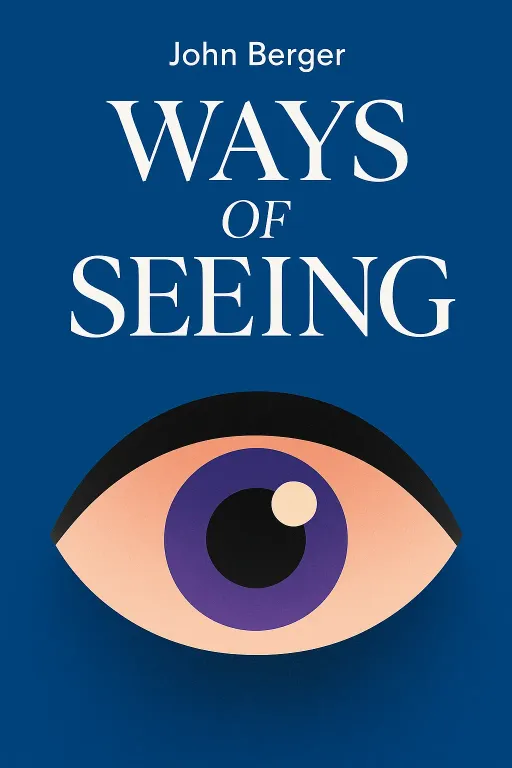
Nova: It's far more fundamental than just attention. The book draws heavily from John Berger's seminal work, "Ways of Seeing." Berger famously argued that the way we perceive art, and really, the world, is profoundly shaped by conventions and power structures. It's not just about pure aesthetic appreciation; it's about how images are used to sell ideas and reinforce social norms.
Atlas: But wait, are you saying our perception is manipulated? How does this apply if you're someone trying to, say, analyze objective data or build a neutral system? It sounds like we're constantly being subtly influenced.
Nova: Exactly! Think about how a luxury car advertisement is constructed. It's not just showcasing a vehicle's features. It's selling an entire lifestyle: status, freedom, success, even a certain kind of future. The car is often placed in an aspirational setting—a winding coastal road, a sleek urban penthouse—with models who embody an idealized version of wealth or happiness. The lighting, the angles, the subtle cues are all designed to tap into our unconscious desires.
Atlas: Oh, I see. So, the cause is this cultural conditioning and these power structures. The process is how these images are meticulously constructed to evoke specific emotions and associations. And the outcome is that we end up desiring not just the car, but the of what the car represents, which in turn reinforces a consumerist social norm. It’s like a pre-programmed filter we don't even know we have.
Nova: Precisely. Berger reveals how these images aren't just reflecting reality; they're actively it, shaping our desires and our understanding of what's valuable or desirable. This isn't about being cynical; it's about being aware of the invisible frameworks that influence our perception. This active understanding is crucial for anyone trying to build robust foundations or understand systemic issues.
Atlas: That’s a powerful insight. It makes you question every image you encounter, from a brand logo to a political campaign poster. It highlights how important it is to look beyond the immediate visual and ask: who created this, and what idea are they really trying to sell me, consciously or unconsciously?
Deep Dive into Core Topic 2: The Shift & Dewey's "Art as Experience"
SECTION
Nova: And that leads us to a crucial counterpoint, or rather, an empowering addition to Berger's insights: John Dewey's "Art as Experience." While Berger highlights the external forces shaping our sight, Dewey emphasizes our internal, active role in meaning-making. He suggests that art isn't just an object to be admired, but an that fundamentally involves both the creator and the observer.
Atlas: So, if Berger says we're conditioned, how does Dewey say we break free or actively participate? What does "active participation" actually look like for someone trying to build a foundation or empower others, rather than just look at a painting?
Nova: It's about cultivating what he calls an "aesthetic experience." Imagine you're at a live concert. You're not just passively listening to notes. You're feeling the vibrations, you're caught up in the energy of the crowd, your emotions are stirred by the performance, your memories might be triggered by a specific melody. You are an active participant in creating the meaning and the impact of that moment. Your engagement is dynamic, personal, and unique.
Atlas: That makes sense. It’s not just about the band playing the notes; it’s about my whole being engaging with the sound, the atmosphere, my own internal world. It's a two-way street. So, the difference between seeing a picture of a concert and being one.
Nova: Exactly! Dewey argues that this active engagement is where true meaning is forged. It's not just about what the artist, but what the observer and within that encounter. This fundamentally shifts us from being passive recipients to active collaborators in meaning. It’s about bringing your whole self, your intuition, your past experiences, to the moment of observation.
Atlas: Honestly, that sounds like a game-changer for anyone trying to deepen team dynamics or refine their data-driven approach. If you're only seeing the surface-level metrics or team interactions, you're missing the entire experience, the underlying currents, the emotional resonance that truly creates meaning and drives sustainable growth. You have to actively engage with the 'data' in a deeper way.
Synthesis & Takeaways
SECTION
Nova: Precisely. These two insights, taken together, fundamentally shift our understanding from passive observation to active, critical, and deeply personal engagement with art and culture. It’s about recognizing the external forces that shape our vision, while simultaneously embracing our internal capacity to create profound meaning.
Atlas: For our listeners who are constantly connecting complex ideas and building systems, this isn't just about art, is it? It's about seeing the underlying structures in your work, understanding the nuanced dynamics within your team, or even refining your product analytics by looking beyond the numbers to the human experience they represent. It's about asking, 'What am I seeing here, and how can I actively engage to find it?'
Nova: It absolutely is. Consider a product manager looking at user feedback. A passive observer might just see a list of complaints. An active 'seer,' inspired by Dewey and Berger, would look for the underlying frustrations, the unspoken needs, the systemic issues suggested by those complaints, and how the product's design might be subtly influencing user behavior. They’d engage with the of the user, not just the data points. This is where truly innovative solutions arise.
Atlas: That’s such a hopeful way to look at it. It takes the idea of a 'blind spot' and turns it into an opportunity for profound insight. It reminds me of the growth recommendation for our listeners: 'Trust your intuition. It guides your strategic mind.' This isn't just about logic; it's about cultivating a deeper, more intuitive way of seeing that connects all those complex ideas.
Nova: It’s about integrating diverse insights, Atlas. It's about empowering ourselves to challenge surface perceptions and build a more meaningful understanding of everything around us, from a painting to a complex organizational structure. It’s about transforming how you see, to transform how you live and work.
Atlas: I love that. So, the next time you're looking at something—anything—ask yourself: Am I truly seeing this, or am I just looking? Am I letting external forces dictate my perception, or am I actively engaging to create my own meaning?
Nova: Exactly. That deeper engagement is where the magic happens.
Atlas: What an episode. Thank you, Nova.
Nova: Thank you, Atlas.
Nova: This is Aibrary. Congratulations on your growth!